
Fixed Glass Roof or Louvred Pergola Roof?
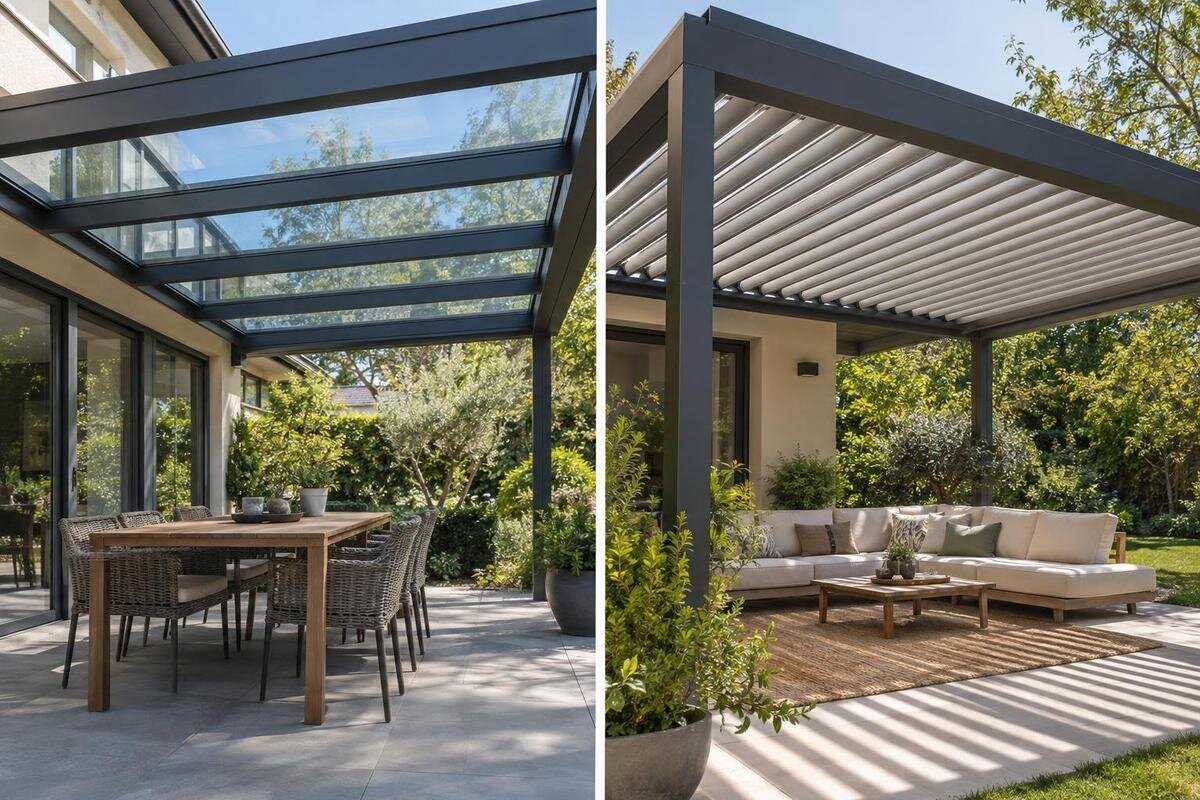
Pergola roof choices
Choosing a roof for an outdoor patio is a choice about how the space should work, not just how it looks. A fixed glass roof keeps a transparent surface overhead; adjustable louvres let you change the roof opening and shade. That affects daylight, ventilation and how the area behaves in rain. The best fit depends on the hours you use the patio, the amount of control you want and the performance of the specified system. Neither roof label alone guarantees a cool space or complete weather protection.

01
What fixed glass and louvred roofs mean
In this comparison, a fixed glass roof means panes that remain in the same position. It is intended to transmit daylight, but the panes cannot be adjusted as the sun moves or opened to release air. An adjustable louvred roof has rows of blades that turn between more-open and more-closed positions. Opening them exposes gaps to the sky; changing their angle alters shade and the amount of air that can pass upwards. A louvred roof is not automatically retractable: its blades can move without sliding away. Adjustable describes movement, not a particular opening size, control system or weather rating.
Separate roof movement from the frame and water-management design. Both types depend on the complete proposal, including supports, edges and drainage, none of which is described by the words glass or louvred. Ask what moves, how it moves and what the closed setting is intended to do. Manual operation, a motor, sensors or automation are not features to assume without product-specific information. The Bloomcabin Pergola product page introduces one model in the range. For this and the other linked models, the supplied catalogue details establish identity and area range, not roof type or performance. Compare the roof configuration and instructions in the offer rather than relying on a broad model label.
Daylight beneath glass and louvres
Fixed glass can keep daylight reaching the covered area, but glass is not a brightness specification. Clear, tinted or coated panes transmit light differently; the roof’s position, surrounding walls, trees and neighbouring buildings also affect what reaches the patio. If the pergola sits beside a living room or kitchen, consider daylight through the home’s doors and windows as well as light on the outdoor table. A roof can shelter the patio while changing the brightness immediately inside. Ask for the proposed glass description and, where possible, view a sample in comparable light rather than judging from a small online image.
With adjustable louvres, the amount of open sky changes with blade position. An open setting admits more light from above; other settings change the shade, although light can still enter around the edges and through any gaps between blades. Consider when the patio is occupied and whether you want to see the sky above it at those times. When reviewing the Bloomcabin Bioclimatic Pergola listing, ask for drawings of the roof configuration being quoted so that you can compare its open and closed arrangements. Beside a kitchen or living room, weigh up the light you want on the patio against the daylight you want to preserve indoors.
02
Ventilation and warmth beneath the roof
Ventilation is a practical difference between the two roof types. A fixed glass roof does not open overhead, so air moves through the sides of the pergola. If the sides are open, the area can still be ventilated; a roof alone does not make it an enclosed room. Even so, a cover can limit the upward escape route for warm air, and the space may feel different from an uncovered patio. How noticeable this is depends on the breeze, nearby walls, exposure, roof height and glass specification. Transparent does not mean that the roof will feel cool, and no roof creates a breeze on a still day.
Opening adjustable louvres creates gaps through which air can move upwards as well as through the sides. Closing them reduces that opening, so the effect depends on the setting and the conditions around the patio. If you use the space for outdoor meals or a braai, think about where air needs to flow during the hours you are outside. For a model such as the Bloomcabin Wall-Mounted Pergola, compare the proposed roof arrangement with the position of the house wall and the open sides. The practical question is how air can move through your particular patio, rather than whether a model name suggests a cooler space.
Adjustable shade and changing sun
A fixed glass roof maintains the same overhead arrangement throughout the day. It does not create adjustable shade as the sun’s angle changes, although the sunlight and glare you experience depend on the glass and the surroundings. A separate blind or screen could change the result, but it is another component whose compatibility and upkeep need to be considered; do not assume it is included. Louvres let you alter the blade angle to change direct sun and shade. This can help when a patio alternates between bright and shaded use, but a setting that works at midday may not block low-angle sun from the side.
Before choosing, note the times you normally use the patio and observe where direct sun falls then. Consider the table, chairs and doorways, not only the centre of the roof. Product photography cannot show the sun path at your home or prove the shade level you will get. The Bloomcabin Pergola gallery and model details can help you consider appearance, while drawings of the proposed roof let you discuss shade in relation to your seating layout. Keep those two purposes separate when comparing options. The practical choice is between a consistent transparent cover and the ability to adjust the overhead setting as the light changes.

03
Rain protection depends on the complete roof
A fixed glass roof can keep direct rain off the covered footprint when the panes, joints, frame and drainage are designed as a complete system. Water still needs a route off the roof, and wind can drive rain in from open sides. The term glass roof does not tell you how the edges are sealed, where runoff is discharged or how the roof is intended to perform in different conditions. Ask whether the proposed design is intended to keep the area beneath it usable during showers, how its limits are described and where water will go. Do not treat the roof label as a guarantee that the whole patio will stay dry in every weather condition.
A closed louvred roof may also be designed to manage rain, but blades meeting in a closed position do not automatically make a weather-tight surface. Water handling depends on the specific blades, joints, drainage, frame and installation. If you are considering the Bloomcabin Bioclimatic Pergola product page, ask how the quoted roof is intended to be used during rain and what limits apply to its closed setting. Compare that answer with the protection described for the glass option. If your main aim is to shelter furniture or dine outdoors in changeable weather, give those details more weight than appearance or the convenience of the controls.
Where the rainwater goes
Rain cover involves more than the material above your head. Compare where water is collected and discharged, whether its route crosses a doorway or walking area, and what may happen at the perimeter in wind-driven rain. A glass roof and a louvred system may use different drainage arrangements; the route is design-specific. Ask to see it on a drawing instead of assuming that water runs invisibly through the supports. Consider the open sides too: a roof may keep vertical rain off furniture while wind-blown rain can still reach the seating. Make sure the proposed discharge point makes sense for the way you use the patio.
If the pergola meets a house wall, pay particular attention to the roof-to-wall junction and the way water is managed there. When discussing the Bloomcabin Wall-Mounted Pergola listing, ask the supplier or installer to show the proposed connection and drainage route for your configuration. Keep door thresholds, furniture and paths in mind when discussing where water may fall or run. Site-specific structural or water-management questions should be checked by a suitably qualified professional, rather than resolved from a product photograph or nominal roof area. The aim is to understand both how the roof meets the house and where the collected water will go once it leaves the covered area.
04
Glass specification, glare and cleaning
When comparing glass options, ask for more than a description such as clear or tinted. Find out what glass is proposed, what information is available about light and solar control, and how glare or reflections may affect the patio. Roof glazing and its support are technical parts of the design, so a suitably qualified professional should confirm that the proposed arrangement is appropriate for the site. There is no need to work out sizes or loads yourself. Also ask how the panels can be accessed and cleaned safely, and what care the supplier recommends. These details can affect how practical the roof is after installation.
Dust, leaves, water marks and bird deposits may be visible from below as well as above, so cleaning access matters alongside appearance. Ask who can reach the surface, whether cleaning requires specialist access and how damaged components are handled. The Bloomcabin Pergola page lists the named model with an area range from 9 to 24 m². That gives you an initial size reference, but the glazing and support details must come from the specification for the exact design. Compare the area you want to cover with the surface that will need cleaning. If access would be difficult, include that practical consideration when weighing up ongoing care.
Operating and maintaining louvres
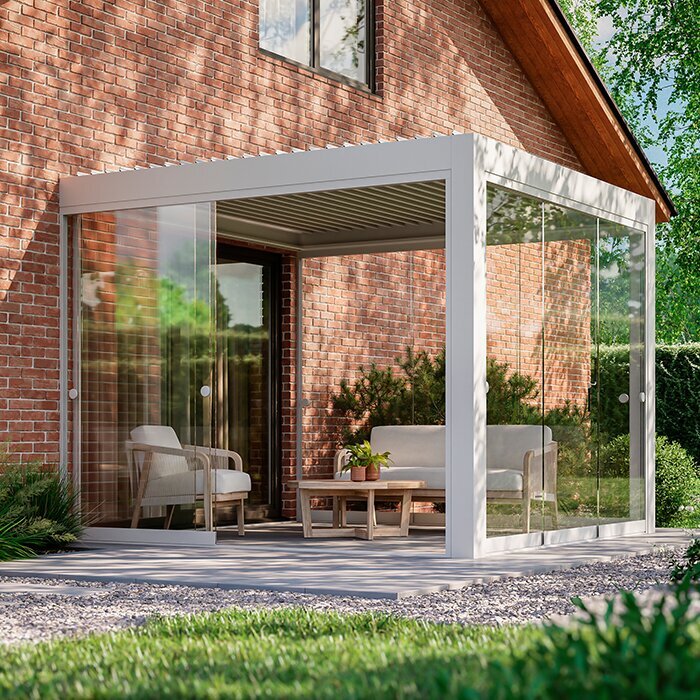
For a louvred roof, look at the operating range and how the blades are controlled. Some designs allow several angles, while others may have a more limited movement, so ask what the quoted system actually permits. Confirm whether operation is manual or motorised, where the controls are and what the instructions say about using the roof in different conditions. Do not infer a motor, weather sensors, automatic closing or app control from the word bioclimatic or from a photograph. The useful comparison is the movement the chosen model provides, not features associated with louvred roofs in general.
Moving parts and drainage areas also call for an upkeep plan. Ask how blade edges and water channels should be kept clear, what routine checks the supplier recommends and whether servicing requires access to particular parts. For the model on the Bloomcabin Bioclimatic Pergola model page, request the care and operating instructions for the configuration being quoted. Use those instructions to compare the attention it needs with the cleaning requirements of the glass option, rather than relying on generic maintenance advice. Also consider whether everyone who will use the patio can reach and operate the controls comfortably. Adjustment is useful only if it suits your routine.
05
Compare the full installation, not only the roof
Compare the same usable footprint, not only a headline area. Mark where supports are proposed, the clear space needed for doors and windows, existing downpipes, trees and furniture, and the route people take through the patio. Look at the roof from inside the house and from the garden: a transparent surface may preserve a view of the sky, while closed louvres present a different overhead appearance. Ask for a plan showing the quoted configuration. If the proposal includes separate blinds or screens, list them separately rather than treating them as part of the roof unless the specification confirms they are included.
Check details that can make two offers unlike-for-like: the glass or blade specification, method of operation, drainage and discharge, cleaning access, and any stated weather limitations. Similar model names do not establish that roof assemblies perform alike, so read the manual for the exact product. If the structure attaches to a house or must suit particular site conditions, ask a qualified professional to assess the proposal. Any local approval or property-specific requirement should be confirmed for your project; this guide does not make a legal or engineering determination. Keep the agreed scope and roof details in writing.
Choose according to the patio’s daily use
Give priority to fixed glass if you want a consistent, light-transmitting cover and prefer not to adjust the roof through the day, provided the specification confirms the rain protection and drainage you need. Accept that the roof will not open to provide ventilation or adjustable shade; air must move through the sides. Give priority to louvres if you expect to change between overhead airflow, shade and a more closed setting. That flexibility is valuable only if the controls, maintenance and closed-position rain performance suit the way you use the patio.
If both daylight and an open roof matter, weigh up the trade-off against your routine. Picture a bright morning, a hot afternoon meal and a rain shower: which condition is most important to manage, and what compromise can you accept? For each option, bring together the specific roof description, operating method, rainwater route and maintenance information, then compare those details with the site and furniture plan. A choice based on how each roof handles light, ventilation and rain is more useful than choosing by the words glass or louvred alone.
Frequently asked questions
Can a fixed glass pergola roof be opened?
A fixed glass roof does not open to ventilate. Separate opening panels or vents would need to be included in the specific design, so check the product documentation rather than assuming they are part of a glass roof.
Are louvres waterproof when they are closed?
Not automatically. Rain performance depends on the roof’s design, joints, drainage and installation, and wind-driven rain can still reach an open-sided patio. Ask what rain protection the chosen model is designed to provide and where the water runs off.
Which roof lets in more daylight?
Glass is intended to transmit daylight, but the amount depends on its specification and the site. Louvres admit more or less light as their position changes. For either option, consider the roof’s position, surrounding shade and the effect on rooms beside the patio.
Will a louvred roof keep the patio cooler?
Opening the louvres can provide an overhead route for airflow, and changing their angle can add shade. Neither guarantees a particular temperature: breeze, site exposure, nearby walls, roof position and how the system is used all matter.
Can I put a glass roof on a pergola designed for louvres?
Do not assume that one roof can replace the other. The roof, supporting structure and rainwater management must be confirmed for the exact design by a suitably qualified professional. A product image or similar model name is not evidence that the components are interchangeable.
Choose fixed glass for a consistent, light-transmitting cover, or adjustable louvres when you want to change the shade and overhead airflow. In either case, rain protection depends on the complete roof system. The better choice is the one that gives you the conditions you value most during the hours you use the patio, with an operating and cleaning routine you are comfortable maintaining.
