
Growing grapes in a greenhouse
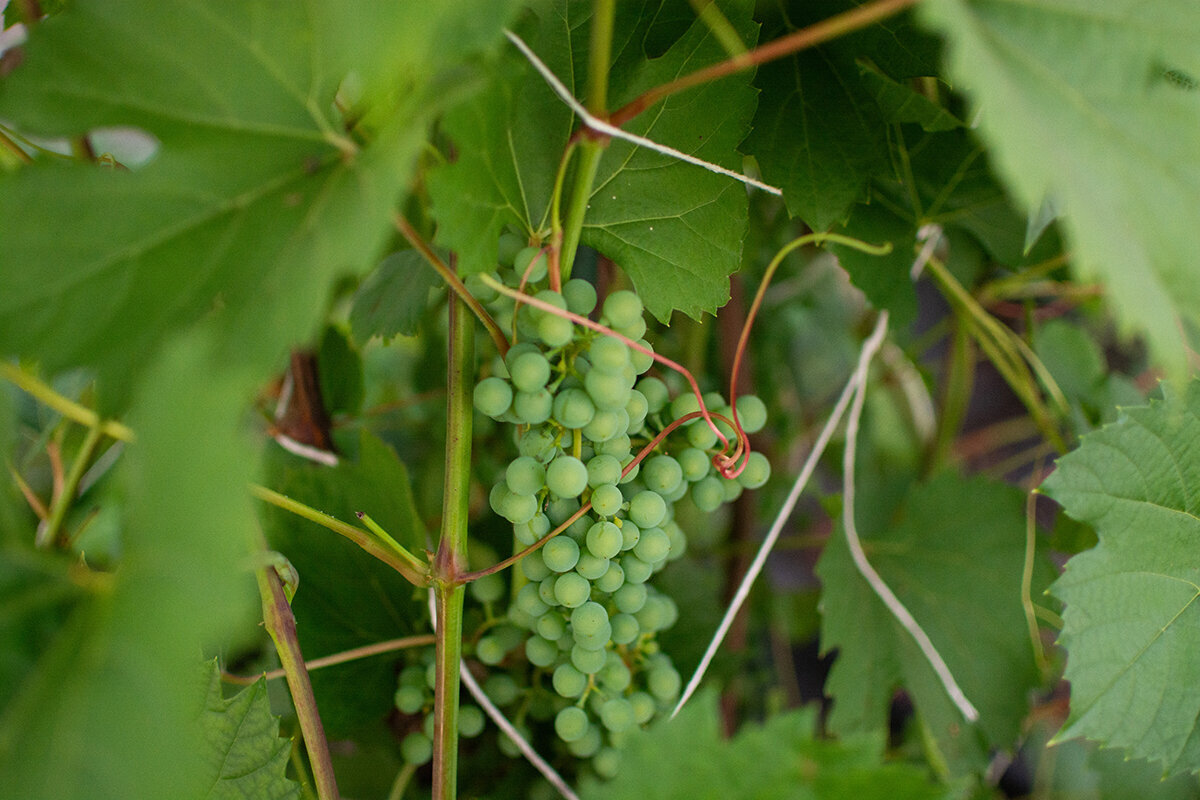
Under glass · Permanent fruit · Vine architecture
How to grow grapes in a greenhouse
A vine under glass is not a seasonal crop. It combines deep roots with permanent wood, annually renewed fruiting shoots and a bright, airy leaf canopy beneath the roof.
Why table grapes thrive under glass
Start with architecture, not berries.
Growing grapes in a greenhouse gives home gardeners unusual control over rain, warmth, access and the leaf wall. The vine does not become low-maintenance, but training is more precise and cropping is often more dependable.
Outdoors, extended rain can keep leaves and bunches wet, while cool summers and weak autumn sunshine may delay ripening. Under glass, vines begin in warmer conditions and bunches are protected from direct rainfall. Heat and humidity can rise quickly, however. A luxuriantly green roof is therefore not automatically healthy: grapevines need moving air, ordered shoots and an annual decision about which wood remains and which is removed.
Treat the greenhouse vine as a permanent edge-dweller, not as a container plant among tomatoes. It needs root room, an unobstructed route to the roof and an aisle that remains usable when the canopy is full. Before choosing a model, consider the Classic aluminium greenhouse and make the vine part of the structure from the outset, rather than an afterthought.
Before planting
Choose for flavour, vigour and pruning system.
For most greenhouse gardeners, aromatic table grapes are the priority. Do not decide only by berry colour or seedlessness. Variety affects ripening time, vigour, leaf health, bunch structure and pruning. The Bavarian State Institute for Viticulture and Horticulture lists robust home-garden varieties including ‘Birstaler Muskat’ and ‘Muscat bleu’. Seedless ‘Venus’ is very vigorous and needs correspondingly more space.
Fresh eating
Table-grape priorities
Look for excellent flavour, vigour suited to the available space and resilient leaf health. Early to mid-early varieties are a reliable starting point for unheated greenhouses, especially in cooler South African areas.
- For grafted vines, select a rootstock suited to the site and garden conditions.
- Prefer varieties proven in your region over novelty alone.
- Allow space for large leaves and vigorous side shoots.
The pruning question
Cane or spur?
Grapes form on green shoots of the current season that grow from buds on one-year-old wood. Some varieties crop reliably from short spurs along permanent cordon arms. Others are better trained on longer fruiting canes renewed each year. The choice follows the variety and available space, not appearance alone.
Cordon and spur training are often especially clear under glass. The Guyot system with annually renewed fruiting canes also works when the variety, wire layout and pruning knowledge suit it. The framework should support the chosen system from day one.
Planting position and spacing
Root room first
Plant in deeply loosened, free-draining soil with dependable drainage. The planting hole can be about 30 to 40 cm deep. On grafted plants, keep the graft union around 5 cm above the soil. Do not place concentrated compost or mineral fertiliser directly against sensitive roots.
- For several vines, 1.50 to 2.00 m spacing is a practical guide.
- Direct irrigation at the root zone, not over the foliage.
- Keep the trunk and fruiting zone accessible for pruning and inspection.
A greenhouse is especially helpful in cool or rainy locations, but it does not replace dormancy. Consider local frost pockets and the variety’s winter hardiness where relevant. In the first year, keep soil evenly moist without waterlogging; later, deep roots make vines more resilient during short dry spells.
Training system · build the framework before bud break
Give the vine a framework for decades.
Use corrosion-resistant tensioned wires, secure end fixings and load-bearing cross members. Never transfer the load improvisationally to glazing, window mechanisms or light shelving. A mature vine carries woody arms, dense foliage and many bunches. Tying and pruning also create pulling forces. Several parallel roof wires create organised routes and air between shoots.
Elevation · framework
Permanent trunkVertical main axis
Permanent armsLasting cordons
Fruiting woodCanes and annual shoots
The trunk is built over the first years. With spur training, cordon arms remain as permanent structure; with cane training, selected one-year-old canes are regularly replaced. Green shoots of the current season carry leaves and grapes.
Reading wood in winter
Identify the wood’s age before pruning.
The key rule makes grape pruning easier to understand: next season’s crop grows on new shoots emerging from buds on last year’s wood. Winter pruning is therefore annual editing. Keep the intended framework, select one-year fruiting wood deliberately and remove confusing surplus growth. This balances light, yield and renewal.
I
Permanent wood
II
One-year cane
III
Green annual shoot
IV
Removal
Permanent wood: The trunk and, depending on the system, cordon arms form the lasting architecture. Keep them healthy and clearly positioned; they must not become a thicket of old, unproductive wood.
One-year cane: Smooth wood grown in the previous year carries buds for the new season. It serves as a fruiting cane or provides short spurs for the next flush.
Green annual shoot: In spring, retained buds break. The new shoots carry leaves, tendrils and flower clusters while also forming wood that may matter the following winter.
Removal: Most excess annual growth is removed during dormancy. A vine that looks strikingly open after pruning is therefore often correctly, not excessively, cut.
Do not copy a fixed bud count or pruning pattern without checking the variety and training system. Cane and spur pruning take different routes. The aim is the same: enough fruitful buds for balanced cropping, enough leaf area for ripening and open spaces where foliage and bunches dry quickly and remain accessible.
Spring to early summer
Shoots first. Grapes second.
Once bud break begins, the greenhouse changes quickly. The crucial task is not waiting for visible grapes, but deciding early which shoots will form the canopy. Remove weak, duplicate, inward-growing shoots or shoots badly placed on the trunk while they are small. Keep well-positioned shoots and tie them softly before tendrils create a difficult tangle.
Stage 01Select shoots
Stage 02Flowering
Stage 03Fruit set
Stage 04Thinning
Stage 05Berry growth
Shoot selection: Rub out shoots early to create an open pattern and direct vigour into the intended framework and fruiting shoots.
Flowering: Avoid drought stress, sharp temperature swings and drastic leaf removal. Grapevines are generally self-fertile; regular air exchange supports balanced flowering conditions.
Fruit set: Young berries reveal the real crop load. On young vines, remove surplus or poorly placed bunches before they compete with framework development.
Time to thin: Reduce the crop thoughtfully on vigorous, heavily laden vines. Well-distributed quality is more valuable than the greatest possible number of dense bunches.
Berry growth: Continue tying in and organise lateral shoots. The fruiting zone should remain inspectable without being stripped bare.
Note on flowering and fruit set
Greenhouse grapes do not normally need hand pollination. A stable climate is more useful: ventilate before heat builds, avoid needless humidity and keep the canopy open. If fruit set remains weak for several years, assess variety suitability, temperature peaks, water stress and vigour balance. Excess nitrogen or unsuitable pruning can also promote leaves at the expense of fruit.
Greenhouse climate · order in the fruiting zone
Under glass, air movement belongs to the pruning system.
A grapevine can make a greenhouse look lush. That abundance becomes problematic when leaves overlap, bunches touch and humid air stands under the ridge. Combine roof vents where possible with door or side ventilation. Warm air can escape above while fresher air enters below. The leaf wall must not block this airflow and should dry promptly after condensation or watering.
Plan view · grape area
Working path
Clear usable width
Clear usable width
Leaf wall
Ordered shoot plane
Ordered shoot plane
Fruiting zone
Freely hanging bunches
Freely hanging bunches
Water deeply and precisely. Newly planted vines need an even supply while rooting. Established plants are usually watered less often, but dry greenhouse soil and ripening grapes still require attention. Water directly into the root zone, preferably in the morning. Avoid wet foliage and rigid schedules. Instead, check moisture at root depth, weather, crop load and the plant’s response. Avoid waterlogging and extreme wet-to-dry swings.
From green berries to ripeness
Harvest by flavour, not colour alone.
As berries soften and colour develops, keep the canopy open. Do not suddenly expose previously shaded bunches to intense heat. Harvest timing depends on the variety: alongside colour, consider sweetness, acidity, flesh, fragrance and characteristic flavour. Taste berries from several parts of the bunch. Cut ripe bunches with clean secateurs and carry them by the stem where possible.
Healthy leaves remain important after harvest. They supply the perennial vine with reserves for the next year. An empty fruiting zone does not mean the season is over. Natural leaf fall and dormancy begin the true pruning and cleaning period.
Green berry growthKeep soil moisture even and avoid strong wet-dry changes, especially with varieties prone to berry splitting.
Softening · veraisonKeep watching. Open a fruiting zone overgrown by lateral shoots moderately, while retaining enough foliage to protect against sun scorch.
Taste testingOver several days, taste berries from different parts of several bunches. A ripe-looking shoulder may conceal less developed fruit lower down.
Harvest and store coolRemove damaged berries and fallen fruit promptly. Store cut grapes cool and dry; wash them only before use.
Problem corner
Check the climate before the fertiliser.
The central diagnosis
The most common error: too much of a good canopy.
When a vine has luxuriant foliage but its grapes colour poorly, split or rot, more fertiliser or water can seem the obvious answer. Check the structure first: are bunches visible and reachable? Are shoots layered over one another? Does condensation remain after sunrise? Does the fruiting zone dry after watering? Is the vine carrying more bunches than its leaf area, roots and available light can support?
- Poor colouring: Shade, excessive crop load and a variety ripening too late for the site often act together.
- Splitting berries: Check uneven soil moisture, rapid water uptake, disease and a very compact bunch structure.
- Mites or small pests: Inspect leaf undersides early, remove badly affected material and use only South African-registered remedies whose current labels cover grapevines and the relevant pest.
- Weak growth: Investigate drainage, root room, nutrition, light and possible overloading of a still-young vine.
Year-round overview · adjust timing to region and variety
The greenhouse vine year at a glance.
| Stage | Main task | What to check | Where restraint matters |
|---|---|---|---|
| Dormancy | Prune to cane or spur system; remove dead, tangled and surplus wood. | Trunk health, wire tension, ties, fruit remains and conflicts with windows or roof. | Do not retain extra buds merely because the necessary pruning feels severe. |
| Early spring | Secure the chosen trunk and watch the beginning of bud break. | Bud burst, late-frost risk, drainage and first signs of pests. | Do not overwater a root zone that is still cool and drying slowly. |
| Late spring | Rub out shoots, tie in growth and begin active ventilation. | Canopy density, flower development and rapid daytime temperature rises. | Do not let tendrils become an inaccessible tangle beneath the roof. |
| Summer | Manage lateral shoots, crop load, airflow and root-zone irrigation. | Condensation, shaded bunches, leaf disease, mites and berry development. | Do not drive lush growth further with nitrogen-rich fertiliser. |
| Harvest · autumn | Harvest by flavour, clear fallen fruit and retain healthy foliage afterwards. | Split berries, rot, uneven ripeness and canopy condition after harvesting. | Do not remove functioning leaves immediately after the last bunch is cut. |
When planning the space, also consider water access, paths, beds, work surfaces and maintenance areas. A suitable basis is the Classic aluminium greenhouse. A permanent grapevine works best when the remaining interior is planned around the trunk, framework and fruiting zone from the beginning.
FAQ
Questions from the canopy.
A greenhouse vine rewards careful observation more than rigid calendar care. These answers offer a reliable starting point; variety choice, pruning and crop protection should always be adapted to the site and current professional guidance.
Can I grow grapes in a small greenhouse?
Yes, if you focus on one vine, an edge planting position and disciplined training. A small greenhouse can carry a vine, but cannot hide an unmanaged canopy. Choose a manageable variety, install wires before planting and retain a clear aisle for pruning, inspection and harvest.
How many grapevines should I plant?
For many private greenhouses, one well-trained vine is enough. It can fill a considerable portion of the roof space and lets you learn the pruning system confidently. Add a second only with sufficient wire length, separate root room and a clear plan for two accessible fruiting zones. A guide is 1.50 to 2.00 m spacing.
Do greenhouse grapes need hand pollination?
Usually not. Grapevines are generally self-fertile, and airflow during ventilation supports conditions while they flower. Above all, avoid extreme heat, drought stress and stagnant humid air. Repeatedly weak fruit set calls for a review of variety, climate, pruning and vigour balance.
Should the vine grow in a container?
A very large permanent container can work where planting in the ground is impossible. Deeply loosened greenhouse soil usually provides more generous, forgiving root room. Containers need much closer water and nutrient management, and their roots respond more strongly to winter temperature fluctuations.
Why does my greenhouse vine make leaves but few good grapes?
Common causes include too many retained buds, excessive nitrogen, a dense leaf wall, little light in the fruiting zone or a young vine carrying too much. Variety and pruning method can also be poorly matched. Start with clear winter pruning, early shoot removal and improved airflow before increasing fertiliser or making drastic changes.
Sources and further information
Reliable technical references.
These professional sources underpin guidance on planting, variety choice, training, grape pruning, canopy management and disease prevention. Check variety and crop-protection advice against current regional information, and account for the specific conditions in your greenhouse.
More from Bloomcabin: automatic greenhouse vent openers · classic aluminium greenhouse · Bloomcabin aluminium greenhouse FAQ
- Bavarian State Institute for Viticulture and Horticulture —Table grapes around the home and garden
- Bavarian State Institute for Viticulture and Horticulture —Grape varieties for home and small gardens
- Bavarian State Institute for Viticulture and Horticulture —Powdery mildew on home vines and table grapes
- Bavarian State Institute for Viticulture and Horticulture —Downy mildew on home grapevines
- Royal Horticultural Society —Pruning and training grapevines
- Royal Horticultural Society —Growing grapes under glass
- Bavarian State Institute for Viticulture and Horticulture —Planting and growing table grapes
The gardener’s harvest table
Plan the greenhouse around the permanent vine.
Before planting, allow for the trunk, permanent framework, roof wires, an open fruiting zone and the person who will prune every winter. Discover the Classic aluminium greenhouse and use the Classic aluminium greenhouse to create a productive interior that remains accessible for the long term from the first day.
Classic aluminium greenhouse