
Growing parsley in a greenhouse
The Greenhouse Journal · Herb Edition
Growing parsley in a greenhouse
Parsley is more than a garnish. Given a bright, cool, well-ventilated position, it becomes one of the most useful long-lasting greenhouse crops after a patient start.
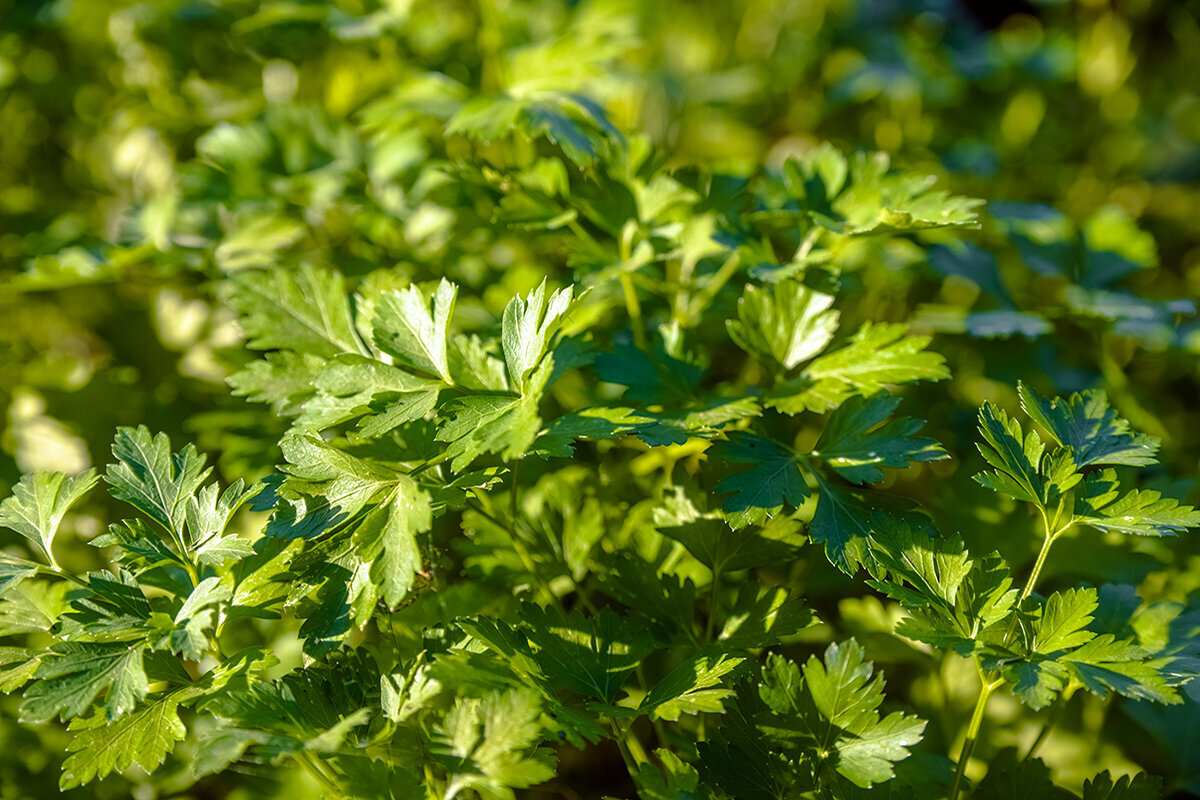
Flat-leaf parsley has broad, open leaves, is easy to rinse and has a bold flavour. It is a practical choice for sauces, salads and cooked dishes.
Curly parsley forms dense cushions of finely curled foliage. On a visible, airy bench edge, it combines precise leaf texture with ongoing harvests.
Plate 01 · A herb worth establishing
Parsley is not an afterthought
A well-grown parsley plant has presence: a strong rosette of divided leaves, a clear scent and enough root reserve for repeated harvests. In a greenhouse, it can be managed as a small permanent leaf crop rather than a packet of greens used once.
That approach changes the way it is grown. Parsley rewards neither rushed sowing nor overheated, stagnant air. It needs fresh seed, loose growing medium, even moisture, bright light and timely ventilation. Once the rosette is established, it occupies little space while supplying useful stems for the kitchen over many months.
For South African home gardens, the greenhouse advantage is control rather than constant warmth. A sheltered bench position supports early propagation, keeps heavy rain away from pots and extends harvesting through cooler periods. In summer, however, the structure must remain bright and thoroughly ventilated. The Classic aluminium greenhouse offers a clearly organised setting for propagation, an herb bench and seasonal growing zones.
Plate 02 · Leaf architecture
Panel A · Open character
Panel B · Dense character
Flat, curly and one specialist type
Choose parsley according to how you cook, harvest and maintain the crop, rather than the picture on a seed packet alone. Both common leaf forms suit a greenhouse. Fresh seed, a reliable variety and several staggered plants matter most for a continuous harvest.
Flat-leaf
Open leaf surfaces. Easy to wash and harvest precisely, stem by stem.
- Broad, open growth
- Ideal for sauces and salads
Curly
Fine curling. Decorative texture with selected outer stems.
- Dense, compact growth
- Attractive on a visible bench edge
Flat-leaf parsley is often called Italian parsley and has generous, open leaf surfaces. Greenhouse dust, growing-medium splashes and individual aphids are easy to spot and rinse away. The clear leaf stems are also easy to trace back to the rosette when harvesting. Its flavour suits vinaigrettes, gremolata, soups, herb oils, sauces and salads.
Curly parsley has a more compact form and produces finely curled, almost ornamental leaves. The foliage needs extra care when washing and should dry quickly after watering. Space plants well along the front of a bed or bench, where mature outer stems remain accessible without damaging the young centre during cutting.
A note on root parsley: Seed catalogues also list root or Hamburg parsley. It is grown mainly for its thickened root and needs a deep, loose, stone-free medium. It is an interesting specialist crop, but less straightforward than leaf parsley for a small herb bench harvested repeatedly for foliage.
Plate 03 · The slow germination workshop
Space for a patient beginning
Parsley really does germinate slowly, but there is no need for concern. Seed age and growing conditions affect progress, and seedlings often emerge at different times. Allow two to five weeks. Instead of repeatedly uncovering the soil, maintain steady moisture, suitable temperatures and a clear label with variety and sowing date.
ISeed and medium
Fresh seed; fine, loose, clean seed compost.
IIDepth and covering
Sow about 1 cm deep and label every container.
IIISteady moisture
Keep evenly moist, never waterlogged.
IVTemperature and light
For germination, 20–25 °C; move into bright light immediately afterwards.
Seed and medium. Use fresh seed and, where possible, a peat-free, fine-textured seed compost. Fill deep modules or small pots loosely and ensure free drainage. Germinating seeds need oxygen as well as moisture, so heavily compacted growing medium is unsuitable.
Depth and covering. Sow thinly and cover the seeds to roughly 1 cm. Press the surface only lightly so there is good contact with the medium. Label variety and date. A clear cover can help initially, but it must be aired daily and removed after emergence.
Steady moisture. The seedbed must not dry out during the long germination period. Constant wetness is equally harmful because it displaces air from the root zone. Moisten carefully with a fine rose or from below, and assess the medium rather than watering to a fixed calendar.
Temperature and light. Around 20 to 25 °C is favourable for germination. Once the first seed leaves appear, move parsley into bright light and noticeably cooler conditions. Warmth without enough light produces long, soft stems. In late winter, an insulating base protects pots from cold stone or metal surfaces.
An unhurried sowing method: if preferred, soak seeds in room-temperature water for twelve to 24 hours, then sow them. This may support water uptake, but replaces neither fresh seed nor even conditions. Check moisture daily. Once true leaves form, provide light, gentle air movement and adequate spacing between seedlings.
Plate 04 · Establishment and atmosphere
Give roots depth, leaves light and the house air
Direct sowing into the final container or bed disturbs the young taproot least. Transplant raised seedlings while they are still young and the root ball holds together. Lift the entire root ball and plant at the same level. A hand-width between strong rosettes improves air movement, inspection and harvesting. Containers need adequate depth, drainage holes and a structurally stable planting medium.
A long trough can create a composed, refined display, but it should not be overcrowded. Space between crowns lets leaves dry faster and allows whole stems to be cut without crushing neighbouring plants. On narrow benches, taller crops belong at the back; despite tolerating cooler places, the low parsley rosette still needs good light.
Reserve a bright section of the herb bench for parsley, but protect it from trapped summer heat. A Classic aluminium greenhouse creates room to separate sensitive herbs from taller fruiting crops that cast shade or need warmer conditions. In many South African regions, clean glazing and a well-chosen bench position are especially valuable in spring. Temporary shade may help during intense summer heat, but never replaces early ventilation or clear growing zones.
Plate 05 · Water, nutrients and clean leaf growth
Grow substance, not excess
- +Water deeply, then observe. Check moisture below the surface instead of giving small amounts every day from habit. The root zone should remain evenly moist, but a pot must never stand in a saucer full of water. Water carefully and thoroughly when the upper layer of medium has dried slightly. Complete drying weakens the crop.
- +Feed moderately. Humus-rich bed soil supplied moderately with mature compost is often sufficient. During main growth, containers may benefit from a weak organic liquid feed at wider intervals. Pale older leaves can indicate declining nutrition; yellow, limp plants in wet soil generally need air rather than more fertiliser.
- +Water the medium, not the crown. A narrow-spouted can or gentle low-level stream keeps leaves largely dry. Morning watering gives splashed water time to dry quickly while vents are open.
- +Separate growing zones. Do not place parsley in a crowded, permanently damp corner beside vulnerable young plants. Clear spacing, open paths and easily reached containers prevent more problems than rushed measures after an infestation.
For a herb area that remains useful over time, a bench at a comfortable cutting height, a waterproof surface beneath pots and a short route to water are helpful. The Classic aluminium greenhouse provides a lasting, organised framework in which ventilation, working routes and separate growing areas can be considered from the start.
Plate 06 · The cutting practice
Cut whole stems for continuous harvests
The most important cutting technique is also the simplest: remove individual mature outer stems close to their base. Do not simply trim leaf tips above the plant. The young centre must remain intact, while bare stem stubs after superficial trimming reduce productivity, hygiene and the clear appearance of the rosette.
- Start outside. Choose the oldest, strongest leaf stems at the edge of the rosette.
- Follow the stem down. Use clean, sharp scissors to cut near the base without injuring neighbouring young shoots or the central crown.
- Preserve the centre. The tightly held, upright young leaves already form the basis of the next harvest.
- Harvest little and often. Moderate, frequent cutting is better than stripping a small plant completely.
Wash harvested leaves only shortly before use where possible, then dry them carefully. For a larger harvest, choose a cool morning after foliage has dried and before the greenhouse heats up strongly. Inspect leaf undersides and the centre of the rosette as you cut.
Plate 07 · The biennial second act
Recognise when parsley changes its role
For home gardens, the leafy first season is most valuable. If parsley survives winter, it may grow again in its second year, form a flowering stem, set seed and complete its life cycle. Leaves from flowering plants are usually firmer and harsher in flavour. Treat the second year as a conscious decision point, not a growing failure.
Year one · Leaf work
Establish and cut
Winter transition
Keep, slow down or replace
Year two · Flower work
Save seed or clear the bench
Year one: establish and cut. Sow in spring, supply plants evenly and keep harvesting the strongest outer stems. A second sowing in late summer creates fresh plants for autumn and early cool weather. Anyone using parsley generously should plan staggered batches rather than permanently overworking one rosette.
Winter transition: keep, slow down or replace. In a sheltered, unheated greenhouse, plants can remain green but grow slowly during short days. Water sparingly, ventilate briefly on dry days and avoid strong feeding. Parsley tolerates light frost, but pot roots are more exposed. The structure protects against wind and excessive winter wet, yet cannot guarantee continuous harvesting.
Year two: save seed or clear the bench. As days lengthen, an overwintered plant stretches and forms flowering stems. Leave one healthy, true-to-type plant if you want to collect seed. For tender kitchen leaves, replace flowering specimens with a young batch. The most reliable strategy is overlap: spring sowing, late-summer sowing and, where suitable, a small overwintering crop.
Plate 08 · Problems and hygiene
Read the crop before treating it
For most problems, begin diagnosis with four questions: Is the medium too wet? Does foliage stay damp for a long time? Are rosettes too close together? Are pests on soft new growth? Remove heavily affected leaves, clean tools and first correct position, watering and air movement. Only then should a further measure be considered.
Symptom
Check first
Respond precisely
Priority
Sticky leaves, curled new growth or small insect colonies on leaf undersides and stems.
Look for aphids and shed skins. Check neighbouring seedlings and soft young shoots, not only the visibly damaged leaf.
Isolate the pot where possible. Rinse small colonies away with a directed water stream, improve air movement and inspect repeatedly. Avoid excessive nitrogen feeding.
Act promptly
Lower leaves yellow; the medium remains heavy and wet long after watering.
Check drainage holes, saucers and compaction. Also observe whether the pot receives water more often than the plant actually uses it.
Pause watering temporarily, improve drainage and remove dead material. Do not compensate with fertiliser: stressed, oxygen-starved roots can barely use extra nutrients.
Correct the routine
Dark or pale leaf spots, especially after prolonged leaf wetness.
Inspect both leaf surfaces. Look for tight spacing, dripping condensation, dirty tools or already suspect newly introduced plants.
Remove affected leaves and dispose of them with household waste. Water low down in the morning, ventilate early, clean cutting tools and avoid touching wet plants unnecessarily. More space and dry foliage reduce further spread.
Work cleanly
Thin, pale, stretched plants with soft leaf stems.
Assess available light, shade from taller crops, dirty glazing and day length. Check whether the greenhouse is both warm and too dark.
Move plants into brighter conditions with more spacing. Clean glazing safely and do not try to force weak growth with fertiliser. In winter, slow growth without extra light is normal.
Reposition
Kitchen plate
The best preservation is a living parsley crop close enough to harvest immediately before cooking.
Treat the harvest as a fresh ingredient
Parsley is at its best when fresh. Cut only what you need, rinse foliage briefly if required and spin or pat it thoroughly dry. For a few days in the fridge, package the dry crop loosely. Do not seal damp leaves airtight, as remaining moisture speeds quality loss.
Larger quantities can be frozen finely chopped in small portions, for example with a little water in ice-cube trays. For hot dishes, parsley is best added near the end. Drying is possible but retains far less of the fresh scent and green quality. Tender upper stem sections also suit stocks, pestos, sauces and herb oils.
Use the Classic aluminium greenhouse as a clearly organised growing space for annual planning. Parsley fills valuable places especially in spring and autumn, while in high summer it benefits from a cooler zone away from the densest fruiting crops.
Question index
Greenhouse parsley FAQ
Can parsley grow in an unheated greenhouse?+
Yes, especially from spring to autumn and during mild winter periods. It needs enough light, moderate moisture and pots that do not freeze solid. Growth slows significantly in short days and low temperatures. An unheated greenhouse extends the growing period, but does not replace heated production with supplemental light.
How long does parsley take to germinate in a greenhouse?+
Do not plan around one fixed day. Seed age, temperature and moisture strongly affect germination; two to five weeks is a useful guide. Keep the seedbed evenly moist but not wet. Do not discard the sowing too soon, and only resow obvious gaps after several weeks.
Should parsley grow in a bed or container?+
Both work well. Beds provide a stable root zone and more even moisture, while containers can be moved more easily in heat or pest pressure. Adequate depth, loose medium and reliable drainage holes are essential. In either system, avoid tight plant spacing and permanently wet rosettes.
Why is my greenhouse parsley flowering?+
Parsley is biennial. An overwintered plant normally produces a flowering stem in its second year as temperatures rise and days lengthen. Strong heat can encourage the transition too. Replace flowering plants with a young batch for tender leaves. Only allow a healthy, true-to-type plant to continue when collecting seed.
How often can I harvest parsley?+
Harvest once enough mature outer stems are available. Remove only a few complete stems close to the base each time, protect the centre and leave sufficient foliage behind. Regular, moderate cutting supports continued production better than rare radical harvesting or simply clipping leaf tips.
Sources and further reading
Technical references
More from Bloomcabin: Made-to-measure aluminium greenhouse · frequently asked questions about aluminium greenhouses · Bloomcabin blog
- Bavarian State Research Centre for Viticulture and Horticulture. Planted parsley: cultivation notes and variety information.LWG guide: planted parsley
- Bavarian Garden Academy. Herbs for fresh use from your own garden: growing, harvesting and use.LWG guide to fresh garden herbs
- Royal Horticultural Society. Growing parsley.RHS guide to growing parsley
- University of Minnesota Extension. Parsley in the home garden: sowing, care, harvesting and storage.Growing parsley in home gardens
- University of Illinois Extension. Parsley: growing, uses and harvesting.Illinois Extension: parsley information
- Iowa State University Extension. Germination requirements for annuals and vegetable crops, with temperatures and practical recommendations.Guide to seed germination requirements
