
Planning Later Screen or Lighting Upgrades for a Pergola
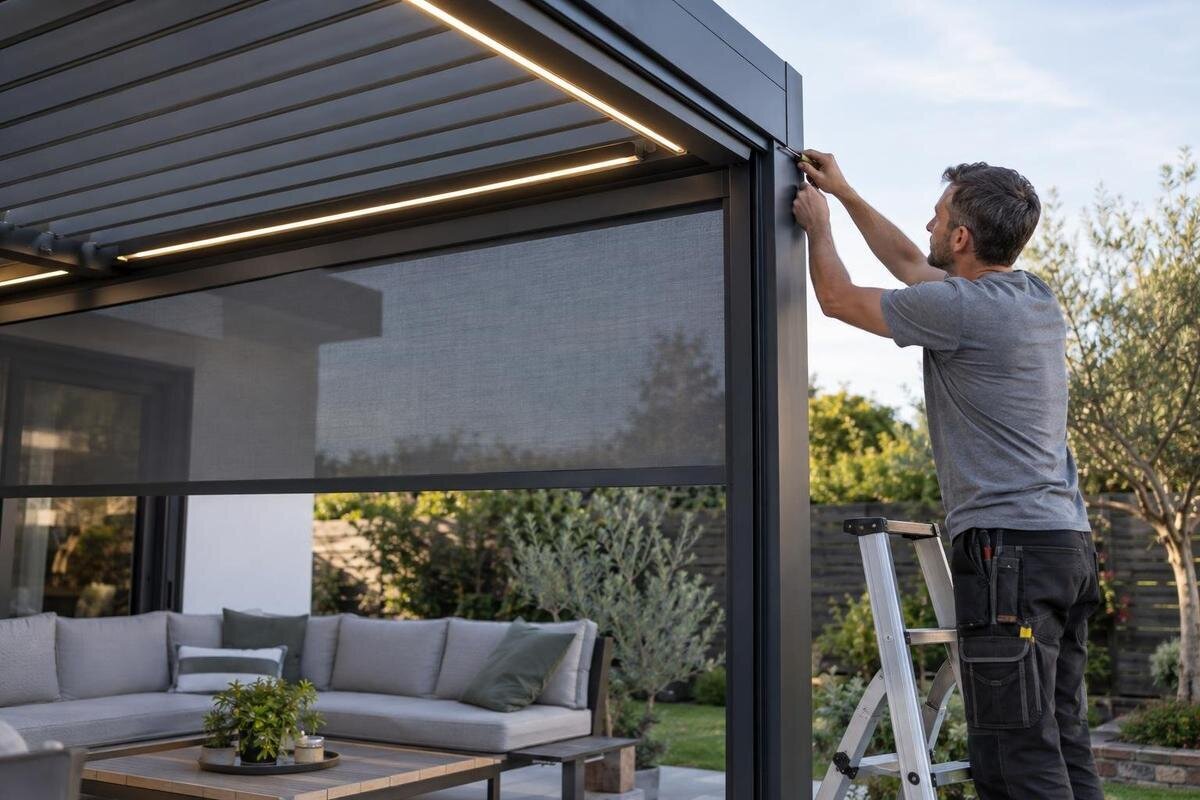
Pergola upgrade planning
A pergola that is already installed may look like an easy place to add a screen or a few lights, but visible space is only one part of compatibility. The frame needs approved attachment points, a screen must clear the structure throughout its movement, and lighting needs a suitable route for power and control. The answer depends on the exact model, revision and installed configuration—not simply on whether an accessory is described as pergola-compatible. This guide sets out what to confirm before ordering parts or agreeing to work.

Can screens or lights be added after installation?
Retrofitting is not a single yes-or-no feature shared by all pergolas. A manually operated screen, a motorised screen and a light fitting each create different requirements. A frame may have provision for one accessory but not another, and an apparently open span does not prove that a track, bracket or cable can be attached there. Ask first whether the proposed accessory is an approved option for the installed model and version, then whether your chosen location and configuration are covered. A general statement that screens or lighting are available for a product family is not enough to establish that an older or altered unit accepts them. The answer can also depend on how the pergola was assembled and whether original frame members or controls have since been replaced.
Separate the two projects as well. Screens need a mounting arrangement and enough clearance for their full movement or fixed position; lighting needs compatible electrical components and an accessible route for servicing. Combining them can create conflicts: a proposed light may occupy an edge used by a screen track, while a cable or fitting could obstruct an operating part. Sketch the intended sides, openings and light positions before seeking approval. Decide whether the screen and lights need independent operation, so the installer can assess the whole layout. The sketch helps a support team identify questions before parts are ordered, but it is not technical approval.
Identify the exact pergola and revision
Look for the original invoice or order confirmation, product name, model or item code, serial or batch label if present, purchase or installation date, and the manual supplied at the time. Record changes made since installation, including replacement posts, altered panels, moved electrical services or components from a later kit. Keep this information together rather than relying on a memory of the colour or appearance: two models can look similar while using different profiles or revisions. If a label is hard to reach, photograph it from a safe position; do not dismantle a component just to find it. Retain handover notes and dated installation photographs if you have them.
Use the name exactly as it appears in the paperwork when making an enquiry. If it identifies the Bloomcabin Pergola, keep the product reference with the order record, but ask the supplier to match it to the installed revision and proposed accessory. Product names help identify a product family; they do not, on their own, answer whether a screen bracket, light fitting or control unit will suit the unit in front of you. Where records are incomplete, send the details you do have and ask what further identification is needed before anyone commits to a retrofit. Also explain if the installed unit differs from the original order configuration; support needs the current arrangement, not just the purchase description.
Check the frame and approved fixing points
A screen is not merely a decorative panel: its rails, guides or brackets need approved attachment points, and its operation may place forces on the structure. A light fitting also needs a suitable, approved fixing, even if it appears light enough to hold by hand. Do not assume that a trim, capping, decorative cover or convenient beam face is designed for an accessory; drilling or adding fasteners without permission can affect the member, finish, drainage or operation. Depending on the screen design, fixing may involve more than the visible face, so ask which parts of the frame are used. Keep separate the questions of whether an item can be attached and whether that attachment is approved for its intended use.
Have an installer or structural professional assess any point that is not covered by the manual, especially if the proposed screen layout differs from an approved configuration or the pergola has been modified. The assessment should address the actual frame, support conditions and site exposure, not just a catalogue drawing. A Bloomcabin Bioclimatic Pergola product reference identifies a model name, but does not approve extra brackets or establish a load capacity. Do not estimate an allowable load or choose anchors yourself; ask for a documented answer before anything is attached. If a proposed screen sits on a side not illustrated in the documentation, mention that explicitly rather than assuming the drawing covers it.
Match the screen to each opening
Decide what the screen is meant to do and which sides need it. A privacy screen, shade screen and insect screen are not interchangeable simply because each covers an opening; materials, operation and guide arrangements may differ. For each side, note the clear opening, posts, adjacent walls, doors and windows, and whether furniture, a walkway or stored items sit in the screen's path. Decide whether one side or several will be screened; measure each opening separately rather than treating a corner-to-corner span as a single opening. Give measurements in the format requested, and do not treat a measurement between visible surfaces as proof of a suitable track size.
Check the complete route, not just the closed position. A retracting unit needs room for its moving parts and operating mechanism; a fixed panel still needs access and a suitable edge fixing. Confirm what happens at corners and where two sides meet, whether the screen can be opened fully, and whether it would conflict with lights, fittings or the pergola's normal operation. Note where handles, stops and any retained sections sit when the screen is not in use. When enquiring about screens for the Bloomcabin Pergola shown in the catalogue, specify the planned screen type, side and fixing position. Do not infer a compatible screen from the product's overall footprint.

Plan the lighting route with a qualified electrician
Lighting planning starts with the proposed fittings and existing electrical arrangement, not with a cable hidden in the nearest beam. Write down where illumination is wanted, what sort of control you expect and where a qualified installer can assess access to the power source and route. An outdoor socket or nearby switch does not prove that a pergola-mounted system can use it. Power supplies, connectors and control units may be part of a specified kit, so identify the complete product rather than selecting a fitting on appearance alone. Record whether fittings will sit near any moving accessory, and whether operation should be local or remote.
Ask a qualified electrician to determine whether the proposed route and equipment are suitable for the actual location and conditions, and what work is needed. This is not a job to improvise by drilling a post or concealing a cable in a structural member; the route must be reviewed without compromising the pergola or electrical system. If your order records name the Bloomcabin Wall-Mounted Pergola, include that exact model reference, but do not treat a product listing as an electrical drawing. Agree on access to components and future servicing before a route is concealed or wiring is changed. The manufacturer should also confirm whether the proposed lighting kit is intended for the installed pergola.
Verify controls and component compatibility
List the components that make the proposed lighting or screen function as a system: fitting or screen assembly, power supply where applicable, controller, remote, receiver and any interface with an existing switch or home automation system. These are prompts for the supplier, not a claim that every pergola uses those parts. Check part numbers, compatible revisions and operating arrangements in the relevant manual. Matching plugs, similar labels or a universal-looking remote do not prove interoperability; a small difference in supply or control can prevent operation or affect safe use. Photograph labels on existing equipment, including separate remotes or switches, before contacting support.
Ask whether the screen and lights are intended to work independently or share a controller, and what happens if one component is replaced later. Confirm whether a retrofit needs a new control unit, a separate supply, a particular remote or approved programming, and who is responsible for setup and testing. Include the exact model name in any support request; a bioclimatic model page can help identify the family, while compatibility needs confirmation for the actual parts and revision. Ask what records a future service visit will need, then keep setup or pairing information with the manuals.
Check support for discontinued components
Age matters because an accessory, controller, rail or small fixing supplied for an earlier production run may no longer be offered. Ask the support team to identify the original component by part number and say whether it is current, superseded or discontinued. If a replacement is proposed, request its exact reference and written confirmation of the models and revisions it suits. Similar dimensions or a shared brand name are not adequate compatibility criteria: profiles, interfaces and control connections can change. Check availability before arranging work, and clarify whether the solution includes every required part rather than only the visible screen or light.
If the original part is no longer supported, ask about an approved substitute, an updated kit or a complete replacement of that accessory system. Each option may affect the fixing arrangement, controls or cable route, so it still needs checking against the installed pergola. For a Bloomcabin Wall-Mounted Pergola replacement enquiry, include the model and revision details with part labels and photos. Ask which replacement components remain available and whether associated rails, brackets or controls must also change: a compatible replacement is not necessarily a direct swap. If no supported part or documented interface can be confirmed, ask whether an approved redesign is possible or a different upgrade plan is needed.
Prepare manuals, measurements and photos
Send a compact evidence pack rather than a single close-up. Include the invoice or order number, model and revision details, manual pages or drawings that show the relevant frame, and part labels for any existing controls or accessories. Take one clear image showing the whole pergola and another from each side where a screen is proposed. Add focused close-ups of the intended fixing area, adjacent joints, moving components and accessible electrical controls. Make photographs sharp and well lit, and include a wider view so the support team can see where each detail sits. Label images by side using the same simple sketch or description throughout.
Add a simple plan or marked photograph with the sides to be screened, desired light positions, opening dimensions and nearby obstacles. Put measurements beside the relevant opening and say how they were taken; the supplier can specify any additional measurement points it needs. State what can be accessed without moving furniture, and note visible changes from the original installation. Never open an electrical enclosure or remove a structural cover just to improve a photograph; send only information you can obtain safely. If your order record identifies the standard Bloomcabin Pergola model, include that reference alongside dated photos showing the actual installed arrangement.
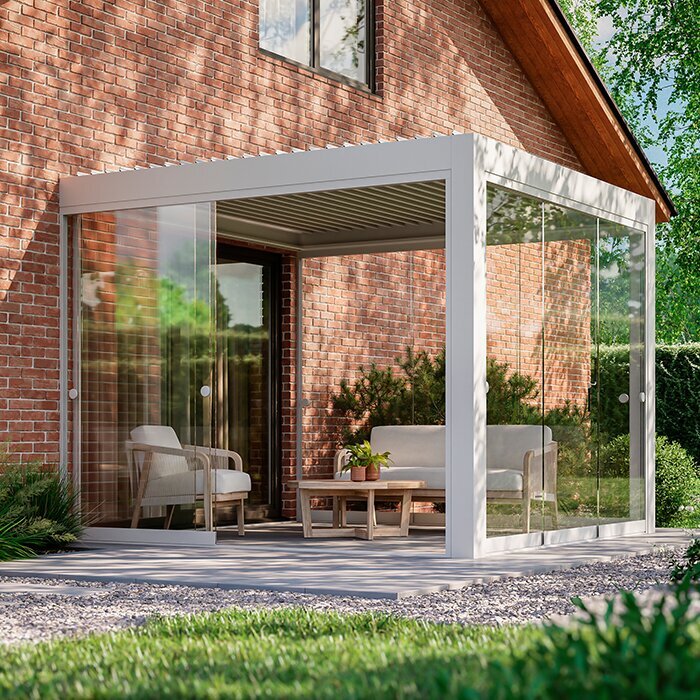
Compare retrofit and replacement options
Compare a retrofit with replacing the accessory system, not only with the price of an individual screen or lamp. Ask for a written scope that separates parts, professional labour, electrical work, access arrangements and making good any finishes disturbed by the work, so you can see what the proposal includes. Costs vary with the site and chosen kit, so request itemised quotations rather than relying on a catalogue allowance. If removal of an old accessory is needed, ask who will handle it and whether it is included. Also ask whether the work can be staged without creating incompatible controls or repeated access work.
Before accepting a proposal, check that it names your pergola's exact model and revision, approved components, screen sides, attachment points, cable route, control arrangement and handover records. Ask who supplies each component and who will confirm compatibility if an item is substituted. Put any questions about warranty or future service in writing rather than assuming an upgrade leaves existing terms unchanged. For work on a Bloomcabin Bioclimatic Pergola installation, make sure each quotation covers the same configuration and scope of work so that you can compare the proposals meaningfully.
Use a compatibility checklist before you buy
Give every check one of three statuses: confirmed in the relevant manual or in writing; assessed by the professional responsible for that work; or still unresolved. Record the exact model and revision, approved screen type and mounting positions, clearance for the complete travel, and structural approval for proposed attachments. For lighting, record the proposed fittings, cable route, compatible controls and the qualified person's assessment. Finally, confirm part numbers and whether replacements are supported and obtainable. For each answer, note its source—a document, person or message—and date. If one critical item remains unresolved, the answer is not yet a confirmed yes.
Proceed only when each relevant point has an answer that applies to the installed pergola, not just a similar model. If the manual cannot be found or a component is discontinued, ask for the exact drawing, compatibility confirmation or approved alternative that closes the gap. If the frame, electrical route or parts support cannot be verified, revise the proposal or stop rather than modifying the structure or wiring on a guess. A clear written answer that no approved retrofit exists is useful too: it lets you defer the change or plan a different solution. Keep the evidence with the pergola records so a future owner or technician can distinguish original equipment from later additions.
Frequently asked questions
Can I add a screen to any pergola later?
No. It depends on the exact frame, approved fixing points, opening and screen configuration, and whether the documentation supports that accessory for the installed model. Ask the manufacturer or an installer to confirm the revision. A screen that appears to fit the opening may still need different fixings or interfere with operation.
Should I install wiring now if I plan to add lights later?
Plan a possible route now, even if the lights will be added later, but do not install or alter wiring on a guess. Ask the pergola supplier and a qualified electrician to assess the equipment, route, access and controls for your installation. Keep any written plan with the product records.
Can I attach standard outdoor lights to a pergola beam?
Not without checking the fitting, fixing point and electrical arrangement. Appearance or an outdoor label alone does not establish that a light is suitable for the pergola or its location. Ask the manufacturer which attachment points, if any, are approved, and use a qualified electrician for the electrical assessment.
What should I send when requesting a compatibility check?
Send the order reference, exact model and revision if available, relevant manual pages or drawings, clear overall and close-up photos, proposed screen sides or light positions, and labels for existing controls or accessories. Explain any changes to the installation and ask what further measurements are needed. Do not remove covers to take photos.
What if the original accessory is discontinued?
Ask whether a documented successor or approved kit suits your pergola revision, and whether related rails, fixings and controls are supported. If not, request an approved alternative or a different plan. Do not substitute a similar-looking part without confirmation that it is compatible with the installed system.
Later upgrades are possible only when the structure, accessory layout, electrical route, controls and replacement support are confirmed for the installed pergola. Treat the model and revision as the starting point, then keep manuals, photographs, professional assessments and written component confirmations together. If a key point remains unknown, pausing the purchase is more useful than forcing an uncertain retrofit; it preserves a clear path to an approved screen or lighting plan, or to a deliberate alternative.
