
Why Wet Pergola Louvres May Drip as They Open
Pergola rainwater guide
A drip as wet pergola louvres open is often caused by rainwater that has not yet left the roof. Drops can cling to a blade edge or remain somewhere in the roof’s drainage route, then shift when the louvres change angle. That timing alone does not prove a leak. The likely route, expected drainage and approved way to move the roof depend on its exact design, so use the model-specific operating instructions and drainage diagram before deciding whether the behaviour is expected.

Before you buy 1
Why the louvres may drip as opening starts
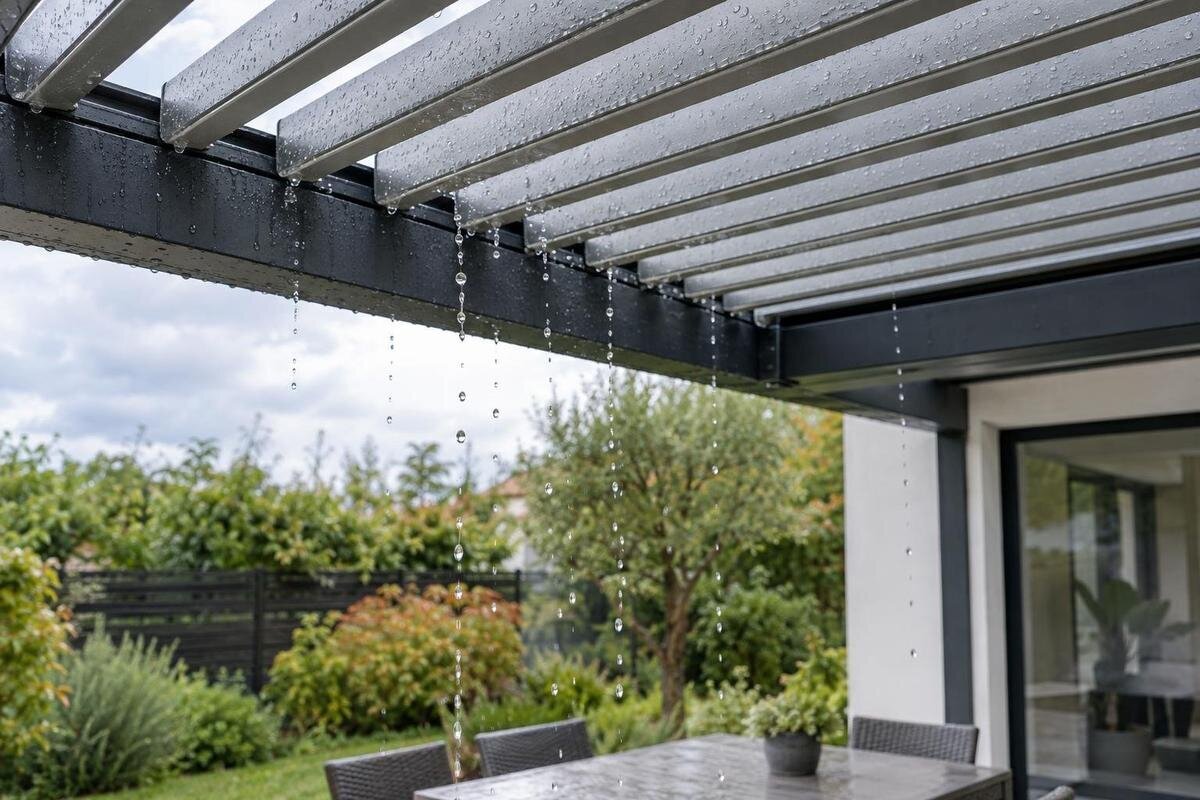
A louvred roof is made of surfaces whose angle changes. After a shower, a thin film can remain on the top or underside of a blade, along an edge, or near points where moving parts meet. It may be too slight to look like a puddle. Water clings to surfaces and gathers at edges, so a roof that seems to have stopped shedding rain may still hold some moisture. Wind during the shower can also leave some areas wetter than others. A surface that looks dry from below may still be wet above or around an end. Retention points depend on the blade profile and the rest of the roof, so one model’s behaviour cannot predict another’s.
When the blades begin to turn, gravity acts on a different slope. Water can run towards a newly lower edge, detach as a bead or travel towards a collection feature. The first drip may appear as opening starts even though the water arrived during the shower. A pause or change of angle can release another small amount later. When considering the Bloomcabin Bioclimatic Pergola, ask how its particular blade design handles retained water during movement. The useful distinction is between water draining while the roof is closed and water released when the blades change position; one does not necessarily show what to expect from the other.
Where rainwater may remain on a louvred roof
Possible retention points include exposed blade faces, edges, blade ends, overlapping areas and, if the design includes them, shallow recesses or channels. A thin film can remain without forming visible standing water, and a view from below may not show the wettest point on top. Some roofs direct water into side channels or outlets; others use a different route. A drop on the underside may have travelled around a blade edge rather than passed through a joint. The model-specific drainage diagram should identify the intended collection and discharge points. Use that drawing instead of judging by appearance alone.
With a wall-mounted arrangement, note whether a drip starts at a blade, a side channel or near the building connection. These points can look close together from below but represent different routes, so location matters. If you are considering the Bloomcabin Wall-Mounted Pergola, ask for a drawing that distinguishes the roof’s drainage route from its connection to the building. It should cover the exact supplied configuration, particularly if an enclosure or adjoining feature is planned. Do not assume a nearby wall is the source until the route is confirmed. A clear description of where the drops begin is more useful than calling the whole roof leaky.
Before you buy 2
How opening changes the water path
The place where a drop lands is not necessarily directly below the place where the water collected. As a blade turns, its lower edge moves, and water can travel along a surface before falling. A wet patch hidden above the closed roof may therefore produce a visible drip elsewhere during opening. This distinction matters when describing the problem: the landing point shows where something became wet, while the release point helps identify the part of the roof involved. Where possible, observe both from a safe position. A drop on furniture beneath a joint does not, by itself, establish that the water passed through that joint.
The timing provides a useful clue. Note whether drops appear as movement starts, partway through travel, at a pause, or only after the louvres reach the selected position. A release during movement is consistent with water changing direction as surfaces move; a steady stream or discharge from an unexpected joint calls for a closer check. Neither pattern alone proves a fault or confirms normal operation. Record what happens at each stage without changing the sequence or trying extra positions. The roof’s own operating guidance and drainage drawing are needed to interpret the observation, because movement ranges and discharge paths vary by design.
Follow the roof’s drainage route
Rainwater performance depends on the drainage route, not just the visible blade. Depending on the exact design, water may be guided to a gutter, channel, frame or outlet; another roof may discharge differently. Follow the model-specific diagram from the louvre surface to the intended exit, including any transition points. This helps distinguish a designated discharge point from a seam that merely looks like a channel, and shows whether water is meant to leave at an edge or follow a concealed route. When reviewing the Bloomcabin Pergola drainage arrangement with the supplier, ask them to identify those transitions on the drawing for the version and configuration you intend to buy.
If a drop appears outside the route shown, or water continues to escape from a joint, the issue may involve more than residual water on a blade. A blocked or restricted outlet, damaged component, or mismatch between the installed arrangement and its documentation could change where water goes; these are possibilities to have assessed, not diagnoses from a drip alone. Note the point of discharge and whether it changes with roof movement. Do not remove covers or alter a drain to test a theory. The drawing gives an installer a basis for checking whether blockage, damage or a configuration issue is plausible.

Before you buy 3
When delayed dripping needs attention
An isolated drop or brief release after rain can be consistent with water remaining on the louvres or in their collection path. There is no reliable universal waiting time or acceptable number of drops for every pergola: blade profiles, drainage layouts and operating instructions differ. Drying conditions also vary, so a fixed clock-based rule can mislead. Check the guidance for the exact roof, including any stated positions during rainfall and after it. Until you have that information, describe what you observe rather than calling it normal or faulty. A small drip is still worth recording if it recurs, particularly if it begins at the same stage of movement.
Patterns that deserve follow-up include a continuing flow, water emerging from an area not shown as an outlet, repeated wetting at a wall or frame joint, or a change after a component or enclosure was added. If the roof behaves differently from its instructions, ask the supplier or installer to check the actual configuration rather than applying an assumed fix. When drops appear with no recent rain or no roof movement, retained rainwater may not be the full explanation; keep that observation separate from an opening-related drip. Note whether the pattern occurs after every shower or only under particular conditions. A pattern helps frame the question but cannot confirm the cause on its own.
Follow the instructions for the exact roof
There is no universal rule to open a wet roof immediately, leave it closed or wait until every surface looks dry. The approved procedure depends on the product and its operating limits. Read the instructions for the exact louvre design: they may specify permitted positions during rain, how to operate the roof and any conditions in which it should remain still. If the paperwork is missing, ask the supplier or installer for the manual and drainage diagram before experimenting. A general explanation of louvred roofs cannot replace instructions for the installed model and configuration, particularly when weather conditions are changing.
Use the controls only as described, and do not force movement if the roof stops, binds or behaves unusually. A drip is not a reason to push a blade, remove a cover or improvise a test. Keep people and valuables out of the immediate drip path while observing the roof. For the Bioclimatic Pergola model, establish which instructions apply to the supplied controls and roof configuration. If the roof is motorised, check whether the manual adds any operating conditions. Where the instructions do not address opening after rain, ask the supplier to clarify the permitted procedure rather than trying different sequences to see which produces fewer drops.
Before you buy 4
Which details help diagnose the drip?
A short, structured record helps separate water released during movement from an ongoing drainage concern. Note when rain stopped, whether the roof was closed or partly open, when it moved and where the first drop appeared. Record whether it was isolated or continuous, whether it stopped after movement, and whether wind or further rain was present. A photo or short video taken from a safe position can show the sequence more clearly than a description alone. Include the date and exact model name so the report can be matched to the right documentation. Keep separate events clearly labelled rather than combining several showers into one account.
Describe what you saw before assigning a cause: for example, drops fell from a particular edge as the blades began to turn. If your roof is the model shown on the Bloomcabin Pergola product page, use that name when arranging support, together with the configuration details from your installation paperwork. A video cannot reveal a hidden channel or prove a fault, but it can help a professional compare timing and discharge location with the drawing. Use visible landmarks to distinguish one edge, frame section or outlet from another. This gives the installer a precise observation to assess rather than a general report that the roof leaks.
Safe checks you can make from the ground
From ground level, look for visible leaves or other debris around an accessible outlet, obvious damage, loose-looking parts, or marks showing where water has been running. Compare the drip point with the outlet and route in the manual. Debris nearby does not prove that a drain is blocked, and a clean-looking edge does not prove the hidden route is clear. Photograph what you see before moving anything, so the original condition is recorded. Carry out only the checks and cleaning that the manufacturer describes as user maintenance and that can be done safely; do not reach into concealed channels.
Do not climb onto the roof, remove a panel, insert a rod into a channel or force an outlet open to find the source. Hidden drainage parts and moving components are not a safe place for trial and error. If access is high, restricted or requires dismantling, leave the inspection to a qualified installer. Before choosing the wall-mounted pergola option, ask which inspection points will remain accessible in your proposed layout and which checks require professional access. Avoid pressure washing or poking at the route as a diagnostic step, since that may obscure where water first escaped.

Before you buy 5
Documents to ask for before choosing a pergola
Before purchase or handover, ask for the operating instructions, roof-specific drainage diagram, model-specific weather-performance documents and any controlled observations relevant to rain and louvre movement. The paperwork should match the exact model and proposed configuration, not merely a similar-looking roof. For a product such as Bloomcabin’s bioclimatic pergola, useful questions include whether the diagram covers the louvres’ operating positions, where normal discharge occurs, and whether residual water may be released when opening. Keep those questions together when comparing the information supplied. If the material only describes drainage with the roof closed, ask separately what to expect when opening it after rain.
Also ask for the weather limits relevant to the roof and any conditions for operation during or after rain. There is no universal storm, watertightness or snow guarantee that can be transferred from one design to another. Request maintenance guidance for the intended drainage route and advice on who should inspect hidden components. If side screens or glazing are part of the plan, ask which enclosure configuration is suitable and whether it changes the applicable drainage drawing or operating guidance. Keep the documents with the model and installation details so future observations can be compared with the right design.
Assessing an enclosed pergola configuration
An enclosure can change what you notice: a drop may land on a nearby panel, or a roof edge or outlet may be harder to see from below. That does not mean the enclosure caused the drip. Treat the roof and proposed side arrangement as one configuration to check, particularly where a wall, screen or glazing line meets the rainwater route. Ask for a drawing showing both the roof drainage and the enclosure, with intended outlets and maintenance access. The plan should make clear where roof water may fall and how the outlets remain accessible. Do not assume that adding panels will contain a roof drip or correct a drainage issue.
If you are considering a wall-mounted product, such as Bloomcabin’s wall-mounted pergola, ask the supplier to confirm the exact enclosure combination and provide instructions for that configuration. Keep the proposed roof, side panels and building connection together in that discussion rather than assessing each in isolation. If an enclosure is already installed, report whether the dripping began before or after it was added and whether the current arrangement matches the supplied plan. Include any change in where the water becomes visible, not just whether there seem to be more drops. That distinction helps an installer assess the actual setup without assuming that the enclosure caused the problem.
Frequently asked questions
Does a drip as the louvres open prove there is a leak?
No. Rainwater may remain on a blade or within the roof’s drainage route and be released as the angle changes. Note where it starts, whether it coincides with movement and whether that point matches the drainage diagram. A persistent flow or water from an unexpected place needs a model-specific assessment.
Should I open wet louvres straight after rain?
Follow the instructions for the exact pergola. There is no universal rule to open immediately, leave the louvres closed or wait until every surface looks dry. If the manual does not address the situation, ask the supplier or installer instead of copying a sequence used for another roof.
How long should I wait before opening the roof?
There is no reliable waiting time that applies to every design and set of conditions. Check the operating guidance for the specific roof and note whether it describes what to expect after rain. Avoid treating a fixed interval as proof that the roof should be dry.
Can I use a hose to find the source of the drip?
Do not create a water test unless the manufacturer’s instructions or a qualified installer specifies an approved procedure. An improvised test may not match the way rain reaches the roof and can make the source harder to identify. Record what happens during ordinary, approved operation instead.
What should I tell the installer?
Give the exact model and configuration, when the rain stopped, the louvre position and when the dripping began. Describe the point where water first appeared, whether it was isolated or continuous, and whether it stopped after movement. A short video taken from a safe position can help show the sequence.
The useful clue is the sequence: rain, roof position, movement, drip point and duration. Opening can release water retained on a blade or within a designed collection path, but timing alone cannot establish whether the roof is draining as intended. Compare what you observe with the instructions and diagram for the exact pergola. If the water’s route or persistence does not fit that guidance, a record of the location and timing gives the supplier or installer a concrete issue to assess without relying on a guess about how every louvred roof behaves.
