
What Flooring Works Under a Pergola? Porcelain, Timber or Stone
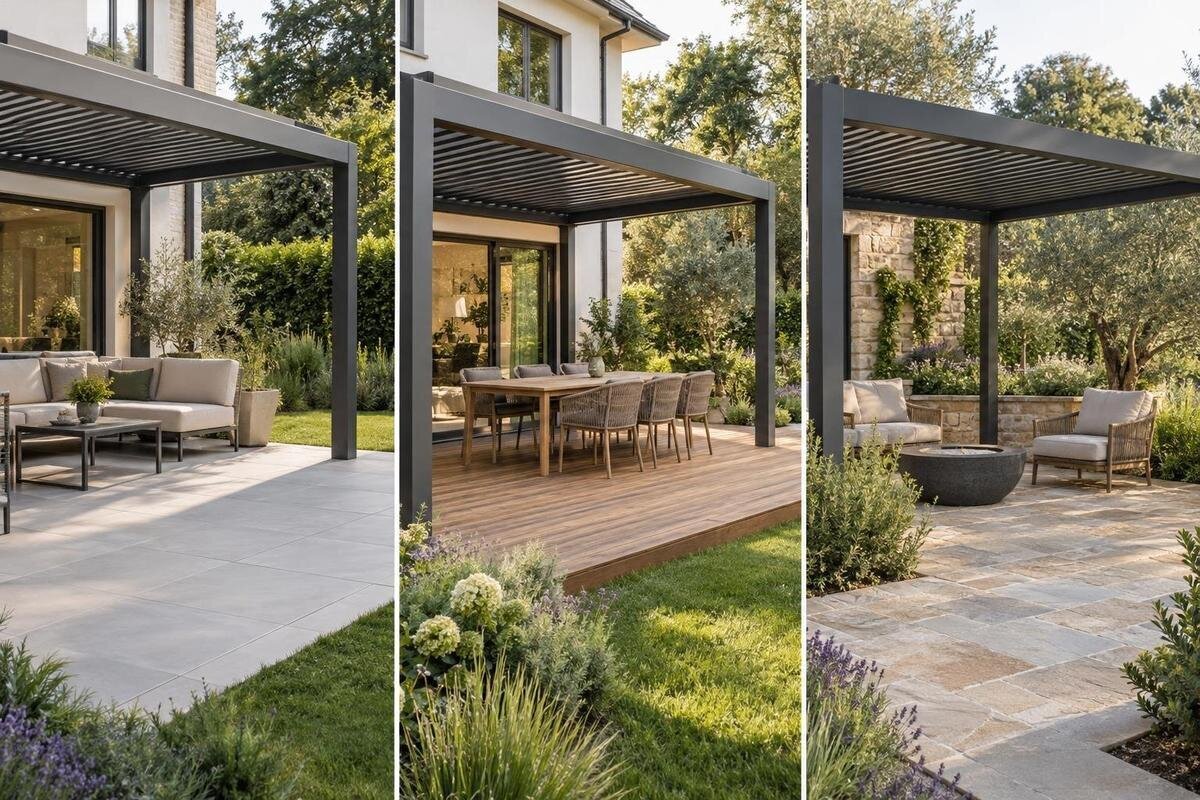
Pergola flooring guide
A pergola creates a defined outdoor room, but its roof does not make the floor automatically cool, dry or maintenance-free. The finished surface needs to suit how you use the space, how much sun and rain reach it, and the care you are willing to give it. Porcelain paving, timber decking and natural stone can all form part of a coherent garden design; the differences lie in surface feel, heat, cleaning, weathering and the way edges meet the house or garden. Compare samples at the site rather than choosing by colour alone.

Decide how the pergola area will be used
Before comparing materials, decide what the pergola area must do. A dining space brings chair movement and food spills; a lounge area puts more emphasis on comfort and where people may walk barefoot; a route through the garden needs a clear, easy-to-follow line. If the same floor serves all three, assess the busiest route as well as the furniture zone. Note how often the space will be used and whether shoes, garden soil, pets or wet feet are part of normal life. These details turn preferences such as a natural look or low maintenance into practical tests you can apply to samples and product information.
Draw a dimensioned plan showing the house edge, intended pergola position, doors, existing paving, steps and furniture. Mark the area you want to finish instead of assuming it equals the area listed for the pergola. The Bloomcabin Wall-Mounted Pergola is listed in a range from 9 to 24 m², but the finished walking surface may extend beyond the pergola. Use the dimensions of your chosen model to position it on the drawing. A plan helps you see where boards, tile joints or stone edges will meet walls, posts and doorways before you settle on a surface.
Porcelain paving: check the exact outdoor finish
Outdoor porcelain paving appeals to people who want a defined finish and straightforward routine cleaning. Dust and many everyday spills can usually be removed with suitable cleaning, but that does not make every porcelain tile maintenance-free. The product must be intended for an exterior floor; indoor tiles are not a substitute for outdoor paving. Compare the exact colour, surface and edge, because products under the same broad material name can differ in texture and appearance. Ask for information on outdoor use, recommended cleaning and wet grip for the proposed finish. In a dining area, consider how crumbs and marks will be dealt with around the joints as well as on the tile face.
A textured surface may feel different underfoot and can be harder to wipe than a smoother one; appearance alone does not establish how either performs when wet. Larger units create fewer visible joints, while smaller formats make a more pronounced pattern. The layout also affects cuts at boundaries, the relationship with furniture and the meeting point with existing paving. Ask the installer how joints, perimeter edges and repairs will be handled. Look at a sample in the actual light where it will be used: a screen image or small showroom swatch may not show the full effect of colour, texture and grout together.
Timber decking: consider board direction and upkeep
Timber decking can bring a natural grain and strong lines to a pergola area. Board direction can lead the eye from a doorway towards the seating space, continue an existing deck or make the shape of the area more apparent. The look varies with the timber, board width, surface finish and weathering, so there is no single timber colour or texture to choose. Ask to see a sample of the proposed decking rather than relying on a photograph, and consider several boards together. That gives a better sense of how variation will read across the floor and whether the chosen finish sits comfortably beside the house and garden.
Decking has joints between boards, so think about how leaves, soil, pet hair and dropped food will be cleared. Check that chair legs sit comfortably on the planned surface and consider whether the board lines suit the main walking route. Timber changes with exposure; colour may weather, and the product and finish affect the care required. Ask the supplier for product-specific cleaning and treatment guidance. The Bloomcabin Pergola is listed in a range from 9 to 24 m². Use the chosen model’s dimensions to check how the board layout will meet the posts and the edges of the seating area before estimating the finished deck area.
Natural stone: allow for variation and product-specific care
Natural stone brings variation that a manufactured surface may not reproduce. Colour, veining, grain and texture depend on the stone and finish, and pieces can differ within a batch. That variation can connect the pergola area to a garden of natural materials, but it can also make the completed floor look busier than one sample suggests. Ask to see several pieces together, including the range expected for the order, and view them in the light where they will be used. A small sample is not a reliable preview of the whole floor, particularly when the area is large or the stone has pronounced variation.
Stone is a family of materials, not one performance category. Surface texture, stain response and cleaning needs vary by stone and finish, so ask for outdoor-use and maintenance guidance for the exact product. Do not assume that every stone needs sealing or that a sealer makes it impervious; any treatment should be compatible with the selected surface and used as advised. Ask how the stone looks when wet, what cleaning products are appropriate and what information is available about wet grip. Because natural variation can make a later replacement look different, keep a record of the stone name, finish and supplier.

Consider how sun and shade affect surface heat
A pergola can shade part of the floor, but it does not guarantee that the whole area stays out of direct sun. Shade moves during the day and may cover the centre while leaving an edge exposed. The house, nearby trees and other structures also change how much sun reaches the surface. Think about the hours when you expect to use the space, not only how it looks in one photograph. This is particularly relevant if people will often walk barefoot or if furniture will sit in both shaded and sunny parts of the same area.
Colour and surface finish influence how a floor feels in the sun, but colour alone cannot predict comfort. Darker surfaces may become hotter in direct sunlight; texture, exposure and the length of time in sun also matter. Place samples where they will be used and compare them under conditions similar to those in which you normally use the space. When considering the Bloomcabin Bioclimatic Pergola, listed in a range from 9 to 24 m², use the selected model’s documented dimensions alongside the site layout to assess exposure. The listed area alone does not show where shade will fall across your floor.
Check wet-weather grip and water flow
Grip is a question about the exact surface and the conditions in which it will be used, not just the material name. Rain, soil, plant debris and surface wear can affect footing; a shaded area may also stay damp longer than an exposed one. Ask for wet-performance information for the specific tile, stone or decking finish, and check what conditions that information covers. Broad descriptions such as grippy or non-slip do not tell you everything about a product. Consider how people approach the pergola when the floor is damp, rather than judging only a dry sample indoors.
Trace where rainwater currently flows and where it should leave the finished area. A paving sample will not resolve standing water or splashing at a doorway; the surface, joints and any drainage need to be considered together for the site. Keep the regular pergola model you are considering on the same drawing as the proposed flooring, but do not infer water flow from the product name. Ask the installer to explain how runoff will be managed at walls, thresholds and existing paving. This is a site-specific surface detail, separate from decisions about the structure beneath it.
Plan the edges and transitions
The boundary of the floor deserves as much attention as its centre. Mark every point where the surface meets a wall, door threshold, existing paving, lawn, gravel or planting. Abrupt changes in level can interrupt access, while gaps at an edge may collect soil and leaves. Check the door swing and the space needed to pull chairs back, then decide where people will walk on and off the surface. Where the house wall forms one side, the wall-mounted Bloomcabin model is a relevant structure type to show on the plan; the paving-to-wall detail still needs to suit the actual dimensions and site.
Board ends, paver cuts and stone boundaries each create a different practical and visual edge. A narrow strip of leftover cuts can look fussy, while a planned border or change of surface may make the boundary more deliberate if it suits the garden. Discuss how the chosen edge will be finished and maintained rather than assuming one detail works for every site. If someone using the area has particular access needs, consider the actual route and transitions and seek appropriate design advice. A sample in the middle of a floor cannot show how the whole surface will meet a doorway or garden path.
Compare the maintenance each surface involves
Porcelain commonly needs sweeping and washing rather than routine coating, although textured faces and joints can still collect dirt. Timber tends to need more planned attention, with care depending on the specific product and finish. Natural stone varies, so use cleaning guidance for the exact stone and follow the supplier’s advice about any treatment. Ask how to deal with the marks you expect in your space, such as leaves, food or soil, instead of relying on a general claim that a material is easy-care. Written product instructions make comparisons more useful than a simple label.
Estimate maintenance from the actual finished area and its surroundings. A floor extending beyond the pergola may collect more leaves or receive more sun, while furniture can make some edges harder to reach. For a space planned around Bloomcabin’s regular pergola, include the whole floor in your upkeep estimate, not just the area beneath the frame. Consider whether you can reach around tables, planters and walls for routine cleaning, and what may need moving for more thorough care. If you want to avoid coatings or scheduled treatments, make that a selection criterion before choosing a timber or stone product.

Match colour, format and texture to the setting
Consider how the floor will sit beside the house, pergola and garden, rather than choosing its colour in isolation. If the walls or paving nearby have strong patterns, a more restrained surface may keep the area visually calm. Where the surrounding finishes are simple, variation in stone or a more defined tile pattern may add interest. These are design choices, not fixed rules. Take samples to the site and compare them with the house and nearby materials in daylight. Catalogue images and small samples can be misleading about colour or the amount of variation across a full area.
Format and joint pattern also influence the finished look. Larger pavers can create a quieter visual field, while smaller formats make the grid more noticeable and add more joints to clean. With decking, the direction of the boards is a prominent line; with stone, variation between pieces may be the main feature. If a bioclimatic model is on your shortlist, identify it on the layout plan and compare flooring samples beside the finish you have actually selected. Do not rely on the model name or an image to decide how the floor will look in your garden.
Test samples in the planned pergola area
Shortlist a surface from each material and compare samples where the pergola will stand. Look at them in the shade and sun that the area normally receives, and see how colour and texture sit beside the house and garden. For timber, compare several boards; for stone, view more than one piece; for porcelain, consider the face and joint colour together. Think through ordinary use as you assess them: walking across the area, moving chairs and cleaning up a spill. Use supplier information for questions such as outdoor suitability and wet grip rather than trying to judge those qualities from appearance alone.
Make a dimensioned drawing that shows the chosen surface boundary, the main route, furniture, doors and transitions. If the wall-mounted option is on your shortlist, include its confirmed dimensions and the house-side threshold on the same plan; do not assume the listed pergola area equals the walkable floor area. Record product-specific cleaning advice, wet-performance information and the details that need professional review, such as the surface meeting a doorway or managing runoff. Comparing these points together makes it easier to see which material suits the way you will actually use and maintain the pergola area.
Frequently asked questions
Which pergola flooring is easiest to maintain?
Outdoor porcelain is often straightforward to clean, but its texture and grout joints still collect dirt. Timber generally needs more planned care, while natural stone varies by type and finish. Compare the maintenance instructions for the exact products.
Will a pergola keep the floor cool in summer?
Not necessarily. Shade changes with the pergola’s position, the time of day and surrounding trees or buildings. The surface finish and colour also affect how it feels in direct sun, so assess samples where the floor will be.
Is natural stone too slippery for a pergola area?
There is no single answer for all stone. Grip depends on the particular stone, finish and conditions. Ask for wet-performance information for the exact product and consider how rainwater and damp shade affect the site.
Can timber decking work under a pergola?
Yes, if the selected decking is intended for outdoor use and its care requirements suit you. Check the supplier’s guidance for the exact timber and finish, and plan for board joints, weathering and cleaning.
Can the flooring extend beyond the pergola?
Yes. The finished surface can follow the wider patio or garden layout, but it may then receive more sun and rain than the covered area. Plan its full boundary, transitions and water flow rather than estimating care from the pergola area alone.
Porcelain, timber and natural stone each bring a different balance of appearance, comfort and upkeep to a pergola area. Porcelain may suit you if straightforward cleaning and a consistent finish matter most; timber if you value natural grain and accept product-specific care; stone if variation is part of the appeal and its maintenance suits your routine. The choice depends on the exact finish, exposure and site details, not just the material name. A floor that works underfoot and is practical to care for will make the pergola area more useful day to day.
