
Pergola Insect Protection: What Screens and Curtains Can Do
Pergola buying guide
Mesh screens and curtains can make pergola seating less exposed to insects, but only where a barrier actually covers an opening. Roof edges, frame joins, the ground line and a doorway left open may still provide routes in. The practical question is not whether the structure is insect-proof; it is which gaps a proposed screen closes, what it leaves open and how people will use the space.
What insect screens can and cannot do
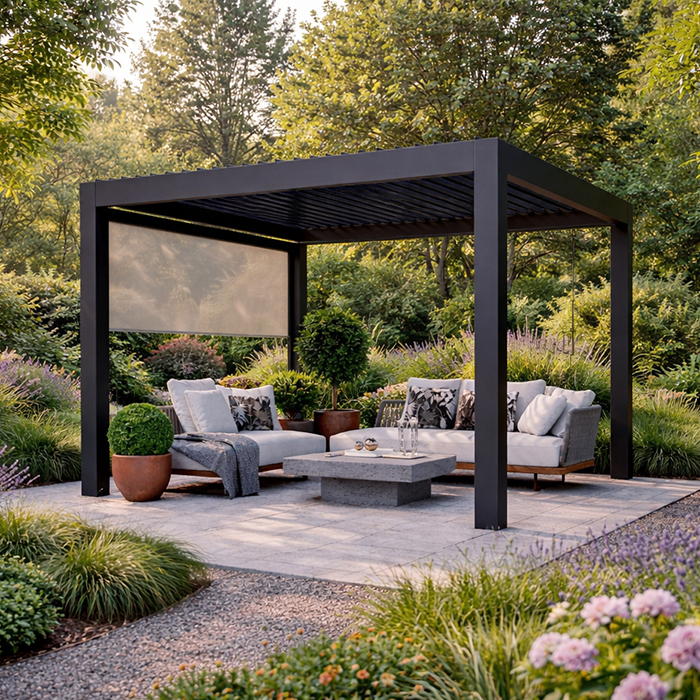
An insect screen works across a particular opening, not across an entire outdoor area. Mesh with openings suited to the insects you are trying to exclude can interrupt direct entry through a covered side while retaining more visibility and air movement than an opaque panel. How much that helps depends on the weave, the condition of the material and how continuously it meets the surrounding frame. A loose panel, a wide weave or mesh that stops short of a post may leave routes for insects to enter. Define your aim first: reducing interruptions near a dining table is a more modest goal than expecting the whole pergola to behave like a closed room.
Roof, sides and access points need to be considered together. An insect can go around a panel, through an open doorway or under an unfinished edge; the route depends on the insect and the layout. A large uncovered side can outweigh a broad run of mesh, and a panel tied back offers no barrier at that opening. When reading the Bloomcabin Pergola listing, keep the structure and proposed side protection as separate questions: the model name does not establish that screens or curtains are included. For most buyers, a more comfortable seating area is a realistic aim; complete exclusion is not. Plan around the hours you use the pergola, because a screen left open at those times cannot help with that entry route.
Map every opening around the pergola
Before choosing mesh, trace every route from outside to the seat you want to protect. Mark open sides between posts, corners, the wall junction, the upper edge beneath the roof and the line where a panel would meet paving or decking. Add the dining or lounge position and the normal approach to it, then note when you use the space. This plan is not meant to predict every insect's flight. It shows which openings remain between the outside and the people sitting there, and whether a screen could cover the route you care about without blocking the way in.
Separate gaps that are always present from those created through use. A gap at a post or along the top edge remains whenever a screen is closed; a doorway becomes an opening whenever someone walks through or leaves it open. Mark both on the drawing, along with any drain or uneven surface that interrupts the bottom edge. If you are considering a Bloomcabin Wall-Mounted Pergola, include the wall-to-frame junction and ask how an approved side closure would finish there. A simple side view can show whether mesh reaches the top and ground and whether neighbouring panels meet at the corners. Without this map, it is easy to choose a wide screen while missing the narrow route beside it.
Mesh and curtains serve different purposes
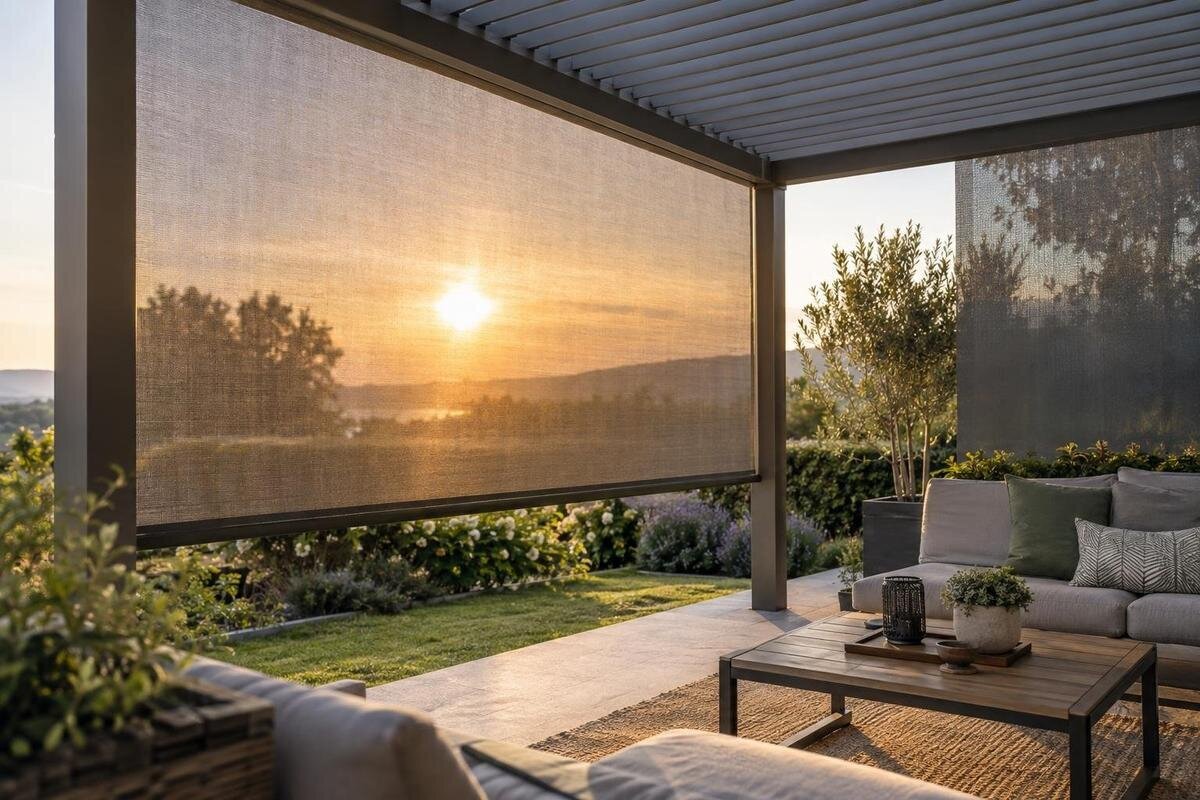
Insect mesh is the more direct option when the goal is to screen an opening while keeping some view and breeze. Its effect depends on the weave, not just the word mesh on a label: smaller openings may change airflow and visibility, and a mesh suited to one insect may not suit another. Ask what the fabric is intended to exclude and inspect an actual sample if possible. Compare the weave from the seat, not only at arm's length, because the view and feel of a panel can change with distance and with the background behind it. Check the edge arrangement as carefully as the fabric.
An ordinary decorative curtain is not automatically insect screening. An open weave, generous gaps between panels or a curtain left tied back can let insects through, even if the fabric looks substantial. A purpose-made mesh curtain can act as a screen only when its fabric and closing edges are appropriate to the task. Opaque or dense curtain fabric may be chosen for shade or privacy, but it can also reduce the breeze and view. Decide which job matters most, then check whether the panel closes the opening while you are using the space and where it sits when opened. The terms curtain and screen are not interchangeable.
Which pergola sides need screening?
A side screen can address only approaches through the area it covers. If insects are most often noticed near an open garden boundary, screening a different side because it is easier to fit may make little practical difference. Observe the space during the hours you sit there and note which opening is nearest the seats, the doorway and any likely route from outside. Do not treat one wall of mesh as an enclosure: insects may still come through uncovered corners, the opposite side or above a panel. Sometimes one screened side helps with a particular nuisance; sometimes several openings need a planned response.
Plan each side alongside the seating and walking routes. A screen placed where chairs, a table, a door or another obstruction prevents it from closing may leave a permanent opening or become inconvenient to use. For the Bloomcabin Pergola model, ask the supplier to mark which sides a proposed compatible screen would cover and how adjacent corners meet; a general product photograph cannot answer that. Keep an entrance usable, but remember that any side left open remains part of the insect route. The aim is a layout that people will actually close when it matters, rather than the maximum number of panels on a drawing.
Plan the entrance alongside the screens
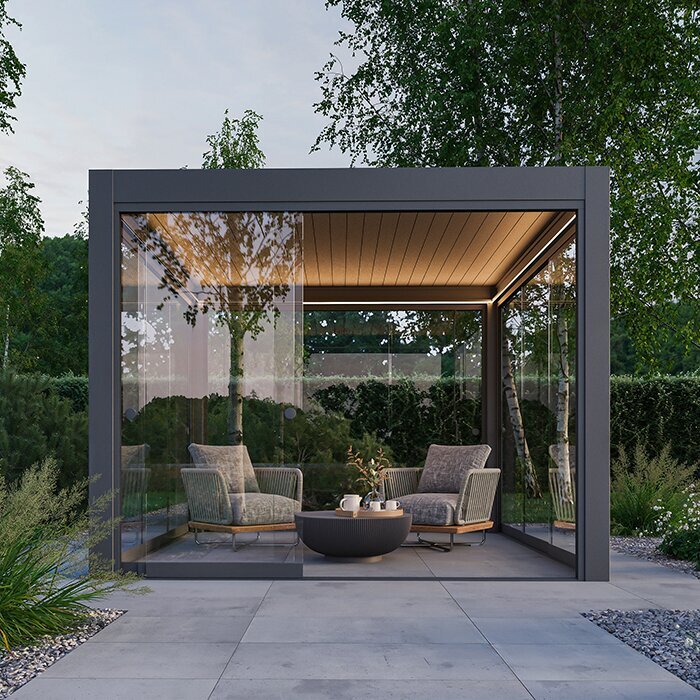
A screened seating area needs a usable entrance, and that access point is often the least consistently closed part of an enclosure. A gap made by drawing two panels apart remains an entry route while it is open; an overlapping or fitted closure may reduce that gap only if its edges meet as intended. Do not assume that a curtain will fall back into place or that a screen is self-closing. Ask how people pass through it, what happens at the side edges and whether it is intended to be opened by hand, moved aside or held open.
Think through an ordinary visit: people carrying food, moving chairs or going in and out may need the entrance open for longer than expected. A narrow or awkward route can make a screen less likely to be closed, even if it looks effective in a drawing. With the Bloomcabin Bioclimatic Pergola, consider the entrance in relation to the exact furniture layout and the route between the house and the seating area. Check whether someone carrying a tray could pass through and close the screen without moving a chair or putting the tray down. This helps you judge whether the proposed entrance will be practical during a meal, rather than only when the pergola is empty.
Check roofline, corners and ground gaps
A mesh panel is only as continuous as its perimeter. Check where its top edge meets the pergola, where its vertical sides meet posts or a wall, and whether corner joints leave a slit. Roof cover and side screening are separate parts of the plan: a roof that provides shade does not by itself close the gap above a side screen. Different designs connect in different ways, so ask to see the actual edge detail rather than assuming fabric runs tightly to every beam. The aim is to identify the openings that remain and understand whether they matter for the insects the proposed screen is intended to exclude.
At the bottom, look for spaces between a screen and paving or decking, especially where the surface changes level. Check that the proposed arrangement does not obstruct a drain or make the entrance difficult to use. For the Bloomcabin wall-mounted model, ask the supplier to show how an approved side screen would meet the wall and surrounding structure; do not assume that a tidy-looking join in a product image represents a continuous barrier. If attachment or alteration is involved, use the manufacturer's guidance and ask a qualified installer about the fixing requirements. A screen that cannot meet an uneven edge may still reduce entry, but the remaining gap should be part of your decision.
Balance insect screening with airflow
Closing a side changes how air moves through the seating area. The effect depends on the screen fabric, wind direction and which other openings remain available. A dense curtain can interrupt a breeze more than a more open mesh, while covering opposing sides may reduce through-flow. This is a trade-off rather than a guaranteed outcome, so compare the fabric and layout that would actually be installed. If the pergola is pleasant mainly because it feels open, plan where air can still enter and leave before deciding how many sides to screen.
A panel that can be moved aside may offer flexibility, but its open position also leaves an entry route. Decide when you would close it, where it goes when open and whether that position interferes with furniture or access. If you can inspect a sample or demonstration, look at it from the seat and notice whether the remaining breeze and view suit the way you use the space. Avoid assuming that adding mesh will leave airflow unchanged, or that a screen left open will provide the same insect reduction as one covering the side.
How screening affects privacy and daylight
Mesh selected for insects is not necessarily a privacy screen. What can be seen through it depends on the weave, the light on either side and the background, so a panel that looks private in a catalogue image may appear different in your garden. Check the view from the seat and from outside, at the times you expect to use the pergola. If privacy is important, decide whether a denser curtain is needed as well, and consider the resulting change to airflow and the view. Treat insect exclusion, privacy and shade as separate requirements rather than expecting one fabric to provide all three.
Also look at how the screen affects the amount of daylight reaching the seating area and how it appears when partly open. A sample shown in isolation may not give the same impression as one against your own surroundings. If you are considering side fabric with Bloomcabin's pergola model, ask to see the proposed material in its intended position and check which areas it covers. Compare the outlook through the fabric with the view beside it, rather than judging its appearance from a close-up alone. This helps you decide whether the visual change is acceptable for the seating area you want to protect.

Confirm accessory compatibility before ordering
Before buying side protection, confirm that it is intended for the exact pergola model and configuration. Ask what is compatible, where the screen attaches, which edges it covers and how it operates. Request a drawing or written description that identifies the top, sides, corners, ground line and entrance. Also establish which items are part of the quoted configuration and which are separate accessories. A model name or photograph is not evidence that a particular screen fits, closes continuously or is supplied with the structure.
A third-party curtain or mesh may look as though it could be attached, but appearance alone does not establish a suitable fit or attachment method. Avoid making changes to the structure without guidance from its supplier. If fixing requirements are unclear, ask the manufacturer or a qualified installer rather than assuming that any convenient point can support an added panel. For a Wall-Mounted Pergola option, make the enquiry about the exact model and proposed side arrangement, including its junction with the wall. Clear compatibility information matters more than a broad claim that a screen is suitable for pergolas generally.
Compare coverage and everyday use
Compare proposals against the same aim: fewer insects reaching a particular seating area, a screen across one entry route or a more enclosed space for regular use. Use your marked-up layout to distinguish differences in coverage from differences in fabric. Two proposals may both describe side screening yet leave different openings around the seats or entrance. If you are comparing configurations such as the bioclimatic pergola model, assess the proposed side protection separately from the structure. A useful comparison explains what each option would cover in your layout, rather than relying on a general description of the pergola.
Then compare how each arrangement would work during a normal meal or evening outdoors. Consider which panels you would keep closed, how often people would use the entrance and where open panels would sit. Include the proposed operating, maintenance and storage arrangements in that comparison, not just the appearance of the closed screens. An option with more coverage on paper may offer less practical benefit if it is awkward enough to be left open. Weigh the remaining gaps against ease of use, airflow and the view, and choose according to the level of nuisance reduction you would find worthwhile.
Frequently asked questions
Will a screened pergola be insect-proof?
No. A screen can reduce entry through the openings it covers, but insects may still get in through open sides, unfinished edges or a doorway. Treat it as a way to reduce nuisance around a seating area, not as a sealed enclosure.
Is mesh better than a curtain?
Choose according to the job. Mesh is intended to screen an opening while retaining some view and airflow. A decorative curtain may offer shade or privacy but does not automatically exclude insects. For either option, check the fabric and how its edges close.
Is screening one side enough?
It may help if that side is the main route into the seating area. It will not close the other sides, a roofline gap or an open entrance. Observe how you use the pergola and identify the openings that matter before choosing how many sides to cover.
Can I add a third-party curtain to any pergola?
Do not assume that a curtain marketed for outdoor use will fit or be suitable for a particular pergola. Check compatibility with the exact model and layout, how it attaches, and whether its edges can close as intended. Ask a qualified installer about fixing requirements where relevant.
What should I ask the supplier to show me?
Request a drawing of the proposed screen in its closed and open positions. It should show the top, sides, corners, ground edge and entrance, as well as any uncovered gaps. Ask which parts are included and which are separate accessories.
Screens are most useful when their limits are clear. Map the openings, choose mesh or curtain material for the job you expect it to do, and consider the entrance and airflow alongside the covered sides. A realistic plan can reduce insect nuisance around pergola seating without promising a sealed outdoor room.
