
Planning Pergola Installation Around a Trading Business
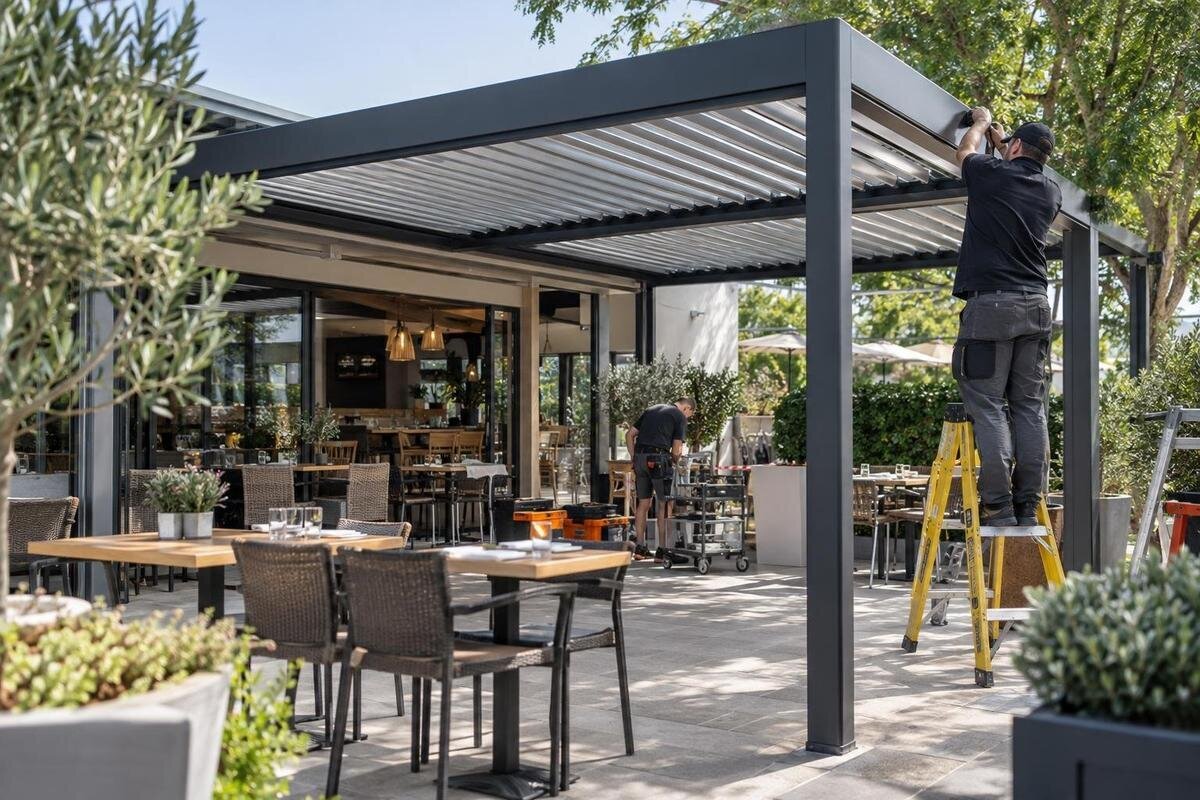
Pergola installation planning
Installing a pergola while a business is trading is an operations project as much as a building project. Customers, staff, suppliers and contractors may all need the same entrance, route or outdoor area while ordinary service commitments continue. Before dates are fixed, agree the work boundary, delivery route, temporary customer and staff routes, and any service interruptions. Put them into a written contractor programme with named people responsible for updates and decisions. It should show what can continue, where disruption is expected and what would trigger a pause or temporary closure.

Agree what must keep operating
Before asking for dates, prepare a short operating brief with the business manager and the people who supervise the affected area. State which functions must continue, such as the main entrance, reception, a customer waiting area, staff access, stock deliveries or an outdoor service point, and which spaces can be taken out of use. Record trading patterns by day and time, including delivery windows, shift changes, booked events, cleaning and regular maintenance. Note seasonal or weekly variations and one-off commitments already on the calendar. This helps the contractor distinguish a genuine no-work period from a preference, instead of treating every weekday as interchangeable.
Set an acceptable level of disruption for each activity, then nominate the person who can approve a route change, noise window or temporary closure. Make clear whether the business can operate with one section unavailable or whether certain tasks require the whole zone to be empty. Record the minimum access and services that must remain available, and who can authorise an exception if a day becomes busier than expected. If the enquiry includes a wall-mounted option, identify it with the Bloomcabin Wall-Mounted Pergola product reference, but keep product selection separate from confirmation of the building interface, actual layout and site suitability. Put unresolved assumptions on the brief, not into contractor instructions.
Map the site during a normal trading day
Give the contractor a current floor plan and mark how people and goods move on a normal day, not just the proposed pergola footprint. Include doors, fixed seating or counters, service points, loading areas, bins, customer waiting space and temporary layouts used for events. Show which features are fixed and which can be moved, so the work plan does not depend on clearing something the business needs. Add known changes in levels or surfaces if relevant, but do not use an informal sketch in place of a proper site survey. Walk the area with the contractor at both a busy and a quieter time to identify queues and the routes staff actually use.
Check the drawing on site and date it; a plan that omits a recently added counter, delivery gate or relocated table can undermine the sequence. Mark the proposed boundary, staging area and temporary routes clearly, and name the person who verified each item. If the enquiry includes the Bloomcabin Pergola, identify it alongside the current site plan so the contractor knows which product is being considered. Ask the contractor to flag any conflict with doors, windows, signs, lighting, drainage or existing services for the appropriate person to review. Note any measurements or site details that still need checking before dates are fixed.
Separate customer, staff and contractor routes
Draw separate routes for customers, staff, deliveries and the installation crew. Mark the path from the public entrance to the service point and the staff route to working areas; include queueing and waiting space, not just a line between doors. Show any alternative entrance or service arrangement being considered, and include delivery movements at the times they normally occur. If customers rely on an accessible route, keep it in the operating plan and ask a competent access reviewer to check any temporary diversion against the actual site and applicable requirements. The business should decide whether a route remains usable at each stage rather than assuming that a sign will make an unfamiliar detour workable.
Check where the contractor’s carrying route crosses public routes, particularly at opening, closing and delivery times. If the routes cannot be kept separate, specify who controls the crossing, when it can happen and whether customers must be redirected or an area closed. Keep emergency access and escape routes visible on the drawing and have the responsible fire or site professional review the arrangement; do not route people through active work just to preserve the original entrance. Consider each programme phase: a route that works during assembly may be obstructed by unloading or clean-up. Include these temporary arrangements in a project enquiry for the Bloomcabin Bioclimatic Pergola, using the actual floor plan to show where people will move during each phase.
Set clear boundaries around the work area
Agree the work zone with the contractor before the first delivery. It may need more space than the finished pergola area: materials, tools, waste handling, assembly and access for the installation team can all affect nearby operations. Ask the contractor to mark each area and state what activity will take place there, when it is expected and which parts remain off limits. Include the route between unloading and the work area. If work at height, lifting or excavation is planned, ask the contractor to identify the affected space and the controls their site team will use. Staff should not have to infer the boundary from equipment or activity on the day.
Agree how the boundary will be kept clear and who checks it at opening and during the shift. Barriers, signs or a temporary partition must suit the work and be selected by the responsible site team; a tape line or verbal warning is not a substitute for a proper separation plan. Discuss noise, dust, glare, debris or restricted views if these could affect customers or service, and ask which activities are likely to cause them. Set expectations for end-of-day housekeeping and whether any equipment or materials may remain on site overnight. If you are considering the bioclimatic pergola option, use the contractor’s confirmed installation scope to define the work zone.

Turn the installation into a dated programme
Ask the contractor for a dated programme showing the order of work, start and finish windows, access needs and tasks that depend on earlier work. It might cover site preparation, delivery, setting out, assembly, finishing and inspection, but the contractor should confirm the sequence for the chosen design and site. Show noisy or space-intensive tasks separately, and identify when a route, entrance or section of the outdoor area will be unavailable. Include decision points where the business confirms an area is ready or the contractor confirms a prerequisite is complete. If the wall-mounted pergola product page is among the options, make dates conditional on the project-specific attachment and access arrangements being agreed.
Use the business’s actual trading calendar when choosing dates: include busy service periods, events, stock deliveries, staff rosters and days when a temporary change would be especially difficult. Ask which dates are firm and which depend on delivery, site readiness, weather or a review that is still outstanding. Record those dependencies rather than presenting an early estimate as a confirmed completion date. Build in points for reviewing the next phase and name the person who can accept a programme change. If work overruns, state whether the crew will stop, continue in an agreed zone or return on another date, subject to the site lead’s approval.
Coordinate delivery and unloading
Treat delivery as part of the installation plan, not a detail to resolve at the last minute. Confirm the delivery address, gate and access route, arrival window, receiving contact, unloading location and route from there to the work zone. Check available space against the delivery and unloading information supplied for the actual order; do not assume a vehicle can use customer parking or a service lane just because it is usually open. If the site has fixed collection times or other suppliers arriving, coordinate those bookings with the contractor and delivery company. Note any access arrangements that need to be made before the delivery date.
Agree in writing who arranges and supervises unloading, what equipment or assistance is expected, whether materials can be stored on site and how they will be kept clear of business traffic. Confirm whether delivery can be staged or must arrive in one visit; the supplier and contractor should resolve this for the order. For an enquiry referring to the regular pergola product page, ask for the actual delivery details and installation scope before reserving space. Set a fallback for a delayed or blocked delivery: who to contact, how a new slot will be agreed and where the business can continue operating while the delivery is rearranged.
Identify service interruptions before booking them
List possible service interfaces before fixing the programme. Power, lighting, water, drainage, communications or security systems may be nearby, but not every site or design will involve them. Ask the contractor to identify which, if any, could be affected, what work might cause an interruption and who is qualified to assess it. The business should not infer that a service will remain untouched from a product name or general drawing. Record the service owner, the review still needed and the person authorised to approve a shutdown. If the contractor cannot yet confirm an impact, show it as an open question in the programme.
Where an interruption is required, record the proposed date and duration, the business activity affected, notice arrangements, the person coordinating the work and what confirmation is needed before normal use resumes. Those details should come from the relevant contractor or service professional, not a guess made to fit a quiet trading period. Avoid planning overlapping outages that could remove several operating functions at once. Make the process for stopping work and reporting a problem clear if an unexpected service conflict appears; only the responsible qualified person should decide how it is resolved. For an enquiry based on the Bloomcabin pergola model page, keep the agreed service arrangements with the installation programme so the business and contractor work from the same information.
Give customers and staff accurate updates
Prepare customer notices once the affected routes and dates are clear enough to communicate. State what will change, when it applies, the alternative entrance or service arrangement if one has been approved, and where customers can find an update. Use channels people are likely to consult, such as a notice at the entrance, booking messages, the business website or a phone message where relevant. Keep the wording factual: if a date or access arrangement is still provisional, say so rather than promising that normal service will be unaffected. Agree who updates notices when the contractor programme changes, and remove outdated information promptly.
Brief staff before each stage, not only when tools arrive. Give front-of-house, operations and delivery teams the same current plan, explain temporary routes and boundaries, and provide a named contact for questions or concerns. Tell staff what they can communicate and what must be referred to a manager, so estimates about reopening or noise do not become unofficial promises. Consider shift handovers: the person coming on duty needs the latest change, not yesterday’s notice. If the plan changes during trading, tell affected teams first so they can give customers consistent, practical information.

Coordinate work and manage changes each day
Nominate one business coordinator and one contractor supervisor, with backup contacts and a clear way to reach them during work. Hold a short daily check before the site opens or the crew starts: confirm the day’s tasks, work boundaries, public routes, deliveries, noisy activities, possible service interruptions and any change to trading. Record decisions, the person responsible, actions still outstanding and the current programme version in one shared log. Staff should know who can approve a temporary closure; conflicting instructions from different managers can undermine an otherwise workable route plan. Note any decision that affects the next stage.
Prepare a contingency for a late delivery, poor weather, a task taking longer or a newly discovered conflict. State what can be resequenced without affecting customers, what needs a fresh review and what triggers a pause or temporary closure. Keep a fallback route and customer notice ready, but use them only after the responsible site and business contacts confirm they are workable. The programme should show how changes reach everyone affected and who decides whether trading can continue nearby. For a project involving the Bloomcabin wall-mounted pergola, keep the product reference and contractor-confirmed site changes in the shared log.
Inspect the area before handing it back
Treat handover as a planned programme stage, not simply the moment the contractor packs up. Before reopening an affected area, agree who will confirm that installation work is complete, materials and waste have been cleared, temporary barriers may be removed and the intended routes have been restored. Have the appropriate professional review any work or service that requires their sign-off. Walk the area with the contractor and business representative against the agreed plan, note defects or incomplete items, and record which areas remain restricted. Front-line staff should not be asked to decide that a work zone is ready for use simply because it looks tidy.
Restore the normal operating plan only after access, service arrangements and customer information have been updated. Ask the contractor to hand over the documents and operating information included in the agreed scope, plus contact details for reporting outstanding work. Record any maintenance or operating responsibilities the business has accepted, and update the site plan and action list. If work remains, define its boundary, access window and communication plan rather than treating the entire project as complete. A clear close-out lets staff distinguish routine trading from a contractor’s remaining visit and gives the business a record of what has been agreed.
Frequently asked questions
Can a business stay open during pergola installation?
It may be possible, but it depends on the work area, routes, installation activities and any service interruptions. The contractor and business need to agree which areas can remain in use at each stage. If safe, workable separation cannot be maintained, plan a temporary closure or a different sequence.
What should the contractor programme include?
It should show the work sequence and dates or date windows, delivery and unloading arrangements, work-zone boundaries, temporary routes, possible service interruptions, decision points and named contacts. Record dependencies and what happens if a task or delivery is delayed, so staff are not left to improvise.
When should installation dates be confirmed?
Confirm them after the site plan, trading constraints, access arrangements and contractor sequence have been discussed. Any outstanding professional reviews, site preparation or delivery details should be listed as dependencies. Avoid presenting a provisional date to customers or staff as firm until the responsible parties have agreed it.
How should a planned service interruption be managed?
Ask the contractor to identify whether any service may be affected and involve the relevant qualified professional. Record the proposed window, business activities affected, notice arrangements and who will confirm restoration before normal use resumes. Do not guess at an outage duration or assume a service will be unaffected.
What should staff and customers be told?
Share confirmed information about affected entrances, routes, dates and service arrangements, along with where updates will appear. Give staff the same current plan and a named person for questions. If details change, update notices and brief affected teams rather than relying on the original announcement.
Planning installation around normal trading does not mean promising disruption-free work. It means identifying, managing and communicating the expected disruption. The useful document is more than a set of dates: it brings together the current site plan, separate routes, defined work zone, delivery arrangements, any confirmed service windows, daily contacts and handover conditions. If an item depends on an unanswered question, record it as a dependency and keep the affected date provisional. That gives the operator and contractor a shared basis for proceeding, changing the sequence or pausing work without leaving staff and customers to improvise.
