
Night-Time Pergola Privacy: How Lighting Changes the View
Pergola privacy guide
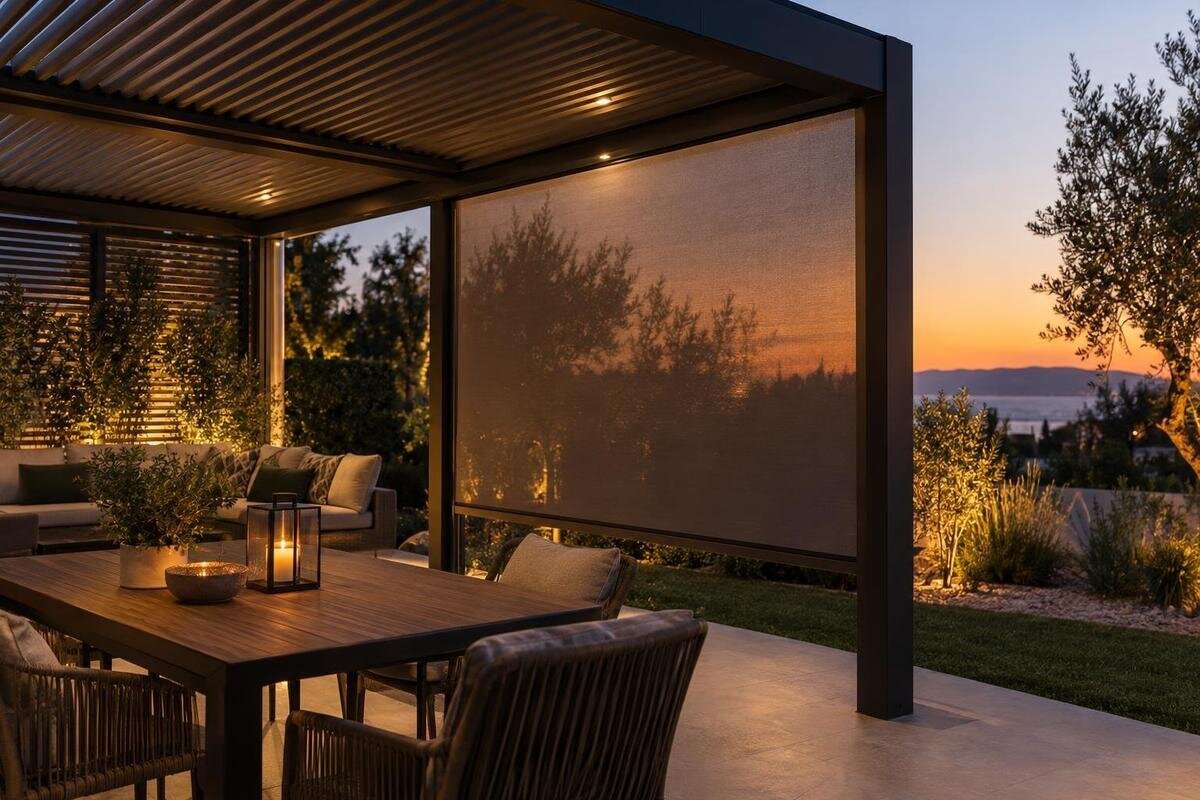
Privacy around a pergola can seem straightforward in daylight and change once the seating area is lit. A bright patio lamp, kitchen window or television-lit room may make people visible as outlines against a darker garden, even when a fabric sample looked effective during the day. The useful question is not simply whether a side is described as private; it is who can see which part of the seating area, from what height and angle, under the lighting you actually use. This guide explains how to map those views and assess fabric or glazing in realistic evening conditions.

Why a pergola can feel more exposed after dark
At night, visibility depends largely on the difference in brightness between the pergola and the place from which someone is looking. When the seating area is strongly lit and a neighbouring property, path or room is darker, the lit zone attracts attention and occupants may be easier to make out. This is especially noticeable when light falls on people or a pale background while the viewer is looking from darkness. A screen that looked dense in daylight may therefore reveal movement or outlines after sunset. This change does not necessarily mean the material has failed; it shows why its daytime appearance alone is not a reliable guide to privacy after dark.
Change the relative brightness and the view can change again. If the pergola is darker than the observer's side, reflections from brighter areas may dominate some glazed surfaces, but that does not prove the view through the glass is blocked. A reflective finish, tinted pane or dark fabric cannot be relied on for one-way privacy in all conditions. Brightness may shift when a lamp is switched on, a door opens or the observer moves. Judge each side from both directions and under the combinations of interior and outdoor lighting you use in a normal evening, rather than treating privacy as a fixed property of the material.
Map the views before choosing a side treatment
Begin with a simple plan of the seating area and mark places where someone could look in: neighbouring windows, balconies, paths, gates, a street-facing edge and any raised landing with a view. Include diagonal lines, not only a straight view from the opposite boundary. Someone standing near a corner may see along the edge of a screen, while a person indoors may look through a different gap. Mark doors and windows that are likely to be open, since a view through them can matter as much as a view across an outdoor boundary.
Then mark where people sit and stand under the pergola. Eye height changes a line of sight: a seated guest may be screened by a low edge while someone standing beside the table is visible, or the reverse may happen from an elevated window. Draw an arrow from each observer position to the faces and seating positions you care about; note where a wall, fence, furniture item or proposed panel crosses it. The sketch need not be an architectural drawing. Its purpose is to identify the viewing directions that matter, so you do not choose a side treatment for an irrelevant angle.
Recreate your evening scene before you decide
Use a substantial sample or temporary mock-up at the intended screen position, rather than judging a small swatch under bright shop lighting. Put a person or simple target where someone would sit, then look from the viewpoints marked on your plan. If you are comparing layouts, label each test with the model under consideration; the Bloomcabin Pergola product page provides a reference for identifying that model in your notes. Record which side the sample represents and where the seating would be. Keep the sample at the distance and angle it would have in use; changing either can alter how much facial detail or movement is visible.
Repeat the view at dusk and in full darkness, with the lights you normally use switched on in turn. Check the main outdoor light, light entering from the house and the combination of both; also look with the outdoor lights off. Ask another person to observe from a path or window while you remain in the seating area, then swap places. Note whether facial detail, clothing, movement or only a general silhouette can be distinguished. A phone photograph can help you remember the result, but automatic exposure changes apparent brightness, so use your view from the actual position as the main test.
What fabric can and cannot screen at night
Fabric performance after dark depends on its weave, density, colour, distance and where the light falls; a label alone cannot predict the view from every angle. An open weave may preserve an outward view by day yet allow a person in a bright seating area to show through at night. A cloth that appears dense in one setting may still reveal movement or outlines when it is backlit. These are questions to test, not universal rankings: two fabrics that look similar in daylight can behave differently when the background, lamp position and viewing distance change.
Compare the candidate fabric in the proposed orientation and at the intended height, with a person sitting and standing behind it. View it from the darker side, then reverse the lighting and look back towards the pergola. Check the edges as well as the centre: even if the fabric obscures the person behind it, a gap beside the panel may expose the table. If you are considering the Bloomcabin Bioclimatic Pergola, identify the exact fabric in your enquiry and ask whether it is an approved option for that model. Keep its name with your test notes so that a later fabric substitution is not mistaken for the material you assessed.

How glazing changes views after dark
Clear glazing is a physical barrier, but it normally leaves the view through it open; at night, lighting can make a person inside easier to see rather than less visible. Frosted, patterned or other diffusing glass softens detail, but the amount of blur varies, and close movement or silhouettes may remain apparent. Tint is not a guarantee either. A reflective finish depends on the brightness on each side and the observer's angle, so a brighter interior can reduce the privacy it appeared to offer in daylight. Treat terms such as obscure or reflective as descriptions to investigate, not proof of night-time screening.
Test a sample by viewing both ways with the pergola area lit, the adjoining house lit, and each side darker in turn. If possible, assess a panel large enough to show reflections and the way a person moves across it; a small sample may show colour without reproducing the full view. Ask what the particular glass treatment is designed to obscure and what remains visible at close range. When enquiring through the Bloomcabin Pergola listing, distinguish the glass treatment from the panel layout in your notes. Record whether your concern is visible detail through the pane or an unobstructed view around its edge.
Lighting position can change the view
Where a lamp sits can matter as much as how bright it is. From a neighbour's viewpoint, a strong light behind a seated person can make a clear outline; a bare bright point may create glare while leaving the rest of the seating area in shadow. Look at the intended fittings from the same angles marked on your sketch. Shielding a light source from direct view and aiming light at the area that needs to be used can reduce glare, but neither step guarantees privacy if illuminated people remain against a dark background. Test the result with actual furniture and people, not an empty pergola.
Consider the lights separately rather than assuming they must all be on at once: a general light, a task light and lights inside the house can produce different views. Separate controls or dimming, where the proposed fittings allow them, make it easier to compare combinations and use only what is needed. Avoid aiming lights towards a neighbour's window or placing a bright source where it becomes the clearest object in their view. For a layout based on the Bloomcabin Wall-Mounted Pergola, include the adjoining room's lights in your comparison, rather than assessing the outdoor fittings in isolation. Note which combination gives useful visibility without unnecessarily exposing the seating area. Have electrical changes planned by a qualified electrician.
Check screen position, edges and openings
A side screen blocks only the lines of sight that actually pass through it. A panel placed opposite a path may not cover a diagonal view from a neighbouring house, and a screen that starts too far from a post can leave a narrow but useful sightline. Use your sketch to check the ends, top and bottom of each proposed panel, including views from the most exposed seat. Test with a person sitting and standing; if the screen is meant to protect a particular chair or table, make sure those positions are covered rather than relying on one central viewpoint.
Openings need their own check. A sliding panel, curtain or door can provide a different view when moved, and the route people use to enter may leave the seating area visible while it is open. Assess the positions you expect to use during an evening, including while someone enters or leaves, rather than testing only with every panel closed. Use the bioclimatic pergola product listing to identify the model when asking about available side arrangements and their openings. Mark the proposed open and closed positions on your sketch so that you can compare access to the seating area with the views each position allows.
Raised windows need a separate sightline check
An upstairs bedroom, balcony or raised landing creates a downward line of sight that is easy to miss if you test only from the boundary at ground level. A vertical screen can interrupt a level view and still leave a seated person visible from above, particularly when a bright pool of light marks the seating area. Check the nearest elevated viewpoints from the places where they are normally used, not just from the centre of a window. Also note whether a house window looks into the pergola through a side opening or from above; these are different viewing angles.
If the view comes from above, shifting a chair or changing its orientation may reduce exposure, but verify the new line rather than assuming it works. A side screen or glazing panel helps only when the observer's line crosses it; do not assume a side accessory provides overhead privacy. For a layout using the Bloomcabin Pergola, mark the raised viewpoint separately from the ground-level views on your plan. Describe whether the observer can see faces, the table or the whole seating area. This gives a more useful basis for discussing a proposed side configuration than simply asking for a taller screen.

Confirm the exact model and side configuration
A product page can help identify which pergola you mean, but the model name alone is not a schedule of side materials or accessories. Before choosing, ask for the exact configuration and confirmation of which fabrics, glazing or other side treatments are approved for it, which are included and which would be separate. If the layout or material changes, confirm that the revised option still matches the model and opening arrangement being discussed. The Bloomcabin Bioclimatic Pergola product page is a reference for that model's identity; it is not proof of any unlisted screening feature.
Give the supplier your sightline sketch and describe the lighting combinations that left occupants too visible during your test. Ask for a drawing showing the proposed panels, openings and material orientation, then compare it with the observer positions you marked. Keep the drawing and sample details together so that the quotation can be matched to the arrangement you assessed. If an image shows a screen or glass wall, ask whether it belongs to the model and configuration you are considering, or is illustrative or separately sourced. Resolve any difference between the pictured arrangement, the tested material and the quoted supply before treating them as the same option.
Use your test results to make the choice
Turn the test into a simple decision record. For each material and lighting scene, write down the observer position, whether faces are recognisable, whether movement is visible and whether the view out from the seating area is acceptable. Use descriptions such as clear, blurred, outline only or not visible instead of relying on a general marketing label. Mark any viewpoint that matters most, such as a path beside a chair or a nearby upstairs window, so that a strong result from one direction does not hide a weak result from another. This makes the trade-off between privacy and an open view explicit.
Set an acceptable result for the way you actually use the space: you may need faces obscured, or simply want to avoid a direct view of the seating area. Recheck the chosen arrangement with the same lights and doors in their usual positions, and keep the record for comparison if a fitting or side panel changes later. If your shortlist includes the Bloomcabin Wall-Mounted Pergola listing, attach that record to the model enquiry and identify which viewpoints are priorities and which compromises you would accept. This makes your privacy requirements specific enough to discuss, without treating the product name as a promise about the view from your neighbour's property.
Frequently asked questions
Can a fabric pergola screen hide people once the lights are on?
It may, but the result depends on the fabric, light levels, viewing angle and distance. Some materials that look private in daylight show movement or outlines when lit from behind. Test a large sample in its intended position, with the lights you use in the evening, and view it from both sides.
Does frosted glass provide privacy at night?
Frosted or diffusing glass can soften details, but it does not always hide movement or silhouettes, particularly at close range. Check it with the pergola and nearby rooms lit, and view it from the places where neighbours or passers-by might look in.
Is reflective glazing one-way after sunset?
No. Reflective glazing does not guarantee one-way privacy. Its appearance depends on the relative brightness on either side and the viewing angle; a brighter interior can change how well people inside are screened. Test the proposed glass in realistic evening conditions rather than relying on its daytime appearance.
Should I switch off the pergola lights for more privacy?
Not necessarily. A different position, shielding or use of only the lights needed may reduce glare and contrast, but switching everything off is not the only option. Test your usual lighting combinations from the important viewpoints and choose an arrangement that provides useful visibility as well as the privacy you want.
Can I judge privacy from a small fabric or glass sample?
A small sample can help you compare colour and surface, but it may not show the full view, reflections or silhouettes at the intended distance. Use the largest practical sample or mock-up, put it where the side treatment would go, and check it from both sides under your evening lighting.
The most useful measure of pergola privacy is the view at the hours and under the lighting you actually use. Map the observer positions, test a substantial sample in place and judge it from both sides, including from raised windows. Then decide whether the issue is best addressed by a different material, a change to screen position or a less exposing lighting arrangement. This keeps the choice grounded in your site rather than a daytime impression.
