
Planning a Reading Corner Under a Pergola
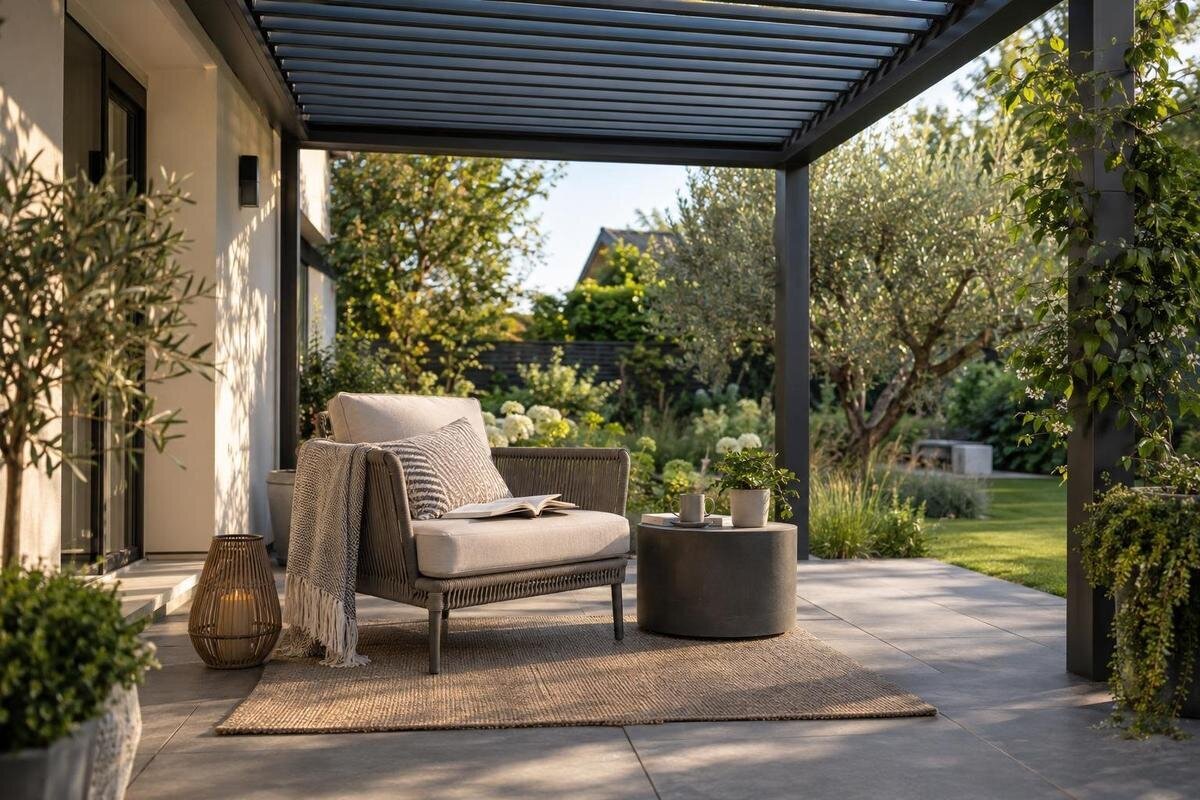
Pergola planning guide
A pergola can give an outdoor reading spot a clear boundary, but the best position depends on when you read and how light reaches the page. Before choosing cushions or décor, test the proposed chair location at the hours you will use it, measure the occupied footprint and decide where books and a reading light will go. A small, well-planned corner should feel quiet and easy to enter without blocking the rest of the patio.

Begin with your usual reading times
Define what the corner must do before choosing a chair. Reading the newspaper over a quick coffee needs a different arrangement from a long reading session, when you may want a supportive seat, room to change position and somewhere to put a drink and book. Note your usual reading times, likely duration and whether you read alone. If two people will use the space, decide whether they need separate seats or room to sit together occasionally. Consider whether you read upright or with your feet up, and whether you take notes. These choices determine the furniture and space required without filling the corner with unnecessary items.
Sit in the proposed spot with a book at the intended time. Notice whether direct light falls across the page, a breeze moves loose pages, or passing traffic and household activity break your concentration. Stay for the length of a normal session, not only a minute or two. A place that looks peaceful when empty may become awkward once a door opens or people take their usual path past it. Leave doors and windows in their usual positions during the trial. Record what affects your reading most so you can prioritise shade, screening, lighting and storage.
Check where shade falls through the year
Shade is not a fixed patch beneath a pergola. As the sun moves across the day and its angle changes through the year, shadows from the pergola, nearby rooflines, walls and trees shift as well. Check the area where your head, book and table will be, because the paving may remain shaded while the page catches direct light. Observe at the hours you intend to read, and repeat the check in more than one season if year-round use matters. A single visit, particularly at midday, cannot show every period when the corner may be too bright or fully exposed. If the pergola is not yet in place, record existing shade at the intended seat as site context, not as a prediction of the finished shade.
Make a simple record rather than guessing from the direction the pergola faces. On a rough site sketch, mark the chair and table, then record which parts are shaded in the morning, around midday and later in the afternoon. Repeat on different dates and note whether the page is comfortable to read. Photographs from the same spot help with comparisons; record cloud cover too, since overcast conditions can hide direct-sun patterns. If the shaded period suits your routine, that may be enough. For longer use, consider moving the chair or reviewing the design. Compare the Bloomcabin Bioclimatic Pergola with these observations in mind; its name alone does not establish the shade it will provide at your site.
Position the chair for comfort and a clear view
Place the chair so the view is pleasant without making the page hard to see. A seat aimed directly towards low sun can create glare; with the sun behind you, your body may cast a shadow over the book. Test a slight angle as well as a straight-on position, using the actual seat and a printed page or book. Check the view from sitting height, since a route, fence or planter that seems unobtrusive while standing may dominate the seated view. Check the background and the path in your peripheral vision too: repeated movement can be distracting. A garden view may feel restful, while a busy walkway or open door can keep drawing your attention.
Comfort also depends on getting in and out without manoeuvring around the table. Allow for armrests, a footstool and a reclined back where relevant: furniture can take up more space in use than when tucked away. Keep the book and drink within easy reach on your preferred side, leaving room to stand without moving furniture. If two readers will share the corner, test both chairs together. Use the measured arrangement when comparing the Bloomcabin Wall-Mounted Pergola with your site, checking the selected configuration's dimensions and clearances.
Measure the chair, table and walking route
Measure the furniture you will use, not a generic reading-chair outline. Record the chair's widest points, its full reclined position and the room needed to pull it forward. Add the table, footrest and any stool, then mark their positions on the paving with chalk or another removable guide. Walk through while carrying a book, then sit down, stand up and reach for the table. This mock-up shows whether the arrangement leaves a comfortable route to the house without interfering with doors, steps or movement across the patio.
Allow a route that remains clear when the chair is occupied and the footrest is in place. A narrow gap may be passable on an empty patio but frustrating when someone is reading, so test the route with the real arrangement rather than judging it from the plan alone. Open nearby doors fully and walk through while someone is seated. Include the space to move furniture for cleaning or to bring it indoors, and note fixed items such as posts, planters and outdoor taps. The Bloomcabin Pergola product page can be considered alongside your sketch, but an image is not a scale drawing; use verified dimensions and support positions for the configuration you are assessing.

Choose compact, useful furniture and book storage
A side table should serve the reading task without becoming another obstacle. Check that its height lets you set down an open book or a drink without leaning far forward, and that its top is large enough for the items you actually use. A small surface beside the preferred arm can be more useful than a larger table placed across the route. If you often read with glasses, a notebook or a charger, include those items in the tabletop test. Avoid a layout that makes you reach across the pages or twist around the chair. Keep a mug away from the edge and loose pages, and choose a stable position where it will not be knocked when someone passes.
Plan how you will carry books outdoors and bring them back in. A tote or handled basket can hold the current book, glasses and notebook together, saving several trips. Check that it remains manageable when full and has a place beside the chair without blocking your feet. It is for carrying, not weather protection, so take it indoors after reading. If you prefer a lidded container, check its stated suitability for the exposure rather than assuming the lid makes it weatherproof. Keep the storage small enough to tidy quickly instead of creating a permanent outdoor stack.
Protect books from sun, dust and damp
Books are sensitive to the conditions around the seating area, and a pergola should not be treated as a sealed room. Depending on its design and the surrounding weather, wind-driven rain, dew, dust and strong sunlight may reach the furniture even when the chair is under cover. Choose a position away from obvious drips, sprinklers and damp surfaces, and account for splash from paving as well as rain from above. Do not leave a favourite or valuable book exposed for days. After reading, bring books indoors or place them in storage whose suitability for the real conditions has been established. That habit is more dependable than assuming the overhead structure alone protects paper.
Assess any proposed storage spot after a change in weather, not only on a still, dry afternoon. Look for dampness on the table, windblown grit on the seat and water inside containers. A shelf may leave books exposed at the sides; a portable box is easier to move but still needs protection suited to its location. Inspect it after wet or windy weather before trusting it with books. When reviewing the wall-mounted pergola listing, look for explicit coverage information rather than inferring weather performance from the model name or photograph.
Plan a reading light for later hours
Daylight is useful, but it changes with the hour and season, so plan a separate light source if you want to continue reading after daylight fades. A task light should make the page easy to see without shining into your eyes or producing a bright reflection. Test its position with an open book: the beam should reach the page, while your hand and head should not cast a distracting shadow. Try the light with the book you use most, since glossy covers and white pages can reflect a beam differently. A movable lamp lets you adjust for different chairs or whether you are left- or right-handed; make sure its base and any cable do not turn the walking route into a trip hazard.
Choose a fitting or portable lamp intended for its setting, checking the manufacturer's limits for moisture and outdoor exposure. When comparing structures, use the Bioclimatic Pergola product page to check the stated inclusions; do not assume lighting or an electrical point is supplied. Have fixed electrical lighting specified and installed by a qualified electrician. For a portable lamp, test its position after dusk and follow its storage instructions. Check that you can reach its controls from the chair without stretching across the table or blocking the route.
Make the corner feel quiet without isolating it
Quiet often comes more from where the chair sits and when you use it than from adding more objects. Spend a few minutes listening at the hours you expect to read: note conversations, gates, deliveries, entertainment areas, road noise or the sound of a frequently used door. The quietest time on a weekday may differ from a weekend afternoon, so listen at more than one time. If possible, shift the chair away from the main route or align it towards a calmer part of the garden. Keep enough access for people to move through the patio without passing close behind the seat. This will not remove every outdoor sound, but it can make interruptions less frequent.
Privacy and quiet are related but not identical. Facing a fence may feel enclosed, while facing the house may bring frequent movement into view. Choose a comfortable orientation before deciding whether you need a screen. Screening can affect airflow and shade; only attach it to a pergola if the selected configuration is intended to accommodate it and the installation has been confirmed. Planting also changes its shade and visual coverage as it grows. Use the Bloomcabin Pergola page to explore the structure, while assessing privacy separately against your site's boundaries and sightlines.

Match pergola dimensions to the finished layout
Once the furniture plan works, compare it with the pergola footprint and the obstacles around it. Mark the available area, any supports shown for the selected configuration, doors and windows, outdoor taps and fixed planting, then check that the chair, table and route still fit inside the usable zone. The Wall-Mounted Pergola model page lists a range from 9 to 24 m²; that range alone is not a substitute for dimensions or a guarantee of clear space around your furniture. Confirm overall dimensions and support or attachment positions before settling the layout. A dimensioned drawing for the chosen configuration is more useful than a marketing photograph when testing the seat.
Compare the configuration with the site rather than choosing by area alone. Check which dimensions describe the outside footprint, the clear height and the positions of openings relative to the chair and light. Where the structure meets a house wall or depends on particular site conditions, confirm compatibility through the product information and a qualified installer. Keep your sketch labelled as a concept until the chosen dimensions and installation requirements have been confirmed. It remains a furniture plan, not confirmation that a particular pergola will fit or provide the required shade.
Trial the arrangement before making it permanent
Before buying accessories or fixing a storage spot, test the proposed corner with the actual chair and table, or with temporary stand-ins of the same size. Use it at your usual reading time, then try another time of day. Check page glare, comfort, the reach to the table, the route past the chair and sounds from nearby activity. Repeat the test on a bright day and later in the day; one trial will not reveal every lighting condition. If something feels awkward, change one element at a time so you can see what improves it. This practical trial is more informative than judging a layout from a decorative photograph or from the pergola's overall area.
Keep the final arrangement simple enough to use without lengthy preparation. Decide where the current book goes when you leave, where the lamp is stored or charged, and whether cushions need to come indoors. Leave the walking route clear and retain room to shift the chair as seasonal shade changes. With your measured sketch ready, compare Bloomcabin’s bioclimatic model listing with the exact configuration you are considering. Check its dimensions and stated details against the arrangement that worked in your trial, rather than choosing accessories around a photograph.
Frequently asked questions
How do I find the best position for a reading chair under a pergola?
Test the chair at the hours you expect to read, with a book in hand. Check whether direct light reaches the page, whether the view feels restful and whether you can enter and leave easily. Repeat the shade check in different seasons if you plan to use the corner year-round.
How much room should I allow for a chair and side table?
There is no single footprint that suits every chair. Measure yours in the positions you will use, including any recline or footrest, then add the table and the space needed to stand and walk past. Mark the arrangement on the paving and try it before settling the layout.
Can I leave books under a pergola?
Do not assume the area is dry or protected. Depending on the design and conditions, wind-driven rain, dew, dust and sun may reach the furniture. Bring books indoors after reading unless you have storage whose stated protection suits the actual exposure.
What kind of light works for evening reading?
A task light intended for its setting can direct light onto the page. Test it after dusk for glare and shadows, and check the manufacturer's instructions for outdoor exposure. Have fixed electrical lighting specified and installed by a qualified electrician.
How can I make a pergola reading corner quieter?
Listen at the times you expect to read and note noise from doors, walkways and nearby activity. Position the chair away from the main route where possible. If you consider a screen, confirm that the selected pergola configuration is intended to accommodate it.
Plan the reading corner around the chair, the changing shade, the route past it and the place books go when reading is over. A measured, temporary trial can reveal glare, noise or an awkward path before you commit to the layout. Keep lighting suited to its setting and books portable unless their protection is known. When those practical details work together, the pergola becomes a place you can use for reading, not merely a shaded spot in a photograph.
