
Outdoor Plug Points Under a Pergola: Everyday Planning
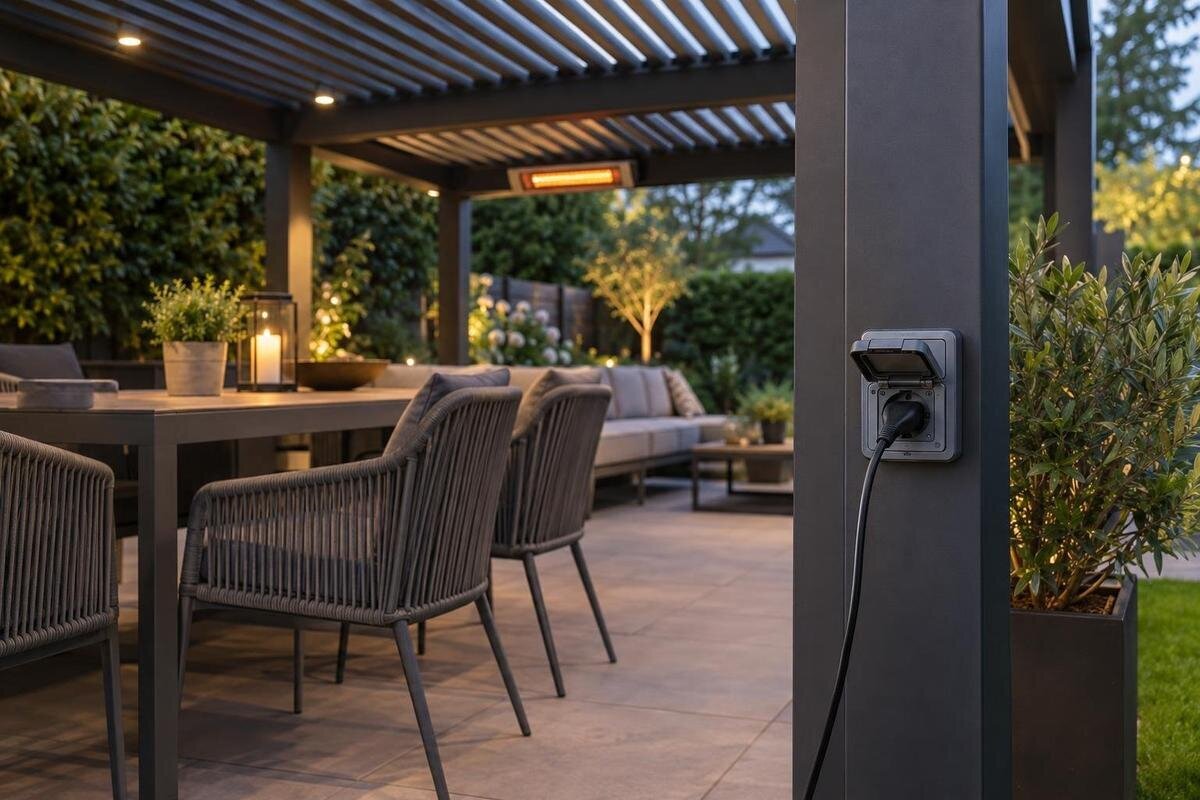
Pergola electrical planning
A pergola can make an outdoor dining or seating area more useful, but a plug point that looks convenient on a plan may be exposed to rain, blocked by furniture or too far from the appliance it is meant to serve. Treat the electrical layout as part of the pergola brief: list the equipment, mark where it will be used, and ask a qualified electrician to assess supply, exposure and protection before work is priced or started. The aim is a practical everyday layout, not a set of DIY wiring instructions.

Questions for your electrician 1
List the appliances and activities first
Before choosing socket positions, write down what you expect to power and how often. Common examples include a phone charger beside the seating, a portable lamp, a small speaker, an outdoor fridge or an appliance used for food preparation. Note where each item will operate, whether it will remain plugged in, and which other devices may run at the same time. A charger used briefly and a fridge connected for long periods create different planning needs. This inventory keeps the brief tied to your routine and prevents the number of plug points from becoming the only measure of whether the layout will work.
Separate fixed equipment from portable items. A light, motorised component or heater may have a specified connection method; an ordinary plug point is not automatically appropriate for it. Check the exact manufacturer’s manual and ask the electrician whether the item needs a dedicated supply, a particular control or a mounting point approved by the pergola supplier. If you have not chosen an appliance yet, describe the job it needs to do rather than guessing its electrical demand. For a vague possibility, consider whether a point is genuinely useful or would simply add an exposed outlet with no clear purpose.
Map furniture, doors and working areas
Draw a simple plan of the pergola and the surrounding area. Mark the table, seating, doorways, serving area, storage and the routes people use to walk through. Add the place where each appliance will operate, not just where it will be stored. A point beside the dining table might help with a lamp or charger, while an appliance used at a preparation surface may need a different position. If the furniture changes between everyday use and entertaining, show both arrangements. A plug point hidden behind a sofa or serving trolley is inconvenient even if it appears close to the right place on a basic plan.
Include the house wall, posts, roof edges, downpipes, doors and any planned screens. These features may affect access, the likely cable route and exposure to dripping or splashing water. If you are comparing a wall-attached design, use the Bloomcabin Wall-Mounted Pergola model as the structure under discussion and mark the exact wall, post and proposed outlet locations on the site plan. The product identity does not specify an electrical entry point. Ask the relevant professionals to confirm a route for the actual installation rather than assuming that a convenient-looking frame member is approved for cabling.
Questions for your electrician 2
Place plug points where they will stay accessible
Think about whether people can reach a point during ordinary use without moving heavy furniture, reaching around a hot appliance or stepping into a regular walkway. Relate its proposed position to the appliance’s normal operating place and supplied lead, while keeping the route through the space clear. The electrician can assess the distance and suitable equipment for the location. Avoid treating a household extension lead left outdoors as a substitute for a planned point. If furniture is moved for family meals or visitors, check that the proposed position still works in both layouts.
Mark preferred positions and approximate heights on the drawing, but treat them as a request for discussion, not installation instructions. The electrician must confirm the mounting, route and weather protection for the actual location. Note possible obstructions such as curtains, stored cushions, plant pots, cooking equipment, door swings and the edge where water runs off. If you are considering the Bloomcabin Pergola model, map where users, furniture and appliances will sit rather than assuming a general product image shows the best place for an outlet.
Confirm what the pergola structure allows
A position near the frame is not automatically a suitable place to fix an electrical fitting. Pergola members may have different purposes, and the exact product documentation determines what can be attached, drilled or routed through. Ask the pergola supplier and electrician to agree on the proposed mounting point and cable route. Do not treat a photograph, general description or sales image as confirmation that a particular beam can accept a fitting, or that a roof component will protect it from the weather. If details are not settled, mark them as unresolved on the plan rather than allowing an installer to guess on site.
For any design with adjustable or moving roof elements, give the electrician the exact model information and manual. If you are considering a Bloomcabin Bioclimatic Pergola, use that product name to identify the structure being discussed, then request confirmation for the specific assembly and proposed attachment. Keep clearances, drainage paths and access for servicing in the conversation. If a separate team is installing the pergola, agree who is responsible for any approved mounting accessories and when the electrical route must be confirmed. Record the approved arrangement before finishes are completed.

Questions for your electrician 3
Assess rain, splash, sun and cleaning exposure
A roof overhead does not make every position sheltered. Rain can blow in from an open side, run off an edge or reach a plug point when the patio is washed. Direct sun, dust and regular exposure to the elements can also affect equipment over time. Note which sides are open, where water drains, whether irrigation or a nearby tap can cause splashes, and whether a proposed position is exposed to sun. If the pergola is near a pool or another wet area, include that detail in the brief. These conditions help the electrician assess the actual location rather than treating every point under a roof as equally protected.
Ask the qualified electrician to select the outlet, enclosure and cover for the intended use and exposure, using the relevant product documentation and applicable local requirements. Appearance alone does not establish suitability. Confirm whether the outlet is intended to be used with a plug inserted, whether its cover can close in that situation and how the manufacturer says it should be maintained. When planning around the wall-mounted Bloomcabin pergola option, mark the proposed points in relation to the wall and roof edges. Include the positions where appliances will remain plugged in, so the assessment covers everyday use as well as protection when the outlets are unused.
Match the electrical plan to appliance demand
A socket count tells the electrician little about the demand the installation may need to support. Share the exact appliance details or clear photographs of their ratings, and say which items might operate at the same time. A lamp or charger is different from a kettle, cooking appliance or fridge that remains connected for long periods. These examples are not a guide to sizing a circuit: the electrician needs to assess the appliances together with the available supply and existing installation. Do not assume that several plug points can safely share an existing circuit just because each one may be used occasionally.
Mention anything you may add later, such as an outdoor fridge, portable heater or cooking appliance. The exact model and its manual matter, and a product intended for indoor use may not be suitable outdoors. Ask whether each item is plug-in or fixed, whether it needs a separate supply or control, and what the manufacturer says about outdoor use. If you are choosing Bloomcabin’s regular pergola model, include the selected structure in the same brief. Distinguish appliances you have already chosen from possible future purchases, so the electrician can explain what the current proposal covers and what would need reassessment later.
Questions for your electrician 4
Ask how the installation will be protected
Include protective devices in the electrician’s brief, not just the plug points themselves. Ask how the proposed arrangement addresses electric shock, leakage, overload and faults, and how the relevant supply can be isolated for maintenance. You can ask specifically about earth-leakage protection, also called residual-current protection, overcurrent protection and earthing. Which devices are appropriate, and where they belong, depends on the installation. The electrician should explain the choices for your site and apply the relevant requirements; there is no need to select or fit protective devices yourself.
A weather-resistant cover and correctly selected protective devices address different parts of the plan. Ask the electrician to explain both, including what to do if a protective device trips and whether a proposed appliance needs a different arrangement. Do not bypass or alter protection to keep an appliance running. For a project involving the Bloomcabin bioclimatic model, include any proposed electrical equipment in this discussion, rather than considering only the outlets for portable appliances. Ask how each part of the installation will be isolated for maintenance and have the electrician explain which controls or protective devices serve it.
Agree cable routes before finishes are complete
Discuss how the electrician expects to bring power to the proposed points and where the route will be visible or concealed. Mark the likely source, such as the distribution board or an existing supply point, on the plan, but leave route design to the qualified professional. Ask how the cable route will relate to walls, posts, screens, drainage and any moving elements. Also discuss whether the chosen route will remain accessible for inspection or maintenance. The aim is to avoid late changes to finished surfaces or a route that conflicts with the pergola installation, not to plan or carry out wiring yourself.
Coordinate the electrical work with the pergola installer, builder or other trades before construction is complete. Agree when each team needs access and who will confirm the final position on site. For a Bloomcabin wall-mounted pergola, ask the professionals to consider the proposed route in relation to the actual wall and selected configuration; do not assume the model page defines a cable path. Once work is complete, request a marked-up plan or record showing the final point locations and route information that the electrician considers useful for future maintenance.

Questions for your electrician 5
Separate plug-in appliances from fixed accessories
Before ordering lights, heaters or other accessories, list the exact make and model and confirm who is supplying each item. A quote for a pergola may not include electrical work, while an electrical quote may not include the fixtures themselves, so ask what each scope covers. A fixed light or heater may have its own connection method, control and approved mounting requirements. It should not be treated as another portable appliance simply because a plug point is nearby. Keep this distinction clear in the brief so the electrician can assess each proposed item rather than allowing assumptions to shape the installation.
Provide the exact manuals and ask for confirmation of outdoor suitability, electrical supply and documented mounting approval for each fixture. Use the Bloomcabin Pergola product page to identify the structure when discussing accessories with the suppliers, but keep the proposed fixtures listed separately in the brief. Ask the pergola supplier to confirm any permitted attachment and the electrician to assess the electrical arrangement. Record who will supply each fixture, who will install it and whether the necessary controls are included in the quote. If an accessory has not been verified, leave it out of the final plan until its specifications and approval are clear.
Set out the work and handover in writing
Before work is booked, ask for a written scope that matches the plan. It should make clear where the plug points are proposed, what outdoor equipment is included, how the supply and protective devices will be assessed, and which professional is responsible for each part of the job. Ask how the proposed mounting and cable route will be confirmed against the pergola documentation. If appliances or accessories are still undecided, have the quote state what assumptions it makes and what needs to be reviewed when exact models are chosen. Clear boundaries make it easier to spot a missing decision before installation begins.
At handover, ask for the electrician’s relevant test or commissioning records and any documentation required for the work, along with the final location plan and instructions for the installed equipment. Keep the appliance manuals and any mounting approval with those records. Make sure you know which points are intended for the planned uses and whom to contact about a fault or later change. A useful handover does not just show where the outlets ended up; it preserves the information needed to maintain the installation and assess future appliances without guessing.
Frequently asked questions
How many plug points should I plan for?
There is no useful number without knowing what you will power and where you will use it. List the appliances, mark their working positions and note which may run together. An electrician can then assess the layout and supply rather than relying on a socket count alone.
Does a pergola roof protect a plug point from rain?
Not necessarily. Rain can blow in from the sides, drip from an edge or reach the point during cleaning. Ask an electrician to assess the exact position and choose equipment suitable for its exposure; do not assume that a roof makes an indoor socket suitable outdoors.
Can I attach a plug point to a pergola post?
Only if the exact structure’s documentation and the relevant professionals approve the proposed position and mounting method. A post that looks convenient is not proof that it can accept an electrical fitting or cable route. Have the pergola supplier and electrician confirm the arrangement before work begins.
Can an extension lead replace an outdoor plug point?
It is better not to plan on leaving an extension lead in place as a permanent solution. Its suitability depends on the lead, appliance, exposure and how it is routed. Ask an electrician to assess the intended use and provide a properly planned option for regular outdoor power.
Can the same plug points supply lights or a heater?
Do not assume so. A fixed light or heater may have a specified connection method, mounting requirement or control that differs from a portable appliance. Give the electrician the exact product manual and ask whether its supply, protection and proposed mounting are suitable for the pergola.
The best layout is not necessarily the one with the most plug points. It is the one that suits the way you use the pergola, keeps outlets accessible and accounts for weather, appliances and protective devices. A clear plan, exact manuals and written confirmation of approved mounting and routing give the electrician a sound brief—and leave fewer assumptions to resolve once the structure is in place.
