
Pergola Insurance: Project Details to Prepare for Your Insurer
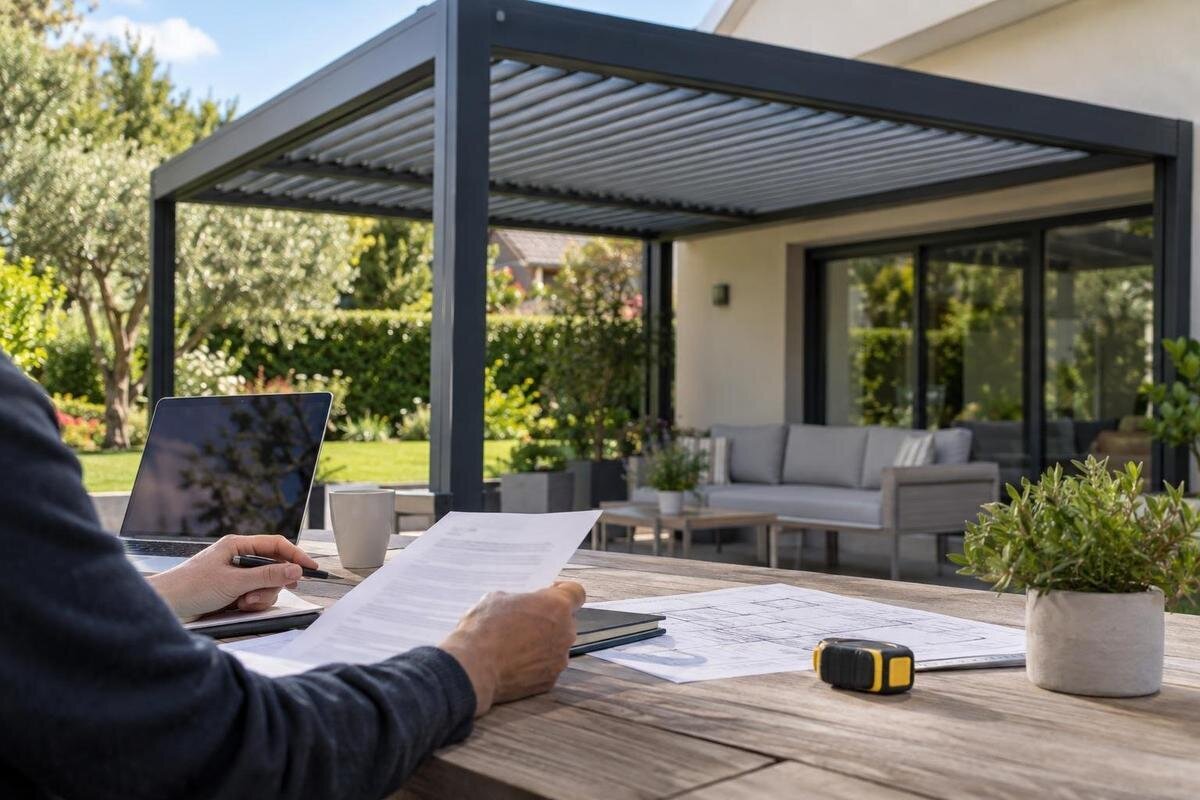
Pergola project planning
A pergola enquiry is easier to assess when the insurer can distinguish the structure from its equipment, site work and installation. Do not assume that a home policy automatically covers a pergola, attached items or damage during construction: policy wording and property details matter. Prepare a small, dated project pack and ask your insurer or broker how the proposed work should be treated. Update the information if the design, contractor or scope changes.

01
Contact your insurer before the project is final
Tell your insurer or broker about the pergola while the design is still a proposal, rather than waiting until installation is complete. The policy wording and the facts of the property determine how a new structure and its equipment are treated, so do not assume that home insurance automatically covers either. If you already have a policy, use the contact channel shown in your policy documents and ask how to disclose the planned work. Explain whether the design is confirmed or still provisional; that helps prevent a preliminary sketch or estimate from being mistaken for the finished project.
Ask what timing they want for the enquiry: before you pay a deposit, before work starts, once the pergola is installed, or at more than one stage. These are questions for your provider, not universal deadlines. Include your policy number and explain your relationship to the property, particularly if the person arranging the project is not the policyholder. If different policies cover the building and its contents, ask which provider should receive the details about the structure and equipment. Describe the intended use of the pergola rather than leaving the insurer to infer it from a photograph. Keep a copy of what you sent, the date, the reply, any reference number and the documents the insurer considered. If the response is conditional, ask which details remain outstanding and where the relevant terms appear in your policy. An answer based on an early drawing may not address a later change to the model, location, equipment or installation scope.
Identify the pergola and its position
Give the full property address and describe where the proposed pergola will sit. State whether it is planned as freestanding or attached to the house, and identify the side or elevation it is beside. Use the same project name on your enquiry, quotation, drawing and later invoice. If you are considering the Bloomcabin Wall-Mounted Pergola listing, copy the exact model name as an identifier, but do not rely on the listing name to explain your particular site arrangement. Your insurer needs to understand the project at your address, not simply the catalogue item you viewed.
Include the proposed length, width and overall height if those measurements are available, and mark them as estimates if they are not final. A simple site plan or clearly labelled sketch can show the pergola in relation to the house and other relevant structures. Avoid descriptions such as beside the patio if they could refer to more than one place. Identify whether the drawing shows the existing layout or the proposed work, and note any measurements that still need to be confirmed. That small distinction makes it easier to correct the record when the final configuration is agreed.
02
Describe the roof and any equipment
Describe the roof system and any equipment using the supplier’s current written specification, not assumptions based on a product name. If you are considering the Bloomcabin Bioclimatic Pergola listing, give the exact name as a reference and ask the supplier to confirm what is included in your selected configuration. The model name alone does not establish the roof mechanism, controls or accessories. State whether roof parts are fixed or moveable, and whether operation is manual or powered, only when those details have been confirmed. This helps the insurer understand what is being proposed rather than infer features from a label.
Make a separate note of optional or owner-supplied items, if any: for example, lighting, heaters, screens, motors, remote controls, sensors, gutters or other drainage components. For each item, record whether it is included in the pergola quotation, supplied separately or not yet selected, and who is expected to install it. Where available, include the item’s make, model and quantity so that a general description such as lighting does not leave the proposed equipment unclear. Distinguish equipment that will be fixed to the pergola from items that will simply be placed underneath it. Mark undecided options as provisional rather than describing them as confirmed purchases. Ask the insurer whether these items should be described as part of the structure, as fitted equipment or separately. Do not group an item into the structure’s value simply because it will be used nearby; give the insurer enough detail to decide how it should be treated under your policy.
Send current drawings and site photographs
Ask the supplier or relevant professional for the most current project drawing available. Depending on what has been prepared, useful views may include a plan, elevations and a section, with the proposed footprint, height and position shown. Include the drawing date or revision so your insurer can tell whether it matches the quotation. The Bloomcabin Pergola listing presents area options from 9 to 24 m²; treat that as information about the listed range, not as confirmation of the dimensions or area of your chosen project. Send the measurements and drawing for the actual configuration instead.
Photographs of the existing site can make a plan easier to interpret. Take clear views of the proposed position, the adjoining wall if relevant, and the surrounding area, then add short captions explaining what each image shows and when it was taken. A photo does not replace a measured drawing, and it should not be presented as evidence of technical details that cannot be seen. Keep original images with the project file and label any marked-up copy as an illustration. If the site changes between the initial enquiry and installation, take a fresh set rather than relying on images of an earlier condition.

03
Explain the connection to the house or ground
Tell the insurer how the proposed structure relates to the house or the ground, using the drawings and supplier or installer documents available to you. For a wall-mounted proposal, identify the wall or elevation shown on the plan; for a freestanding proposal, show its position in relation to the house. The wall-mounted pergola product page can help you match the model name to your document pack, but the project-specific drawing should explain the actual arrangement. Include any confirmed information about the base or supporting surface, and distinguish it from details that have not yet been decided.
If the project involves changes to an existing surface, wall, drainage route or nearby services, describe them only to the extent that they are part of the confirmed scope. Ask the supplier, installer or another suitably qualified professional which drawings or technical records are appropriate for your project; do not estimate structural capacity or create technical calculations for the insurance enquiry. If local approvals or consent may be relevant, check that separately with the appropriate local authority or a qualified local professional. An insurer’s response about a policy does not settle a separate planning or building question.
Separate supply costs from installation work
Send the written quotation and contract inclusions, not only a headline total. Separate the pergola supply from any quoted delivery, installation, site preparation, base or foundation work, electrical work, removal of existing items and other additions. Show exclusions as well as inclusions, so it is clear which parts of the job are still to be arranged. If the quotation refers to the Bloomcabin Pergola model details, include the dated specification that identifies your selected configuration; a general product listing does not establish what your contract includes.
Set out who is responsible for each part of the work: the supplier, installer, another contractor or you. Note whether the quotation covers installation or only supply, and whether any work is being arranged independently. Include expected start and completion dates if they are known, labelling estimates clearly. If delivery and installation are planned for different dates, show both and explain where the materials are expected to be kept in between. Identify any planned gap between site preparation, assembly and completion of separately arranged work. This allows you to ask about those periods explicitly rather than treating the whole project as a single installation date. This gives the insurer a useful picture of how the project will be carried out without suggesting that a particular party’s responsibilities are already agreed when they are not. If a scope item is still being priced or assigned, say so and update the information when the contract is settled.
04
Ask how to record the project value
Do not assume that the product listing, supply price or total project budget is automatically the right figure for insurance purposes. Ask your insurer how it wants the value of the proposed structure recorded and whether it needs a particular basis, such as a supplier quotation, an installed cost or another assessment. The Bioclimatic Pergola model page identifies a model; it does not establish your final specification, the work completed at your property or the value the insurer should use. Attach the relevant quotation and inclusions so your provider can explain what information is needed.
Keep the cost of the structure distinguishable from optional equipment, separately arranged work and moveable items such as outdoor furniture. Ask whether each category should be reported separately and whether the insurer needs invoices or other evidence after completion. If you send more than one quotation, identify whether they are alternatives or cover different parts of the same project. Make it clear when an accessory price is already included in a package total, rather than adding it twice. Label deposits and balance payments against the relevant contract so they are not mistaken for separate purchases when the insurer reviews the figures. Do not add items to a figure simply because they are near the pergola or appear in a photograph. Retain supplier quotations, contracts, invoices and payment records as they become available, and note any change in scope that affects the total. Your insurer can tell you how to present those figures under the wording of your own policy.
Record contractor details and design changes
Record the name and contact details of each business involved, together with its agreed role and the work covered by its quotation or contract. If responsibilities are split between a pergola supplier, installer and separate trades, describe that split rather than naming only the main contractor. Keep the proposed schedule and copies of relevant documents provided by each party. Ask your insurer which contractor or installation details it needs; do not assume that every provider asks for the same records or that a particular document is required in every case.
Maintain a dated change log from the first enquiry to handover. Note what changed, when, why, and which drawings, quotations or responsibilities were updated. If you switch to a model listed on Bloomcabin’s wall-mounted pergola page, for example, make sure the insurer receives the revised project-specific drawing and scope rather than only the new model name. Describe removals as well as additions: an earlier equipment list may no longer be accurate if an option has been dropped. In your covering message, summarise the differences and identify the documents that replace earlier versions. This gives the insurer a clear update without requiring it to compare every line of two lengthy quotations to find the changes. Before relying on an earlier response, ask whether the change affects it. Keep both the earlier and later versions so there is a clear record of which project details were considered at each point.
05
Ask precise questions about policy terms
Give the insurer the project details and ask how it classifies the structure and any fitted equipment under your policy. The Bloomcabin Pergola product page can serve as a model identifier alongside the actual quotation and drawings; it is the project-specific information that should frame the questions. Ask whether the structure needs to be noted, whether the response differs before, during or after installation, and what further documents or conditions apply. You can also ask how the policy treats attached items, separately supplied equipment and work in progress, without assuming that they fall into the same category.
Ask about the policy wording for relevant events or conditions rather than assuming that any particular loss is covered. Depending on your concerns, ask how the terms address wind or hail, fire, falling objects, water, theft or accidental damage, and what exclusions, excesses, security or maintenance conditions may apply. These are topics to clarify, not a list of promised benefits. Ask who should insure materials and work in progress while installation is underway, and whether any contractor documentation is needed. Keep the answer in writing and ask the insurer to identify relevant wording or explain any condition you do not understand.
Keep a final handover record
When the work is complete, organise the final project documents in one place. Keep the confirmed quotation and contract, final drawings or revisions, invoices, completion photographs and any installation or handover records provided to you. Store product manuals and maintenance information for equipment that was actually installed, along with any documents the insurer specifically requested. Label final records clearly so they cannot be confused with the earlier proposal. Ask the insurer whether it wants the completed information sent to it, and retain the response with the documents it reviewed.
Compare the installed project with the details the insurer considered: model, position, dimensions, equipment and agreed scope. If the finished work differs, explain the difference and ask whether the insurer needs an updated record. Keep the file current if equipment is added, removed or replaced later, and note when each update was shared. A simple folder with dates and clear file names is more useful than a collection of unlabelled photos and superseded quotations. The aim is to be able to show what was proposed, what was installed and what information was provided to the insurer.
Frequently asked questions
Does home insurance automatically cover a pergola?
Do not assume that it does. The answer depends on the wording of your policy and the details of the project. Ask your insurer or broker to assess the pergola, its equipment and the installation period separately, and keep the response in writing.
What should I send before the final quote is ready?
Send the property address, the proposed position and approximate dimensions, any available drawing or site photographs, and the current product description or quotation. Mark what is still provisional, then ask the insurer which additional documents it needs before making an assessment.
Can a product page replace project drawings?
No. A product page can help identify a model, but it does not establish your selected dimensions, site position, contract inclusions or installation arrangements. Use current project-specific drawings and a written quotation to describe what you intend to build.
What if the design changes after I have contacted the insurer?
Send the revised information and ask whether the insurer’s response changes. Keep the earlier and revised drawings, quotations and replies together so it is clear which version was considered. Do not assume that an answer based on an earlier proposal applies to a different project.
Is the installer’s insurance enough to protect the project?
Do not assume that another party’s policy protects your property or everything involved in the work. Ask your insurer and the contractor who is responsible for the structure, materials and work in progress, and what evidence or policy details you should request.
A useful insurance enquiry is specific, dated and easy to reconcile with the pergola that is actually installed. Describe the structure and equipment, show where it will sit, separate supply from installation work, and ask the insurer to explain the terms that apply. Keep the original proposal and final handover records together so later questions can be answered from documents rather than memory. The aim is to have the insurer assess the project you intend to build, not an assumed or outdated version.
