
Managing a Pergola at a Self-Catering Rental
Holiday rental operations
A pergola at a self-catering holiday rental is part of the guest experience, but it is also an item someone must clean, inspect and maintain. Guests need to know what they may use and how to report a problem; the cleaner needs a defined changeover task; and the owner or manager needs time and suitable access for checks and repairs. A straightforward plan makes those responsibilities clear without burdening guests with technical instructions. Base it on the actual floor plan and the pergola installed at the property, then keep the listing, guest guide and cleaning checklist consistent. Do not infer its operation or weather performance from a model name or photograph.

Planning checklist 1
Define the pergola’s purpose in the rental
Before choosing furniture or writing the property listing, decide what the pergola is for at this rental. It might be a place to eat, sit or move between the house and garden; choose a purpose that fits the actual layout and furnishings. Specify whether it is for the booked unit alone or shared with another part of the property, and whether guests may use it at any time. Do not describe it as waterproof, all-weather or suitable in every condition unless the performance of the exact installation has been confirmed.
Put the intended use on the floor plan and compare it with a typical guest day: people arriving, carrying food, pulling chairs out and walking back indoors. Mark routes to the house, steps or gates, nearby doors and other outdoor facilities. Consider the busiest expected group, not just how spacious the terrace looks when empty. If the space is shared with another unit or service area, plan how guests and staff can move through without obstructing one another. Have the actual arrangement reviewed for applicable access, fire and planning considerations, involving a qualified professional where appropriate.
Measure usable space on the actual terrace
Draw the proposed layout on the floor plan and confirm measurements on site rather than planning from a photograph or an area figure alone. Include fixed features shown in the selected design, nearby walls, opening doors, steps, gates, planting borders and the furniture guests will use. Plot the route from the indoor living area to the seats and back, then check it with chairs pulled out and people seated. A table that fits on an empty drawing can still obstruct a door or walkway once the area is in use. Keep routes to the rest of the property clear.
The listing for Bloomcabin Bioclimatic Pergola gives a range from 9 to 24 m². Treat this as a stated area range, not a substitute for the dimensioned plan for the selected model or its usable clearances. Before choosing an option, request the exact plan and mark in the furniture, guest routes and space needed for cleaning. Area alone will not show how seating and movement fit the terrace. If an access route needs assessment, have the real layout reviewed by a qualified professional.
Planning checklist 2
Check the model against the site and operating plan
A product title cannot determine whether an option suits a particular building or terrace. If you are considering Bloomcabin Wall-Mounted Pergola, ask for drawings and installation requirements for the exact option, then have the proposed location checked against the actual building and floor plan by the supplier or a qualified installer. Do not infer that a particular fixing point or layout is suitable from a model name or photograph. Include cleaning and service access in the site review, not just the space available for guests.
Give the supplier a written brief covering the intended use, expected guest numbers, furniture, routes, operating needs and who will manage the pergola. Ask them to identify the exact option and provide the information needed to assess its dimensions, operation, care and service access. Use the property’s actual floor plan when completing any applicable access, fire or planning review. Keeping these questions together helps the owner, manager and supplier discuss the same site conditions instead of relying on an appealing image or a general description.
Put cleaning and guest duties in writing
Write separate responsibilities rather than relying on a vague request to leave the area tidy. Guests can be asked to clear their belongings and report spills or damage; ask them to return movable items only if the instructions show where they belong. The cleaner can handle agreed routine tasks, while the owner or manager decides whether a reported fault affects use and arranges any repair. Do not make guests responsible for deep cleaning, technical checks or adjusting components. Name a backup contact for times when the owner is unavailable, particularly if the property is managed remotely. State who receives a cleaner’s report and who confirms that it has been dealt with. This keeps an unfinished task from being passed between people who each assume someone else is handling it.
Where a Bloomcabin Pergola is installed, record that exact model name in the property’s asset information and match it to care guidance for the delivered product. A model name alone does not identify suitable cleaning methods or how often particular tasks are needed, so do not guess from a photograph. Give the cleaner written instructions for approved methods and supplies, along with a named contact for problems. Make clear which observations should be reported rather than handled as part of routine cleaning.

Planning checklist 3
Write instructions for the installed controls
A guest guide should be short enough to read before using the area and specific to what is actually installed. Describe controls only if they are present, use the same names as their labels and state which actions guests are allowed to take. Explain where to find help and what to do if a component appears damaged or does not respond. The Bioclimatic Pergola product listing can identify the option under consideration, but instructions for guests must be based on the actual installation and its documentation, not on a model title or catalogue image.
Put the same guidance in the digital welcome information and in the property’s house guide, so guests do not have to search several documents. Place essential operating information where guests can find it before using the pergola, rather than burying it among restaurant recommendations or check-out notes. Keep the language plain and avoid copying technical wording that does not help someone use the space. If a diagram is useful, make sure it reflects the actual controls and layout. Ask the property manager or cleaner to follow the guide as a first-time guest would, without extra verbal explanations; revise any step that leaves them guessing. Keep the contact details alongside the instructions. Date the version and update both copies after a change to the installation or its operating instructions, removing superseded copies from the property.
Weather guidance and fault reporting
A pergola’s presence does not establish how it performs in rain, wind or other conditions. Ask the supplier, installer or a suitably qualified professional for guidance on when the exact installation may be used and when the area should be closed. Do not invent wind or rain thresholds, or expect guests to judge structural safety. Keep the listing and arrival information consistent with confirmed guidance, and avoid promising all-weather cover when it has not been verified for the site.
If a fault is reported, tell guests not to force, climb on or repair any component. Where moving parts or powered controls are fitted, only include actions that the instructions explicitly allow guests to perform. For the Wall-Mounted Pergola option, as with any model, base guest guidance on the supplied setup rather than the product name. Give guests one clear way to contact the owner or manager. If an issue could affect safe use, close the area until it has been assessed and arrange qualified help rather than asking a guest or cleaner to troubleshoot it.
Planning checklist 4
A consistent cleaning routine between stays
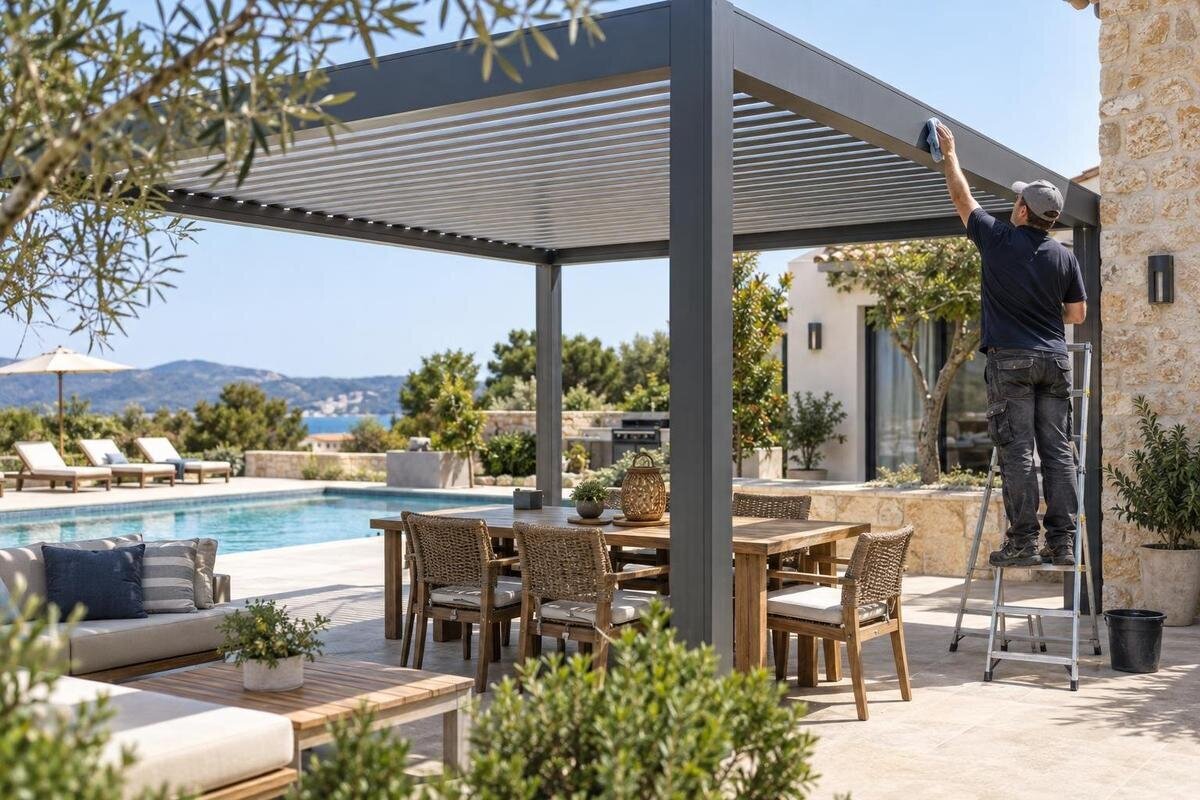
Build a short checklist for each departure. It can cover clearing leftover guest items and rubbish, checking the floor and furniture, cleaning agreed surfaces using the approved method, and returning movable items to the stated layout. Arrange the tasks in the order the cleaner normally works, with a separate place to note anything left unfinished. Include a visual check for damage or anything out of place, but do not ask cleaners to climb or reach beyond their assigned safe tasks. Distinguish a completed clean from a reported problem: a tick beside the cleaning task should not imply that a fault has been resolved. Ask the cleaner to record completion and flag outstanding issues before the next arrival, so the manager can decide whether the area is ready for guests.
Make the cleaning sheet specific to the installed surfaces and the care guidance for the delivered product. Keep the instructions for the Bloomcabin Pergola model with the property’s cleaning information so staff can find them during a changeover. Set any deeper-cleaning interval using supplier guidance and the conditions at the property, rather than choosing a universal timetable. List the approved supplies clearly and explain where they are kept. If a required product is missing or a task cannot be completed as instructed, the cleaner should report this rather than improvise. Separate routine cleaning from work that needs a specialist, and give less frequent tasks their own place in the schedule.
Keep a maintenance log for checks and repairs
Use an asset record to keep the model name, available supplier documentation, service contact and maintenance history together. If the installed item is Bloomcabin’s Bioclimatic Pergola, enter that name accurately so correspondence and service records refer to the same asset. Set maintenance intervals from the relevant supplier or installer guidance for the exact installation. For each reported issue, record the date, what was observed, who is responsible for arranging a response and whether the matter remains open. Add the action taken and the completion date when the work is finished. Keep any outstanding follow-up visible rather than treating a booked service visit as a completed repair. This gives an incoming manager a usable record without having to reconstruct events from messages between guests, cleaners and contractors.
Routine observations and repairs are different tasks. A manager may record visible damage, an unusual sound or a change in how a component works, provided the observation can be made safely during normal access. Staff should not climb, dismantle or attempt to correct a technical issue unless they are specifically authorised and qualified to do so. Record enough detail for a service person to understand what was noticed and when. If the concern could affect safe use, keep the area closed until it has been assessed.
Planning checklist 5
Plan access and downtime between bookings
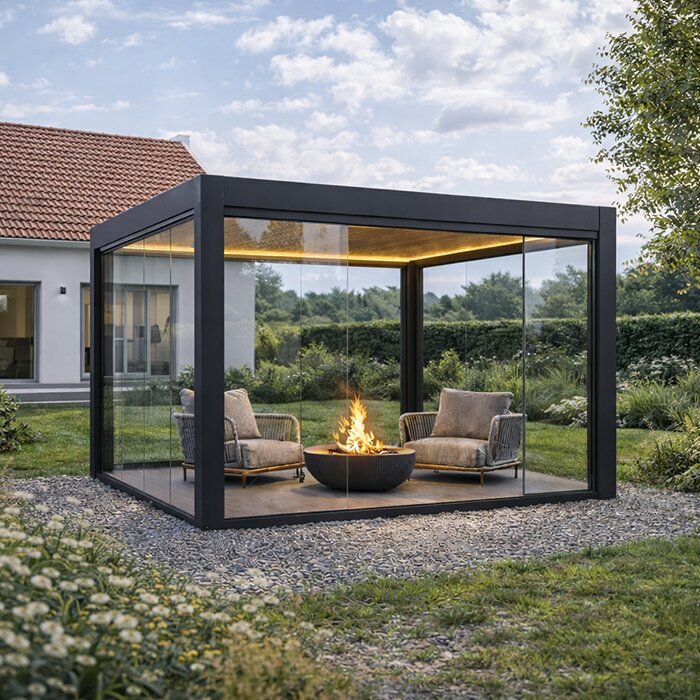
Put planned maintenance in the booking calendar rather than assuming it will fit into a short changeover. Allow time for access, the work, any follow-up and a handover before the next arrival. Agree who will open the property or site, how the service person will reach the work area and how guests’ privacy will be respected. If a booking overlaps with required work, make an alternative access arrangement or close the affected area. Tell affected guests clearly which part of the outdoor space will be unavailable and when, using the information currently confirmed rather than promising a completion time that remains uncertain. Make sure whoever handles guest messages knows about the closure. Allow for delays; promising use before the work is finished can leave the next guest without the amenity they expected.
If the asset record identifies a Wall-Mounted Pergola installation, give the service person the exact model information and site plan, then confirm what access the work requires. Check the proposed route and working space at the property with the supplier or qualified contractor. Mark the agreed approach on the plan and arrange for furniture or stored items to be moved where necessary before the visit. Agree who will return the space to its guest layout afterwards; this should not be left to an arriving guest. If the work affects use, keep the area closed until the responsible person has confirmed that the work is complete. Update the guest information to reflect any changes to the layout or operation before reopening.
Use guest and staff feedback to improve the process
After bookings, note repeated guest questions, reports about the controls, cleaning issues and any maintenance concerns raised by staff. Repeated questions may reveal that the arrival guide is hard to find or that the permitted use is unclear; unfinished tasks may point to a gap in responsibility. Compare the notes with the current guide and changeover checklist, then update the wording or task assignment where needed. For example, if guests regularly ask where movable chairs belong, clarify the layout rather than adding another general request to leave things tidy. Ask cleaners whether the revised instructions address the problem during their normal work. Keep a dated version so the owner, manager and cleaner are all working from the same instructions, and review whether the same question or missed task continues to recur.
Review the arrangement when furniture, the installation or the way the terrace is used changes. Recheck the floor plan, guest route, cleaning tasks and service access before updating the listing or reopening the area. If guests repeatedly ask whether the pergola may be used in particular conditions, clarify the confirmed guidance instead of leaving them to guess. Any change that affects the structure or site should be considered against the applicable professional reviews. The aim is a predictable space and a manageable routine, not extra technical work for guests.
Frequently asked questions
What should a guest guide say about the pergola?
Keep it brief and specific to the installation. Explain what guests may use, which controls they may operate if controls are fitted, where to find help and what to do if they notice damage or a fault. Do not rely on a product name or photograph to explain how the pergola works.
Should guests clean the pergola before check-out?
Guests can be asked to clear their own belongings and report spills or damage, but routine cleaning and maintenance should be assigned separately. Give the cleaner an agreed checklist and care instructions for the actual surfaces. Do not ask guests to adjust components or carry out technical checks.
Can I advertise the pergola as all-weather shelter?
Only describe its weather performance if it has been confirmed for the exact product and installation by the supplier or a suitably qualified professional. A pergola’s presence, name or appearance does not establish that it is waterproof or suitable in every condition. Keep the listing in line with the confirmed guidance.
What should I do if a guest reports damage?
Thank them, ask them to avoid the affected area or component, and pass the report to the owner or manager. Record what they observed and when. If the issue could affect safe use, close the area until a responsible person has assessed it and arrange qualified help where needed.
How do I fit maintenance between bookings?
Reserve time in the booking calendar for access, the work itself and a handover before the next arrival. Do not assume every job can be completed during a short changeover. If work overruns or the area cannot be used, update the guest arrangements and keep the pergola closed until it is ready for use.
A well-managed rental pergola depends on clear expectations as much as on its layout. When guests know what they may use, cleaners have specific instructions and owners can reach the area between bookings, routine care becomes easier to organise. Keep every claim and instruction tied to the actual installation, and treat a fault or uncertainty as a reason to pause and check rather than asking guests to work it out. The result is a more consistent experience for visitors and a clearer maintenance record for the people who look after the property.
