
Climbers on an Aluminium Pergola: Supplier Checks
PERGOLA PLANNING
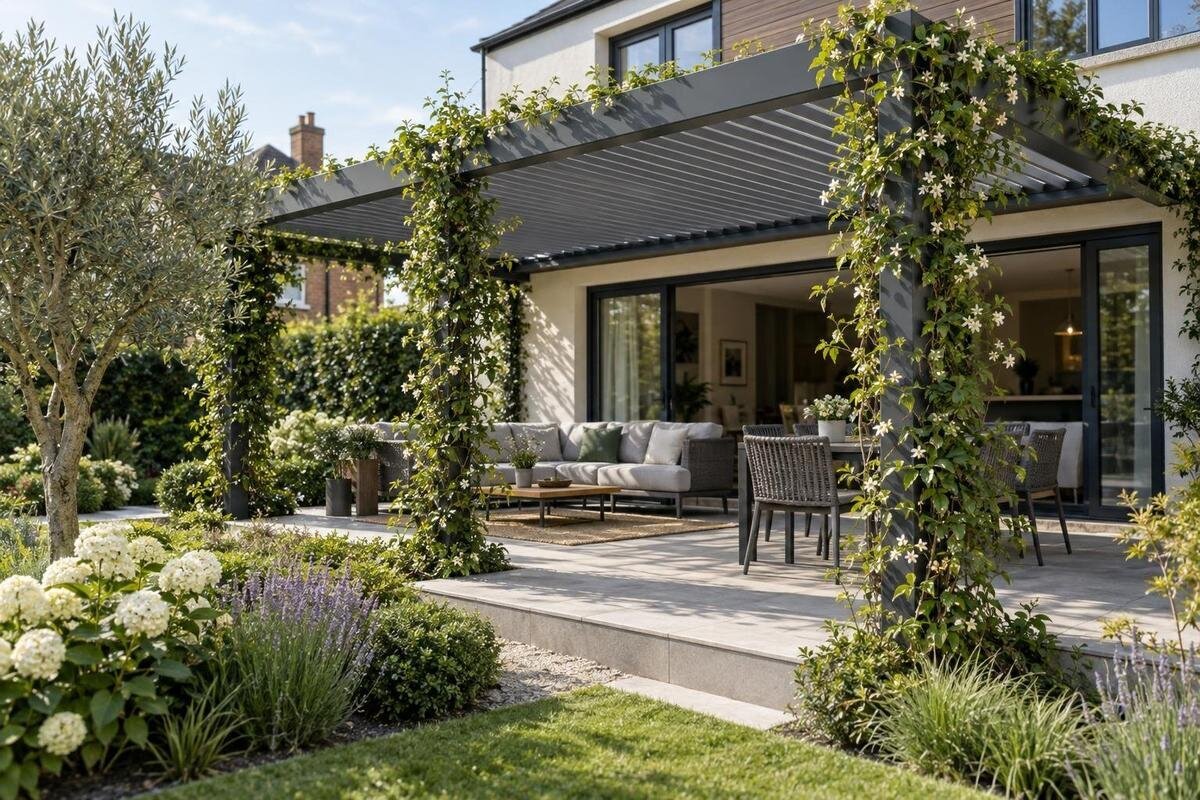
Climbing plants can soften a pergola and provide seasonal cover, but they also introduce loads and maintenance needs that may not have been part of the original frame specification. As a vine matures, stems, wet foliage and fruit can add weight; a dense canopy can also catch wind. If the roof has moving sections, leaves and growth may interfere with its operating clearance. Before attaching a plant to an aluminium frame, ask the supplier to review the exact pergola, fixing method, documented plant requirements and clearance plan. Where the frame cannot be approved for that use, plan a separate support that carries the plant independently.

Why a climber needs supplier approval
A pergola is supplied as a particular assembly, and its suitability for a climber cannot be inferred from its material or appearance. A plant adds load gradually rather than all at once. Stems can concentrate force at a few ties or clips, while a mature canopy spreads across a much larger area. Foliage may hold water after rain or irrigation, and dense growth can catch wind. A young plant in a pot tells you little about its eventual size, weight or spread. The frame may also need to carry the plant’s own trellis or wires. Treat the climber, its attachments and the pergola as one design question before growth reaches the frame.
Ask the supplier to consider the specific model, roof arrangement, plant and fixing layout, rather than asking only whether the product can take a vine. The reply should identify what was assessed, any limits, and whether the proposed attachment is accepted. A product photo, a similar-looking installation or an answer about another model is not approval for your configuration. If the supplier cannot assess the added loads, ask whether a suitably qualified structural professional should review the proposal, or whether the plant should have its own support. Do not treat silence as consent or assume a separately sold trellis is suitable for attachment to the pergola.
Document the mature plant, not just the seedling
Give the supplier the climber’s mature requirements, not just its nursery-pot size. Record its likely height and spread; whether it is annual or perennial; whether its stems twine, cling, use tendrils or need ties; and whether they become woody. Note expected leaf cover, fruit if relevant, seasonal leaf loss and pruning needs. These details affect how much of the frame the plant may occupy, whether it will need regular training and how often clearances must be restored. Obtain written growing information for the chosen species from a nursery or landscape professional familiar with the site. A fast-growing label is not evidence that the vine will stay light or contained.
On a dimensioned landscape plan, show the plant base, intended direction of growth and expected mature envelope beside the pergola footprint and height. Say whether you want growth above the roof, along an outside edge or on a separate trellis; each layout raises different questions about load and clearance. If the species is undecided, submit a short list with documented requirements for each rather than requesting approval for a climber in general. A model such as Bloomcabin Bioclimatic Pergola identifies which product you mean; it does not establish that the proposed plant is suitable.
Confirm permitted attachments and fixing points
Fixings need explicit permission because they determine where a plant’s force reaches the frame. A tie, clip, wire or bracket may load a narrow profile at one point; tensioned support lines can also pull on their attachment points. Ask whether any fixing is permitted, which locations can be used, what type is accepted, and whether a limit applies to the number, spacing or tension. Check whether the proposed method could conflict with joints, drainage, the surface finish or access. Do not assume that a surface can be drilled or clamped because it is aluminium, or that a removable clip is harmless.
Wait for written guidance before drilling, clamping or tensioning a wire against a pergola member. If approval is conditional, keep to the stated positions and method; it does not automatically cover another beam or roof component. Even plant ties can tighten as stems thicken, so ask how attachments should be checked as growth develops. Ask who supplies and maintains an approved attachment, and whether it affects other product terms. When Bloomcabin Pergola is the model under consideration, include its exact name and selected configuration in the request. Ask the supplier to mark permitted zones rather than relying on a generic fixing detail or another installation.
Allow clearance for every moving roof position
When a roof has moving sections, request the clearances needed through its full operating movement, not only the gap visible while it is stationary. A stem that appears clear in one position may cross the roof’s path in another. Ask for a drawing or written description of the movement envelope, including space needed for inspection and routine care. Mark this clear zone on the landscape plan and allow for mature growth and movement in wind, rather than relying on a narrow gap at planting time. If the supplier offers more than one roof configuration, make sure the response relates to the one being quoted.
Keep stems, tendrils and added trellis lines outside moving parts unless the supplier has explicitly approved the arrangement. Leaves can collect around joints or obscure areas that need access, while pruning becomes difficult if growth hides the edges of the operating zone. If you are considering the Bioclimatic Pergola, ask the supplier to identify the selected roof configuration on your plan and show the required clearances if it includes moving sections. Keep the intended growth route visible on the same drawing so any overlap can be discussed. Even a fixed roof needs access around joints and drainage paths.

When to use an independent trellis
An independent trellis can keep plant loads off the pergola when direct attachment is not approved. Independent means the plant’s support has its own load path; it is not tied back to a pergola post, beam or moving roof. Its position, height, footprint and ground support still need to suit the species and site, so freestanding does not by itself prove that it is adequate. Where design input is needed, ask a landscape designer or suitably qualified professional to assess the proposed support against the plant’s requirements and site conditions. Leave a deliberate gap and enough pruning access so growth can be kept from bridging onto the pergola.
Where the pergola attaches to a building, show the wall and proposed separate plant support on the same drawing. Do not assume that the wall, a nearby trellis or the wall-mounted frame can take the climber’s load; the actual arrangement still needs review. Bloomcabin Wall-Mounted Pergola identifies a model to discuss, not evidence that a vine may be fixed to its frame or the building. Ask whether the plant support must remain structurally separate and how its position affects installation, access, drainage and roof clearance. Include the support details so the supplier can see how the parts relate.
Give the supplier a dimensioned plan and plant details
A useful supplier brief starts with a dimensioned landscape plan, rather than a photograph alone. Show the pergola footprint, post positions, height, roof edge and any connection to a wall; add the plant base, proposed training route, likely mature spread and gap to moving components. Include an elevation or section if growth will approach the roof, because a plan view can conceal a height conflict. Mark doors, paths, windows and maintenance routes where the plant could obstruct them. Identify the exact model and configuration, such as Bloomcabin’s bioclimatic model, so the supplier can address the same assembly shown on the drawing.
Attach the plant information separately: species, expected mature height and width, growth habit, leaf or fruit cover, pruning needs and any reliable information about mature mass. If a source does not give a weight, do not invent one; state what is known and ask what further information is required. Label the drawing and configuration clearly, then request a reply that identifies the plan reviewed, any permitted fixing points, movement and maintenance clearances, and conditions or exclusions. The supplier may refer load questions to a qualified structural professional. Written, configuration-specific advice is more useful than an informal assurance.
Include pruning and cleaning access in the layout
Plan maintenance as part of the clearance requirement. A climber that needs frequent pruning may be manageable only if the relevant growth can be reached without using the pergola as a ladder or support. Decide who will prune it, how the canopy will be kept within the agreed envelope and how stems will be prevented from spreading onto moving parts or into spaces needed for inspection. Ask whether drainage channels, joints or access areas must remain clear. Allow for new growth between pruning sessions; a plan that assumes the plant will stay at its planting size is not a lasting maintenance plan.
Consider cleaning beneath and around the structure as well. Fallen leaves, flowers or fruit may reach the walking or seating area, while dense growth can make it harder to see where the plant has spread. Place the plant where ordinary pruning and tidying up are practical, and agree a routine with the gardener or landscape professional based on the chosen species. For the regular pergola model, mark maintenance and cleaning access on the proposed layout alongside the plant’s training route. Show where the gardener will need to reach stems and remove cut growth while keeping the walking route clear.
Describe wind exposure and seasonal plant loads
Site exposure belongs in the supplier brief because a developed canopy can present a broad surface to wind. Flexible stems do not remove the need to consider that exposure, and a plant may be much denser at maturity than it looks in its first year. Wet foliage after rain or irrigation, woody growth and fruit can also alter the load. Describe the actual setting, including whether it is open or sheltered and whether nearby walls or corners channel air. Do not try to calculate a structural rating yourself; the supplier can say whether further assessment is needed for the proposed model and plant.
If a structural assessment is requested, give the professional the same drawings and documented planting requirements so the review is based on one consistent proposal. Do not substitute a broad plant label or a photograph for details of species, mature size and planned training. For a wall-mounted pergola, include the wall relationship and full canopy position in the discussion; do not assume that fixing one side to a building resolves the extra plant load. Site conditions and actual support details matter more than a general description of the garden.

Keep written approval tied to the exact arrangement
Keep the supplier’s response specific and in writing. It should identify the pergola model and roof configuration, the plant or planting options reviewed, the proposed fixing method, any approved attachment zones and the clearances that must be maintained. Ask whether the response depends on regular pruning, a maximum growth envelope or keeping particular sections free. It should also state what was not assessed, such as a different plant, a later change in roof configuration or a trellis attached to the frame. This record gives the installer and gardener a shared reference instead of relying on recollection.
Give the response and final plan to everyone involved in installing the pergola, putting in the plant support and maintaining the climber. If the layout changes after review, ask whether the change needs a fresh assessment. Keep the model identity clear—for example, Bloomcabin’s wall-mounted model—but do not treat a product page or general confirmation about that model as approval for an unreviewed attachment. If the supplier cannot approve the intended arrangement, keep the vine off the frame and seek advice on a separate support.
Decide before planting or attaching the climber
Where possible, choose the plant, pergola and support together before fixing the final layout. That gives the supplier a chance to review the full arrangement before attachments or planting positions are committed. If the plant is already established, draw its current route and the growth you expect to retain, then ask whether that exact arrangement is acceptable. Do not train established growth across the frame while waiting for an answer. Keep the plan realistic about pruning, access and how far the canopy can extend, rather than using its present size as the limit.
There are three practical outcomes: proceed within the written approval; revise the plant, fixing or layout and submit it again; or carry the climber on a separately designed trellis. Treat a later species change, a different support method or growth beyond the agreed envelope as a reason to check the arrangement again. If the answer is uncertain, pause direct attachment rather than treating uncertainty as permission. The decision is whether mature growth can coexist with the specified loads, moving parts and maintenance access.
Frequently asked questions
Can any climbing plant grow on an aluminium pergola?
There is no blanket answer. Mature size, growth habit, weight, attachment needs and leaf cover differ, and the frame may have areas that must stay clear. Ask the supplier to assess the named plant and its documented requirements for the exact pergola. If direct support is not approved, plan a separate trellis.
Can I screw or clip a support to the frame?
Only if the supplier confirms the fixing type and the locations where it may be used. Do not assume that drilling, clamping or adding tensioned wire is acceptable because the frame is aluminium or a clip is removable. Get the guidance before attaching anything.
What clearance does a moving roof need?
Ask for the movement envelope and required clearances for the specific roof configuration. The plant and its support must stay outside those areas as they mature, not merely appear clear when the roof is stationary. Include access for inspection and maintenance in the same plan.
What should I send the pergola supplier?
Provide the exact model and configuration, a dimensioned plan showing the plant base and intended growth route, and documented information about the plant’s mature size, growth habit and pruning needs. Include the proposed attachment method and any moving-roof or maintenance clearances you need to preserve.
When should I use an independent trellis?
Use a separately designed support if the supplier cannot approve the plant on the pergola, or if the plant would interfere with moving sections or required access. Keep the trellis structurally separate rather than tying it back to the pergola, and have its position and support considered for the plant and site.
A useful planting plan names the plant, its support and the clear space around the pergola, rather than adding a vine later on the assumption that the frame will take it. Get approval for the exact arrangement or use a separately designed trellis, so the plan accounts for mature growth as well as the structure’s movement and maintenance needs.
