
When does a greenhouse pay for itself?
Greenhouse guide
When does a greenhouse really pay for itself?
A greenhouse does not pay for itself according to a fixed timetable. Your crop choices, how intensively you use it, the value of home-grown food and ongoing costs all matter. A clear calculation helps you decide which approach suits your garden and budget.
Anyone planning a greenhouse rightly asks whether it will be worthwhile. Yet the purchase price alone cannot answer that question. A structure used regularly for seedlings, tomatoes, herbs and delicate crops creates different value from one planted for only a few summer weeks. The right assessment therefore starts with your everyday gardening routine.
Include every one-off cost: the greenhouse, a suitable base, assembly, equipment and, where needed, water or electricity connections. Set these against annual harvest value, avoided purchases, a longer season and practical benefit. The latter is personal but important: people who harvest more often and raise plants more reliably usually use the greenhouse far more intensively.
This guide offers no blanket promise, but a robust approach for South African gardens. You will learn to set realistic values, include ongoing expenses and compare different use scenarios. The abstract payback question then becomes a decision suited to your space, available time, tastes and expectations of a greenhouse.
01 · Basics
What payback really means in the garden
Payback is the point at which value generated through use equals the initial and ongoing costs. In a garden, that value is broader than a supermarket bill: it includes vegetables, herbs, seedlings and an extended growing period. Still, keep the financial calculation separate from personal benefits such as enjoyment of growing or a more attractive garden room.
Start with a basic list, noting which expenses are one-off and which recur. Seeds, growing medium, fertiliser, water, possible energy use and replacement parts belong in the annual view. A purchase does not automatically become more valuable because it lasts; regular, suitable use is what turns it into measurable benefit.
- Separate measurable harvest value from comfort, learning and design, so that your financial assessment remains clear.
- Spread one-off costs mentally over the expected period of use without treating that as a guaranteed lifespan.
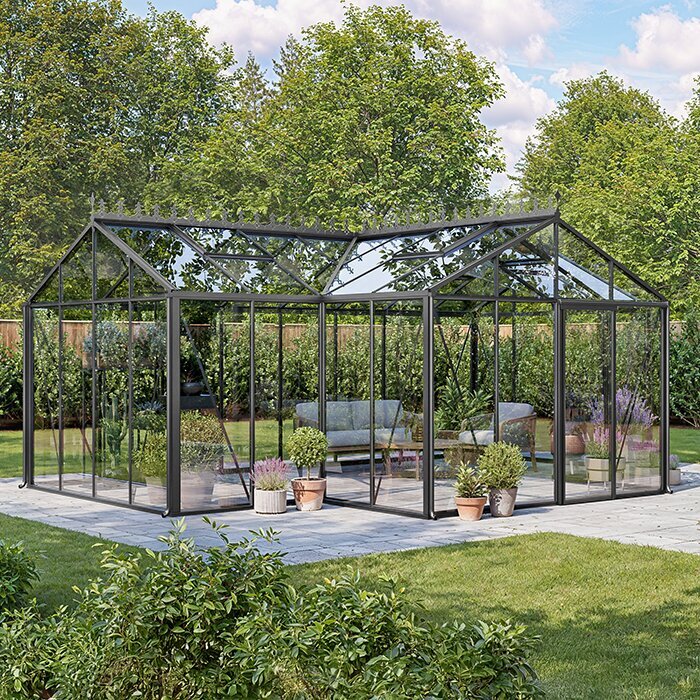
For a clearly costed starting point, a standard Classic greenhouse can form the basis for your individual specification.
02 · Investment
Capture all upfront costs
The first calculation is often too narrow. Alongside the greenhouse, consider a stable, level site and the anchoring method. Depending on the property, earthworks, a foundation, paths or drainage may matter. Interior equipment also changes the investment: a workbench, shelves, beds, shading, ventilation and irrigation should be included only if you genuinely intend to use them.
It helps to divide items into essential and optional costs. Essentials are everything needed for safe, functioning installation in line with the relevant requirements. Optional items make everyday use easier or enable a particular crop. Ask for a current, complete configuration and compare not only the visible product package but also the work required around the site.
- Note resources already available, such as a water connection, tools and suitable paths, so you do not count covered costs twice.
- Allow a small contingency for site-related work instead of basing the calculation on an ideal plot.
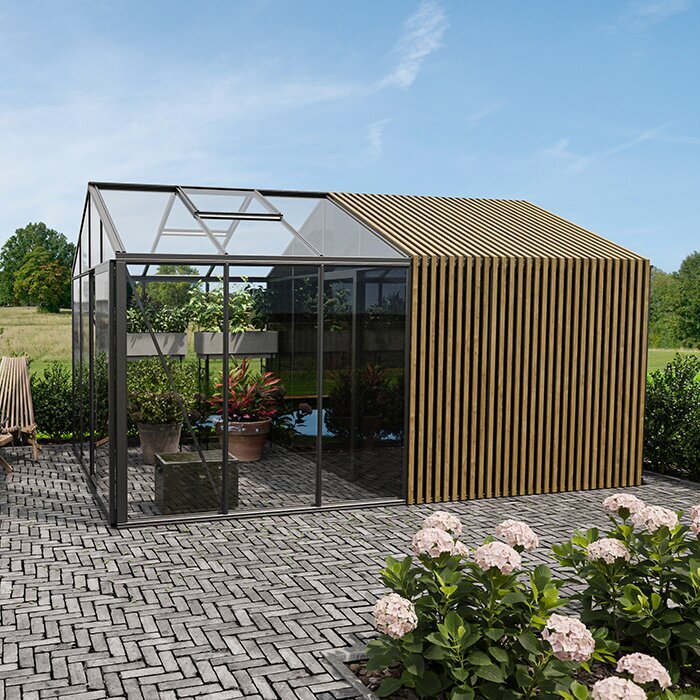
Against a house wall, a full-size standard lean-to greenhouse can bring existing space into your investment plan.
03 · Harvest value
Value your own harvest realistically
Harvest value does not come from the maximum possible yield, but from what reaches your plate. Start with crops your household buys and enjoys regularly. For tomatoes, salad leaves, herbs, peppers or cucumbers, value the harvested amount using a normal comparison price you choose. Use one consistent quality level rather than unusually expensive speciality products.
Record the harvest by crop and period. A simple notebook or spreadsheet is enough: harvested quantity, quantity used, surplus given away and losses. Seedlings can be valued as avoided purchases if you successfully use them. Unused surplus should not count in full because it does not replace an actual purchase.
- Value herbs by portion only when they are regularly used at home or can be preserved meaningfully.
- For new crops, begin with cautious quantities and increase values only after documented experience.
For varied cropping plans, a standard Classic greenhouse offers room for harvests, propagation and seasonal trials.
04 · Season
Put longer growing periods in perspective
A longer growing period can noticeably increase usefulness because propagation and heat-loving crops fit your routine better. The financial benefit arises only if you actually plant, tend and harvest during that extra time. An earlier start or later harvest does not automatically save purchases. What matters is whether it replaces products you would otherwise have bought.
Plan the season as a sequence rather than one summer crop. Propagation can be followed by early leafy crops, main crops and later follow-on plantings. This improves use of the space but demands attention to soil care, crop rotation and ventilation. If time is limited, a few dependable crops are often better than an unbroken, demanding planting plan.
- Create a monthly plan for sowing, planting, harvesting and changing beds before calculating extra yields.
- Allow honestly for empty periods; they can be useful for cleaning, soil care or holidays.
For use across seasons beside a house wall, a full-size standard lean-to greenhouse can be a coherent site solution.
05 · Running costs
Plan ongoing costs without wishful thinking
Individual ongoing costs are often manageable, but together they matter. They include seeds and plants, soil or compost, fertiliser, tying materials, water, and supplies for care and cleaning. If you plan to heat the greenhouse or use technical equipment, include its actual consumption separately. Compare these costs with harvest value every year, not only at the end of the assessment.
Time has value too, although you do not have to assign it a monetary amount. For some households gardening is restorative; for others it is a limited commitment. Decide openly whether your calculation records cash flows only or also includes your own time allowance. Then compare several years, as weather and crop development can vary.
- List water, seed and growing media as recurring items, even when individual amounts seem small.
- Assign expenses to specific crops so you can later see which plants work financially and on the plate.
A Classic greenhouse in the standard range can be equipped to match your real maintenance commitment.
06 · Location
Site and use affect the calculation
A favourable site supports use but cannot replace it. Light, accessibility, water within reach and sufficient space for doors, care and harvesting are important. If the greenhouse is far from everyday activity, sowing, airing and watering often become irregular. A convenient location can therefore add indirectly to harvest value because the structure is checked more often.
Near a wall or terrace, close access can be especially practical if construction conditions and drainage are suitable. Check building lines, local controls and possible building requirements with the relevant authority before proceeding. Do not rely on general statements: the property, municipality and proposed design may be assessed differently.
- Observe the proposed position over several days to assess shade, wind and routes realistically.
- Clarify building questions with the relevant local authority early, before making firm plans or placing an order.
Where depth is limited along the house, a full-size standard lean-to greenhouse can simplify access from the garden.
07 · Scenarios
Use scenarios rather than hoped-for figures
A good payback calculation uses at least three scenarios. In the cautious scenario, allow for low harvest volumes, full running costs and empty periods. The realistic scenario draws on your gardening experience and buying habits. An ambitious scenario may include additional crops, but should include only values you can manage and use in practice.
Divide total expenditure by the annual net benefit: harvest value and avoided purchases minus running costs. The result is guidance, not a promise. If benefits remain low in a weak year, the point moves further away. That is why it is more useful to continue the calculation annually than to settle on one figure before buying.
- Use the same cost items for every scenario so differences arise only from use and harvest.
- Check each year whether your realistic scenario still fits, replacing assumptions with your own records.
A Classic greenhouse in a standard size can provide a clearly defined planning base in every scenario.
08 · Long term
Assess value sensibly over the years
As experience grows, use often improves: you learn which varieties, timings and quantities suit your household. That can increase harvest value without requiring more space. Conversely, changing life stages, travel or a different diet can reduce intensity. A long-term view should stay flexible and include maintenance, possible replacement parts and continuing operating costs.
Alongside your own calculation, public liability, building insurance or storm damage may be relevant. Only your insurer can determine whether and to what extent a greenhouse is covered under the specific policy and site. Read written product conditions and the scope of any commitments carefully. This combines financial sense with responsible, long-term planning.
- Keep invoices, installation documents and an equipment list so that your cost base remains traceable.
- Check insurance cover and written conditions directly with the relevant contacts rather than relying on general assumptions.
If wall space will remain part of your garden concept long term, a full-size standard lean-to greenhouse deserves equally long-term cost and use planning.
Comparison
Which calculation suits your use?
How you use the greenhouse determines which values are reliable in a payback calculation. This comparison helps sort your assumptions. It does not replace an individual cost breakdown, but shows where harvest value, time commitment and equipment are weighted differently.
| Use profile | Typical crops | Value used in the calculation |
|---|---|---|
| Occasional summer growing | Tomatoes, herbs, individual cucumbers | Value only summer harvests actually used, and do so cautiously. |
| Regular food-growing garden | Mixed crops, salad leaves, peppers, herbs | Record harvests, follow-on crops and avoided seedling purchases. |
| Propagation-focused use | Vegetable and herb seedlings | Value only plants successfully planted out or used. |
| Comfort-focused garden room | Selected favourite crops | Keep harvest value separate from personal enjoyment and design value. |
| Planning across seasons | Early and late crops | Include extra harvest only where it demonstrably replaces purchases. |
Your personal payback calculation in five steps
Keep the first calculation simple and easy to follow. After the first season, you can replace assumptions with your own data. What matters is a method you can continue without much effort.
01
Collect the starting total
List the greenhouse, site preparation, installation and equipment required from the outset. Mark optional wishes separately.
02
Record annual costs
Capture consumables, plants, water and any equipment. Enter only costs that will genuinely arise in your planned operation.
03
Limit the crop plan
Choose a few crops that matter highly to your household. Estimate quantities cautiously and allow for care needs and holidays.
04
Record the harvest
Note quantities, use and avoided purchases. Record surplus, losses and gifted harvests separately so the values remain reliable.
05
Compare net benefit
Deduct annual costs from the estimated harvest value and compare the result with the starting total. Update the calculation after every season.
Checklist before you decide
These points help turn a general idea into a reliable personal calculation. Answer them with your existing garden routine clearly in mind.
01. I have listed every one-off expense, including site preparation and the interior equipment I want.
02. I know which crops our household buys, uses and genuinely enjoys regularly.
03. I have checked access to water and sufficient space for care, harvesting and entry.
04. I include annual running costs for plants, growing media, water and possible technical equipment.
05. I value only harvests we consume, preserve or demonstrably use instead of purchases.
06. I plan a cropping calendar with realistic empty periods, holidays and cleaning time.
07. I have raised local building questions with the relevant authority before committing to plans.
08. I keep a simple harvest and cost record to improve assumptions after the first season.
Frequently asked questions about greenhouse value
How long does a greenhouse take to pay for itself?
That depends on your starting total, annual costs and actual net benefit. Someone who regularly harvests suitable crops and replaces purchases achieves different value from someone who grows only occasionally in summer. Create cautious, realistic and ambitious scenarios instead of relying on a general timeframe.
Can I include my working time as a cost?
Yes, if you want your calculation to reflect total economic cost. Set your own reasonable time value and use it consistently in every scenario. If gardening is leisure for you, a calculation based solely on expenses and harvest value may be more meaningful. The important point is not to mix the two approaches unnoticed.
Which crops improve the calculation most?
The best choices are crops you buy often, can grow successfully and use reliably. Purchase price alone is not enough. Herbs or tomatoes can be worthwhile when used in everyday cooking; rarely eaten specialities do not deliver comparable household value despite a possible harvest. Your own eating habits are the best starting point.
Does raising my own seedlings count as harvest value?
It can count as an avoided purchase if you later genuinely use the seedlings. Record seed, growing medium and losses so the value is not set too high. A cautious assessment is sensible for early attempts. After several seasons, your records will show which propagation methods work for you.
How do heating and equipment affect payback?
Equipment can change your growing options, but also increases investment, consumption and maintenance effort. Include purchase costs and actual ongoing expenses separately. Value only the additional harvest you are likely to use. Whether equipment makes sense therefore depends more on your cropping plan than on a general recommendation.
Do I need to include approvals and insurance in my planning?
Check both early. Requirements can vary with the site, property and proposed design; the relevant local authority can advise on the approval route. Your specific policy determines insurance cover, so ask your insurer directly. Add possible costs or requirements to your personal calculation only after that clarification.
Plan the right greenhouse
A good calculation starts with your gardening routine
No standard figure can answer when a greenhouse pays for itself. A useful calculation combines full upfront costs, recurring expenses and conservatively estimated harvest value. The better you understand your crops, shopping habits and available time, the more reliable the result becomes.
Plan not for a perfect season, but for use you will enjoy sustaining for years. A manageable crop plan, a good site and consistent notes provide the best foundation. Bloomcabin helps you view the right greenhouse form as part of a considered garden concept.
Compare forms and equipment options with your site, crop plan and personal payback calculation in mind.
