
Should Outdoor Furniture Stay Under a Pergola All Year?
Pergola care
Keeping outdoor furniture beneath a pergola throughout the year can work, but the roof alone does not turn the area into dry storage. Wind-driven rain can enter from the sides, moisture can linger on furniture and soft furnishings, and the pergola has operating limits separate from the care instructions for a table or chair. The useful question is not simply whether an item fits under the roof; it is whether each piece tolerates the exposure at your site and whether you can dry, cover or store it when conditions change.

A pergola offers partial shelter, not dry storage
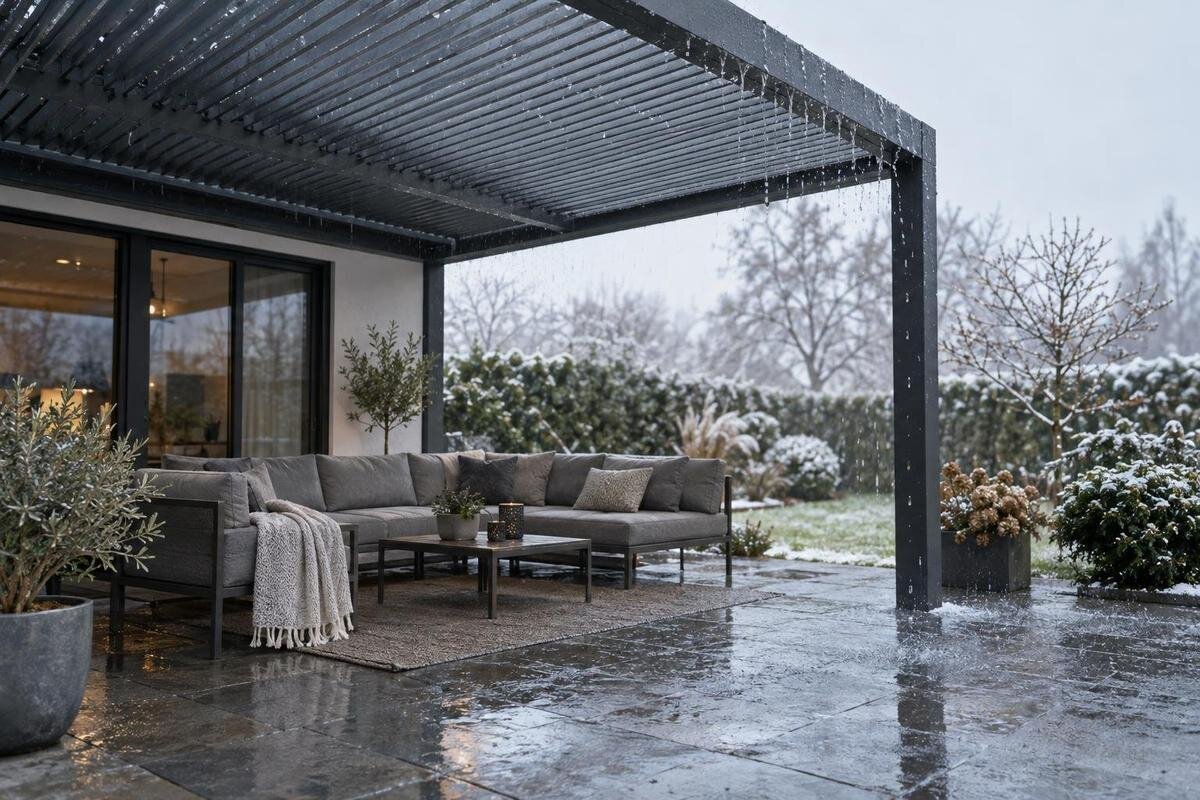
Treat a pergola as partial shelter rather than an enclosed room. Its roof can intercept some overhead rain and sun when configured to do so, yet open sides leave furniture exposed to wind, splash and low-angle weather. The result depends on roof design, site orientation, layout and the direction of the weather. Even when a seat looks dry during one shower, water may reach its underside, joints or cushions; changing wind and sun angles can alter exposure later in the day or season. A table near a post may be more sheltered than a chair by an open edge. Do not use the roof alone as proof that delicate items can be left unattended.
Begin with the furniture maker’s guidance: check whether each piece is intended for outdoor use, its permitted exposure, cleaning requirements and any advice about storing cushions or removable parts. Then consider the most exposed place where you plan to leave it, not the driest-looking spot beneath the roof. If you are considering the Bloomcabin Pergola, assess the shelter and furniture as separate purchases: the roof configuration affects exposure, while each table or chair has its own care requirements. Factor in how often you can inspect, move or dry items, particularly when you are away, before deciding what can remain in place throughout the year.
Wind-driven rain reaches beyond the roof edge
Rain is not always vertical. Wind can carry it beneath an open side, around a corner or across the patio, while drops landing on paving may splash onto chair feet and lower frames. Which position gets wet depends on the direction and intensity of the weather, the roof’s geometry and edges, nearby walls, and the distance between furniture and the exposed side. A wall may block one route but leave another open. Do not judge protection from a photograph or one light shower: a site can look sheltered in calm rain and behave differently when rain is driven sideways.
When comparing pergolas, ask how the proposed configuration handles rain arriving from the exposed sides of your patio. For the Bloomcabin Wall-Mounted Pergola, look for weather-performance information, observations made under stated conditions and a drainage diagram for the configuration you intend to buy. A wall-mounted layout does not by itself establish that furniture will stay dry. Check whether the information covers the roof position and side arrangement you plan to use, and distinguish protection from overhead rainfall from protection against rain blown beneath an edge. Those details help you judge where vulnerable soft furnishings might need to be moved when the weather changes.
Condensation can leave furniture damp without rain
Condensation is a different source of moisture from rain. When moist air meets a surface that has cooled, water can form as a film or droplets, even beneath a roof that has stopped direct rainfall. The amount depends on local air and surface conditions; a pergola does not control humidity. Water can also remain in seams, woven junctions, cushion undersides or beneath a tabletop after a splash. A dry-looking seat surface therefore does not prove every part is dry, while a damp morning alone does not show that the roof has leaked.
Air movement and time to dry matter. Open sides may let air through, but furniture pushed tightly against a wall or packed close together can still have surfaces that dry slowly. After wet or humid weather, check cushion undersides, joints and feet, and let removable pieces dry separately in a place permitted by their maker. Avoid stacking or storing damp cushions in a closed container. If an area repeatedly stays wet, move the most vulnerable item or change its cover-and-storage routine rather than assuming the pergola roof will solve the problem.
Match furniture care to its materials
Outdoor furniture is not one material with one weather tolerance. Timber may change in appearance or move with moisture and sun; coatings on metal frames can wear, and exposed fixings or joints may need attention. Synthetic weave, rope and fabric can differ in how quickly they shed water and dry. Sunlight can also affect some finishes and fabrics even when rain does not reach them. These are broad tendencies, not a diagnosis of a particular product: material, construction, finish and previous wear all matter. Do not infer a chair’s durability from its cushions or from another piece that appears unaffected.
Check the maker’s guidance for the frame and soft furnishings separately. It should say whether an item is intended for outdoor exposure, what cleaning is allowed and whether protective treatment or off-season storage is advised. When planning a seating or dining area beneath the Bloomcabin Pergola model, include those care requirements in your furniture choice rather than judging a set only by its appearance beneath a roof. Inspect joints, feet, seams, damaged finishes and places where water collects before deciding on year-round placement. Where the material or finish is unknown, avoid assuming that it needs the same treatment as another piece that looks similar.

Cushions need their own wet-weather plan
Cushions, pads, throws and removable covers need a separate decision from the furniture frame. Outdoor fabric may be intended to tolerate exposure, but that does not mean the filling, seams or backing will dry quickly after wind-driven rain or condensation. If pads remain damp between uses, they can become unpleasant and may develop mould or odour. Inspect them rather than assuming the top fabric tells the whole story. During unsettled weather or before a long absence, move removable soft furnishings to a suitable dry place if their care instructions allow. Repeated dampness is a reason to change the routine before visible staining appears.
If cushions must stay beneath the pergola, choose an arrangement you can maintain: keep them away from direct runoff, avoid leaving them on a wet seat, and allow the underside to air. Follow the cushion maker’s instructions about cleaning and storage, and make sure the storage space is dry before putting them away. Remember spare throws, seat pads and parasol fabrics too; small accessories can be less protected than a heavy frame. Bringing soft items inside after use, or checking them after wet weather, can preserve comfort and reduce cleaning, but it does not replace choosing materials suited to the exposure.
Use furniture covers with care
A furniture cover can reduce some rain, dust or sun exposure when selected and fitted appropriately, but its performance depends on the cover, the item and the conditions. A close-fitting cover that allows little air movement may slow drying or hold moisture against a surface; a loose one may let water in or move around. A poorly shaped cover can also collect water. Follow the instructions for both furniture and cover. Check whether the maker recommends air gaps or a particular fit, and whether the item needs to be dry before covering. A waterproof label alone does not mean condensation cannot form beneath it.
Use a cover as part of a routine, not as a way to leave wet furniture untouched for months. Dry the piece as the maker recommends, fit the cover without blocking pergola drainage, then inspect beneath it after rain and during damp periods. Air it when the instructions call for that. If you are considering the Bloomcabin Bioclimatic Pergola, assess any proposed side screens separately from furniture covers: they serve different purposes and have their own instructions. Ask which accessories are compatible with the model and what is included in the configuration you are buying, rather than assuming that the name describes an enclosed space.
Seasonal checks show whether the arrangement works
Base checks on conditions at your patio, rather than relying on a calendar label such as summer or winter. After wet weather, a windy spell or a long period away, look for damp fabric, water sitting in joints, new marks on finishes and debris where water should drain. Before a seasonal change, clean and store removable pieces according to their makers’ directions. If you are considering the wall-mounted pergola option, include access for routine care in your layout: you should be able to reach furniture for inspection without obstructing controls or moving parts. Check the installed model’s instructions before inspecting its fasteners or mechanisms.
Keep a short record of which places get wet, how long furniture appears to take to dry and which items need to be moved. This is not a formal weather test; it is a practical way to notice repeated exposure and decide whether a cover or storage change is worthwhile. If your pergola has a gutter or channel, check and clean it only as its manufacturer specifies, since drainage can affect where water lands. Make care proportional to what you observe, and do not operate a roof or accessory based on a guessed weather limit.
Pergola operation in winter is a separate decision
Furniture remaining in place and the pergola remaining in a particular operating state are separate questions. A roof may have specific instructions for when it can be opened, closed, adjusted or left unattended, and those instructions vary by model and configuration. Winter conditions can include wind and heavy rain, and some sites may also experience frost or snow. Do not assume a structure is designed for every condition simply because it is permanent or sold for outdoor use. Check the operating manual, stated weather limits and advice for any side enclosure. Furniture is not a reason to leave a roof in a position its maker has not approved.
For a model such as the Bloomcabin bioclimatic pergola, establish the permitted roof positions and operating conditions before deciding how you will use the space through winter. Ask for the model’s operating instructions, stated weather limits and guidance for any accessories or enclosure. Keep these requirements separate from your furniture-covering routine: protecting a table is not a reason to use an unapproved roof setting. Do not force a mechanism or guess at a setting when instructions are unavailable; obtain model-specific advice. If structural questions remain, take them to a qualified professional rather than treating dry furniture after one spell of weather as evidence of structural suitability.

Follow drainage paths when placing furniture
Water does not land only where it falls from the sky. Pergola drainage may send it through a channel or towards an edge, while splashes can reach chair feet or a tabletop below. When planning around the Bloomcabin wall-mounted model, compare the drainage drawing for your proposed configuration with the positions of tables, chairs and storage. Keep discharge routes clear and avoid placing valuable items directly where water emerges. If the drawing is not available on the product page, ask for it before settling the layout. This helps you distinguish a sheltered seating position from a spot that lies beneath a runoff route.
After rainfall, note which edges are wet and whether splashes reach the furniture. At another time of day, observe where direct sun falls; a roof may block overhead sun while low-angle sunlight still reaches some fabrics or finishes. Shift furniture if doing so reduces exposure or improves access, but do not obstruct drains, controls or moving parts. A position that stays dry in one shower is evidence only for those conditions, not a promise about other wind directions or seasons. Review the layout again if you add furniture or change the arrangement.
Choose what to leave, cover or store
Make the choice item by item. Leave a frame beneath the pergola when its maker permits outdoor exposure and your observations show that the site and care routine are manageable. Cover it when the cover is suitable, the furniture is dry as recommended and you can inspect underneath. Store items with delicate finishes, cushions or removable accessories when the maker advises it, or when repeated rain, lingering damp or long absences make maintenance unrealistic. If there is no reliable way to dry soft furnishings, treat them differently from a table or bench. This is a practical decision, not a promise that a pergola protects every item.
Before buying the Bloomcabin Pergola for your patio, consider whether the furniture arrangement will still be manageable when you are not using it every day. Put the furniture care instructions, exposure at each position and pergola operating information together, then identify which items can stay and which need another place during wet periods or absences. Follow any instruction to store an item rather than relying on the roof to compensate. Where information is incomplete, bringing vulnerable pieces inside is a cautious option. Revisit the arrangement if you change the furniture, add a cover or find that an item remains damp between uses.
Frequently asked questions
Will a pergola keep furniture dry in heavy rain?
Not necessarily. Rain can blow in through open sides or splash up from paving, and water may run from the roof into particular areas. Check information for the exact pergola and observe where water reaches your furniture; one dry shower does not prove year-round protection.
Can outdoor cushions stay under a pergola all year?
Only if their care instructions allow the exposure and they can dry properly. Outdoor fabric does not guarantee that cushion filling, seams or backing will dry quickly. If they repeatedly stay damp, bring them to a suitable dry place or follow the maker’s storage advice.
Should I cover furniture that is already beneath a pergola?
A suitable cover may reduce some exposure, but it can also slow drying if moisture becomes trapped. Follow the furniture and cover instructions, including any requirement to dry the item before covering it, and inspect beneath the cover after wet weather.
How can I tell whether condensation or a roof leak is making furniture wet?
One wet surface may not reveal the cause. Note when and where moisture appears, whether it follows rain, and which parts are affected. Compare what you observe with the pergola’s drainage information, and ask for model-specific advice if the pattern remains unclear.
Does an all-weather pergola mean my furniture can stay out?
No. The pergola’s weather and operating information applies to the structure, while the furniture maker’s instructions apply to each item. Check both, including any guidance for cushions, covers and side accessories.
Furniture can remain beneath a pergola all year when its own instructions allow outdoor exposure, the site does not leave it persistently wet and you can carry out the care it needs. Reassess after conditions change: roof protection, drainage and furniture durability are not interchangeable. If the answer differs by item, leave only the suitable pieces in place and bring cushions or vulnerable parts in when they cannot dry.
