
Buying a bioclimatic pergola on Black Friday: features to compare
Pergola buying guide
Black Friday can put several pergola listings side by side, but an offer label says little about how the roof will work in your outdoor space. For a bioclimatic pergola, the useful comparison is the system behind the name: how the louvres adjust, how rain is managed, what the controls require and how materials are specified. This guide helps you make a shortlist without assuming a discount is available or that product pages include the same features. Start with your intended use, then compare the exact model details and any seasonal offer conditions.

What makes a pergola bioclimatic?
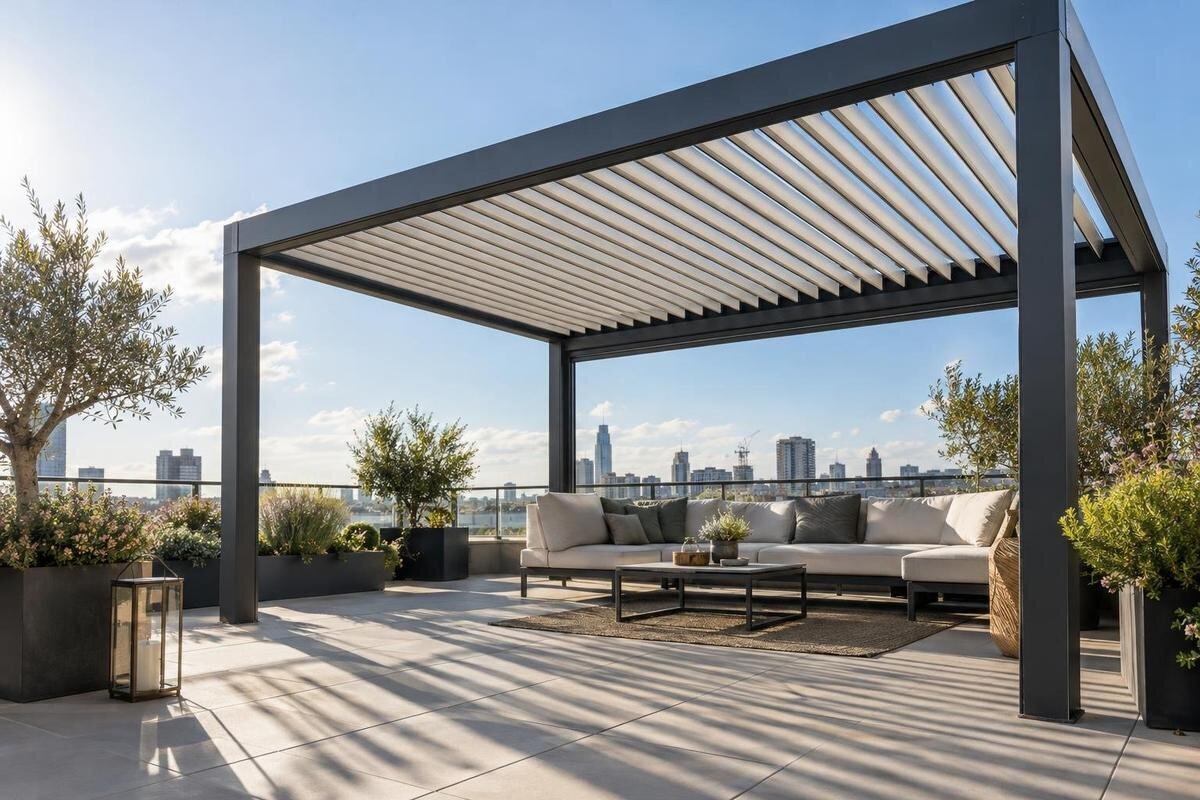
A bioclimatic pergola is generally understood to have a roof made from louvres that can be adjusted. Changing their position can alter direct sun, daylight and how open the roof feels; on some designs, it also changes how air passes through the roof. The term does not specify how far louvres move, whether the system is manual or powered, or whether a closed position manages rain. Nor does it establish the frame material or what is included. Treat the category name as a starting point, not a full feature description. The bioclimatic pergola product listing is a candidate to assess in that model-by-model way.
Before comparing seasonal offers, decide what you need the pergola to do. You might want adjustable shade at different times of day, an open view overhead, or a roof that has clearly described rain management. These priorities can involve trade-offs: changing louvre position changes the light and exposure above the space. Think also about whether the area is mainly used for meals, quiet sitting or entertaining, as this can affect how often you would value changing the roof position. Write down your must-have features separately from preferences, then check each against the exact model details. If a listing names a feature without explaining how it works, leave it as a question rather than assuming the most favourable interpretation.
How far can the louvres adjust?
Check what positions are possible, not only whether the louvres move. Look for a stated adjustment range or a clear diagram of available positions, and note any information about louvre direction or how the roof is divided into sections. A system with only open and closed positions may suit a different need from one with intermediate settings; do not assume either arrangement from a promotional image. If the listing does not explain the movement, ask for a drawing or written description before treating the feature as a match.
Consider when and where you expect to use the space. Midday shade and a clear view of the sky when the roof is open call for different settings, while low-angle sun can enter from the sides regardless of the roof position. Compare the stated movement with where people sit and the times you plan to be outside. Consider the direction of the seating as well as the pergola itself, because moving chairs later may change which shade positions are useful. If the general pergola product listing is also on your shortlist, do not infer movable louvres from the word pergola; check its exact roof description. Record the product version and the adjustment details so seasonal offers are easier to compare on a like-for-like basis.
What does the product say about rain and drainage?
Water handling deserves a separate line in your feature comparison. If a model says its louvres close, that alone does not establish that the roof is waterproof or how it performs in heavy or wind-driven rain. Look for an explicit account of whether the roof is intended to manage rain when closed, the role of any channels or gutters, where water exits, and which components are included. Diagrams can help show the layout, but an image cannot confirm every detail about performance. If a listing uses a broad term such as weather-resistant without describing drainage, treat the water route as unconfirmed.
Trace the stated route from the roof to its outlet and consider where that water would go in your intended position. Check whether an outlet connection is included or separate, and whether the route can be inspected and cleaned. Leaves or other debris may affect maintenance, so look for guidance on access as well as performance. It is useful to mark the proposed outlet position on your site plan, particularly where paths, planting beds or seating sit nearby. Use the bioclimatic option as a product page to check for model-specific details, not as proof that a feature is included. If the outlet or site connection is unclear, ask the supplier or an appropriately qualified installer to explain what needs assessing.
Choose controls you can use day to day
The operating method affects whether you will adjust the roof regularly. Compare only the control types named for the exact model: a listing may describe manual or powered operation, but do not assume either from the category. For a manual system, check where the handle or operating point sits and whether it will stay accessible with your usual furniture in place. For a powered system, look for the stated control interface and whether different roof sections operate separately, if that information is provided. Photos may show a control, but do not confirm that it is included.
Ask what components are supplied, what any powered controls require and what happens if the system cannot be operated as expected. Check whether an override, compatible control or maintenance information is specified rather than assuming one is available. The listing identified as bioclimatic does not establish motor operation from its category title; rely on the details for the selected configuration. If electrical work is required, have a suitably qualified professional confirm the installation scope. Treat a control described vaguely or listed as an optional extra as unconfirmed until its inclusion and compatibility are clear.
Check materials and finish by component
Read the material description for each part rather than accepting one label for the whole structure. Check what the product information says about the frame, louvres, moving parts, fixings, drainage channels and finish; a single material name may not apply to everything. Look for stated coatings, surface treatments and maintenance guidance. A named metal or finish is not, by itself, proof of corrosion resistance, UV stability or suitability for every site. If the space has salt-air exposure, strong sun or frequent moisture and leaf debris, check the manufacturer’s written care and suitability guidance for those conditions.
Consider what ongoing care involves, including any cleaning instructions and whether replacement parts are described. Where warranty terms are provided, read their scope, conditions and exclusions rather than relying on a brief promotional statement. Compare how easily the stated care tasks could be reached once the pergola is in place, especially if the roof will sit near trees or other sources of debris. If the listed pergola option is another contender, compare its stated components and care requirements separately; do not carry a material description from one model across to another. Note any unanswered questions about finish or maintenance while comparing packages, as an attractive seasonal price does not resolve whether the materials meet your requirements.
Consider the pergola’s position in your outdoor area
Make a simple plan of the space you intend to use, including doors, windows, paths, seating and nearby trees. Note when sunlight reaches the area and which sides are open. That helps you judge whether adjustable overhead shade addresses your main need or whether low-angle sun from the side will still matter. Check the stated dimensions and clearances for the exact model against doors, access routes and furniture, but do not rely on a product image to show how much room the installed structure needs. Leave access for normal operation and any maintenance described by the manufacturer.
Position also matters when you consider rain outlets, nearby walls and existing services. Think about where a stated outlet would discharge and whether its position conflicts with a doorway or the route people use. If a wall-adjacent layout is one possibility, the wall-mounted pergola listing identifies a mounting category to compare; it does not establish that a particular wall is suitable or that the product has the louvre features you want. Keep site observations separate from product claims, and ask a suitably qualified professional to assess structural or service-related questions that cannot be answered from the listing.
Confirm the mounting and installation scope
Mounting format is separate from louvre performance, but it affects which products can be considered. Confirm whether the exact configuration is freestanding or designed to attach to a building, then identify the posts, brackets, fixings and site preparation described by the supplier. If it is attached, have a suitably qualified building professional assess whether the existing wall and proposed connection are appropriate. A product name or an image showing a pergola beside a wall cannot prove this. For a freestanding design, request the stated support and fixing information and have site-specific concerns assessed rather than improvising.
The wall-mounted format is relevant only if that arrangement is genuinely under consideration; its label does not establish a fixing method or suitable wall. Before ordering, clarify who handles assembly, what preparation is required and what the installer’s scope covers. Keep this separate from the roof-feature comparison: a clearly described louvre system does not resolve an unsuitable mounting arrangement. If installation involves electrical or drainage connections, arrange an assessment by the relevant qualified professional. Do not assume that work is included just because it appears in an illustration or general product description.
Separate the main features from optional extras
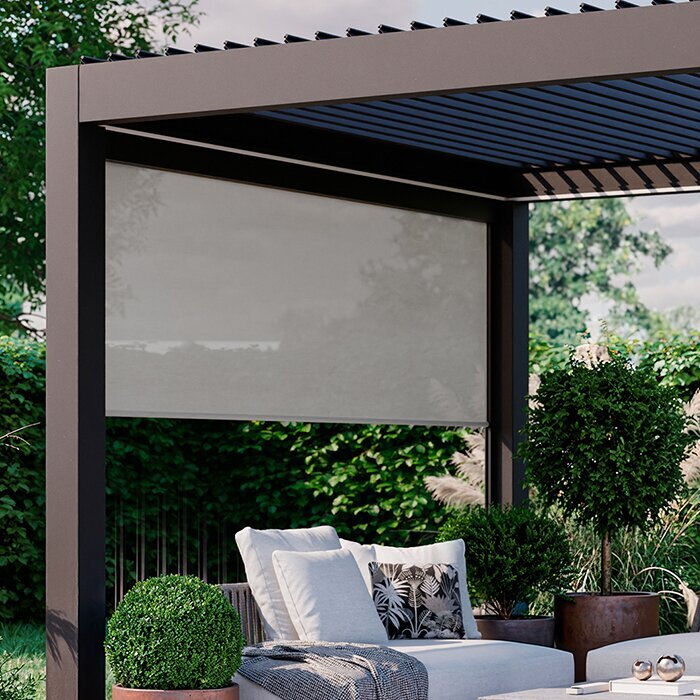
A product page may present several configurations or accessories, so check the exact option selected rather than comparing only the model name. Look for differences in roof operation, controls, finish and drainage components, and confirm whether any accessories shown are included or available separately. If lighting, screens or other additions appear in a product image, do not assume they come with the pergola. Check whether optional components are compatible with the selected configuration and whether their requirements are described. A change in options can alter what you are comparing even when two listings use similar wording.
A simple comparison table helps: mark each priority as included, optional, not stated or not required. For the core pergola, give particular attention to louvre adjustment, rain management, operating method and material descriptions; record extras in a separate column. Add the source of each detail, such as the selected configuration or a written response, so it is clear which statements still need confirmation. This makes a missing detail visible without treating it as a negative product claim. Ask for written clarification if a feature’s inclusion or compatibility is ambiguous. When comparing Black Friday packages, match the exact variant and accessories before deciding whether the difference between offers matters to your plans.

Compare Black Friday offers on the same basis
Black Friday timing does not, by itself, confirm that a product is discounted or that an offer suits your needs. If a promotion is displayed, compare the exact model and configuration, the stated inclusions and the terms that apply to that offer. Check whether the displayed price relates to the options you have selected, and note any separately stated delivery or installation charges. Do not judge value from a percentage or crossed-out figure alone if the comparison basis is unclear. Keep the offer wording alongside the product details so you can compare like with like.
Read any stated conditions, exclusions and return information before placing an order, and make sure the chosen variant is the one shown in your order summary. The general pergola candidate belongs in the same comparison only if its documented roof type and package meet the same requirement; a product title alone is not a like-for-like match. Rank your must-have features before looking at the headline price. If a critical detail remains vague, the offer label is no substitute for confirming it. That approach keeps attention on the product you would actually receive, not just the event wording.
Complete a model-specific check before ordering
Before paying, write down the exact model and configuration, dimensions, finish, roof type, control method, drainage details and included components. Check that the information applies to the selected variant rather than to a different option or a general brochure image. Confirm the mounting arrangement and installation scope, then check practical details such as access for delivery and whether any stated accessories are part of the order. Keeping these points together makes it easier to spot a mismatch between the product page, offer terms and checkout summary.
Resolve important gaps before committing. If the rain route, material suitability, control requirements or mounting details are not clear, ask the seller for model-specific information; ask a suitably qualified professional to assess site, structural, electrical or connection questions where relevant. Check that any response identifies the selected variant, since a general answer may not apply to every configuration shown on a product page. If a must-have feature cannot be confirmed, treat it as unresolved and decide whether to wait or consider another option. A seasonal offer is only useful when the documented features, configuration and installation plan still suit the space you intend to use.
Frequently asked questions
Are bioclimatic pergolas waterproof when the louvres are closed?
Not necessarily. Closing louvres does not, by itself, confirm waterproofing or explain where rainwater goes. Check the exact model’s stated rain performance, drainage route and included components. If those details are missing, ask for clarification rather than relying on the category name or a product image.
Are the louvres always motorised?
No. The operating method varies by model, so look for an explicit description of manual or powered operation and check what controls are included. Do not assume a motor, remote or app is part of the package unless the selected configuration says so.
How do I decide whether the louvre adjustment will suit my yard?
Consider when you use the space, where the sun reaches it and whether you want shade, open sky or a view overhead at those times. Compare those needs with the adjustment range stated for the exact model. A louvred roof changes overhead exposure; it does not block low sun coming from the sides.
Does Black Friday guarantee a better price?
No. The event name alone does not confirm a discount or show whether an offer is better value. If a promotion is displayed, check its terms and compare the same model, configuration and inclusions against other candidates.
What should I confirm before placing an order?
Check the exact model and configuration, louvre operation, drainage details, controls, material descriptions and included parts. Confirm the mounting and installation scope for your site, too. Resolve any important unanswered questions with the seller or a suitably qualified professional before ordering.
Treat any event price as one part of the decision, not as a feature in itself. A suitable bioclimatic pergola should have documented louvre adjustment, rain management, controls and materials that fit your plans, alongside a mounting and installation arrangement that suits the site. If a critical detail remains vague, record it as unresolved rather than filling the gap with a category name or product image. That gives you a clearer, like-for-like comparison when you decide whether to order.
