
Buying a wall-mounted pergola: check how it connects to your home
Pergola buying guide
Buying a wall-mounted pergola means checking two things together: whether the product suits the outdoor space and whether the home’s wall can accept the connection described by its manufacturer. A neat exterior finish does not show what lies behind it, and a product photo cannot confirm the fixing method. Treat the wall construction, proposed position, water interface and installation documents as part of the buying decision. The aim is to have a specific connection assessed for your house before you commit to a model or arrange delivery.

How a wall-mounted pergola connects to your home
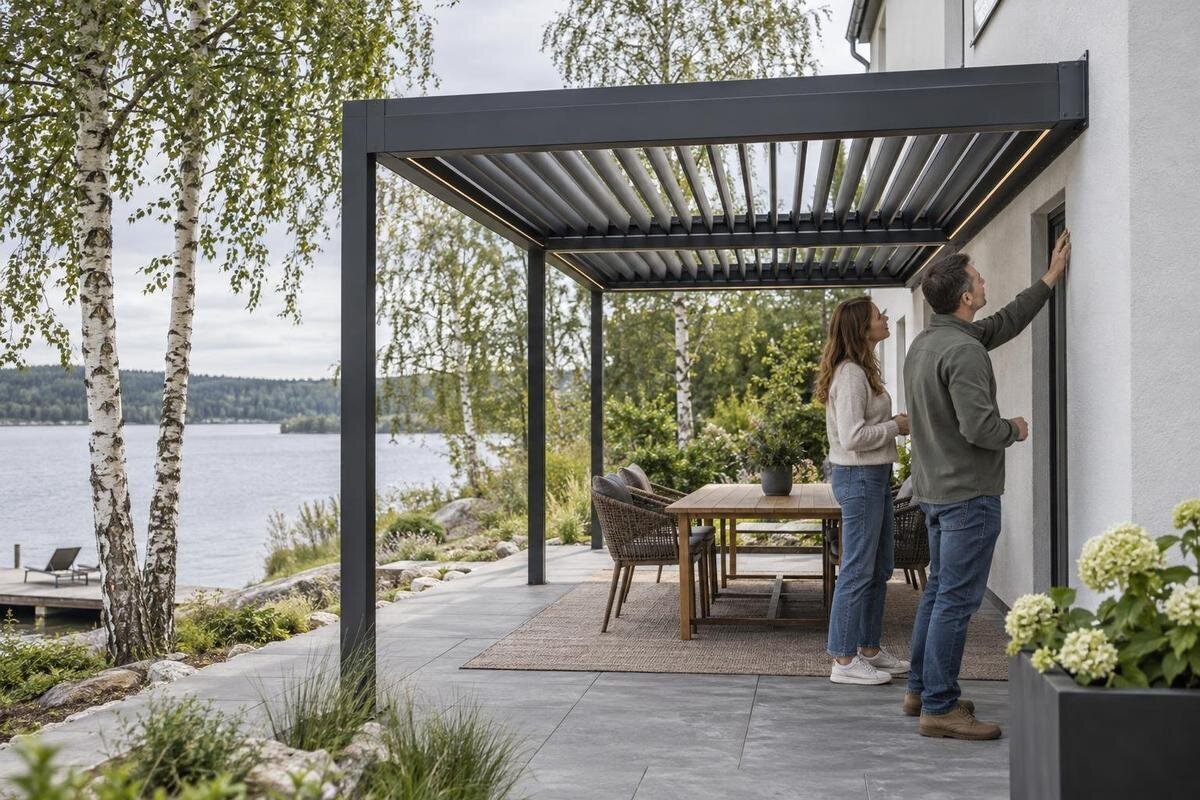
With a wall-mounted pergola, the connection to the house forms part of the design’s support arrangement; other parts may be carried by posts or supports specified for that model. That makes the building part of the buying decision. You are not simply matching a frame to the patio footprint: the proposed attachment must suit a particular section of wall and fit around openings and the roof edge. A catalogue label or appealing image cannot establish that. Treat a Bloomcabin pergola product page as a place to inspect whatever information is supplied, not as evidence that the pergola suits every house or wall type.
Before comparing appearances, picture where you want the pergola to sit and how you will use the area beneath it. Look for a drawing that shows the house-facing side, overall projection and support arrangement, so you can relate the model to the building. These details vary by product; do not infer the post layout, attachment or clearances from a lifestyle photograph. A model that fits the paving can still place its wall connection across an opening or service point. If the listing does not make the arrangement clear, ask for current drawings and installation documents before comparing it with another option. The term ‘wall-mounted’ describes the arrangement, not a guarantee of a sealed joint or universal fixing.
Identify the wall behind the finish
Identify the wall along the exact line where a connection is proposed, rather than describing the house only by its broad construction type. The outside face might be brick, render, cladding or another finish, while the layer that carries a connection may be different. Brick veneer, for example, is not the same description as solid masonry; framed and clad walls also have their own build-ups. A visible surface alone cannot tell a seller which fixing detail applies. Check building plans or renovation records if you have them, and give the installer an honest account of any uncertainty. The task is to identify the actual wall build-up, not to guess from its appearance.
Note the condition around the proposed attachment as well. Point out visible cracking, loose finishes, water staining, previous repairs, added cladding or insulation, and anything else that may affect an assessment. These observations are not a diagnosis, but they should not be left out of a sales enquiry and discovered only after delivery. A qualified person may need to inspect the site or review records before confirming whether the wall can take the proposed connection. When asking about the Bloomcabin pergola listing, include the location and what is known about the wall, then request an answer tied to that information rather than a generic assurance that the model attaches to a wall. If records show an extension or recladding, note which part of the façade they cover.
Ask for the model-specific fixing detail
Ask for the installation documents for the exact model and configuration, not just a general pergola brochure. The documents should make clear where the house connection sits and identify the prescribed attachment components and the wall construction they are intended to suit, if that information is provided. Request the manufacturer’s position on any alternative substrate or fixing instead of assuming a contractor can substitute hardware without affecting the product requirements. The connection also needs to be considered in relation to the model and site conditions; wind exposure and the structure’s configuration are matters for a suitably qualified professional, not estimates from a sales photo. This pergola product listing can be one comparison point, but the listing itself does not confirm a fixing schedule.
Before placing an order, have the responsible installer or another qualified professional explain how the proposed detail matches your identified wall, and ask who is responsible for that assessment. If the manufacturer’s documents are unclear, ask the supplier to obtain clarification rather than relying on a verbal guess. Keep the answer with the quote and model reference, including any conditions or exclusions. If the product information does not say what wall build-up is required, treat that as an open question, not proof that the attachment is universal. Ask what site information the reviewer needs from you and what remains subject to inspection. That gives you a more useful basis for comparing wall-mounted pergola fixings before the product arrives.
Check wall layers and hidden services
An exterior wall is a layered assembly, and the point that looks solid from outside may not be the layer intended to receive an attachment. A brick-veneer wall, a rendered masonry wall and a lightweight framed wall with cladding are not interchangeable descriptions. Added insulation, a cavity or later renovations can change what lies between the outer face and the structural backing. Do not choose a pergola on the assumption that a familiar surface material guarantees a suitable fixing. Ask the installer to identify which part of the actual wall the product’s connection is intended to engage, and how the visible finish and any intervening layers are addressed in the documented detail.
Surface appearance may not reveal hidden services or differences between sections of the same façade. Share available plans or records, but do not treat an old plan or a phone photo as final confirmation if the wall has since changed. Ask the installer to review the information against the selected model and refer uncertain structural or weatherproofing questions to an appropriate professional. When comparing another pergola product page, check whether its installation information is specific enough to answer these questions. A product title or general mounting image is not a substitute for a detail that relates to the actual wall.
Set the position against doors and roof edges
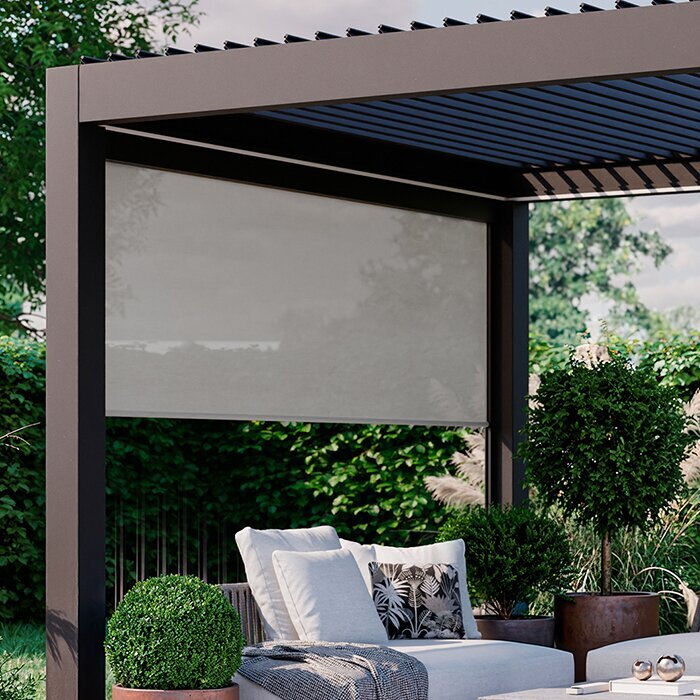
Check the proposed position against the home before ordering, not just the width of the patio. Mark the intended wall line and note nearby windows, sliding doors, vents, downpipes, outdoor taps, lights, eaves and gutters. Consider whether openings need to remain usable and whether the attachment or a support could interfere with access, cleaning or maintenance. A wall connection placed too close to a door or window can affect how the area works, even if the overall frame fits on paper. Use a site sketch to make these conflicts visible, then have the installer verify the position against the actual product drawings.
Ask for plan and elevation views showing the model’s overall width, projection, attachment height and support positions, where available. Compare them with the wall openings and the room or deck immediately inside: headroom, views, daylight and the path of a door may matter in everyday use. These are selection checks, not changes to make by guessing at the frame. Confirm measurements on site before the order is final, especially if walls, paving or roof edges are not square or level. Consider furniture and routes from indoors as well as maintenance access. When looking at a Bloomcabin product-page entry, compare its documented dimensions with your measured space rather than relying on proportions in an image.
Get the weatherproofing and drainage detail
Consider water at the junction as carefully as the shape of the frame. Fixing through or beside an external finish can affect the wall’s weatherproofing, while nearby eaves and gutters already have a route for roof water. Ask for the manufacturer’s connection detail and have the installer explain how the proposed work treats the wall interface in a way that suits the existing wall system. If the chosen design has overhead elements that direct water, ask where that water is intended to go at the house side and outer edge. Do not assume a trim, bracket or bead of sealant makes the junction weatherproof; the answer should come from product instructions and a site-specific professional assessment.
Look at the whole drainage picture around the proposed location. A downpipe, gutter outlet, deck edge or paved area may affect where water falls or collects, so note these features when the installer reviews the site. Ask whether existing drainage or access for wall maintenance would be obstructed, and whether the design needs a separate detail or adjustment. Rain from the existing roof and any runoff from the pergola are different paths to consider. Get the agreed approach recorded in the installation scope so the product information and the installer’s plan do not leave a gap between them. A listing such as a separate pergola listing is useful to compare only after you establish which details are documented for that exact model.
Confirm site and property permissions
Work out what permissions or approvals may apply to the proposed location before committing to an order. The answer can depend on the property, design, site and local requirements, so do not assume that a pergola connected to an existing home is automatically exempt or automatically permitted. Ask the relevant local authority or a building certifier what information is needed for your proposal. If the home is rented, in a strata scheme or subject to a body corporate, check the owner’s or manager’s process as well. A wall attachment can make a building-owner or shared-property decision relevant, not just the preferences of the people who will use the outdoor area.
Check boundary and shared-area considerations early, particularly if the proposed position is close to a neighbour or common property. Keep product drawings, site measurements and wall-connection details together so the person assessing the proposal can review the actual configuration rather than a vague pergola description. Ask the supplier what documents it can provide, and establish whether you or the installer will supply them; do not assume someone else will arrange it. For the product page for a Bloomcabin pergola, use only the information actually shown and request further drawings if the local reviewer or property manager needs them. If the final position or connection detail could affect an approval, resolve that before treating the order as settled.
Compare fixings, inclusions and exclusions
Compare products against the same written checklist instead of relying on a title such as ‘wall-mounted’ or on photographs. For each candidate, establish the exact model and configuration, overall dimensions, house-side connection detail and installation documents available. Ask which brackets, plates, trims, covers, seals and other connection parts are supplied, and whether any listed fixings are intended for the wall construction identified at your home. If anchors or other components are selected by the installer, make that division of responsibility clear. A parts list matters because two listings that look similar may not include the same items; do not assume the mounting hardware is in the box.
Record unanswered points beside the quote before comparing totals: separate supply items, site work, exclusions and any requirement for professional review can change what each option involves. Request written confirmation of compatibility conditions and the installation instructions for the selected version, including whether proposed substitutions need manufacturer approval. The Bloomcabin pergola entry should be assessed on its own stated details, not on assumptions borrowed from another model. Keep a copy of the product information and document version with your order so questions can be matched to what was offered. This makes comparisons more meaningful and helps reveal unresolved work at the wall.

Coordinate the order with the installer
Coordinate the purchase with the person who will install the pergola, especially if they have not yet inspected the wall. Give the retailer and installer the same model reference, drawings, wall description and site measurements; different versions of a plan can lead to different assumptions about position or parts. Agree who checks final dimensions, who confirms the wall, who supplies separately specified fixing components and what happens if the site differs from the information provided. This is not just about arranging a delivery date: the order and installation scope should describe the same configuration. Keep the written answers with the final model details.
Before confirming the order, read the seller’s terms for changes, cancellation, returns and reporting damage or missing parts, and clarify how the delivered components can reach the intended storage area. Check access from the unloading point to the installation area; gates, steps or narrow passages may matter. These are practical logistics, not details to leave until installation day. Do not assume an installer will store, inspect or assemble items unless the scope says so, and avoid arranging work around an unconfirmed supply date. If a later site inspection finds a different wall construction, establish how that will be handled before ordering rather than assuming the product or installation can be changed without consequence.
Decide whether the connection is documented
A wall-mounted pergola is ready for a confident comparison when both the proposed position and the connection have been described clearly. You should know the wall build-up, have the product-specific attachment information, and have the intended method reviewed by the responsible installer or another qualified person. The dimensions and support layout should fit the home, water at the junction should have a documented treatment, and any relevant permissions should be checked with the appropriate people. Together, these answers let you compare suitability rather than judging only appearance or footprint. Keep the final model reference alongside the drawings and written assessment.
Pause if the response is simply that a model ‘fits most walls’, if no one can identify what the connection needs to engage with, or if the installation documents do not match the product being offered. Ask the seller to clarify the gap in writing and have the question reviewed by an appropriately qualified professional. If the wall, water interface or clearances cannot be resolved, delay the order or reconsider the location rather than relying on a generic assurance. The decision should rest on a product detail that can be checked against your actual house, not a guess based on its exterior finish.
Frequently asked questions
Can a wall-mounted pergola be attached to any house wall?
No. Suitability depends on the wall’s construction and condition, as well as the connection details specified for the particular pergola. Have the actual wall and product documentation assessed by the installer or another appropriately qualified professional; the visible finish alone is not enough to confirm a suitable fixing.
Is a brick veneer wall suitable for a pergola attachment?
The words ‘brick veneer’ do not confirm that a particular attachment will work. The connection needs to suit the wall’s full construction, including the backing behind the visible face, and the selected product’s instructions. Give the installer accurate details about the wall and ask for a model-specific assessment.
Will the wall fixings come with the pergola?
Do not assume they are included. Check the parts list and ask which brackets, fasteners or other connection components are supplied, which are selected separately and who is responsible for confirming their suitability for your wall. Get the answer in writing before placing the order.
Should I check approvals before ordering?
Yes. Find out what approvals or property permissions, if any, apply to your proposed design and location. Requirements can depend on the site and property. Ask the relevant local authority or a building certifier, and check with the owner or strata or body corporate manager where applicable.
What information should I give an installer before asking about a wall-mounted pergola?
Share the proposed location, known wall construction, relevant plans or renovation records, site measurements and the exact product reference. Point out visible damage, nearby services and anything that could affect access. Photos can help explain the site, but should not replace an assessment of the wall.
For a wall-mounted pergola, the decisive buying detail is a connection considered for both the selected product and the actual house wall. Once the fixing information, wall interface, drainage and site clearances have been assessed and recorded, you can compare models on more than appearance. If any of those details remains uncertain, resolve it before the order is final.
