
Buying a Pergola: How to Choose the Right Type
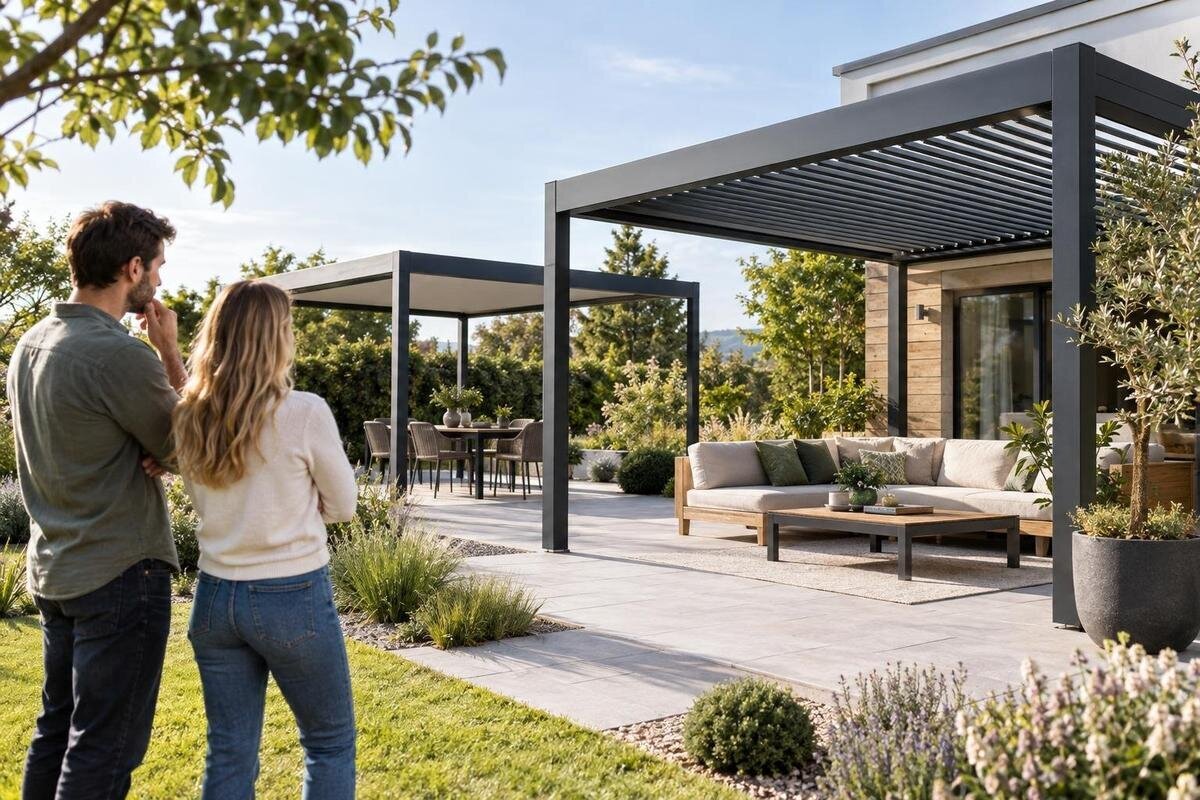
Pergola buying guide
Choosing a pergola is less about finding a universally best style than matching its structure, roof and placement to the way you use your outdoor space. Compare the main design choices before focusing on a particular listing: what the area needs to do, how much shelter you expect, how the structure relates to your home, and what installation and upkeep involve.

Define the pergola’s purpose
Think about the activity the pergola should make easier: meals outside, a place to sit, a link between indoors and the garden, or a defined area for entertaining. The intended use affects more than the footprint. It shapes whether you prioritise shade at certain times, a view out to the garden, privacy, or space around furniture for people to move. Consider who will use the area and how it connects with the doors and paths you use every day. A structure that looks attractive in isolation may be awkward if it interrupts a route or leaves the main seating outside the covered zone. Note whether furniture will stay in place or move around, as that changes how people need to pass through the area.
Write down your two or three priorities in order rather than treating every desirable feature as essential. Shade for a dining setting may matter more than a fully enclosed feel, while a lounge area may benefit from the option to vary overhead cover. Distinguish an everyday use from occasional entertaining: a setup for meals may need different clear space from low seating, and planned movement around it matters. Be realistic about what a pergola can provide: an open roof does not create an enclosed room, and even a more substantial roof needs product-specific weather details. Use Bloomcabin's pergola listing as a page to compare against your needs, not as evidence of features that are not stated.
Compare open, fixed and adjustable roof styles
Pergola descriptions can refer to different roof arrangements. An open or slatted top leaves gaps, so it offers a different balance of light and shelter from a continuous covering. A fixed roof gives a consistent overhead surface, while an adjustable design lets you change the roof position if the product is built to do so. Some ranges also offer retractable fabric or canopy-style options. These labels are not interchangeable, and their meaning can vary between listings. Compare how a roof opens, closes or stays in place rather than assuming a familiar term means the same mechanism across products. Consider whether you want to change the amount of cover while using the space, and check any stated limits on operation.
Treat terms such as bioclimatic as a starting point for checking the specification, not a complete description of how a roof works. Assess the Bloomcabin bioclimatic pergola listing through the details on its own product page: look for the roof mechanism, how it is controlled, what positions it allows and what is stated about rain. If any of those points are missing or unclear, ask the seller before you decide. A label alone does not establish that a roof is fully weatherproof, opens in a particular direction or includes a particular control.
Choose between a freestanding and wall-mounted structure
Freestanding pergolas can be placed as separate features within an outdoor area, while a wall-mounted design is intended to meet a building. The distinction changes the relationship between the structure and the home, not just its appearance. A freestanding option may suit a spot away from the façade if the site and product instructions support that placement; a wall-mounted one can visually connect an outdoor area with a room indoors. Neither description by itself tells you how much space a product occupies, how it is supported or what surface it can be installed on. Think about whether you want the pergola to sit within the garden or feel connected to the house.
With a freestanding model, consider circulation around the structure and whether its position works with paths, garden beds and views. Do not assume that freestanding means temporary, movable or suitable for any surface. With a wall-mounted model, ask what type of wall or building connection the design requires and who is qualified to assess it. A wall-mounted pergola listing gives you a named category to inspect, but its label cannot confirm that your home's wall is suitable. Have site-specific attachment and weatherproofing questions assessed by a qualified installer or building professional before committing to that arrangement.
Match the roof to the shade you want
Shade changes through the day as the sun moves, and nearby trees, fences and buildings also affect how much of an outdoor area is shaded. Consider when you normally use the space and whether you want more consistent cover or the option to change the amount of light. A roof with gaps, a solid cover and a movable system will create different conditions underneath; the actual result depends on their design and location. Looking at the site at the times you expect to use it can help you decide whether your priority is shade over a table, softer light across a seating area or a clear view of the sky. Seasonal changes may also affect the shade you get.
Think of the pergola as one part of the shade plan, not a guarantee that every seat will be covered. Compare the roof's stated layout with the furniture and movement you want to accommodate, and check whether side elements are included or optional. For a specific example, consult the Bloomcabin pergola product page for the information it actually publishes; do not use its name or a product image to infer the covered area or amount of shade. If coverage at particular times matters, confirm what to expect for your intended orientation with the seller or an installer.

Set realistic expectations for rain and weather
An outdoor structure's performance in rain and wind depends on its design, materials, installation and exposure. An open roof will generally allow rain through the gaps; an adjustable roof may change position, but that does not by itself make it watertight. Even a continuous cover needs product-specific information about water run-off and the conditions for which it is intended. Check the listing and manufacturer guidance for limits and maintenance rather than drawing conclusions from a photograph or a broad claim such as all-weather. This matters if you expect the outdoor area to remain usable during unsettled conditions, rather than mainly seeking shade in fine weather.
Decide what level of shelter you expect, then see whether the pergola type and product details support that expectation. Ask what any stated performance applies to, whether drainage components are included and whether installation requirements affect it. Do not assume that the listing labelled as a bioclimatic pergola manages wind or rain in a particular way; those points need to be stated for the product. Where exposure, attachment or site conditions raise technical questions, seek advice from the supplier and a suitably qualified professional instead of trying to infer safe limits from a product description.
Check how the pergola fits the site and the home
Look at how the proposed position relates to the house and the wider yard. A pergola can frame a view, provide a transition between inside and outside, or divide one outdoor area from another, but its posts and roof line may affect sightlines and access. Consider doors, windows, exterior finishes, neighbouring structures and the routes people use around the garden. Think about whether the structure will feel in proportion to the area and whether it will block a view or an opening you use. If the site has constraints, identify them early and ask the relevant professional how they affect your choice.
Ask what the particular product and site require: suitable installation surfaces, preparation, assembly method, access during installation and any trades involved. A wall-mounted label, such as the one on the Bloomcabin wall-mounted pergola page, does not show that the connection suits every building. Check the product instructions and have the wall or ground conditions assessed by an appropriate installer where needed. Approval requirements can vary with location and design, so ask your local council or a qualified building professional what applies rather than relying on a general online description.
Compare materials by upkeep as well as appearance
Appearance and upkeep are linked. Compare the material and finish stated for each option, then ask what routine cleaning or maintenance they require in your conditions. Timber, metal and composite descriptions cover a broad range of products; species, treatment, coating and construction can affect care, so material names alone are not a reliable comparison. Consider whether the finish will sit comfortably with the house and garden, how visible dirt or wear may be, and whether you are prepared to maintain it over time. A claim that a product is low maintenance should be supported by product-specific guidance rather than taken as a guarantee.
Look for clear care instructions, details about repair or replacement parts, and any limits on cleaning products or maintenance methods. Do not assume two pergolas described with the same material will need identical care. Check the pergola listing for its stated materials and maintenance information, then ask the seller about any gaps. If the published details do not specify a finish or care requirements, treat that as an unanswered question rather than making an assumption. Maintenance is part of the buying choice: choose an appearance you can keep in the condition you want, not only one that suits the house on day one.
Decide which extras are essential
Optional screens, privacy panels, curtains, lighting or other accessories can change how an outdoor area feels and how much the project costs. Think about whether you need privacy, shade at the sides or lighting after dark, and whether those features are essential now or can be handled separately. Accessories are not automatically compatible with every pergola, and a product image may show items that are not included. Check each component's status, compatibility and installation requirements before building it into your plan. Electrical additions should be discussed with an appropriately qualified professional; a product listing is not installation advice.
Separate the base structure from optional extras when comparing listings. Confirm what is included in the order, whether controls, screens, posts or finishing pieces are part of it, and whether compatible additions can be purchased later. For example, the bioclimatic pergola product page is a place to verify published inclusions, not proof that any particular accessory comes with it. If you expect to add something later, ask about compatibility and whether the change affects installation, appearance or care. This helps avoid choosing a model around a feature that is only pictured, optional or sold separately.
Compare the full cost, not just the headline price
Compare the full amount you will need to spend, not just the displayed price of the structure. An order may involve delivery, assembly, site preparation, base work, finishes and optional accessories, but exactly what is included varies. Ask for a written breakdown that separates the product from services or extras, then compare options on the same basis. A price is difficult to judge without knowing what it covers. If one option seems cheaper, check whether the difference reflects fewer components, a different roof configuration, extra work that is not included or a simpler finish, rather than assuming it is better value.
Check practical purchase terms before payment: the stock status and delivery information shown for that order, access for delivery, assembly arrangements, returns, damaged-item processes and the terms of any applicable product cover. Do not assume delivery to the property includes carrying the item to the installation area or assembling it. Ask whether a quotation is final, what might change it and how long its terms apply. These details can affect your decision, particularly if you need to coordinate an installer or other work. Keep written answers with the product details you are comparing.
Review the product details before placing an order
Before placing an order, compare the same essentials across your shortlist: overall form, roof operation, materials and finish, stated coverage, included parts, site requirements, care, delivery and assembly. Where a feature is central to your choice, find it in the written product information rather than relying on a category name or image. Make a note of anything that remains uncertain and get an answer before paying. If you are relying on an installer, involve them while the product is still under consideration so they can flag site-specific constraints before delivery.
Finally, decide which compromises you can live with. A roof that prioritises openness may not provide the rain protection you want; an attached design may look integrated but needs a suitable building connection; and privacy or lighting extras may add cost and work. There is no single pergola type that suits every yard. Choose the option whose documented features, installation needs and ongoing care fit the way you will use the space. A clear comparison is more useful than a decision based only on style or the broad promise of a listing.
Frequently asked questions
Which type of pergola suits a small backyard?
There is no single best type for a small backyard. Consider how the structure will sit in relation to the house, paths and furniture, then compare roof styles with the shade and shelter you want. Check the product’s stated dimensions and site requirements before choosing.
Is a freestanding or wall-mounted pergola better?
It depends on the location and how you want the outdoor area to connect with the house. Freestanding designs are separate features within a space; wall-mounted designs meet a building. For an attached option, have the building connection assessed for your particular site.
Will a pergola keep rain off?
Not necessarily. An open roof can let rain through, and an adjustable roof is not automatically watertight. Check the product-specific information about rain handling, drainage and intended conditions rather than relying on the category name or a product image.
What does bioclimatic pergola mean?
The term is commonly associated with pergolas that have adjustable roof elements, but it does not confirm how a particular product operates. Check the listing for the roof mechanism, controls, available positions and stated weather performance.
What should I check before ordering a pergola?
Confirm the roof style, materials, included components, site and installation requirements, delivery arrangements and maintenance guidance. If a detail affects your choice, find it in the product information or ask the seller before paying.
A suitable pergola brings together the right layout, roof style and level of shelter for your outdoor routine. Choose on the strength of the product details and site requirements, not a category label alone, so the design you buy makes sense for the space you have.
