
Buying a Pergola for a Coastal Property: What to Consider
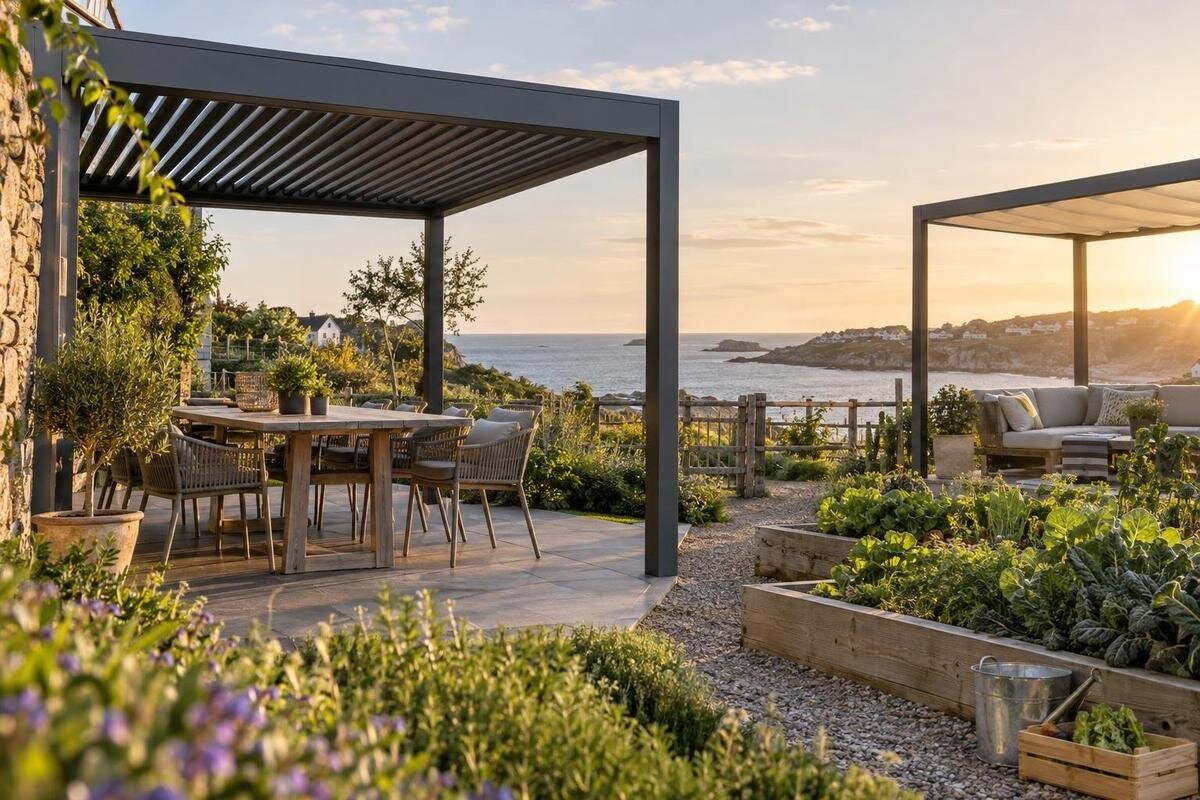
Pergola buying guide
Buying a pergola for a coastal property starts with the site, not the seaside look. Salt-laden air, wind and shifting sun affect outdoor areas differently, while the layout determines whether a structure suits how you use the space. A sheltered courtyard can have different needs from an open patio, even within the same neighbourhood. Before comparing styles, record the proposed position, intended use and questions the product information must answer. That gives you a practical basis for comparing pergolas for coastal homes without assuming that an attractive photograph proves suitability.

Assess the exposure at the pergola site
Coastal exposure varies across a single property. A patio open to sea breezes, an exposed corner and a courtyard behind neighbouring buildings may experience different levels of salt-laden air and wind. Distance from the shoreline is useful context, but it does not establish what reaches the exact spot where the pergola will stand. Note which sides are open, what lies between the space and the sea, and whether gaps between buildings channel airflow. This site description is a better starting point than treating all homes near the coast as having the same conditions.
Look for practical clues around the proposed footprint: salt residue on outdoor fittings, early corrosion on exposed metalwork, or the direction from which wind usually reaches the patio. Treat these as clues, not a suitability test; no visible corrosion does not prove that a product will suit coastal exposure. Nearby walls, fences and planting may change local conditions, so note what provides shelter without assuming it guarantees protection. If you can, observe the area during the breezy conditions you expect to use it in and record where gusts or spray enter. Share those details with the supplier or installer rather than relying only on the suburb name.
Check materials and finishes for salt-air exposure
Salt and persistent moisture can increase corrosion risk in susceptible metal components, but a pergola's performance depends on the complete assembly: frame, finish, screws, brackets, connectors and exposed edges. A material name or visible coating alone does not reveal how every part is treated or maintained. Joints between components and surfaces that are difficult to clean may have their own care requirements. Terms such as weather-resistant can also be broad. Avoid assuming that one material or a colour description is automatically best for a seaside property; ask how the supplied combination is intended to cope with the conditions at your site.
For any option, including a Bloomcabin pergola listing, find written material and finish details or request them if they are not shown. Ask whether the manufacturer identifies the product as suitable for the site's level of coastal exposure, which exposed parts need inspection, and what cleaning routine is approved. Check whether salt air affects warranty coverage and whether the specified fixings are included. Do not assume that alternative screws, coatings or maintenance products can be substituted. A clear answer covering the whole assembly is more useful than a broad assurance about the main frame alone.
Confirm wind suitability for the exact location
Coastal wind can be highly local: an open frontage, a gap between buildings, a corner or a raised part of the property may feel different from a sheltered patio. Fences and planting can alter airflow, but their presence does not confirm how a pergola will perform. Consider the direction the space is open to and whether it regularly gets gusts, not just how calm it feels during a viewing. Record nearby structures that might funnel air, too. These observations help you explain the setting, but a general description of the yard cannot replace product-specific wind guidance.
Before ordering, ask for written information about the wind conditions the particular model is intended for, any site or installation limits, and the fixing or base requirements in its instructions. Have a suitably qualified installer or building professional assess whether those requirements fit the proposed surface and position; do not estimate structural suitability from appearance or weight. When assessing the Bloomcabin bioclimatic pergola listing, check what wind-related documentation is actually supplied and seek clarification on anything not stated. Guidance may depend on the mounting surface or configuration, so match its conditions to your actual layout.
Plan shade for the hours you use the patio
Work out when you want the area shaded, then observe the patio at those times rather than judging from a single midday visit. The sun's position changes over the day and seasons; low-angle light can enter from the side even when the overhead area is covered. Note the house's orientation, nearby trees and neighbouring structures, and mark the parts of the patio that need shade for dining or seating. This helps distinguish shade over a table from shade across the whole footprint. It can also show whether the proposed position would leave a doorway or a regular route exposed.
Pergola designs differ in how open or covered their overhead area is, so verify the arrangement and operation described for the option you are considering. A label such as adjustable or bioclimatic does not tell you how much shade reaches your patio, or what happens when the covering is open. When examining the Bloomcabin pergola product page, use images to understand appearance, then check the written details or ask about the roof layout and shade. Camera angle, time of day and surrounding buildings can differ from your site, so a photograph is not a shade assessment.

Match the footprint to how you will use the space
Think about how you will use the area on an ordinary day, not only how it looks when empty. Dining, lounging, entertaining or using the patio as a route between the house and garden each needs a different balance of coverage and open floor area. List the furniture you expect to keep there, including chairs pulled out from a table, and decide which paths must stay clear. You may want a place to sit out of direct sun while keeping sightlines or a feeling of openness. Naming the main use helps you assess options without paying for features or coverage that do not serve your needs.
Sketch the layout with furniture in its usual position and show the usable area beneath the proposed footprint, not just the outer dimensions. Allow for people moving around seats, carrying items through the space, and opening doors or gates; a pergola should not make the patio awkward to enter. If privacy, airflow or changing shade matters, list each priority so you can compare options consistently. When reviewing a bioclimatic pergola product page, relate its stated dimensions and features, where provided, to your plan. A product name cannot show how comfortably the area will work.
Measure the site, clearances and delivery access
Measure the space where the pergola is intended to sit, including its length, projection and available height. Compare those measurements with the product's stated overall dimensions, and check whether supports or other parts affect usable space. Look up as well as across: eaves, gutters and windows can constrain placement, while doors need room to open. Do not estimate the footprint from a photograph. A simple site sketch with measurements and fixed features gives you a more reliable basis for comparing product information and discussing installation than an approximate description.
Note the position of downpipes, outdoor services, changes in ground level and any nearby boundary or access constraint. Check with your local council or a building professional whether local planning or building requirements apply; do this before ordering rather than assuming the same conditions apply everywhere. Also consider how the product and its packaging will reach the installation area, including gates, narrow paths, steps or limited unloading space. Ask the seller what access information is needed and confirm that delivery and installation arrangements suit the property. These practical checks can affect which size or configuration is feasible.
Choose between wall-mounted and freestanding layouts
Decide whether a pergola alongside the house or one set apart better matches the layout. A wall-mounted arrangement may keep supports away from one side of the area, but it depends on the particular wall, connection and treatment of the junction with the home. A freestanding structure can be positioned away from the house, but still needs a suitable surface and the base or fixing method specified for its design. Neither arrangement is automatically easier or more suitable for a coastal property. The fit depends on the building, ground conditions and the space you want to cover, not simply on which style looks right.
For a wall-mounted option, have a qualified professional check that the supporting structure and proposed connection meet the product instructions; a wall-mounted description does not certify every wall. For a freestanding option, confirm that the specified base or anchors suit the actual surface, and get professional advice if that is unclear. Check clearance around eaves, doors and drainage features, and establish who is responsible for installation. If you are considering the wall-mounted pergola listing, use its exact written installation information, or request it, before deciding that the house can accommodate it.
Check rain handling and ongoing maintenance
A pergola is not automatically waterproof. The amount of rain shelter depends on the specific overhead design and configuration, and wind-driven rain may still reach the patio. If protection from rain matters, check what the product information actually promises and what it does not. Ask how rainwater is managed and where runoff will fall, including whether it could make a path slippery or land beside an entrance. Consider this alongside the home's existing drainage rather than assuming the pergola will direct water in a particular way. Clarify these points before choosing a configuration or settling on its position.
Salt, dust and leaves can all affect how often an outdoor structure needs attention, but the right care routine depends on the product. Ask which cleaning methods and inspection schedule the manufacturer recommends, and whether coastal exposure changes the maintenance guidance or warranty terms. Do not apply cleaning chemicals or treatments unless they are approved for the materials and finish. When reviewing this Bloomcabin pergola option, look for maintenance instructions or request them before purchase; do not infer a routine from the product's appearance. Include the time and access needed for upkeep in your decision, not just the initial layout.

Compare product details and the full purchase scope
Use the same comparison points for every option: overall dimensions, materials and finishes, stated coastal suitability, wind guidance, overhead arrangement, installation conditions and maintenance. Separate facts from marketing terms. If a description does not say what site conditions it covers, record that as an unanswered question rather than treating it as approval. A page labelled bioclimatic, for example, does not by itself explain how its parts operate or what performance to expect. Use the Bloomcabin bioclimatic pergola page as one item to assess against its written information, not as evidence that it meets requirements that are not stated.
Then check what the purchase includes and what may need to be arranged separately. Confirm the exact configuration, finish, fixings and any components named in the order, along with delivery, assembly or installation arrangements if those are relevant. Ask for a clear breakdown of the product and any other project costs so that separate site work or installation is not mistaken for part of the product price. Read the current ordering, warranty and return terms, paying attention to any conditions related to coastal exposure. Do not assume that two similarly named options have the same contents or terms.
Confirm the details before placing an order
Before ordering, gather the site measurements, exposure notes and furniture plan, then compare them with the exact product configuration you intend to buy. Ask the supplier to clarify any missing information about materials, coastal suitability, wind conditions, shade or maintenance, and keep the response with the product documentation. If installation depends on a wall or ground surface, share the instructions with the qualified professional assessing that site. For the Bloomcabin wall-mounted pergola page, for example, verify that the configuration and installation conditions you are considering are the ones documented for the product, rather than relying on the category name.
Check the delivery route and installation arrangements against the measurements you took, and confirm the package contents, responsibilities and relevant order terms before payment. If a key answer is still missing, pause and resolve it rather than filling the gap with an assumption about coastal products generally. The same applies if the site conditions differ from those described in the product guidance: ask a qualified professional how to proceed. A considered purchase leaves you clear about the pergola you are ordering, the evidence supporting its suitability and the upkeep it will require.
Frequently asked questions
Does a home near the beach automatically need a coastal-rated pergola?
Not necessarily. Salt exposure varies between properties and even between different sides of one home. Describe the proposed site and ask the manufacturer what its coastal-suitability guidance covers; do not rely on the address or a broad marketing label alone.
Which pergola material is best for salt air?
There is no universal answer based on the material name alone. Check the frame, finish, fixings and connections as a complete assembly, along with the approved cleaning and maintenance guidance for the site.
How can I check whether a pergola suits a windy coastal site?
Ask for written, model-specific wind-suitability information and installation conditions. A qualified installer or building professional can help assess whether those requirements match your proposed position and surface.
Will a pergola keep rain off the patio?
Do not assume it will be waterproof. The amount of cover depends on the specific design and configuration, and wind-driven rain may still reach the area. Check the product information and ask where runoff is directed.
Should I choose a wall-mounted or freestanding pergola?
Base the choice on the layout and the conditions at the attachment point or ground surface. Confirm that the product's installation requirements suit the site, and ask a qualified professional to assess any uncertainty.
Choosing a pergola for a coastal property means matching site evidence with product-specific information. A useful shortlist accounts for salt exposure, wind guidance, the shade you need, the layout, and installation and maintenance conditions. Keep your measurements and written answers together, and make sure the exact configuration being ordered is the one a qualified installer has assessed where necessary. If a key suitability detail is missing, pause before paying rather than filling the gap with a product name or photograph. The best choice is the one whose documented requirements make sense for this particular outdoor area.
