
Buying a pergola for a hotel or holiday property
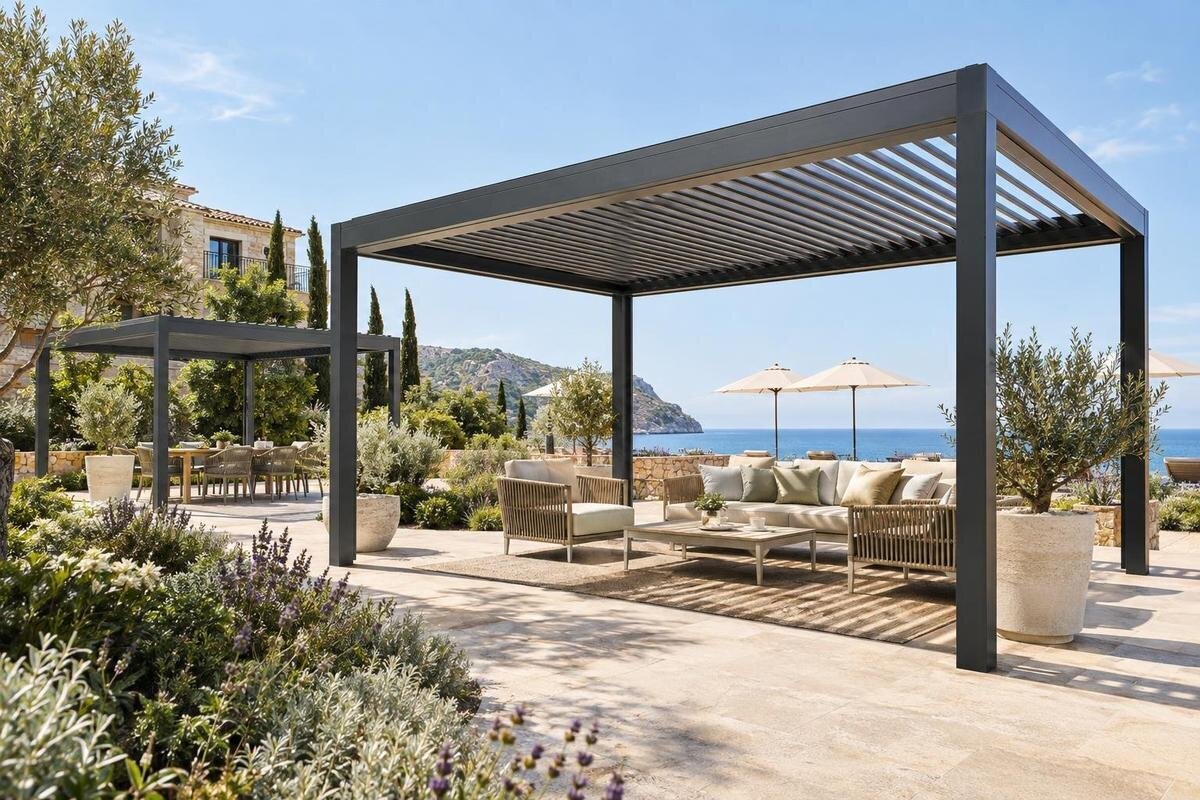
Pergola buying guide
Buying a pergola for a hotel or holiday property starts with the outdoor area's job, not a catalogue image. Guests, staff and whoever maintains the site may all use the space differently. Define the intended use and measure the workable footprint before comparing shade, design, upkeep and ordering details. That makes it easier to shortlist an option without assuming that its name or appearance proves it will suit the property.

Define the guest use before browsing
A hotel or holiday property may use an outdoor area as a shared lounge, a place to wait, a space for breakfast or a private extension of a rental. Those uses call for different layouts, so begin by naming the main activity rather than deciding that every outdoor space needs dining furniture. Note who will use the area, whether access is shared or private, the likely group size and the times of day it is busiest. Include staff movements too: clearing dishes, setting out chairs, cleaning the floor or reaching service doors can affect where a pergola belongs. Separate primary use from occasional use so a rare function does not dictate the whole layout.
Then rank what matters most. It might be shade over a defined seating area, a more usable outdoor zone, privacy from adjoining spaces or a particular visual relationship with the building. A hotel operator may need to consider different guest groups and day-to-day service; a holiday-property owner may rely on cleaners or a manager who visits less often. Ask both the decision-maker and the person responsible for upkeep to review the brief. A listing such as the Bloomcabin pergola listing can be one candidate on the shortlist, but its name does not establish dimensions, cover or suitability. Keep notes on what still needs proof so later quotes can be compared on equal terms.
Measure the footprint and keep circulation clear
Measure the area where the structure could sit, not just the total patio or yard shown on a plan. Record the usable length and width, changes in level and fixed features such as boundaries, trees, garden beds, steps, doors, windows, downpipes and service equipment. Existing tables may be moved, but note the room they need when in use. A clear rectangle on a drawing can shrink once these obstacles are counted. Ask for the proposed pergola's overall dimensions, any roof projection and the positions of supports; do not assume that a headline dimension describes the full footprint. Photographs from several angles can help an installer understand the site, but they do not replace measurements.
Map how guests and staff approach the area and where they need to pass through it. Keep entrances, paths to rooms and service routes clear, and allow space for chairs to be pulled back, luggage to move and cleaning equipment to pass. Mark the proposed footprint on a sketch or with temporary markers, then check it against door swings, furniture and paths in everyday use. A catalogue listing such as the Bloomcabin product page can help identify a candidate, but use the exact drawing and fixing information for the option under consideration before deciding whether it fits. Include the space needed to reach the area for cleaning and routine maintenance.
Choose a position within the property
Choose a position in relation to the rest of the property. A shared hotel area may need to be easy to find without interrupting arrivals, service routes or access to guest rooms; at a holiday property, a pergola may sit near a living area or in a more private part of the grounds. Consider views from indoors and from neighbouring rooms, how much privacy the spot offers, and whether conversation or activity there could disturb a quieter area. A pleasant position should support the way guests move through the property, not create a pinch point between two well-used spaces. Check the plan with someone familiar with busy periods, rather than judging only when the property is quiet.
Where a proposal meets an existing wall, assess the wall, openings and access as part of the site choice; the attachment point is not a decorative detail. A page for the wall-mounted pergola listing identifies a type to compare, but it does not show whether a particular building or position is appropriate. If you are weighing a standalone position instead, consider how it affects routes, views and maintenance access around every side. Review the proposed location on a site plan and get any structural or installation questions answered before the shortlist becomes an order. This is especially useful where guest circulation needs to remain flexible.
Set realistic expectations for shade
Shade is not a fixed patch on the ground. Its reach changes with the sun's direction, the time of day and year, the pergola's roof configuration, and nearby buildings and trees. Think about when guests are most likely to use the area and what part of the seating or path needs shade at those times. Visit the site at more than one time if practical, or ask a designer to assess the sun path; do not base the size decision on a single photograph. Consider whether existing shade already helps, and whether a different position or footprint would meet the brief without disrupting the rest of the outdoor space. Describe the shade outcome you want rather than relying on a vague promise of full cover.
Ask the supplier to explain the actual shaded area and limitations of each configuration you compare. For the bioclimatic pergola page, for example, the product name alone cannot tell you how much shade it provides, how the roof works or how it behaves in rain. Seek drawings and written information about coverage, any openings, control method and weather limits; do not assume that a pergola is waterproof or blocks sun from every angle. If protection from rain matters to the guest offer, confirm whether the selected design is intended for that use and what conditions apply. Set guest expectations to match the information provided.
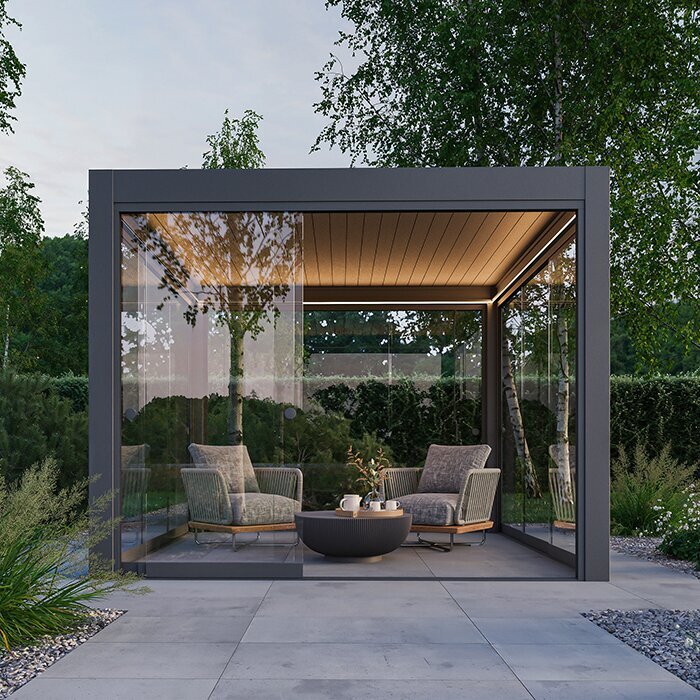
Check how the pergola will be operated
Decide who will operate any moving or adjustable parts, if the design includes them. In a hotel, a feature that guests can change may need clear instructions and a simple way to return it to the agreed setting; staff may prefer to manage it themselves. In a holiday rental with less frequent supervision, operation should be easy to explain and maintain. Ask how the controls work, whether access can be limited, what happens if a component needs attention and which tasks belong to the owner or service provider. These are questions for the product documents and installer, not details to infer from a product photograph. Consider whether operation could interrupt service or require staff oversight.
A category label does not answer those questions. The description on the page labelled bioclimatic pergola should be treated as an identifier, not as confirmation of a particular roof movement, control, noise level or included accessory. Ask for the exact configuration and operating instructions, then check who is expected to use it and what ongoing attention it needs. If the product includes powered controls, have a qualified installer confirm the relevant requirements for that site; do not plan a power connection from a catalogue description. Compare operational details alongside appearance, and clarify any guest-facing instructions before purchase.
Plan for ongoing upkeep
Upkeep can be more demanding in an accommodation setting because a pergola may be exposed to frequent use, weather and cleaning routines. The work depends on the actual materials, finish, location and any moving parts, so do not infer a maintenance schedule from a product's name or appearance. Ask the supplier for written cleaning instructions, recommended inspection intervals, products to avoid and advice for the site's exposure. Check whether routine care can be done by the housekeeping or grounds team, or whether a specialist visit is needed. A low-maintenance claim should be supported by a clear description of what the owner still has to do, and those tasks should be included in the property's maintenance plan.
Think about where leaves, dust, bird debris or coastal salt air could be a factor, and whether staff can reach the surfaces that need attention. For a holiday property, make sure someone is responsible for checking the structure between stays or reporting damage; an owner who is not on site may need a local manager to take on that role. Use the Bloomcabin pergola page to identify the listing under consideration, then request its care and maintenance information rather than assuming the page answers those questions. Confirm how repairs and replacement components are handled before finalising the order. Do not choose a material or finish based on a presumed cleaning advantage alone.
Have the site and fixing method assessed
Site suitability needs more than a visual check. A qualified building professional or experienced installer should assess the proposed position and the product's documented fixing method, including the surface or ground it relies on. Ask them to consider relevant site conditions such as wind exposure, drainage, slope, nearby services and existing trees, and to identify any work needed before installation. If the pergola is to connect to a building, do not assume that a wall is strong enough because it appears sound. If it stands independently, do not assume that no site preparation is required. The answer depends on the specific design and property.
Bring the product drawings and installation information to that review. If you are considering the wall-mounted pergola model page, ask the professional to assess the proposed location and attachment using the manufacturer's details; the category name alone is not proof of suitability. Also ask which approvals or inspections may apply and who is responsible for confirming them with the relevant local authority. Resolve these points before ordering, so the seller's product information, the installer's proposal and your site plan describe the same arrangement. Keep written notes of any conditions that affect the chosen configuration, and do not rely on a generic image to answer technical questions.
Compare specifications and ordering terms
Compare written specifications, not just photographs or broad labels. Put each option beside the same checklist: overall dimensions, roof or covering details, materials and finish, colour, support or attachment arrangement, controls, included components and optional extras. Ask whether the quoted configuration matches the version you intend to buy, and request a drawing where dimensions or interfaces are unclear. When reviewing the bioclimatic pergola listing, use it as a named option in that comparison, not as evidence of a particular performance or package. Write down unanswered questions, especially any detail that affects shade, site fit, cleaning or operation. A visually attractive page is no substitute for a clear specification.
Check the commercial details before committing. Confirm what the quote includes for delivery, unloading, site preparation and installation, and whether any work must be arranged separately. Ask how the delivery vehicle can reach the site, where components can be stored securely and whether work can be scheduled around bookings or normal hotel operations. Read the seller's current warranty, returns, cancellation and payment terms rather than assuming they are standard. Match the final order acknowledgement to the agreed dimensions, configuration, finish and quantities; correct discrepancies before acceptance. Treat an estimated delivery time as unconfirmed unless it is stated in the seller's terms.

Make the layout work for different guests
Guests may not know the property's layout, so the area should be easy to approach and use without making the route confusing. Think about people carrying bags, using mobility aids, accompanying children or needing an unobstructed path between indoor and outdoor spaces. Check thresholds, steps, furniture positions, door clearance and turning areas as part of the layout, not after the pergola is selected. There is no single layout that suits every property; where accessibility is a requirement, ask a qualified access professional to review the plan and confirm any applicable local requirements. Keep the route usable when chairs and tables are in their everyday positions, not only when furniture is stored.
Guest comfort also includes what the pergola changes around it. Consider privacy between rooms, views across shared areas, light entering nearby interiors, staff sightlines and whether the seating invites quiet use or group activity. If the space is shared, define how furniture will be arranged so one party does not block access for others. At a private holiday property, consider whether guests will understand any house rules for the area and its controls. Review the plan with the person responsible for guest experience as well as site maintenance. This can reveal small layout changes that make the chosen footprint more useful without adding features or promising conditions the design cannot guarantee.
Plan delivery, installation and handover
Installation planning affects the guest experience as much as product choice. Confirm how installers and materials will reach the site, what area must be kept clear and who will manage the work. In a hotel, schedule disruption around occupancy, guest access, deliveries and service routes; for a holiday rental, account for booking dates and the local manager's availability. Ask whether the installer needs access to rooms, power or other services, and clarify any site-preparation tasks before arrival. Agree how packaging and leftover materials will be removed. Check responsibilities in writing, rather than relying on a conversation, so the work does not disrupt normal property use unexpectedly.
Before handover, make sure the owner or site manager receives the final product documents, operating information, care guidance and contact details for follow-up. Show staff how any guest-facing features should be explained and who should respond if something is damaged or not working as expected. Keep the installed configuration and maintenance notes with the property records. After the space has been used, review whether the shade, access and cleaning routine match the original brief; record any lessons before buying another unit or changing the layout. This is useful when one purchase may inform decisions about other areas of the property.
Frequently asked questions
What size pergola should a hotel choose?
Begin with the usable footprint, then allow for supports, furniture, door swings and clear routes for guests and staff. Compare those measurements with the exact product drawing. If the proposed location or fixing method raises site questions, have a qualified professional review it.
Will a pergola keep guests dry in the rain?
Not necessarily. Weather protection depends on the particular design and configuration, so do not assume that a pergola is waterproof from its name or appearance. Ask for written details about its cover, drainage and stated limits before promising guests protection from rain.
Is a wall-mounted pergola suitable for a holiday property?
It depends on the property, the product's fixing information and how the space will be used. A qualified building professional or installer should assess the proposed wall and location. A product label alone cannot confirm that a particular building is suitable.
How much maintenance should I expect?
That depends on the product's materials, finish, moving parts and exposure. Request written cleaning and inspection guidance, including any products to avoid, and decide who will handle routine care between guest stays or during hotel operations.
What should I confirm before placing an order?
Check the final dimensions and configuration, what's included, delivery and installation arrangements, site-preparation responsibilities, and the seller's current warranty and cancellation terms. Resolve any site or approval questions with the relevant professional or local authority before committing.
A pergola for accommodation should be chosen around a specific guest purpose and the way the property is run. Base the shortlist on a measured layout and realistic shade expectations, then resolve site suitability, upkeep and order terms with the people responsible for the building and its operation. When a product's label leaves a question open, keep it open until the written information or a qualified professional answers it. That gives a hotel or holiday-property owner a clearer basis for choosing an option that works with both the outdoor area and day-to-day operations.
