
Buying a Pergola for Your Poolside Terrace
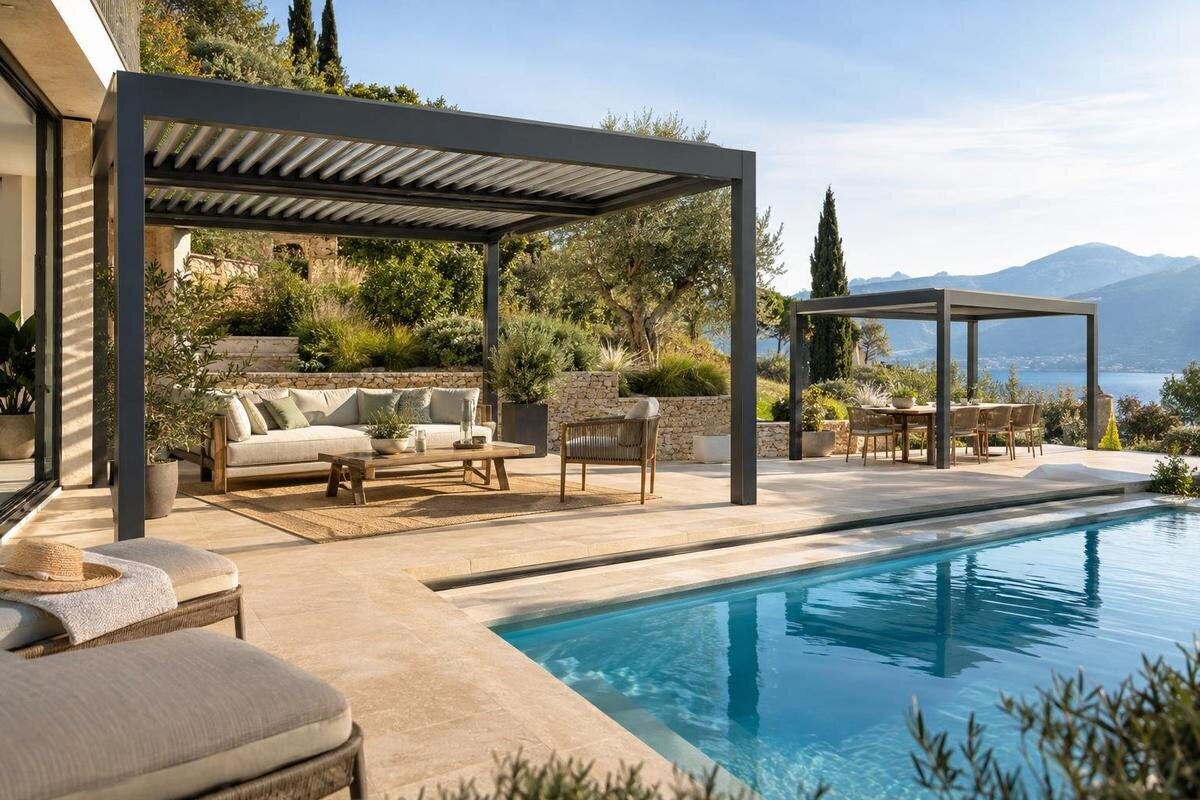
Pergola buying guide
Buying a pergola for a poolside terrace is as much about planning the space as choosing a style. The structure should provide the shade you want without narrowing the route to the water, obscuring useful views or crowding the place where people sit. Measure the terrace, notice how sunlight reaches it and check what a proposed position means for the pool, the house and the supporting surface before comparing product listings.

Decide what needs shade
Start with the activity that needs shade, not with a model photo. You may want a sheltered place for chairs, a spot where swimmers can pause, or room for people to sit while keeping an eye on the water. These uses call for different footprints and furniture clearances. Decide whether the pergola should cover one seating area, link the house and pool, or shade a particular stretch of terrace. Note how many people typically use the space and whether furniture stays put or is moved between swims; that affects the usable area beneath the roof as much as its outside dimensions.
On a simple plan, mark the pool edge, steps, fence and gate, house doors, established trees and any fixed seating. Add the places where people sit, dry off, leave towels and walk. Include the real route between the house and water, rather than drawing a straight line through furniture. Pool water can reflect light back onto the terrace, so a shaded seat may still feel bright at certain times. Spend time outside during the hours you use it and note the sun, glare and existing shade. This gives you a clear buying brief instead of a vague request for more shade.
Measure the usable terrace around the pool
Measure the terrace boundaries, not just the pool or the patch you hope to shade. Record the pool edge and coping, steps, fence and gate, doors, drains, built-in seating and fixed equipment. Add chairs and tables in their everyday positions, allowing space to pull a chair out and walk past it. Plot the pergola’s supports as well as its roof: posts can occupy the very corner that seemed free on a sketch. Note any narrow point or change of level nearby. Use actual measurements rather than estimating from a photo; a dimensioned plan makes different sizes easier to compare.
Check height and overhead space too. Eaves, windows, doors, existing lights and other fittings can affect where a structure can sit, while nearby openings matter if the roof is close to the house. Compare the stated overall dimensions—not only a product image—with your plan. If drawings show roof projection and post locations, use both; ask if a measurement or clearance is missing. Compare the Bloomcabin pergola listing only against information it actually provides. Roof area and usable space between supports are not interchangeable, so allow for the posts and furniture rather than assuming the whole outline is clear.
Work out when and where you need shade
Shade moves as the sun changes position, and its reach can vary across the day and through the year. If you mostly use the pool in the afternoon, a spot that is shaded in the morning may not meet your needs. Observe the terrace at the times you expect to use it and note which seats, paths or parts of the pool are exposed. Also consider reflections from the water and nearby pale paving, which can make a shaded area feel brighter than expected. These observations help you decide whether the priority is a particular seat, a route or another part of the terrace.
A pergola’s footprint does not tell you exactly where its shade will fall. Compare the coverage and roof operation described for each option, and ask what is not clear. If you are considering a product described as bioclimatic, check the listing titled Bloomcabin bioclimatic pergola for the specific roof arrangement, adjustment and stated coverage; the name alone does not answer those questions. Think about whether you want a steady patch of shade or the ability to change the amount of light, then verify that the product details support your expectations.
Keep access and views to the pool clear
Plan the route people use to move between the house, terrace and water. A post should not sit where it makes a normal walkway awkward, narrows a route past furniture or conflicts with the space needed to open a gate. Include steps, ladders and any equipment that needs regular access. If people walk through the area with wet feet, make sure the planned furniture and supports leave a straightforward path rather than creating a sequence of tight turns. The aim is to fit shade into the terrace without making its everyday movement harder.
Check views from the places where people sit and from the house, especially if someone needs to keep the pool in sight. Posts, roof edges and furniture can change what is visible from a particular position. Keep the existing pool fence and gate functioning as they do now; do not plan to move them simply to make a pergola fit. If the proposed position could affect access or the fence, ask a qualified pool-safety or building professional about the site before ordering. Also consider where rainwater from a covered roof might fall and whether the installer needs to address it.

Choose between wall-mounted and freestanding placement
A wall-mounted pergola places the structure against a building, while a freestanding layout can be positioned separately within the terrace. The better arrangement depends on where you want the shade and what the site can support. If the preferred spot is beside the house, compare your plan with the Bloomcabin wall-mounted pergola page and check the product’s stated installation requirements. The label identifies a type of listing; it does not confirm that your wall, terrace or chosen position is suitable.
For a wall-mounted option, note nearby doors, windows, eaves, downpipes and other fittings that could affect placement. Ask a qualified installer to assess the actual wall and explain any fixing or weatherproofing considerations before you commit. Sketch the usable space under the roof rather than measuring only from the wall. This makes it easier to see whether a dining chair, lounge chair or side table would clash with a post, door swing or through-route. Consider where wet towels, bags and pool toys are normally set down as well; these everyday items can make a compact terrace feel crowded. A freestanding layout still needs suitable support locations and enough room for its posts, so it is not automatically easier to fit. Where the terrace is irregular, test more than one orientation on the plan, because turning the same footprint can change both access and shade. In either case, decide where the supports could go on your plan and consider whether that position leaves the pool route and useful seating area intact.
Size the covered area for people and furniture
Choose the covered area around the way people use the terrace, rather than matching the pergola’s size to the pool alone. Mark the seats, table and the space needed to get in and out of them. Then compare that area with the roof outline and the position of the supports. A roof may appear large enough on a product image but still leave a chair partly exposed or place a post beside the table. Compare your plan with Bloomcabin’s pergola product page, using only dimensions and drawings actually provided; ask for clarification if support locations or projection are not shown.
Be clear about whether you want shade over a sitting area, a path or part of the water. Those are different layout goals, and a roof’s stated dimensions do not guarantee continuous shade in every position. Sun angle and the location of the pergola both affect what is shaded. If your priority is shade over the pool itself, treat that as a site-specific design question and check access, sightlines and any relevant installation requirements with a qualified professional. Avoid choosing a larger footprint until you have confirmed that it leaves enough room for movement around the terrace.
Have the surface and fixing points assessed
A timber deck, paved terrace or concrete surface may look ready for supports, but appearance alone does not establish whether it is suitable for a particular installation. Ask an appropriately qualified installer to assess the surface and proposed fixing locations, including the condition of the area near the pool edge. Mention any known services, drainage issues or changes in level that could affect the location. Record the surface construction if you know it, but do not rely on an old plan where later alterations may have changed the area. Give the installer clear photos and measurements of the proposed locations, while recognising that an on-site assessment is needed for a decision. The professional can check the site against the product’s installation requirements; do not choose a fixing method or assume the deck is suitable from a photograph or general description.
If a wall-mounted layout is on your shortlist, take the wall-mounted Bloomcabin listing to the installer and ask what conditions its installation requires. Have the actual wall and intended position assessed rather than treating the product name as proof of compatibility. For a ground-supported option, ask about the proposed support locations and the surface beneath them. Confirm what assembly is included and whether the installer needs any further information before the order is placed. This gives you a clearer picture of site work and avoids discovering an important constraint after delivery.
Compare roof design and day-to-day control
Pergola roof designs can differ in how much light they allow through and whether their coverage can be changed. Compare the specific product details for roof arrangement, stated coverage and how any adjustment works. If you are weighing an option described as bioclimatic, check the bioclimatic pergola product page for what that particular listing includes rather than relying on the category name. Ask whether the roof is fixed or adjustable, what the user needs to do to change it and whether the information explains how it should be used in different conditions. Write down the information in a comparison table rather than relying on showroom-style images. For each option, note the roof type, whether adjustment is described, the method of operation and any components identified separately. This helps expose gaps in the listing that could affect daily use and keeps you from comparing one product’s stated feature with an assumption about another.
Think about who will operate the roof and how often they are likely to adjust it. A control that is inconvenient to reach or unfamiliar to other users may not suit the way the terrace is used. Check the care instructions for moving parts and ask whether any controls or accessories are included or listed separately. If a product has powered operation, confirm who can advise on its electrical requirements and installation. Also consider whether children or visitors will use the area, as a system that only one person understands may be left in one position. Keep the operating instructions with other poolside information once installed, and follow the product guidance rather than improvising changes. These practical details help you compare a roof that looks appealing with one whose operation and upkeep you understand before purchase.
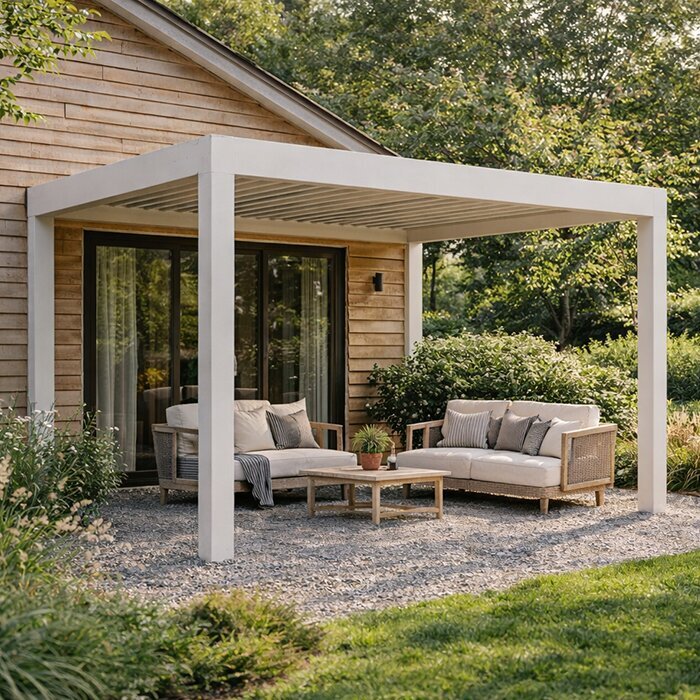
Check materials and maintenance for poolside exposure
Poolside conditions are worth discussing when you compare materials and finishes. Depending on the site, a structure may be exposed to splashes, salt or chlorinated water, sun, nearby irrigation or pool-cleaning products. Tell the seller or manufacturer what the pergola would be exposed to and ask whether the stated materials, finishes and fixings are suitable. Do not assume that a general product description confirms compatibility with your particular pool environment. Clear information about the intended use and care gives you a more useful basis for comparing options than appearance alone.
Ask what cleaning methods are approved, what maintenance is expected and whether parts of the roof need regular access for care. Leaves, dust and other debris may collect differently depending on the site and roof design, so check the instructions for the product you are considering. For the Bloomcabin bioclimatic pergola entry, look for product-specific care details and confirm anything that is not stated before ordering. Plan access for cleaning before choosing a position. A roof that is difficult to reach safely may make routine care harder, even where the footprint otherwise suits the terrace. Avoid applying pool cleaners or other chemicals to the structure unless the manufacturer’s guidance says they are suitable. Factor the ongoing care into your choice, not just the initial fit.
Confirm product, installation and delivery details before ordering
Before choosing a listing, verify the overall dimensions, roof configuration, materials, installation requirements and what is included in the order. Check whether any controls, fixings or other components are specified as included or separate, and whether the available drawings answer your site questions. Read the Bloomcabin pergola entry alongside your measurements rather than treating a photograph or product name as a specification. If an important detail is missing, ask the seller for clarification and keep the answer with your planning notes so you can compare candidates on the same basis.
Check the delivery route as well as the final position: note gate and access widths, steps, turns and where components could be unloaded or stored. Confirm the delivery, assembly, returns and warranty terms shown for the order, without assuming that installation or extra components are included. Think through the order of work: the terrace may need to remain clear while the structure is delivered and assembled, which can affect normal pool use. Decide in advance where furniture will go temporarily and whether access for people, pets and pool maintenance can continue safely. These practical arrangements do not determine suitability, but they can prevent avoidable disruption. If approval or site-specific requirements may apply, check with your local council or a suitable building professional before committing. A clear plan for the product, site and delivery makes it easier to decide whether the pergola suits your poolside terrace.
Frequently asked questions
How close can a pergola sit to a swimming pool?
There is no single distance that suits every terrace. The pool fence and gate, access routes, support locations and the pergola’s installation requirements all affect placement. Measure the space and have the proposed position checked by a qualified professional if it could affect access or the pool fence.
Should I shade the pool or the seating area?
Choose according to how you use the terrace. If the main aim is a comfortable place to sit, map the chairs and table first. If you want shade elsewhere, check where it will fall at the times you use the pool; a roof’s dimensions alone do not show the shaded area throughout the day.
Can I attach a pergola to the house beside a pool?
A wall-mounted layout may suit some terraces, but a product label does not confirm that a particular wall is suitable. Check the installation requirements and have the building and fixing points assessed by a qualified installer before ordering.
What roof style is best for a poolside pergola?
There is no single best style. Compare the coverage each product actually states, whether the roof can be adjusted, how it is operated and what care it needs. Verify those details in the product information rather than assuming a style name guarantees a particular amount of shade.
What should I check before ordering a pergola for a deck?
Confirm the overall dimensions, support positions, installation requirements and whether the deck or its underlying structure is suitable. Also check poolside care guidance, what is included, delivery access and the terms for your order. Ask a qualified installer to assess the site if support or fixing details are unclear.
The right poolside pergola is the one whose footprint, shade pattern, access and installation requirements work with your actual terrace. A measured plan and a check of the sun at the times you use the pool make product comparisons more meaningful. Confirm the details that matter for your surface, poolside exposure and delivery before ordering, so the structure fits the way the space is used rather than simply filling an open patch.
