
Buying a Pergola for a Windy Location: What to Consider
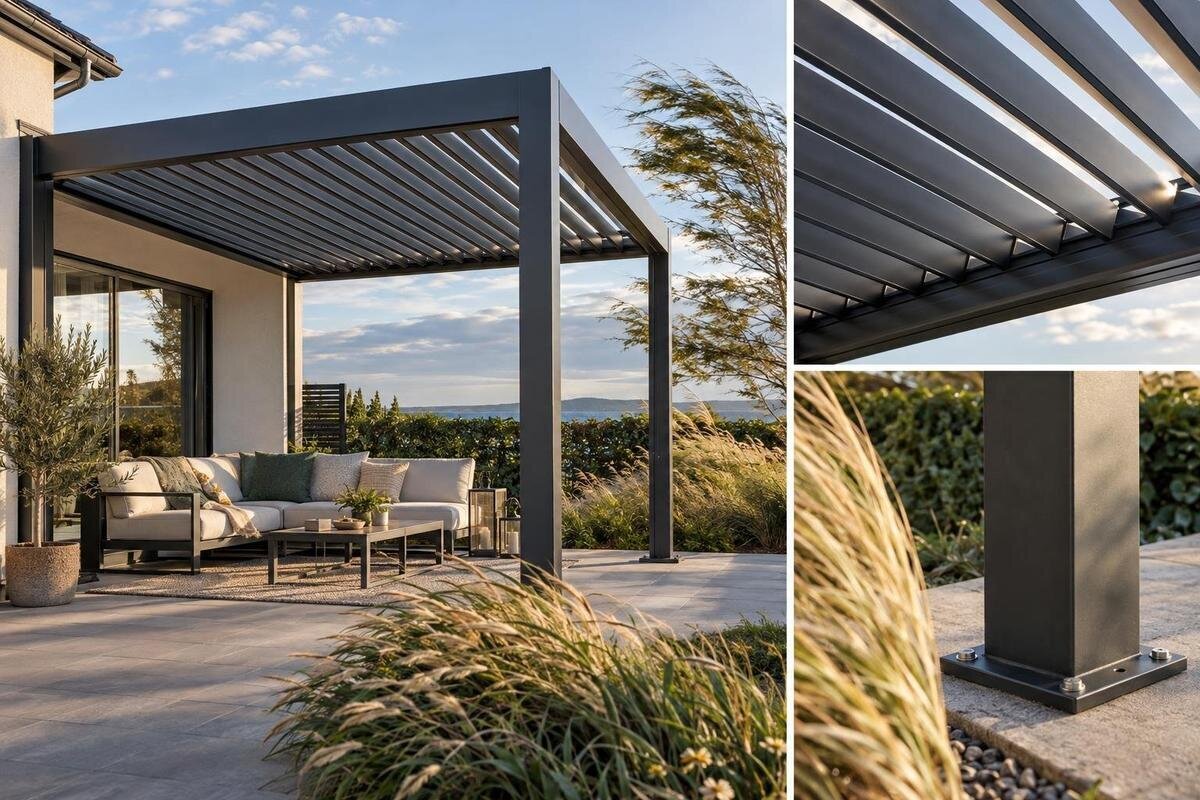
Pergola buying guide
When buying a pergola for a windy location, the choice is less about picking the heaviest-looking frame and more about confirming that the whole setup suits the site. Gusts affect the roof, frame, fixings and supporting surface together, while buildings, fences and terrain can change how wind reaches a particular corner of a property. Before comparing appearances, describe the exposure, ask what the supplier documents for the exact model and configuration, and establish whether the proposed base and installation can be assessed by an appropriate professional. That gives you a sound basis for comparing options without treating a general claim as a site-specific guarantee.

Map the wind exposure at your site
Start by describing the exposure at the proposed footprint, rather than labelling the whole property simply windy. An open boundary, a rise, a gap between buildings or an exposed corner can experience different conditions from a sheltered courtyard a short distance away. Note the directions from which stronger winds commonly arrive, the amount of open ground upwind, and whether roofs, fences, tree lines or narrow passages channel, deflect or interrupt airflow. Consider both the pergola's intended position and the route wind takes across the property. Also note exposed edges, sudden changes in ground level and gaps that may funnel gusts towards the proposed structure. These observations help explain the site to a supplier or installer, but they do not establish a design rating or replace a technical assessment.
Look beyond a single calm-day visit. Think about conditions during seasons when strong winds are more common, whether changes to planting or nearby buildings may alter the shelter, and whether temporary objects are masking the exposure. Reliable local weather records can help you describe recurring wind directions, but they cannot determine the structural requirements for one footprint. A simple site sketch can show the proposed position, boundaries, neighbouring structures, open approaches and significant changes in level. Add notes about times when the area is usually gusty. This makes discussions more specific without turning casual observation into an engineering conclusion.
Ask for wind information for the exact pergola
Look for written information tied to the exact model, size and configuration you intend to order. A broad phrase such as wind-resistant does not show which wind conditions were considered, how the structure was installed in any assessment, or what limits apply. Ask what design criteria the documents cover and whether they apply to the chosen span, roof position, support arrangement and any optional side elements. Check whether the information assumes a particular foundation or fixing method, and whether it excludes certain locations or modifications. Ask whether the documentation remains applicable when the pergola is supplied with the accessories and layout you have selected. If the answer refers only to a product family, ask for information about the version you would actually buy.
When comparing catalogue options, keep product identity separate from technical evidence. The Bloomcabin pergola product page identifies an option to ask about, but a name, photograph or general description does not establish wind suitability. Request technical information and installation instructions for the exact version, and ask the supplier to point to any stated limits, required base and excluded configurations. If the available material refers to a different model or leaves a key condition unclear, treat that as an unanswered question rather than filling the gap with a guess. A qualified professional can advise what further information is needed for your site.
Separate product suitability from local approvals
Separate product evidence from the suitability of your site and any local approvals. Supplier information may describe the pergola in one defined configuration; it does not automatically cover another base, attachment, exposure, accessory or alteration. A spot that looks sheltered is not proof that a particular model meets the relevant conditions, either. Ask the supplier to identify the limits of its information, and ask a suitably qualified building professional or structural engineer whether a site-specific assessment is needed. Provide the assessor with the intended location, configuration and available supplier documents so the question being considered is clear. Make clear who is responsible for each answer, so no one assumes another party has checked the ground or the building.
Before ordering, ask your local council or relevant building authority whether approvals or other checks apply to the proposed location and work. Requirements depend on the project and jurisdiction, so a generic online statement may not answer your question. For an attached design, have an appropriate building professional assess the relevant part of the house and the proposed connection. A named option such as the bioclimatic pergola listing identifies what you are considering; it does not establish that the product, attachment or site has been approved or assessed. Clarify responsibilities and any required documentation before committing to the purchase.
Assess the base and anchoring together
Treat anchoring as part of a complete structural system, not as a choice of bolts in isolation. Wind can push or lift a structure, and the forces have to pass through the frame, connections, supports and base into the ground or building. A strong-looking frame cannot compensate for an unsuitable connection or foundation. Ask which installation requirements apply to the exact pergola and who will confirm that the proposed support arrangement matches them. Establish this before site work begins, as a different footing or attachment arrangement may affect the planned layout and installation scope. Avoid relying on a general description of the product when the fixing details or assumptions are not clear.
Existing paving, a concrete surface, a deck and bare ground are not interchangeable bases. The visible finish may not show what lies beneath it, how the surface is supported or whether it is suitable for the proposed fixing method. Ask the installer or a suitably qualified professional to assess the substrate, including relevant conditions such as drainage, edges and buried services. Use the Bloomcabin pergola listing to identify the product you are discussing, then request any installation or anchoring information needed for that specific option. Do not assume that a surface is suitable just because it appears solid.
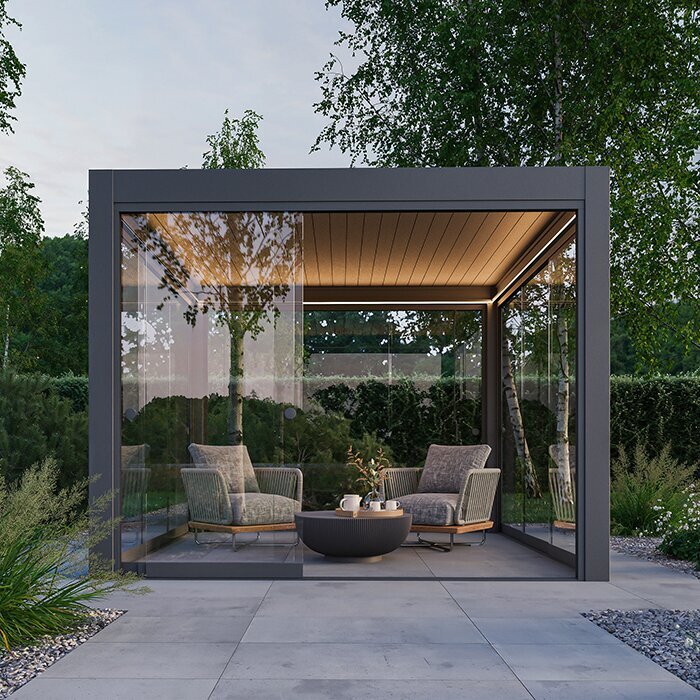
Compare freestanding and wall-mounted layouts
A freestanding pergola places its supports on its own base, while a wall-mounted design relies on a connection to the building. Neither arrangement is automatically more suitable for a windy location. A freestanding option still needs an appropriate base and installation; a wall-mounted option also depends on the connection and the part of the building taking the load. Compare the site work each layout requires, as well as the way it fits the outdoor area. Consider whether either arrangement would require a different position, support layout or access route for installation. A wall can change local airflow, but being close to a house does not by itself prove that the position is sheltered.
For a wall-mounted option, check who will assess the building surface and confirm that the proposed connection is appropriate. The product description does not establish the condition of your wall or its suitability for an attachment. Ask about relevant details such as existing openings, eaves and water management, and clarify whether the installer or another professional is responsible for checking them. The wall-mounted pergola page can help you identify the kind of listing you are considering; use the installation documents and a site assessment to judge whether that layout suits your property.
Check the roof's operating positions
Do not compare pergolas on roof appearance alone. A fixed roof, adjustable elements or a retractable covering can have different operating states, and wind guidance may depend on the position of those parts. Ask what instructions apply to each state, whether the supplier sets out conditions for changing position, and whether the guidance covers the exact model and installation. Check who will be responsible for following those instructions if more than one person uses the outdoor area. Do not assume that opening or retracting a roof makes a structure safe in strong winds; use only directions supported by the product information and advice from a qualified professional.
The name on the Bloomcabin bioclimatic pergola page does not, by itself, tell you which components move or what wind limits apply. Ask the supplier for the relevant operating instructions and any conditions that affect the roof configuration. If the information discusses only one position, ask whether it covers the positions you expect to use. Keep the answer with your purchase records so everyone involved in installation and operation can refer to the same guidance. This check is useful for any pergola with moving parts, not just a particular product type.
Include screens and side panels in the assessment
Side screens, blinds, curtains and other panels can change how wind acts on the pergola as a whole. Their effect depends on the specific design and how much of the side is covered, so do not assume that an accessory has the same wind guidance as the frame. Ask whether the supplier's information covers each panel you plan to use, including any combination of accessories. Consider accessories intended for later purchase as well as those ordered with the initial pergola. If guidance applies only to the pergola without side elements, it may not answer the question for the finished setup.
Clarify whether screens are included, optional or supplied separately, and whether the product information treats them as compatible with the configuration you want. Ask what operating instructions apply in windy conditions, including whether the panels need a particular position or handling. A photograph does not confirm which accessories are included or how they should be used. For example, the Bloomcabin pergola entry can identify the listing you are considering, but you will need to confirm the details of any panels or add-ons directly. Include planned accessories in the assessment rather than adding them after the structure has been reviewed.
Choose the position and footprint carefully
Once you have shortlisted a suitable configuration, consider where it will sit within the property. A narrow gap, an exposed corner or the end of a building may channel wind differently from the rest of the yard. Nearby walls or fences can alter airflow rather than provide reliable shelter, so do not choose a position on that assumption alone. Compare possible locations with the site observations you recorded, and ask the installer or assessor whether the proposed spot changes the conditions considered in the product guidance. Avoid moving the structure to a different corner after assessment without checking whether the earlier advice still applies.
Plot the full footprint using dimensions from current product information, not an image or a model name. Include projections beyond the supports, access around the structure and any doors, paths or services that could affect installation or use. This helps prevent a late change to the position or configuration, which may affect the original assessment. A listing such as this bioclimatic pergola option identifies a product to investigate, but its appearance cannot establish the space it will occupy. Confirm measurements and clearances from the relevant documents before finalising the order.

Set installation responsibilities before ordering
Find out who is responsible for checking the site, preparing the base, supplying the fixings and installing the pergola. Ask whether the installation will follow the product instructions and what happens if the installer finds that the ground, wall or access differs from the initial description. If an independent professional needs to assess the structure or site, agree who will arrange that work and when it must happen. Record any agreed changes to the location or configuration so the supplier, installer and assessor are working from the same proposal. Having these responsibilities clear before delivery can help avoid uncertainty about whether a change is a product issue or a site issue.
Check practical ordering details as well as the design: delivery access, unloading arrangements, where components can be stored and whether site preparation must be completed first. Ask for a written quotation that makes clear which parts of the work and any professional assessments are included, and which remain your responsibility. For a wall-mounted product, the wall-mounted pergola listing can help you identify the option when discussing the scope; confirm the exact model and configuration in the order documents. Comparing like-for-like scope is more useful than comparing a product price without installation context.
Plan for operation and ongoing checks
Before you buy, check what the manufacturer or supplier says about operation, inspection and care in exposed conditions. Keep the operating and installation instructions available, and make sure the people who will use the pergola understand any stated limits or required actions. Ask what to inspect and how often, including relevant connections, moving parts and visible wear. Keep a record of any inspections or advice received, particularly if the site experiences unusually severe weather. After severe weather, do not assume that a structure is unaffected because it looks intact from a distance. If you notice movement, damage or a change in how it operates, seek appropriate advice before continuing to use it.
Compare each shortlisted option against the same evidence: site exposure, written wind guidance, mounting and base requirements, accessories, installation responsibilities and ongoing instructions. Include the cost of site preparation and professional assessment in your comparison, but do not assume those items are included in a product price. If an important limit or responsibility remains unclear, pause the decision and ask for clarification. A pergola for a windy site is a considered purchase: confidence comes from matching the product information to the actual installation, not from appearance or a broad claim.
Frequently asked questions
What wind information should I ask a pergola supplier for?
Ask for written information covering the exact model and configuration you plan to order, including the wind criteria it addresses, any limits and the installation conditions it assumes. Check whether the guidance covers your roof position, base and side elements, rather than a different version in the same product range.
Is a pergola described as wind-resistant suitable for any exposed site?
No. A general description does not show the conditions or installation details it refers to, and it cannot confirm suitability for a particular property. Ask the supplier to explain the evidence behind the claim and have the proposed installation assessed where needed.
Is a wall-mounted pergola more secure in strong winds?
Not automatically. A wall-mounted design depends on the connection and the part of the building it is attached to; a freestanding design depends on its supports and base. Compare each option using its installation requirements and a site-specific assessment, not the mounting style alone.
Can I anchor a pergola to existing paving?
Do not assume the visible paving is an adequate base. The surface and what lies beneath it both matter, and the required anchoring depends on the structure and site. Ask a suitably qualified professional to assess the substrate and the proposed fixing method before ordering.
Do screens or blinds change the wind assessment?
They can change how wind acts on the overall assembly. Check whether the supplier's guidance covers the exact screen or blind, whether it is included or optional, and what operating instructions apply in windy conditions. Do not rely on guidance for a bare frame if you plan to add panels.
A sound buying decision brings together four things: the wind exposure at the intended position, information for the exact pergola and configuration, a suitable base and attachment, and a clear installation plan. Use the supplier's documents to frame the questions, then resolve site-specific issues with an appropriate professional or local authority. If essential guidance is missing, treat that as part of the comparison rather than assuming a pergola will suit the location.
