
Buying a Pergola for Australia's Strong Summer Sun
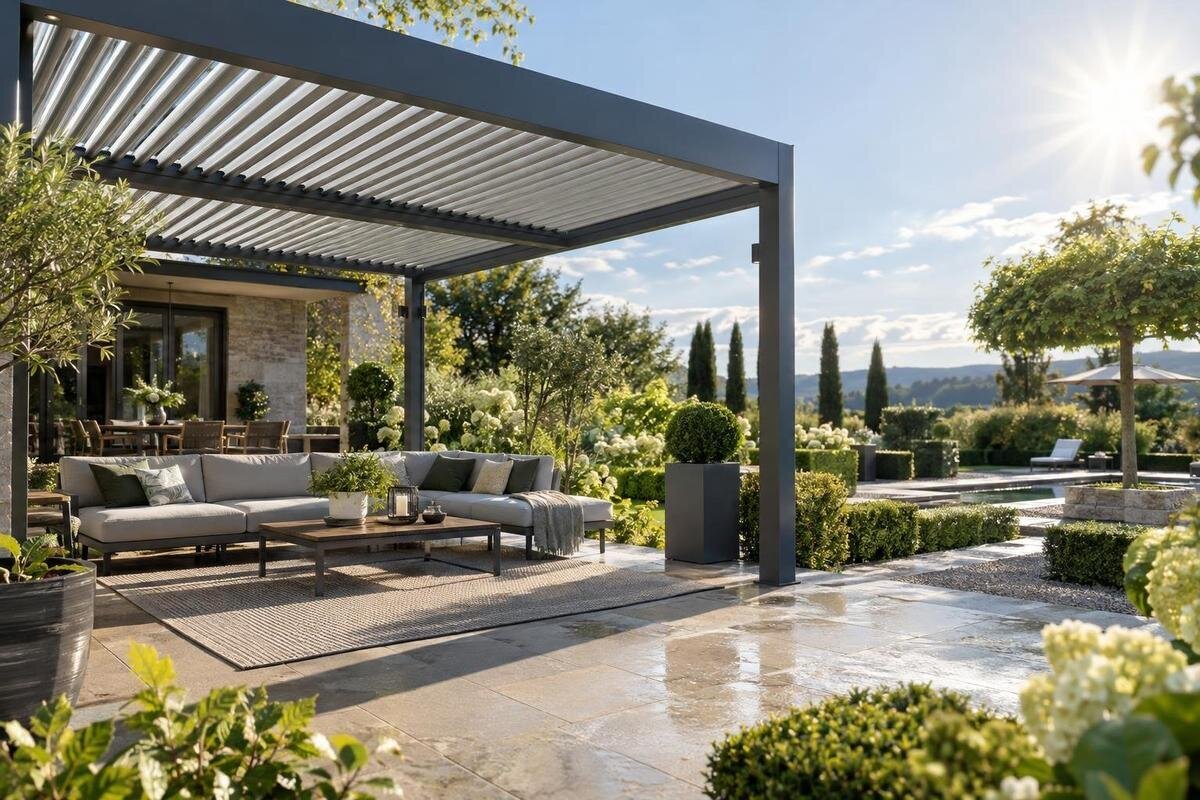
Pergola buying guide
Buying a pergola for Australia’s strong summer sun starts with the site, not the product photo. Work out which parts of the outdoor area need shade and at what times, then consider the roof’s light filtering, the pergola’s footprint and how it will be installed. Sun moves across the day and changes seasonally, so a structure that covers a table at midday may still leave it exposed in late afternoon. Compare written product information with what you observe at home, and include delivery, installation and any site preparation in your decision.

Buyer checklist 1
Decide what the pergola needs to shade
Begin with what you want to do beneath the pergola, rather than with a standard size. A dining table needs shade over the tabletop and room to pull chairs out; a lounge setting may need coverage across several seats, while a route between the house and garden should remain clear. Mark the part that matters most and note who will use it and when. Include doors, windows and other features that need access, as well as any furniture you plan to keep there. The area you need shaded is not necessarily the same as the pergola’s outside footprint, so put both on a simple sketch. This makes later size comparisons far more practical.
Then describe the light you want: broken shade, a bright space with some direct sun, or a more consistent overhead barrier. Record the hours you expect to use the area and whether sunlight from one side is a particular problem. An overhead roof alone may not address low-angle sun, so identify the exposed side as well. Use the Bloomcabin pergola listing as one item to compare against your brief, not as a recommendation based on its name. Count coverage as confirmed only if the page provides relevant written details or a useful plan; a product image cannot show how shade will fall at your home. That distinction can rule out options that look large but miss the seating you most want to cover.
Track the sun across the day
Observe the site at the times you actually expect to sit there, particularly morning and late afternoon if those are regular use periods. Note where the sun enters and where shadows fall on the ground, table and house wall. Repeat the observation through the day rather than relying on a noon snapshot: the sun’s angle changes, so the shaded footprint shifts too. Existing trees, fences and nearby buildings affect what you see, and their shadows move. If the pergola is intended mainly for summer, assess it against summer conditions; a view recorded in another season is only part of the picture.
Draw a simple plan with north marked, then add the house, boundaries, doors, trees, furniture and the times you checked. If you cannot observe the site in summer, use a reliable sun-path assessment for the location or ask a design professional to help interpret it. Compare your notes with the details on another Bloomcabin pergola page only where that page states relevant roof coverage or dimensions; if those details are absent, seek clarification. Product photography may be taken at a different angle, time or season, so it is not evidence that the same part of your outdoor area will be shaded.
Buyer checklist 2
Compare roof coverage and light levels
Roof style is a central buying decision because it affects how much sky and direct sun reach the area. In general, a close or opaque covering blocks more overhead light than a widely spaced open roof, while open slats can leave patches of sun that shift during the day. Adjustable systems, where offered, may let you change the opening, but their range, controls and upkeep are specific to each product. Roof height, spacing, material and orientation all affect the result. Ask for a dimensioned drawing or a clear description of coverage rather than relying on a style label alone. If the pergola is beside house windows, consider how the roof may change the daylight inside.
Decide whether you want a fixed level of shade or the flexibility to alter it, and whether you want to retain winter daylight through the same area. More overhead coverage does not necessarily stop low sun coming in from the sides. If rain shelter also matters, treat it as a separate performance question rather than assuming a shade roof will provide it. On this Bloomcabin pergola page, rely on a roof detail only if one is actually stated; otherwise request it. If glare or UV transmission is important, ask for a clearly defined performance measure, since how dark a roof looks in a photo is not an exact rating.
Measure the footprint and plan the layout
Measure the usable area from fixed reference points and put the proposed outer dimensions on a sketch. Include the roof outline and any posts, brackets or projections shown in the product drawing; supports can take up useful floor area, so the roof’s overall size is not the same as the clear space underneath. Mark the table, chairs in use, doors, windows and the route people walk. Leave room for access and for furniture to be moved or cleaned around. If you have only a photograph or a broad product description, do not estimate dimensions from perspective; obtain the stated measurements before treating the layout as workable.
Check the shade target against the roof footprint, remembering that a moving shadow can extend beyond or fall short of the covered area. At a wall, note eaves, windows, vents and doors; in a garden setting, mark boundaries, existing trees and services that may affect placement. Think about what you see from inside as well as from the seating area, since a roof can alter daylight through nearby windows. Use the measurements stated for the listed Bloomcabin pergola if available, and compare them with your measured plan. If a drawing does not show post positions or clearances, ask for the layout before ordering rather than assuming the supports will sit at the edges.
Buyer checklist 3
Choose a suitable installation arrangement
Consider whether a freestanding arrangement or a wall-attached one makes sense for the site. A freestanding pergola needs its own support positions and may allow more choice of placement, while an attached layout uses the house as one side and can connect more directly with an existing outdoor area. These are broad planning differences, not a guarantee that either form will fit a particular property. A wall’s appearance does not prove it is suitable for attachment, and eaves, cladding, doors and windows can constrain the position. Think about the route from the delivery point to the final location as well, particularly where access is narrow.
Before choosing an attached option, ask a qualified installer or building professional to assess the wall and proposed fixing approach; do not assume that a visible exterior surface is adequate support. For a freestanding option, confirm what the product instructions say about support locations and site conditions, without substituting general online advice for a site assessment. Check whether installation is included, who is responsible for preparation and what the work will involve. If property-specific approvals or restrictions may apply, ask the local council or a qualified building professional. The information on the product page for a pergola is useful only to the extent that it expressly describes installation and site requirements.
Check materials, finishes and maintenance
Ask what the frame, roof and finish are made from, and how those materials are intended to cope with prolonged outdoor exposure. Strong sunlight can affect some finishes and fabrics over time, but durability depends on the material, coating, colour and care; avoid relying on a broad phrase such as weather-resistant without supporting detail. If fading, glare or heat beneath the roof matters, ask whether the manufacturer publishes relevant information for the specific finish and roof covering. A colour shown on screen may also look different in daylight, so request a physical sample or a clear colour reference where appearance is important.
Maintenance is part of the purchase decision, not an afterthought. Look for cleaning instructions, recommended products, inspection needs and any parts that may need periodic attention; check whether the supplier can explain how components are replaced if something is damaged. Read the warranty wording and note its stated term, covered parts, exclusions and any care conditions without assuming every part has the same cover. If the details are not on another pergola product page, ask for the current written information before comparing it with another option. A striking finish is less useful if its care requirements do not suit the maintenance you are prepared to do.
Buyer checklist 4
Plan for sun coming in from the sides
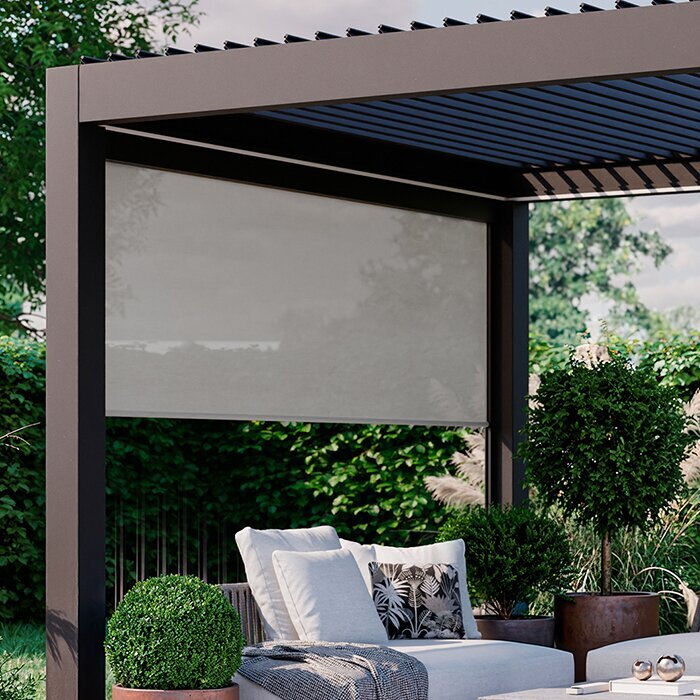
Overhead shade may not be enough when sunlight comes in from a low angle. Identify which side needs attention at the hours you use the space, then decide whether a side screen, blind, curtain or planting is part of the plan. Each approach has different effects on outlook, airflow, daylight and upkeep. Plants take time and care to establish and can change as they grow; fabric screens need cleaning and may have specific fitting requirements. Treat side shade as a separate choice rather than assuming it comes with a pergola. Note whether the priority is a particular seat or a wider part of the outdoor area.
If you are considering an accessory, confirm that it is designed to fit the selected structure and whether it is included, optional or sourced separately. Ask how a screen affects ventilation and whether it changes installation or maintenance requirements; do not assume a generic curtain or panel is compatible. Add-ons can also change how a structure is exposed to wind, so get the manufacturer’s or a qualified installer’s guidance before relying on them. Check compatibility information for the Bloomcabin product listing where it is provided, and seek an explicit answer if it is not. Decide the side-shade plan before ordering if it affects the dimensions or position you need.
Consider comfort beyond the roof
Think about the surface and surroundings as well as the roof. Shade can reduce direct sun on a seat, but it does not remove warmth stored in paving or nearby walls, and reflections from glass or pale surfaces can affect glare. Note whether air can move freely through the seating area and whether side panels would change that. If possible, spend time in the intended location at the hours you care about, or use an existing movable shade to identify which seat or edge remains exposed. That observation is not a test of a pergola, but it can prevent a mismatch between the space you mean to use and the one you end up covering.
Use that experience to rank what matters: continuous shade, a lighter feel, open sides or an ability to adjust the roof. A single product image cannot show how paving, nearby walls or reflected light will affect your own setup, so combine direct observation with written product information. For this pergola listing, consider only details that are actually published; do not infer temperature, shade level or airflow from its appearance. If a key feature is not documented, ask the supplier to clarify it in writing. This keeps expectations realistic without treating the pergola as a complete solution to every summer comfort issue.

Buyer checklist 5
Compare the full cost and ordering terms
Compare the total project cost, not just the displayed product price. Ask what the quoted amount includes: pergola components, roof or side accessories, fixings, freight, unloading, installation and site preparation may be priced separately. Do not assume an item shown in a photograph is included or that the listed dimensions cover every part. Request an itemised quote where possible so two options can be compared on the same basis, and include any professional assessment or work you have been advised to arrange. A total or saving cannot be assumed without a site assessment and a written quote.
Check delivery conditions before placing an order: whether the vehicle can reach the property, where packages can be left, who unloads them and whether the path to the installation area is clear. Confirm the stated delivery estimate, payment terms, cancellation and return conditions, and what happens if a component arrives damaged; use the current seller terms rather than assumptions. Read the warranty and installation conditions alongside the product details, since these can affect the whole purchase. If timing matters for planned use, ask for a current estimate in writing. These details are practical parts of buying a pergola, not minor matters to resolve after choosing a design.
Compare your shortlist against the site
Before ordering, compare a short list against the same written brief: the hours and direction of sun, the area you need covered, desired roof openness, side-shade needs, full dimensions, materials and maintenance. Add installation method, site suitability and all quoted costs. Mark each point as confirmed, unclear or unsuitable rather than filling gaps with assumptions. A product that meets your appearance or size preference but leaves a critical shade question unanswered is not yet a fully assessed choice. This comparison also makes it easier to see which information you still need from the seller or installer.
Have the final layout checked against the actual site, including door and window clearance, post positions and the route for delivery and installation. Where structural attachment, ground support or property restrictions are involved, rely on product instructions and advice from a suitably qualified professional familiar with the site. Keep the written specification, quote, warranty and any answers to your questions together so the order can be checked against what was agreed. Once those points line up, the choice is less about finding a universal pergola for summer and more about selecting an option that matches your own sun exposure, space and preferred level of shade.
Frequently asked questions
How can I tell where a pergola should go?
Observe the area at the hours you plan to use it, noting where sunlight falls on the ground and furniture. Repeat at several times of day and, if possible, in summer. Mark the results on a simple plan; a midday view alone will not show afternoon exposure.
Will a pergola roof provide complete shade?
Not necessarily. Shade depends on the roof coverage, gaps, material, height, orientation and the sun’s angle. Low sunlight can still enter from the sides. Check the product’s written coverage details or a relevant rating; a photograph is not enough to confirm how much shade you will get.
Is a wall-attached or freestanding pergola better?
It depends on your layout and the site. A freestanding pergola needs its own support positions, while an attached design depends on a suitable part of the house. Have a qualified professional assess the proposed location and installation requirements rather than choosing by appearance alone.
Which roof style suits strong summer sun?
There is no universal answer. Compare how much light each roof design admits, whether you want fixed or adjustable shade, and how much side sun reaches the area. Ask for product-specific coverage information, and consider maintenance and winter daylight if you will use the space year-round.
What should I confirm before ordering?
Check the stated dimensions and roof details, what is included, installation and site requirements, delivery access, and the full quoted cost. Read the current warranty, return and cancellation terms. If a detail that matters to your decision is unclear, request a written answer before placing the order.
A well-chosen pergola starts with a clear picture of where the sun falls, when you use the space and how much shade you prefer. Measure the layout, check the details that affect coverage and installation, and compare the full order terms rather than relying on a product image. That gives you a site-specific basis for choosing a pergola that suits your outdoor area through the summer.
