
Buying a Pergola With Side Screens: Privacy and Weather Checks
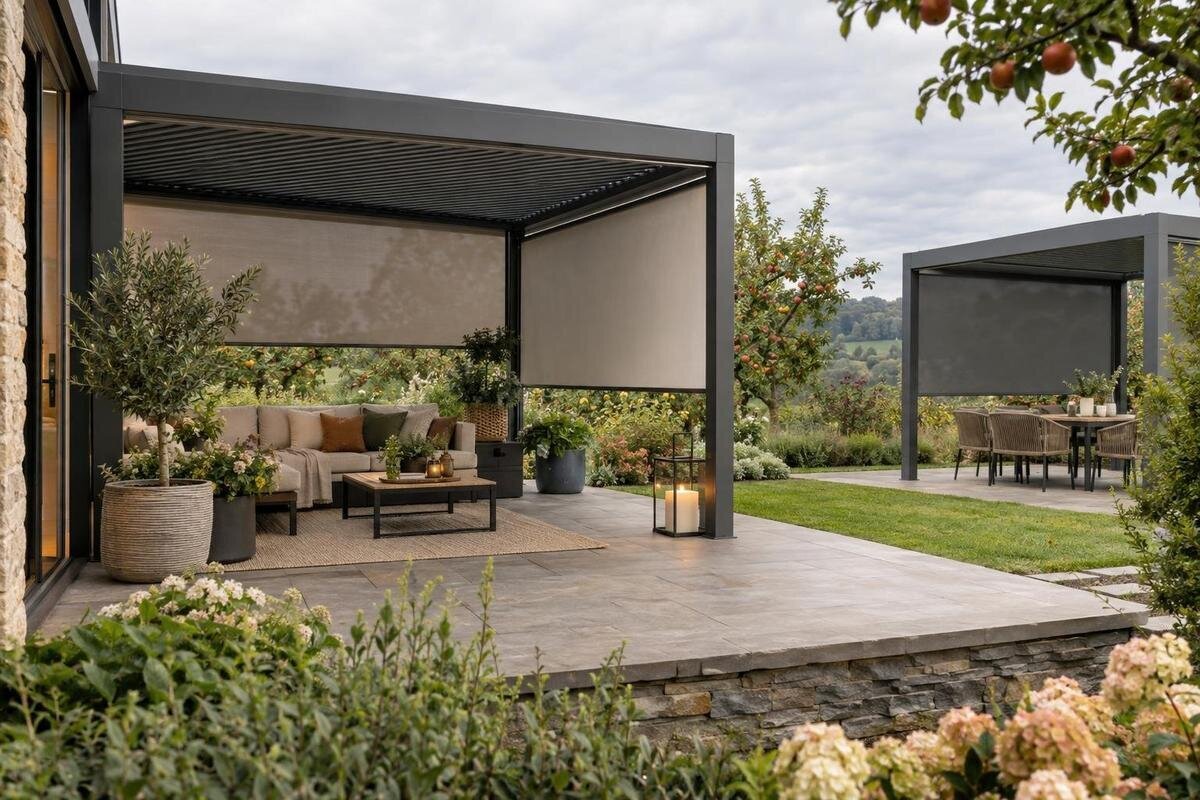
Pergola buying guide
When you buy a pergola with side screens, the word “screened” alone tells you little about privacy or weather shelter. The result depends on screen material, coverage, gaps, how the screens move and the conditions around your home. Before choosing a setup, decide which views you want to interrupt and what exposure you want to reduce. Then compare those needs with the exact screen details, installation requirements and the way you use the outdoor area. A privacy screen is not automatically a windproof or rainproof wall, and a photograph of a finished pergola cannot confirm what is included in an order.

Clarify what you expect the screens to do
Before comparing screens, identify the main problem you want them to solve. Is the priority blocking a direct view from a neighbouring window, making an exposed seat feel less open, or reducing sideways rain? Rank these needs rather than assuming one screen will meet them all. A denser panel may improve visual separation but alter airflow; a more open mesh may preserve the outlook while offering less concealment. Write down when and where the area is used, including the seats that need privacy. The Bloomcabin pergola listing can be one page in your comparison, but do not assume side screens are included; confirm the screen package and compatibility separately.
Also decide whether the requirement is constant or occasional. Some side-screen systems stay in one position, while others can be opened or retracted; check which arrangement is actually offered. Note whether you want one boundary screened, a corner sheltered or several sides covered, and where people need to walk through. These choices shape the layout before colour or appearance matters. If privacy is essential at particular times, record those times too: a lunchtime view and a lit outdoor area after dark can behave differently. A clear brief makes it easier to compare quotes on the same basis, instead of treating every mention of side screens as equivalent.
Map the views into your outdoor area
Walk the proposed pergola footprint and look outward from the places where people will sit and stand. Check sightlines from neighbouring windows, balconies, paths and nearby doors, not just from the boundary fence. A screen that blocks one angle may leave a diagonal view around its end, or a higher viewpoint above it. Mark the main lines on a simple plan and note the approximate position of each viewing point. If privacy changes when chairs move, use the normal furniture layout when assessing the screen rather than judging from an empty space. This can help you avoid covering a whole side when only one section is exposed.
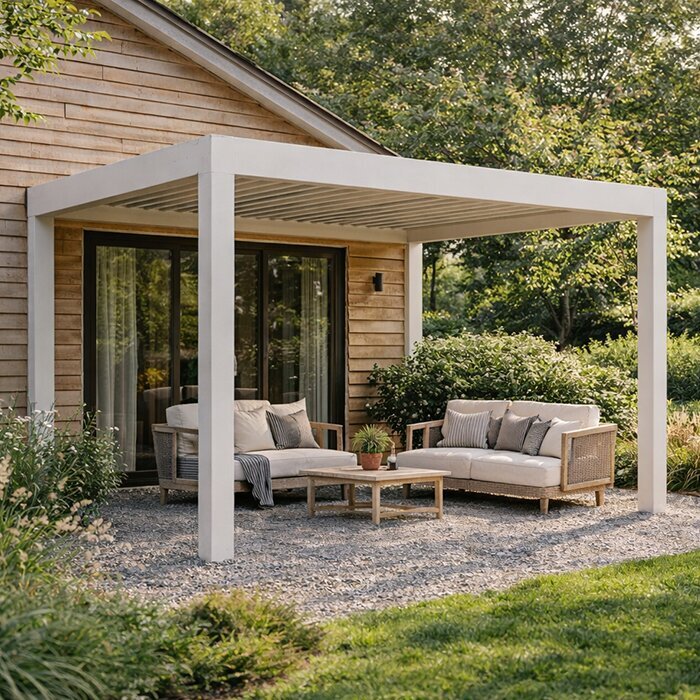
Check the view from both sides of the proposed screen and at different times of day. If practical, have someone stand at a likely viewing point while you look out from your usual seat; this can reveal an angle a sketch misses. A gate left open or a temporary obstruction may give a misleading impression, so base your decision on the views you expect to have regularly. The pergola product page cannot show how a screen aligns with your actual windows or boundary. Use product imagery only as a reference for the structure’s appearance, then confirm the screen dimensions against the final layout.
Balance privacy with light and airflow
Screen material affects what you can see through it as well as how visible you are from outside. Open-weave mesh may retain more of the outlook and daylight, while a denser or opaque panel can obscure views more fully; neither description alone establishes a level of privacy. Weave, colour, finish, viewing angle and the light on each side all matter. Ask for the material specification and, where available, a sample large enough to judge rather than choosing from a small colour swatch. Look through it from outside towards the seating area as well as from inside out, since those views may not look the same.
Consider airflow and light alongside concealment. A more open construction may feel less enclosed, but will not block views or wind in the same way as a more closed surface; a solid-looking panel can reduce the outlook and may alter how wind acts on the structure. Ask what the supplier means by privacy, and whether any published openness or weather information applies to the exact screen you are considering. The Bloomcabin pergola page is not evidence of a particular screen material or specification: verify those details against the screen option itself. Compare the trade-offs with how you use the space, not with a generic claim that one material is best.
Test privacy in evening light
Daytime privacy does not guarantee privacy at night. When lights are on under or near the pergola and the outside is darker, people outside may see more through some fabrics than you expect. The result depends on the material, distance and lighting, so the label privacy screen is not a promise of one-way visibility. If evening use matters, ask to inspect the material in comparable conditions or arrange a sample test with the light on where the screen will sit. Check the view from likely outside positions, not only from directly opposite the panel.
Also consider light coming from the home, neighbouring properties or street-facing areas. One lit side and one dark side can produce a different view from the reverse, and a screen that looks private in a showroom may behave differently outdoors. Ask whether the maker provides guidance about night-time visibility and what that guidance assumes. The product page itself identifies a pergola, but its name or an outdoor photograph cannot establish how private a chosen screen will be after dark. If evening privacy is important, make the material sample and the exact screen arrangement part of your comparison.

Set realistic expectations for wind and rain
A side screen can change exposure to a breeze or wind-driven rain, but it does not turn a pergola into an enclosed, weatherproof room. Open mesh, solid panels, incomplete coverage and gaps can all produce different outcomes. Rain may travel around an edge or through a material, while a closed surface can catch wind; the actual effect depends on the screen construction, how it is fixed and the site’s exposure. Do not assume a screen sold for privacy also offers meaningful weather shelter. Ask for the manufacturer’s stated limits for the exact screen and structure, including any instructions about when it should be opened or secured.
Describe the site plainly when seeking advice: note whether it is sheltered or exposed, whether wind can funnel between buildings, and which side receives the rain that affects your seating area. Opening a pergola listing from Bloomcabin does not verify that a particular screen is suitable for those conditions, so request a clear answer about the selected configuration and its limits. Where wind exposure or attachment suitability is uncertain, have a qualified installer or relevant building professional assess it; do not infer safe use from a photograph or attempt your own structural calculations. Assess the roof and drainage separately, because side screens cannot correct a roof-related gap.
Check screen coverage and gaps
Coverage is about the whole edge, not only the headline screen width. On a plan, mark the positions of posts, corners, doorways, steps and the seats you want screened. Then check whether the proposed panel reaches far enough to block the relevant view, and whether there are openings at the top, bottom or sides. Those gaps may be intentional for movement or ventilation, but they can reduce privacy and weather shelter. Ask whether the quoted dimensions describe the screen itself, the opening it fits or the area it covers, and request a drawing if that distinction is unclear. Avoid assuming adjacent panels overlap or close off a corner.
Plan access at the same time. A screen across the most exposed side may be inconvenient if it interrupts the route from the house or leaves no comfortable entry point. Think about where chairs, tables and doors sit when the screen is closed, and whether it can be moved without shifting furniture. The pergola page can serve as a reference when comparing a listing with your sketch, but it cannot establish screen reach, clearances or corner treatment. Have the supplier confirm final opening sizes and coverage in writing before ordering, especially if two or more screens need to meet at a corner.
Consider how you will use the screens
Decide how often you expect to adjust the screens. Fixed panels keep the boundary in one state; adjustable or retractable systems can change the outlook and airflow, but only if the operating method and storage position suit the space. These are general arrangement choices, not features to assume from a pergola listing. Ask whether the screens are fixed or movable, how they are operated, where they sit when open and what parts are supplied. If people will use the area daily, consider whether the controls are easy to reach and whether operation conflicts with furniture, doors or a narrow walkway.
Think about what you will do when conditions change. Some screen systems have limits on when they should remain deployed, so follow the manufacturer’s instructions rather than treating every side as suitable to leave closed in all weather. Check whether the screen can be secured as instructed, whether its tracks or fittings remain accessible for cleaning, and what steps are needed before it is put away. Use a display or demonstration, if available, to see the movement and effort required. The Bloomcabin pergola page is a useful item to review, but ask separately whether a screen system and its operating hardware are part of the order.
Confirm compatibility and installation
Screen compatibility is specific to the pergola frame and its mounting arrangement. A side screen made for one opening may not fit another structure, even where the overall appearance seems similar. Confirm the intended model, opening, attachment points and any required guides or hardware in the supplier’s documentation; do not assume an aftermarket screen will be suitable. If the pergola is attached to a building, describe the wall and proposed position; if it is freestanding, explain how and where it will be installed. Check the pergola product listing against the screen documentation, but do not treat a product page as proof that a particular accessory fits.
Installation conditions need a separate assessment from product selection. Existing paving, wall finishes, posts, eaves or uneven ground can affect what an installer needs to confirm, but this guide cannot determine whether a fixing or support is suitable. Ask who measures the opening, who supplies the screen fittings, what work is included and whether a qualified installer should inspect the site before the order is final. If you are unsure whether local approvals or building requirements apply, ask the relevant council or a qualified building professional rather than relying on assumptions. Get the agreed installation scope and exclusions in writing.
Check care, wear and replacement options
Ask how the screen material and hardware are expected to cope with the conditions on your property. Sun exposure, dust, moisture and salt in the air can make care requirements different from one site to another, but a material label on its own does not establish long-term durability. Request the manufacturer’s information on cleaning, UV exposure, colour change, corrosion resistance where metal components are used, and any limits on cleaning products. Compare like with like: statements about the frame do not necessarily apply to the screen fabric, zips, tracks or fasteners.
Maintenance affects whether the screen stays practical as well as how it looks. Find out how to clean the fabric and guides, whether parts need routine adjustment, and whether worn sections can be repaired or replaced individually. Ask which parts are replaceable and whether the supplier can identify them later; do not rely on a general promise that a screen is low maintenance without care instructions. Review any warranty terms supplied, including what they cover and which conditions or upkeep requirements apply. Keep that documentation with the product details so future repairs do not depend on memory.
Compare the complete order before you buy
Compare the complete order rather than screen names in isolation. The written quote should make clear which pergola structure and screen panels are included, which sides they cover, their dimensions and material, and whether guides, fasteners, operating hardware and installation are included or priced separately. Confirm any colour, configuration or measurement choices before payment. If photographs show screens but the product information does not list them, ask whether they are display accessories or an available option; an image alone is not an order specification. Keep the final selection, drawing and any advice about site suitability together.
Before placing the order, check how final measurements are confirmed, what happens if a site detail differs from the plan, and which delivery, installation, return or change conditions apply. Do not assume accessories can be added later without checking availability and fit. The useful comparison is between complete, compatible setups that cover the same sides and meet the same privacy priorities, not between headline prices for different inclusions. Resolve any gap between the product page, quote and installer’s description; a clear written record reduces the chance of receiving a structure without the screens you expected.
Frequently asked questions
Do side screens make a pergola weatherproof?
No. A screen may reduce direct exposure in some conditions, but its material, coverage and gaps all affect the result. Rain can pass through some screens or reach the area around their edges, and a screen is not a substitute for assessing the pergola roof separately. Check the manufacturer’s stated weather limits for the exact screen and setup.
Will a privacy screen keep the area private after dark?
Not necessarily. If the pergola is lit while the area outside is darker, people outside may see through some screen materials more clearly. Visibility varies with the fabric, lighting and viewing angle. If you use the space in the evening, inspect a sample in similar conditions and check the view from likely outside positions.
Is mesh or a solid screen better?
It depends on what matters most. An open mesh may preserve more airflow and outlook but provide less concealment; a denser or solid-looking screen may obscure views more while changing airflow and how wind acts on the setup. Ask for specifications for the exact option, then compare them with your privacy and weather priorities rather than relying on a general material label.
How many sides should I screen?
Screen the sides that address the views or exposure that matter to you, rather than assuming every side needs covering. Map sightlines from the places people sit, then consider access, airflow and the gaps at corners or doorways. More coverage does not guarantee privacy or weather protection, so confirm what the chosen arrangement actually covers.
Can I add side screens to a pergola later?
Only if the screens are compatible with the pergola and its installation. Check that the screen is intended for the specific structure and opening, and confirm any required fittings and clearances with the supplier. An installer may also need to assess the site. Do not assume a screen made for a similar-looking pergola will fit or be suitable.
The right setup is the one whose screen material, measured coverage and operating arrangement address the views and weather you actually face, within the installation limits confirmed for your site. Treat privacy and shelter as separate outcomes, assess visibility at the times you use the area, and compare the full set of panels and fittings in writing. That gives you a clear basis for ordering without assuming that a pergola labelled as screened is private, weatherproof or fully equipped.
