
Choosing Pergola Flooring: Porcelain, Timber or Natural Stone
Pergola planning
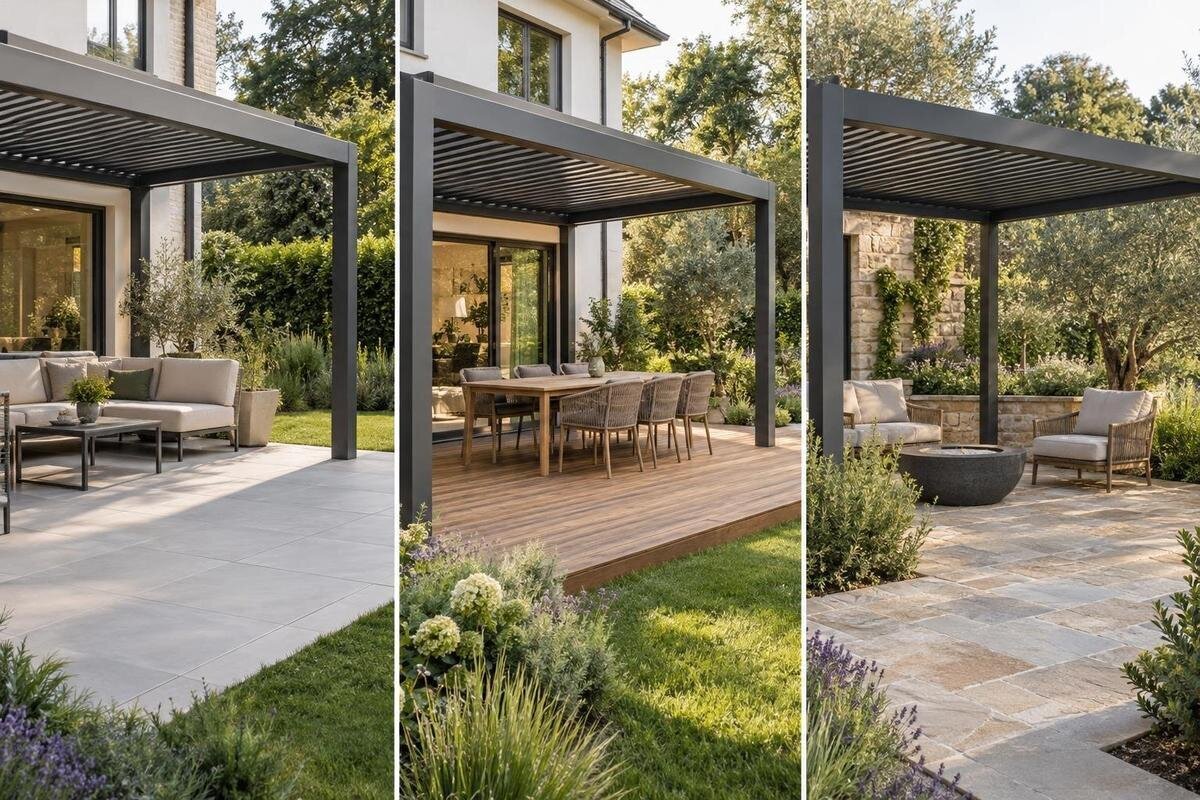
Choosing pergola flooring is about more than matching a paving colour to the frame. The surface shapes how the area feels under bare feet, how it responds to sun and spills, and how much cleaning or upkeep it asks of you. Porcelain, timber and natural stone each have different finishes and product-specific requirements. Compare them against the way you will use the space, its exposure and the look you want to carry through to the rest of the garden.
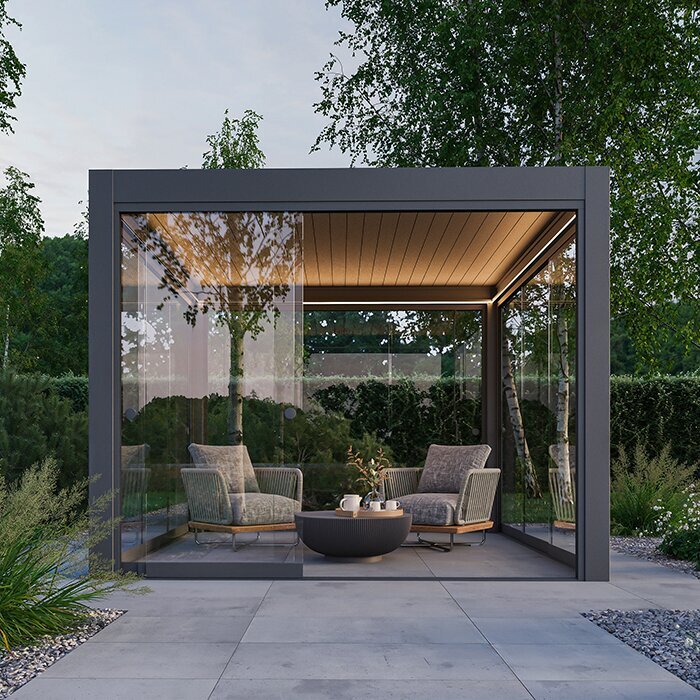
Choose for the activities under the pergola
Start with what happens in the area most often: dining, lounging barefoot, carrying food between the house and table, or using the pergola as a route through the garden. For a dining setting, consider chair movement and occasional spills; for a through-route, consider surface evenness and whether joints interrupt the walking line. If the space has several roles, rank them rather than choosing only by the most attractive sample. Include everyday movements in that assessment: pulling a chair back, moving around an occupied table and carrying a tray through the doorway. Note whether furniture will stay in place or be rearranged regularly. These details give you a practical basis for comparing board gaps, grout lines and texture, rather than treating appearance as the only difference between the materials.
Map the furniture, circulation and intended floor area together. Include the strip beyond the roof line: the surface can extend past the covered area, and that exposed section may have different conditions. Check the position of doors, posts and garden paths against the final landscape plan. The Bloomcabin Wall-Mounted Pergola listing gives an area range from 9 to 24 m², but that range is not a dimensioned floor plan. Use the chosen layout to establish the actual boundary and allow for the way people will move between the house, pergola and garden.
Sun exposure affects surface temperature
Do not assume the floor beneath a pergola stays in shade all day. Depending on the position and roof arrangement, direct sun may reach the perimeter or pass across the surface at different times. The Bloomcabin Pergola product page lists an area range from 9 to 24 m², but the position of shade needs to be considered for your particular layout. Observe the space at the times you expect to use it, distinguishing the covered centre from exposed paths and seating areas. Mark those observations on the plan alongside the furniture. If your main use is an afternoon meal, assess the places where people will sit and rest their feet at that time, rather than judging the entire floor from a shaded corner in the morning.
Colour and finish influence how a surface feels, but neither gives a complete prediction on its own. A darker finish can absorb more sunlight, while a pale surface may reflect bright light towards seating or windows. Material, texture, direct exposure and airflow also matter. If barefoot comfort is important, look at samples in the actual space and compare them under the conditions that matter to you. A small sample viewed indoors cannot show how the same colour and finish will feel in full sun or in changing shade.
Porcelain paving: pattern and joints
Porcelain pavers can suit a pergola where you want a planned, tile-like layout. Their manufactured patterns and finishes can give a more consistent look from piece to piece than the natural variation of stone. Larger pieces can create fewer visible joints; smaller formats or a deliberate pattern make the grid more prominent. Compare the pattern across several pieces, including any repeated markings, rather than assessing a single paver. Think about how the layout meets the pergola edge and nearby paving before settling on a format. The Bloomcabin Bioclimatic Pergola is listed in areas from 9 to 24 m². Use the confirmed dimensions of your chosen layout to position the paver grid, checking how full pieces, joints and cuts would appear around the perimeter and beneath the main furniture.
Check that the exact product is intended for outdoor paving and ask for information about its finish in wet conditions. Texture, edge treatment, size and installation requirements vary between products, so do not assume that every porcelain tile is suitable for the same setting. Ask the supplier and installer to confirm that the selected paver and installation system are compatible with the site. Cleaning may be straightforward for the face of the paver, but joints can still collect dirt. Follow the product instructions for cleaning rather than choosing a strong cleaner by habit.
Timber decking: grain, layout and upkeep
Timber gives the floor a board-based pattern and visible grain, with natural differences in colour and appearance. Board direction can make the area feel longer or draw attention towards the garden, while the joins create a different visual pattern from square pavers. Consider how board ends will meet the edge of the covered zone and how the surface will connect with existing paving. When considering a wall-mounted pergola option, compare the board direction with the house wall and the route into the garden. Sketch both possible directions on the plan rather than judging the relationship from a product image. Include the position of the dining table or lounge setting so you can see which parts of the board pattern will remain visible around the furniture.
Timber’s appearance changes with exposure and care, and maintenance depends on the species, finish and product instructions. Ask the supplier what cleaning and treatment are recommended for the specific decking, and what signs of wear to look for. Clear leaves and other debris from the surface and between boards as part of routine cleaning. Over time, colour and finish may change; the amount and character of that change are not identical for every timber. If a low-maintenance routine is a priority, discuss the likely upkeep before choosing the look.

Natural stone varies from piece to piece
Natural stone has variation that manufactured finishes may not reproduce: colour shifts, markings and texture can differ between pieces. That variation is part of its appeal, but a single small sample may not show the effect across a full pergola area. Ask to see a representative selection, and consider how the pieces will be arranged rather than selecting only the most striking one. Look at the overall balance of quiet and strongly marked pieces, especially if you prefer a restrained finish. If the surface will extend beyond the pergola, include that exposed area in the same material comparison. When considering the Bloomcabin Pergola model, mark its confirmed position on the landscape plan before working out the paving area and edges. This lets you assess the stone as a continuous surface, including borders and cuts.
Stone type and finish affect care and suitability, so avoid assuming that all natural stone needs the same treatment. Ask the supplier whether the particular product is appropriate for the intended outdoor use, how it performs when wet, and whether sealing is recommended. If treatment is needed, confirm which products are compatible and how to maintain the finish. Texture can change the look as well as the feel underfoot, and a more pronounced surface may hold dirt differently from a smoother one. View samples in natural light and discuss cleaning before making the final selection.
Check barefoot comfort and wet grip
Barefoot comfort is personal, so compare the actual surfaces rather than relying on descriptions such as smooth, textured or natural. Notice how the finish feels, whether the joints are comfortable to cross and whether the surface seems suitable for sitting or walking on. If possible, view a sample in the space and consider both the covered area and any exposed edges. Also think about how furniture, toys or outdoor dining items will sit on the surface. A visual match to the garden is useful, but it should not outweigh how the floor feels in its everyday role.
Wet conditions need a separate check: a finish that feels comfortable when dry does not necessarily provide the same grip when wet. Ask for product information about wet outdoor use for the exact surface, and have the installer confirm suitability for the site. Whether you are considering the Bioclimatic Pergola option or another model, assess the walking surface separately from the structure. Identify where people will cross between covered and exposed areas, including the route back to the house. Include transitions and edges in the review, since an abrupt change in level or a poorly planned joint can affect how the whole area feels to walk across. Consider both barefoot use and the footwear you normally wear outdoors.
Plan joints, thresholds and water flow
A good-looking sample can be harder to use if the finished layout has awkward cuts or a poorly considered edge. Plan the grid or board direction across the whole area, including the perimeter, door approach and any path leading into the garden. For paving, consider where joints and cut pieces will fall; for decking, look at board ends and the joins between the deck and other surfaces. The wall-mounted pergola product page can help you identify the structure option, but the floor layout still needs to be coordinated with the confirmed dimensions and the actual threshold.
Water flow and levels should be considered as part of the surface design, not added after the material is chosen. Discuss the site, existing drainage and doorways with the installer, who can determine the appropriate floor levels and drainage details. Avoid making assumptions from a product image or from the name of a paving finish. Where the floor meets the house, ask how the transition will be handled and where water is intended to go. This is a site-specific installation matter; a qualified professional should confirm the details rather than relying on a general layout example.
Compare cleaning and maintenance needs
Porcelain, timber and stone do not call for identical care. Dirt may show more clearly on one colour or texture than another, and joints can collect debris even when a paver face is easy to wipe. Timber may need care suited to its species and finish, while stone treatment depends on the selected type and supplier guidance. Ask what routine cleaning involves and what should be avoided. If outdoor meals, potting or frequent foot traffic are likely, think about the kinds of marks the surface may encounter and whether the recommended care fits your routine.
Consider the whole area, including the parts beyond the roof line, when estimating how much cleaning it will take. If you are considering the regular pergola option, use the confirmed landscape plan to measure the surface around it as well as beneath it. Compare care requirements for the same total floor area so that a smaller display sample does not distort your impression of the work involved. Separate routine jobs, such as sweeping and dealing with spills, from any occasional treatment recommended for the chosen finish. Ask which cleaning products are compatible and whether sealing or oiling applies to that particular material. Then consider who will do the work and whether the recommended routine fits how you already maintain the garden and outdoor furniture.

Coordinate colour, texture and garden edges
Compare flooring samples with the house exterior, existing paving and the colours in the garden. A close match is not essential: a related tone or texture can connect the areas without making them look identical. Check samples in the light where they will be used, because indoor lighting can make colour and surface detail appear different. Pay attention to the amount of visual pattern as well. Timber grain, stone markings and porcelain prints all create their own character, and the surrounding space may already have strong brickwork, planting or paving to balance.
Think about where one finish should stop and another begin. A clear border can make the pergola area feel deliberate, while carrying one surface into a nearby path can make the overall space feel connected. Either approach needs a considered edge and a practical transition. Avoid adding several competing materials simply to define each zone; a small, coherent palette is often easier to read and maintain. Check that the proposed boundary works with garden access and furniture placement, not only with the view from inside the house.
Compare flooring samples against the final layout
Before deciding, bring together samples of the exact products and finishes still on your shortlist. Compare them in the pergola area under the same light, rather than relying on impressions formed in different showrooms. For stone, include enough pieces to understand its natural variation; for timber, consider the grain and board direction; for porcelain, examine repeated markings and the joint pattern. Set the samples beside the existing paving or house finishes they will meet. On the landscape drawing, mark the proposed flooring boundary and furniture positions, then check where the material will be most visible. This final comparison should bring together the decisions made earlier: the surface pattern, its relationship with the house and the treatment of the perimeter. It is also a useful point to remove options that look appealing in isolation but do not suit the overall layout.
Record the practical details alongside each shortlisted finish: outdoor suitability, information about wet use, installation requirements and the recommended care. Keep the comparison specific by naming the product and finish, rather than writing only porcelain, timber or stone. Separate questions for the material supplier from site details the installer needs to resolve, such as the threshold, edge or drainage arrangement. This makes it easier to see whether a preference is based on appearance, everyday comfort or the amount of maintenance involved. Where two options remain close, return to the activity you ranked highest at the start: dining, barefoot lounging or access through the garden. The best choice is not automatically the hardest, smoothest or most natural-looking surface. It is the finish whose appearance, feel and care requirements suit that use across the full area.
Frequently asked questions
Which pergola flooring stays coolest underfoot?
There is no single material that stays coolest in every setting. Direct sun, shade, colour and surface finish all make a difference, as do local conditions. Compare samples where the flooring will sit, including any parts that receive full sun.
Is porcelain paving slippery when wet?
It depends on the exact product and finish. Ask the supplier for information about its suitability for wet outdoor use, and have the installer confirm that the chosen product suits the site. A textured appearance alone is not proof of wet grip.
Does timber decking need sealing or oiling?
Care depends on the timber, its finish and the product instructions. Ask what cleaning and maintenance the supplier recommends, and avoid assuming that one treatment suits every deck. Keep an eye on wear and weathering as part of routine upkeep.
Does natural stone need to be sealed?
Not every stone has the same care requirements. Ask the supplier whether the specific stone and finish need sealing, which products are suitable and how often any treatment should be reviewed. Follow the instructions for the stone you choose.
Can the flooring extend beyond the pergola?
Yes. A larger surface can connect the pergola with a path or another outdoor area, but the part beyond the covered zone may get more direct sun and rain. Plan the boundary, level changes and drainage with your installer.
Choose the surface by weighing its everyday feel, exposure and care requirements together. Porcelain, timber and natural stone can each suit a pergola, but the exact product and finish matter more than the material name alone. When samples, layout and installation details are considered as one plan, the finished area is more likely to work as well in daily use as it looks in the garden.
