
Growing Potatoes in a Greenhouse
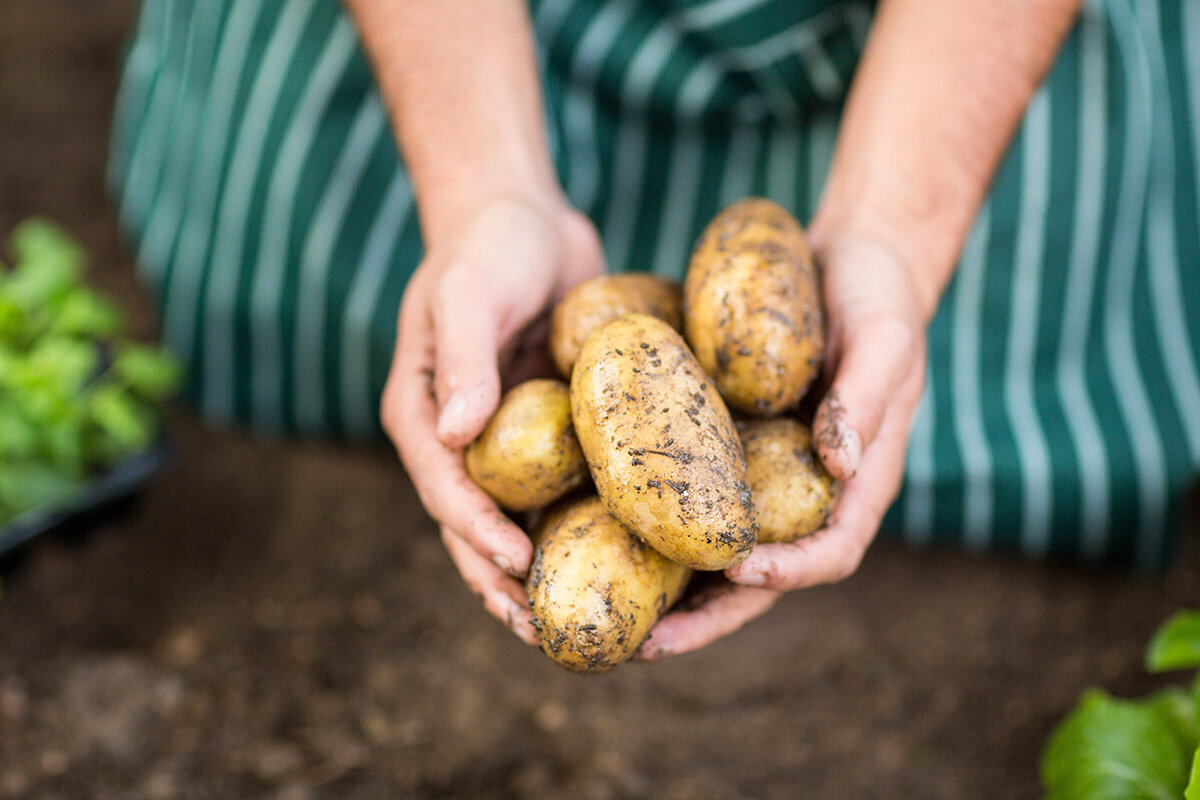
The hidden harvest ledger · Greenhouse crop No. 09
Raising a potato crop in the greenhouse
Potato foliage reveals only part of the crop. The yield takes shape out of the light in cool soil, as buried stem sections form stolons whose tips enlarge into new tubers.
A greenhouse gives you close control over this hidden crop. You can manage the growing medium, watering, airflow, hygiene and the soil kept aside for earthing up. It does not turn potatoes into year-round tropical plants. Instead, it supports a well-timed cool-season start: chit the tubers, use soil that warms sooner, shelter emerging shoots and finish the crop before tomatoes or cucumbers claim the space.
Folio 09 · Germany · From seed tuber to storagePlate A · The crop beneath the soil
Chapter I · Reading the underground plant
The harvested tuber is stored food on a lateral stem, not a root.
Potato crops are generally started with seed tubers rather than botanical seed. Shoots emerge from the eyes and grow into stems. Fine lateral stems, known as stolons, develop from sections below the soil, with each new tuber forming at a stolon tip. That structure explains the main tasks: plant into friable soil, cover the stem base, add soil as growth advances and exclude light from every tuber.
Earthing up has a practical purpose. It shades the tuber-producing zone, covers potatoes near the surface and, where soil remains loose, maintains a suitable growing area around the stems. German federal agriculture guidance also describes tubers forming on underground side shoots and the ridge shielding them from light. Leave planting bags and tall pots partly empty at planting, keeping clean, friable medium ready for later additions.
Ledger correction — myth and reality.
Myth: simply making the mound taller guarantees more potatoes. The crop actually depends on enough soil volume combined with sound foliage, reliable moisture and air in the root zone. A deep container full of stagnant water offers conditions for decay, not a bigger harvest.
Myth: simply making the mound taller guarantees more potatoes. The crop actually depends on enough soil volume combined with sound foliage, reliable moisture and air in the root zone. A deep container full of stagnant water offers conditions for decay, not a bigger harvest.
Greenhouse cover alters the conditions around the leaves but not the potato’s underlying needs. Rain stays off the plants, clean medium can be used in containers, and vents can remove humidity after irrigation. Yet enclosed spaces also heat rapidly. Prevent a cycle of parched, hot soil at noon, soaking wet soil that evening and motionless humid air through the night.
Chapter II · Input ledger
Start with planting stock worth trusting.
Good planting stock is a basic defence against disease rather than an indulgence. Potatoes sold for eating may be treated to suppress shoots, and hidden plant-health problems may accompany them. Choose certified seed potatoes from a specialist outlet where possible. Reliable stock is especially valuable in a compact greenhouse used intensively, because there is little room to compensate for failed plants.
01
Decide the use
Early · waxy · storing
Early varieties usually fit a limited greenhouse window best. They gain from the sheltered start, then vacate the bed before summer heat and the main warm-season crops take over. Match the variety to the kitchen as well: waxy potatoes hold together when boiled, all-round types suit many dishes, and floury potatoes work well for mash. Culinary type describes texture and use; it does not promise a heavier harvest.
02
Select seed tubers
Small whole · divide large ones only when needed
Seed potatoes around hen’s-egg size are convenient to plant whole in a home garden. Each has several eyes and enough stored nourishment for dependable growth. Even very large tubers need not automatically be cut. If division is necessary, use only vigorous, healthy stock and a clean knife, leaving several sound eyes on every piece. Exposed cut faces are more prone to decay, so careful handling matters.
03
Heal cut surfaces
Store briefly, dry and sheltered
Set the cut portions in a single layer in a sheltered, well-aired, dry position away from direct sunlight. Wait until each exposed face has dried. Do not put newly cut pieces into cold soil saturated with water: stored energy that should support shoots may instead be lost to rot before roots develop.
04
Record the crop
Variety · supplier · planting date
Write down the variety and supplier, when it was planted and emerged, the first earthing-up date, and any unusual signs. By the second season, these notes show which choice matured early, remained healthy, produced the preferred texture and kept successfully. Also record bags that lost moisture quickly and positions where excessive warmth developed.
Chapter III · Before planting
Chitting produces compact, resilient shoots instead of pale, threadlike growth.
Chitting allows seed potatoes to start forming compact shoots before planting. Although optional, it may shorten the wait for an early harvest and gives you a chance to examine every tuber. Stand them eyes upwards in shallow trays or egg cartons. Bavaria’s Garden Academy recommends bright light without full sun and a temperature of about 15 to 20 °C. Aim for firm, pale-green growth rather than elongated, fragile shoots produced in darkness.
01 · Sort
Firm and healthy
02 · Position
Eyes facing up
03 · Wait
Short, sturdy shoots
04 · Plant
Ready for loose soil
- Sort Remove any tuber that is soft, mouldy, severely shrivelled or conspicuously damaged before bringing it into the greenhouse.
- Position Place the tubers apart in a single layer. Plenty of indirect light favours compact, durable shoots rather than weak, elongated ones.
- Wait Stout shoots measuring 1 to 2 cm are sufficient. Carry and plant each tuber gently to avoid breaking them.
- Plant Before planting divided tubers, confirm that every cut surface has dried and sealed. The soil should be evenly moist but never saturated.
Chapter IV · Building protective cover
Begin low. Add soil gradually afterwards.
In a greenhouse bed, set chitted potatoes about 10 to 15 cm deep, generally leaving 30 to 40 cm between plants, with the shoots uppermost. For a roomy opaque container, begin with a freely draining lower layer instead of filling it to the top. The unfilled space is essential because it provides capacity for later earthing up.
Stage 1 · Plant
Cover the seed tuber lightly
Stage 2 · First ridge
Foliage reaches 20 to 30 cm
Stage 3 · Final ridge
Keep every tuber dark
- Plant Choose friable, humus-rich soil that drains freely. Avoid treading on a ground bed; for containers, select a stable potting medium rather than dense garden soil that becomes sodden.
- First ridge Draw loose soil gently around the stems, covering their lower section. Leave a healthy tuft of foliage clear. Work without firm pressing, root injury or snapped shoots.
- Final ridge Add another layer as the stems extend. Once finished, the ridge should exclude light from every enlarging tuber while leaving the root area uncompacted.
Spacing influences the range of tuber sizes as well. Plants packed too tightly compete for water, nutrients and light. A gap of 30 to 40 cm is a sensible starting guide in a home greenhouse. Leave a path alongside the row so foliage can be checked, water applied close to soil and growing medium added without compressing the planted area.
Chapter V · Space ledger
Choose a system with enough reserve.
Visible floor area tells only part of the story. Include both the usable soil volume and the empty capacity that will later hold the protective ridge.
A ground bed in a spacious greenhouse gives roots a consistent zone and makes earthing up straightforward. Where the structure is smaller, several generous containers can put the lower space to work without occupying it permanently; remove them after the early crop. Every arrangement still needs unrestricted drainage, darkness around the tubers and convenient access for watering at soil level.
For a purpose-planned growing area, assess the usable footprint and ventilation offered by the Classic aluminium greenhouse. Its doors, roof vents and orderly internal layout help you moderate conditions during unsettled spring weather.
| Method | Room for each plant | Medium held back | Watch for |
|---|---|---|---|
| Ground bed | 30 to 40 cm spacing | Friable root area | Access and crop rotation |
| Grow bag | About 40 l or more, one plant | Keep upper volume empty | Edges drying out |
| Roomy tub | About 35 to 45 l, one plant | Add medium progressively | Drainage and plant density |
- Row in a greenhouse bed. Several plants receive the most consistent rooting space in this arrangement, and soil held beside the row is easy to draw towards their stems. Retain a clear working path and plan the rotation. In the same soil, potatoes should not immediately follow tomatoes, capsicums, eggplants or a previous potato crop.
- Grow bag. A durable, porous bag can be moved and also suits a paved greenhouse floor. Provide at least about 40 l for one seed potato. A larger bag may hold two plants where their spacing and water supply are adequate. Inspect the outer sections closely on sunny days because they lose moisture first.
- Large lightproof tub. Provide open drainage holes and, as a rule, use one plant in each container. Tubs organise limited space and can be refilled with clean medium. Packing several seed potatoes into a small pot instead creates competing tops, patchy moisture and numerous undersized tubers rather than a smaller number that develop well.
Allow roughly 35 to 45 l of medium for one plant, and use a grow bag holding at least about 40 l. Opaque sides are functional, not cosmetic, because light turns exposed tubers green. Keep every drainage opening unobstructed and never leave the saucer holding water.
Chapter VI · Keeping the ledger even
Water soil, exchange air and avoid excess.
Moisture
Sharp dry-to-wet changes stress potatoes. During tuber formation and swelling, maintain evenly fresh medium without keeping it saturated. Test the root zone each morning at around 5 to 8 cm deep. Once it starts to dry, water slowly and thoroughly; exceptionally dry medium may need two applications. Allow all excess water to run away afterwards.
Nutrients
Before planting, incorporate mature compost or a modest quantity of organic vegetable fertiliser. Nutrients are necessary, but an excess of readily available nitrogen can drive lush top growth while delaying tuber formation. Feed again only if plants remain visibly weak and enough of the season remains. For beds used continuously, soil analysis can help prevent nutrients accumulating beyond what the crop needs.
Ventilation and heat
Ventilate early on bright days, before warmth becomes trapped beneath the cover. Extra shade may be helpful during hot spells, and containers should sit away from glazing or walls that become very hot. Potatoes perform poorly in a sealed, steamy summer greenhouse. A cool root zone and circulating air matter more than maximum heat. Automatic vent openers can assist with everyday temperature control.
Dry foliage
Deliver water to the soil with a can, drip hose or slowly aimed line. Do not wet the canopy late in the afternoon, as leaves should dry before night. Moving air clears condensation and reduces pockets of still, humid heat. Using clean tools, take away yellow or suspicious foliage, then clear discarded plant matter from containers and paths.
A well-designed greenhouse proves its value when practical details make this measured routine easier. View the Classic aluminium greenhouse and plan for airflow, shade, container positions and paths that are easy to reach. To compare additional forms and dimensions, browse the aluminium greenhouses for ideas suited to pots, ground beds and an intentionally sequenced growing calendar.
Chapter VII · Risk register
Act early before an unseen harvest is lost.
Cover shelters the crop, but poor airflow or unsuitable irrigation may leave moisture sitting on foliage. Examine plants at least twice each week, including both leaf surfaces, the bases of stems and the top of the growing medium. Diagnose before responding to symptoms. Check whether roots are too wet or dry, whether the greenhouse overheated, and whether the cause could be inadequate nutrition, feeding pests or disease.
Case file 01 · Potato late blight
Wet-looking spots that rapidly turn brown
Late blight attacks both potatoes and tomatoes, spreading rapidly where leaf wetness persists. Begin with certified stock, irrigate at soil level and keep air moving. Use clean equipment to remove suspect leaves without delay. Heavily infected material should stay out of compost. When symptoms are unmistakable, an earlier lift may be wiser than waiting for tubers that are unlikely to keep well.
Case file 02 · Decay of seed pieces and stems
Poor emergence, blackened stem base or collapse
Early losses commonly follow cold, saturated soil or unhealthy starting stock. Select sound seed potatoes, let cut faces seal and avoid planting into cold, greasy soil. Discard any growing medium whose condition is doubtful. Promptly move collapsed plants away from unaffected neighbours.
Case file 03 · Scab
Firm potatoes marked with cork-like lesions
Scab largely originates in the soil. Clean planting stock and container medium, suitable varieties and sensible rotation offer more value than trying to correct it late. Do not repeatedly allocate a permanent greenhouse bed to potatoes and other nightshades. Maintain consistent moisture while ensuring the soil never remains waterlogged.
Case file 04 · Insects and viral symptoms
Eaten foliage, clusters of aphids or curled leaves
Look beneath leaves for aphids, and note mottled pale areas or shoots that are weak and uneven. Deal with a small colony early by wiping it away or applying a precise jet of water without soaking all the foliage. Separate or discard plants that appear abnormal. Once the crop ends, remove every residue so possible pathogens and pests have nowhere to remain under cover.
Case file 05 · Heat and irregular irrigation
Wilting leaves, uneven or malformed tubers
These symptoms commonly reflect environmental stress rather than a single pest. High temperatures and abrupt moisture changes disrupt both tuber initiation and enlargement. Provide shade and ventilation before conditions become extreme. Avoid letting pots turn powder-dry and then drenching them. A consistent inspection each morning is preferable to sudden remedial watering.
Case file 06 · Potatoes exposed to light
Green skin or the top of a tuber showing
Greening occurs after light exposure and signals increased solanine production. Immediately replace loose soil over any visible potato, and inspect the ridge after forceful watering in case the medium has subsided. Protect harvested tubers from light as well. A small green area may be cut away generously, but potatoes that are strongly green, bitter or heavily sprouted should not be eaten.
Chapter VIII · Closing the account
Harvest in stages and allow skins to firm.
An early potato and one intended for storage represent different finishing points for the same plant. Lift new potatoes while their skins remain delicate and eat them promptly. A storing crop stays underground until its foliage has died and the skin no longer rubs off readily. This maturation is part of harvesting; rushing it leaves fragile potatoes that damage easily and keep poorly.
1 · Early harvest phase
First new potatoes
2 · Foliage dies back
Let ripeness show
3 · Skin firms
Harvest dry and gently
4 · Storage
Keep cool, dark and airy
- First new potatoes For an early variety, reach carefully into one side of the ridge and remove individual potatoes when they reach the preferred size. Restore the soil afterwards so light cannot reach those left behind. Eat these thin-skinned potatoes within a few days rather than putting them into storage.
- Dying foliage If the crop is meant to keep, wait for the tops to yellow and die, reducing irrigation as the season closes. Skin firming may require two to five weeks, depending on the variety and soil. Press with a thumb to check whether the surface still rubs away readily.
- Harvest Choose dry weather, then ease the potatoes out with a digging fork or tip each container onto a tarpaulin. Brush off soil lightly rather than washing them. Separate any cut, crushed or soft tubers and, if otherwise wholesome, use those first.
- Storage place Place only sound, undamaged, unwashed potatoes in crates that admit air. Select a dark, frost-free, cool location; about 5 °C is a practical guide for home storage. Inspect the crop routinely and discard anything soft or decaying. Do not store apples alongside it, as their ethylene promotes sprouting.
Chapter IX · Choosing an Australian growing window
Use the cooler margins of the local season deliberately.
Germany offers one useful reference pattern: in many regions, chitted potatoes enter an unheated greenhouse from March or April if the soil is crumbly rather than cold and sodden. Northern and elevated areas often start later, while the Lower Rhine and mild Rhine-Main area may start sooner; early to mid-April is commonly cited. Fleece protects tender growth where frosty nights remain possible. In Australia, do not merely reverse those months. Choose a cool local window according to regional climate, elevation, frost, greenhouse conditions and soil temperature.
A greenhouse is not a reason to push potatoes through unsuitable weather. In cooler Australian districts, a protected crop may begin around the transition out of winter and finish before summer heat, freeing space for cucumbers or basil. Tropical and subtropical gardeners need to favour their cooler local period instead. Autumn planting is worthwhile only where temperatures, light and frost risk suit the crop; an unheated structure cannot overcome every seasonal limitation.
Rotation note
Base rotation on the whole botanical family, not potatoes alone. Tomatoes, capsicums and eggplants are also nightshades and share several disease concerns. Where possible, avoid planting potatoes directly after any of them in the same medium. A larger greenhouse permits growing zones to alternate, while containers simplify rotation in compact structures because both their position and growing medium can be changed.
For a carefully planned season start, explore the Classic aluminium greenhouse. For plans involving a broader footprint with beds, pots, access routes and a following summer crop, the selection of aluminium greenhouses presents several sizes and forms for practical crop planning over successive seasons.
Season principle: Consistency matters more than intensity when potatoes grow under cover. Neither the hottest enclosure, the strongest feeding nor the tallest last-minute ridge usually produces the finest result. Observe regularly and make measured adjustments at the right time.
Potato help desk
Questions from the greenhouse.
Is year-round greenhouse potato growing realistic?
Usually not in an ordinary unheated home greenhouse. Potatoes prefer cooler growing conditions. In temperate Australian areas, use the structure to advance or protect a suitable cool-season crop; in warmer regions, select the mildest local window and avoid severe heat. Cold districts may still lack adequate winter warmth and light without heating and supplementary lighting.
What planting rate suits a 40-l container?
One plant is the dependable starting point. A tall, opaque container holding about 35 to 45 l of medium, with drainage openings kept clear, gives one seed potato space for roots and later additions of soil. A substantially larger bag can support two tubers if moisture and separation are managed properly. Crowding makes even watering difficult and tends to produce many small potatoes.
Are supermarket potatoes suitable for planting?
They are not the preferred choice. Potatoes intended for eating may carry sprout-suppressing treatment, and their plant-health history is uncertain. Introducing disease is particularly troublesome where a small greenhouse is used intensively. Certified seed potatoes obtained from a specialist outlet provide a cleaner, more dependable beginning.
When do greenhouse potatoes need water?
Let root-zone conditions determine irrigation rather than following fixed days. Each morning, feel the medium about 5 to 8 cm below its surface. Water slowly and deeply once drying begins. Even moisture is especially important while tubers initiate and enlarge, and bags or tubs warrant extra checks in sunny weather. The objective is moist soil that drains freely, never a container that remains saturated.
What causes green potatoes under cover?
They have been exposed to light. Restore a covering of friable soil at once, then see whether watering is causing the ridge to settle. Harvested potatoes also require darkness. Do not eat tubers that are markedly green, bitter or heavily sprouted.
Sources and further notes
Technical information behind this guide.
More from Bloomcabin: Planning a greenhouse: layout, crops and care · Water-efficient greenhouse gardening · Summer greenhouse care
- Bavarian State Research Centre — Preparing potatoes for an earlier crop
- German Federal Information Centre for Agriculture — Reasons for earthing up potatoes
- Bavarian State Research Centre — Starting potatoes and sweet potatoes early
- Berlin Plant Protection Office — Potato late blight guidance
- Bavarian State Research Centre — Garden and balcony potato growing
- North Rhine-Westphalia Chamber of Agriculture — Harvesting and keeping potatoes
- Organic Farming NRW — Organic potato production notes
Put the greenhouse floor to work
Make room for a crop hidden below the foliage.
For a keen home grower, a capable greenhouse is more than shelter for containers. It provides a structured place for easily overlooked crops, combining friable beds, roomy pots, accessible soil-level watering, adjustable airflow and protective ridges where future meals form beyond view.
Classic aluminium greenhouseClassic aluminium greenhouse