
Choosing Hedges or Pergola Screens for Privacy
Pergola privacy guide
A hedge and a pergola screen can both reduce unwanted views, but they solve the problem on different timelines and occupy space in different ways. A hedge needs a planting strip and time to fill out; a suitable installed screen can address a defined sightline sooner. The right choice depends on where people can see in, how much room you can spare, and how much seasonal care you want.

Planning points 1
Which sightlines need screening?
Privacy is rarely an all-or-nothing boundary. A neighbour looking down from an upper window, someone standing on a path and a person sitting under the pergola create different sightlines. Walk through the area at the times you use it; note which windows, paths and neighbouring outdoor spaces can see the table, lounge or doorway. Decide whether you want to shield one seat, one side of the pergola or the garden boundary. That matters: a short, well-placed barrier may answer one specific view, while a long hedge may take up space without solving an overlooked angle. Record whether each view is direct or diagonal and whether it changes as people move between the house and the seating area.
Sketch the views from seated and standing eye levels, including diagonal angles rather than only a direct view across the boundary. A screen only blocks the area it spans; it may leave views from above, around an end or through gaps. A hedge has similar limitations until its foliage is dense enough in the required place. Keep visual privacy separate from noise, wind and sun control: a barrier chosen for sightlines should not automatically be expected to address those other concerns. If the view is limited to one corner or one part of the day, record that before choosing a continuous hedge or a full pergola-side treatment. A simple plan with arrows and viewing positions often reveals which section actually needs cover.
How much room does a hedge need?
A hedge occupies a strip of ground as well as the visible line of foliage. Plan around the selected plant's expected mature width, not the pot or young plant on planting day. Leave room for the bed, pruning access, nearby paving, gates and furniture; a row that looks slim on paper can become intrusive if branches need space to fill out. Mature dimensions and spacing vary by species, so ask a local nursery or horticulturist for advice for the site. Check the plant's soil, sun and water needs at the proposed location rather than assuming one hedge will suit every boundary. On a narrow edge, check that the mature width still leaves a workable path, rather than merely fitting a single row of young plants.
Measure the clear strip from the boundary to the usable patio edge, then mark paths, doorways and the space needed to move chairs. If the hedge would narrow access or crowd a sitting area, its privacy may come at the cost of everyday use. When comparing a planting layout with the Bloomcabin Bioclimatic Pergola, check the chosen model's dimensions and mark its posts and footprint on the same plan. Don't treat the entire area around the structure as spare planting space. Where the planting line meets the pergola area, leave a clear route for tending plants and moving through the space.
Planning points 2
How hedge privacy develops over time
A newly planted hedge does not provide the same cover as an established one. How quickly foliage fills depends on the species, the plant's starting size and local growing conditions; there is no reliable single growth rate to use for every garden. Even closely spaced plants can leave sight gaps while they establish, and a recent trim can temporarily change the amount of cover. If privacy is needed by a particular season or event, don't plan on an unverified growth estimate closing those gaps in time. Dry, exposed or otherwise unsuitable conditions may also affect establishment, so use advice for the exact site instead of relying on a neighbour's results.
Ask a nursery about typical establishment for the chosen plant in your conditions, and decide what degree of partial cover is acceptable while it grows. Budget for watering and early care as well as the plants themselves, and avoid filling gaps with a temporary barrier unless its location and attachment are suitable for the site. If waiting is not acceptable, compare an installed screening option or consider a staged plan: use a compatible screen for the immediate view, then add planting for a softer boundary later. Allow for both treatments in the layout so the developing hedge does not crowd the screen or make either difficult to maintain.
When a pergola screen provides quicker privacy
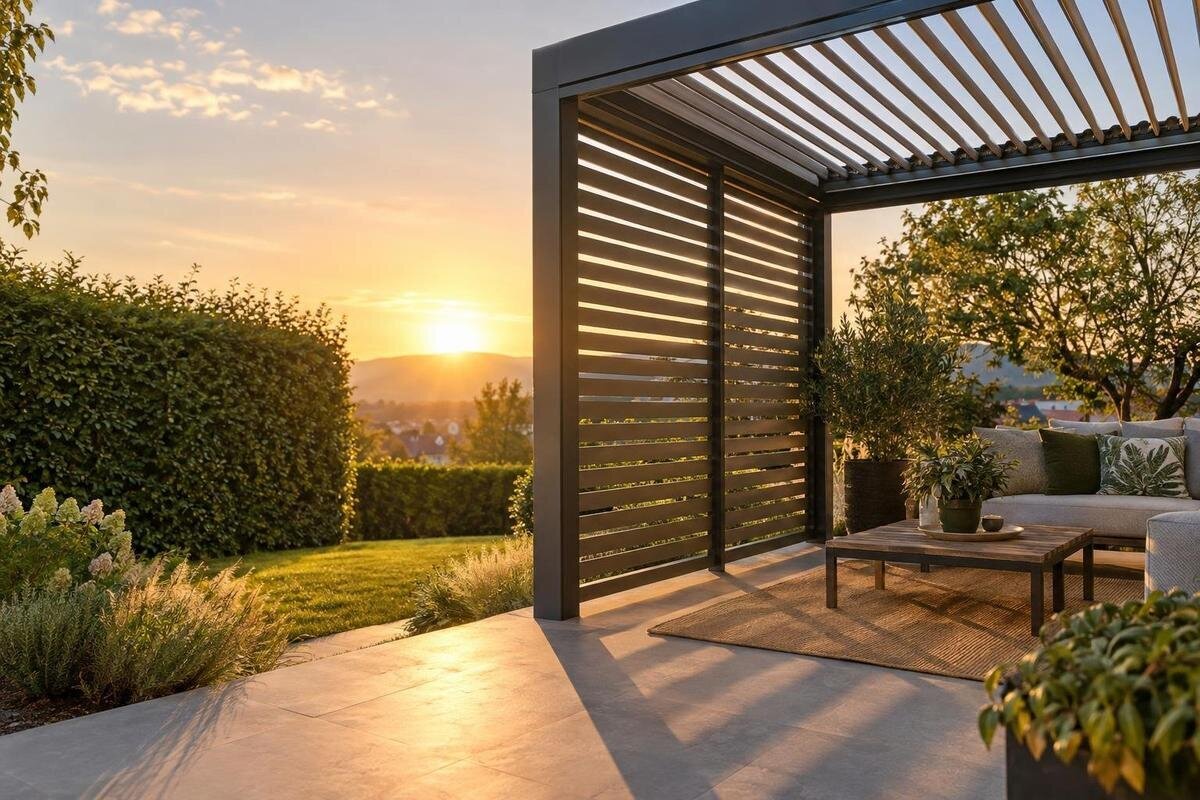
An installed side screen can alter a direct view as soon as it is in place, so it suits a clearly identified sightline that cannot wait for planting to mature. Its effectiveness depends on what the chosen panel actually covers: height, width, material, opacity, edge gaps and the viewing angle all matter. A partly open or see-through material may filter a view without concealing it. Ask to inspect a sample or an installed example in comparable light, and check from the neighbour's likely viewing position as well as from your seat. If possible, assess the sample both with light behind it and with the brighter area in front; visibility can change with the contrast.
A pergola screen is not automatically part of a pergola purchase, and a generic screen should not be assumed to fit a particular frame. Confirm whether the proposed side treatment is an approved accessory for the exact model and whether it is supplied separately. When viewing the Bioclimatic Pergola model page, distinguish the structure shown from any screening offered separately; the model name alone does not establish compatibility or privacy. Ask the supplier or a qualified installer to assess the intended arrangement. Check how corners, ends and gaps are handled as well as the central panel, since these details affect how much of the view is blocked.

Planning points 3
How screens affect light, airflow and views
Privacy panels can also change how much light and air passes through the selected side. A solid panel, a perforated one and a fabric with some visual transparency will not behave alike; the result depends on material, coverage, orientation and surrounding buildings. A hedge changes the view as foliage fills in, and its shade also depends on plant density and season. Don't choose by a product description or plant photograph alone if preserving a garden view or daylight matters. Look at samples, where available, and compare what can be seen through them from inside and outside the pergola. Consider nearby house windows as well as the outdoor seat if a panel could affect a valued view.
Check the sun's path at the times of day and in the seasons when you use the space, and mark nearby windows or garden areas you want to keep bright or visible. A narrow screen on one side may preserve other views; screening every side can feel very different from covering one direct sightline. If you are comparing layouts for the Bloomcabin Wall-Mounted Pergola, include views from the house as well as those from the outdoor seats. Assess the proposed screening material separately from the pergola itself. Observe the site at more than one time of day rather than deciding from a single snapshot.
Seasonal cover from hedges and screens
Year-round privacy from a hedge depends on plant choice and local conditions. Some plants retain foliage, while others thin or lose leaves seasonally; even an evergreen hedge can have gaps or look different after pruning and during establishment. If cover in cooler months matters, ask a nursery about mature appearance and seasonal behaviour for the exact species in your area. Consider the view from both sides, too: the amount of cover needed against a window may differ from what is needed against an open garden or pathway. Plan for the mature shape and note when seasonal thinning could reopen a sightline; a current plant photograph may not show those changes.
A fixed, opaque screen can give a more consistent visual boundary while it remains in place, but its coverage still depends on its extent, condition and position. A retractable or removable treatment only provides cover when used, and not every pergola supports every style. When considering side options for the Bloomcabin Pergola, establish whether each proposed treatment is fixed, retractable or designed to be removed. Compare winter and summer views on the same sketch, including any seasonal gaps in the hedge. This makes it easier to judge whether the screen would be needed throughout the year or only while the planting offers less cover.
Planning points 4
Hedge and pergola-screen maintenance
Hedge upkeep is part of the privacy plan, not an occasional extra. Plants may need watering while establishing, pruning to maintain their intended shape, and routine attention to dead or damaged growth; the schedule depends on species and site conditions. You also need access to the sides that require care and a place for clippings. If the hedge is kept narrow by repeated cutting, ask whether the chosen plant will remain healthy and dense under that approach. A hedge that gets too wide or is cut back hard can stop working as the neat visual screen you expected. Check that the height and access needed for routine care are practical for whoever will maintain it.
Pergola screens have their own care requirements, which vary with the material and operating system. Check the manufacturer's cleaning and maintenance guidance, and allow access to components that need inspection or servicing. Don't assume a screen is maintenance-free because it is not planted. When requesting care information for a side treatment proposed for the wall-mounted pergola model, ask for the screen supplier's instructions as well as those for the structure. If the screen has guides or moving parts, check what routine care they require. Compare those tasks with watering, pruning and clearing clippings to decide which ongoing work better suits your routine.
Compare setup costs and ongoing effort
Compare overall costs and ongoing work rather than just the purchase price of plants with a screen quote. A hedge budget may include plants, soil preparation, planting labour, water during establishment, pruning and replacement if plants fail. A screen arrangement may involve the pergola, a compatible accessory, professional fitting if required, and future cleaning or repairs. The actual totals depend on the site and products, so obtain itemised quotes rather than treating either option as inherently cheaper. Include the value of the ground given over to a hedge if that area is useful for access or seating. For a fair comparison, use the same planning period and include recurring work, not just the initial setup.
Time matters as well. An installed screen can address a view sooner, while a hedge develops over its establishment period and needs ongoing care. A hedge may be hard to move once it has grown; whether a screen can be removed or changed depends on the system and its supports. If you are using the Bloomcabin Pergola model page to prepare a budget, keep the structure price separate from any proposed screening. Request an itemised quote showing the accessory, fitting work and scope of supply. That lets you compare the complete screening arrangement with the planting and maintenance costs of a hedge, rather than comparing two incomplete prices.
Planning points 5
Place the barrier on the right sightline
Mark the proposed screen or planting line on a top-down plan, then check it from the actual seats, doors and approach paths. A screen at the far edge may miss a diagonal view; one closer to the table may block more of the garden than intended. A hedge can leave a usable gap at an entrance, but that opening may also preserve a sightline. Use temporary markers at the proposed endpoints and height to judge the visual effect before committing, without fixing anything to the pergola or neighbouring property. Repeat the check while seated and standing. Take photographs from the same positions to compare the mock-up with the current view and spot gaps you may miss when looking from elsewhere.
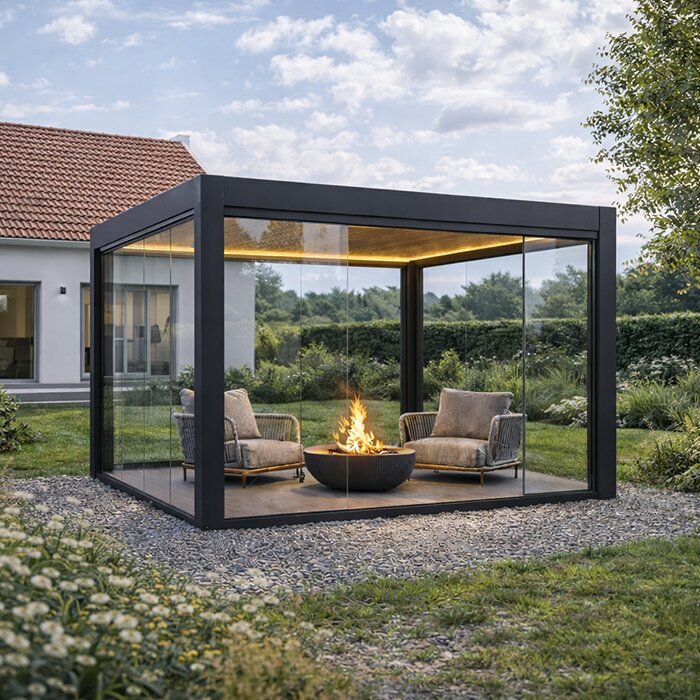
For a layout using the Bloomcabin Bioclimatic Pergola model, mark the proposed screen position in relation to the pergola posts, nearby doorways and paths. Confirm attachment requirements and practical clearances with the supplier or a qualified installer rather than assuming a panel can go wherever it looks convenient. For any nearby fence, wall or boundary, clarify access and responsibilities before settling on the position. Keep room for maintenance in the final plan, and ask whether the intended arrangement suits the exposure at that location. This check should follow the sightline sketch: a convenient attachment point is only useful if screening there actually blocks the unwanted view.
Choosing a hedge, a screen or both
Choose a hedge when the planting strip is genuinely available, you want a living boundary, and you can accept a gradual change in cover plus regular horticultural care. Choose a pergola screen when the priority is a specific sightline and a compatible option can provide the required coverage while preserving enough light, airflow and garden views. Neither choice guarantees privacy: plant maturity, gaps, height and viewing angle determine how much is concealed. A sketch and a material sample or on-site mock-up make those limits easier to see before you spend. Decide which seats or areas must be concealed and where partial screening would be acceptable.
A combined approach can be sensible when the two elements do different jobs: a compatible screen addresses the most exposed sightline now, while a hedge creates a planted boundary elsewhere or fills a broader garden edge over time. Avoid stacking both along the same narrow strip if that would crowd access or add care without improving privacy. If your plan includes the Bloomcabin Wall-Mounted Pergola, consider the adjoining planting strip and proposed side treatment together, while confirming accessory compatibility separately. Give each element a clear role: identify the view the screen will cover and the space the mature hedge will occupy.
Frequently asked questions
Which option provides privacy straight away?
A suitable screen can block a particular view once it is installed. It will not necessarily block views from above, around the ends or through the material, so check its coverage and opacity from the relevant viewing positions. An existing mature hedge may already screen a view; a newly planted one needs time to establish, and the timing depends on the plant and site.
Will a hedge provide privacy in every season?
Not automatically. Year-round cover depends on the species and local conditions, and even an evergreen hedge can have gaps while establishing or after pruning. Ask a local nursery how the chosen plant looks through the seasons at maturity. If winter privacy is essential, compare that advice with a compatible, opaque screen and check that its position covers the sightline you need.
How much space should I allow for a hedge?
There is no universal width. Use the selected species' expected mature dimensions and spacing, then allow room for access, pruning and nearby paths or furniture. Ask a nursery or horticulturist whether it is suited to the soil and light at the proposed location. Plan for mature growth, not the width of plants in pots, and mark the planting strip before buying.
Can I add any screen to a pergola?
No. The fact that a screen can attach to one structure does not establish compatibility with another. Ask the supplier whether the exact pergola model supports the proposed side option, whether it is an approved accessory and whether it is supplied separately. Do not assume a third-party panel will fit or be included.
Can I use a hedge and screen together?
Yes, if each has a purpose and enough room. A compatible screen can address a particular view sooner, while a hedge creates a living boundary elsewhere or develops over time. Check that the combination does not crowd paths, chairs or plant-care access. Confirm screen compatibility for the exact pergola model, and plan the hedge by its mature size.
The practical choice blocks the unwanted view without taking up more space or requiring more care than you can manage. If you want a living, evolving boundary and can wait, plan the hedge around its mature size and seasonal cover. If a particular seat needs privacy sooner, assess how well an installed screen would block that sightline and verify model compatibility before treating it as part of a pergola. A targeted combination can meet both needs, provided each element has its own space and role.
