
Motorised Pergola During a Power Cut: What Happens?
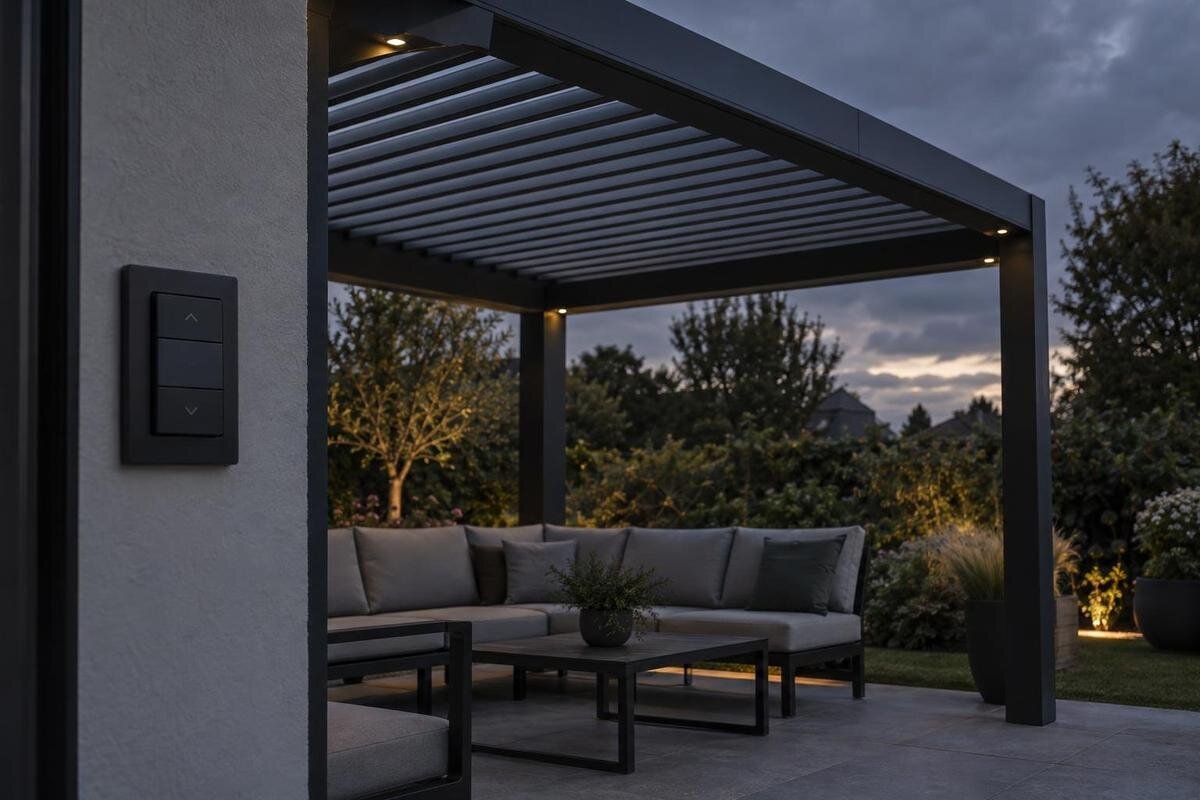
Pergola operating guide
The term ‘motorised pergola’ tells you that some movement is powered; it does not tell you what happens during a blackout. The roof might stop, remain held, move to a designated position or allow an approved manual procedure. The answer depends on the exact roof mechanism, motor, controller, power arrangement and manufacturer’s instructions. It is also important to distinguish an automatic response from a manual action an owner is permitted to take. This guide explains what to clarify before buying and how to respond without assuming an undocumented backup function.
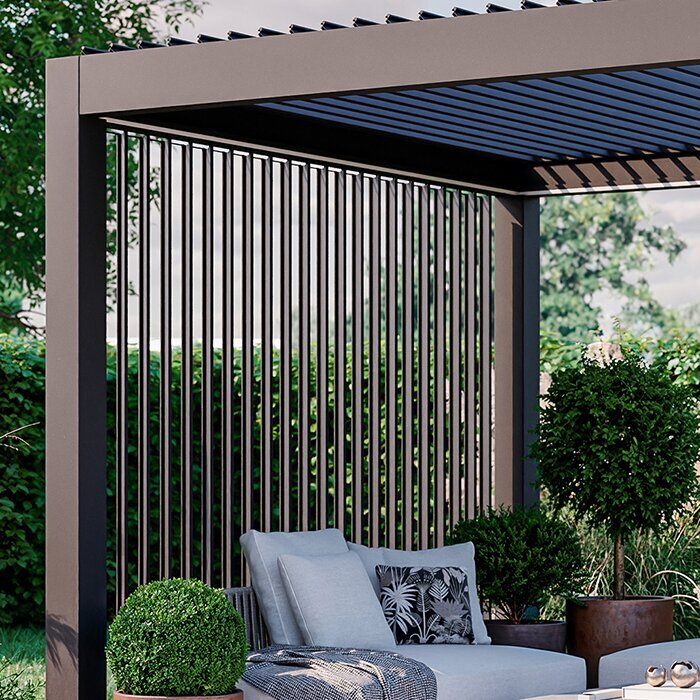
What happens to the roof when power fails?
If the motor relies on mains electricity and has no independent supply, it cannot keep driving the roof electrically while that supply is absent. What happens next is a design question: the roof may stop, the drive may be designed to hold its position, or a documented reserve arrangement may permit a particular movement. The outage itself does not reveal which applies. A stationary roof does not show whether it is mechanically held, simply not receiving a command, or approved for manual movement. Treat the exact mechanism and control system—not the broad label motorised pergola—as the source of the answer.
Do not assume the roof will automatically close, remain exactly where the power failed, or release for hand operation. Similar-looking roofs can use different drives and controllers, and a retractable canopy is not the same mechanism as adjustable louvres. The useful answer is a model-specific statement about what happens at different points in travel, plus any action the owner is permitted to take during an outage. If the supplier cannot point to a manual or written response for the exact setup, treat the behaviour as unknown. A general assurance that the pergola is safe or weather-ready does not answer the power-loss question.
Check which pergola parts are motorised
A pergola may have more than one powered component, so first identify which part you mean by the roof. The main cover could be adjustable louvres or a retractable canopy; a side screen, lighting or another accessory may have its own motor or controller. A remote, wall switch, app and weather sensor are controls or inputs, not proof of an independent power source. Ask which parts share the supply, what still works when it fails and whether a control can report the roof’s position while the system is offline. This helps distinguish an unresponsive app or screen from the roof’s actual mechanical state. Be specific when describing a problem: has the electricity supply failed, is one control unavailable, or is the roof not responding? Those descriptions are not interchangeable. Tell the supplier what you can observe without repeatedly operating the controls, and avoid treating an app display as confirmation that the roof has physically reached a particular position.
If your quote names the Bloomcabin Wall-Mounted Pergola, ask the supplier to state whether that configuration has a motorised roof, what controls are supplied and whether any optional screens or accessories are included in the same operating system. The product name identifies the pergola but does not establish which components are powered. Record the equipment and options on the quote rather than relying on a photograph or broad category label. This gives you a clear description of the system whose outage behaviour you need to understand.
Match the manual to the exact model
An operating manual for the exact model and control package is more useful than a general brochure. Request the product or model code, the roof mechanism, and any motor or controller identifiers, then check that the paperwork applies to the configuration being supplied. Look for a clear explanation of what happens if electricity is lost while the roof is stationary and while it is moving. The documents should also say whether the drive holds or releases, whether a reserve source changes its response, and where the manufacturer describes the approved action during an outage. Read any diagrams alongside the written instructions: terms such as open, closed and retracted need to be clear for that particular roof. If a passage refers to optional equipment, establish whether your order includes it before relying on that procedure. Keep the relevant page references with your model details so you can find the right instructions without searching the whole manual during a blackout.
For the Bloomcabin Pergola listing, the catalogue name is an identifier, not a control specification. Match it against the quote or order details and ask which exact model and control components are included. If the supplied configuration has options, keep their codes with the manual so you can tell whether its instructions apply. A generic guide for the same brand, or for another roof style, may not answer questions about the motor and controls in your particular setup.
Manual override can mean different things
The phrase manual override is not precise enough to establish that a roof can be moved by hand. It could refer to a local switch, a hand-operated release, a removable crank or a separate powered backup. A local switch may still need electricity, so it is not necessarily an outage solution. Ask whether the manufacturer permits an owner to use the method, what equipment or access it requires, and whether the procedure changes when the roof is partway open. Also ask how normal powered operation is restored afterwards. A useful explanation should cover the whole procedure, not just how to begin it. Before treating manual operation as a practical buying benefit, consider whether the permitted user can reach the designated operating point and use the specified equipment. If that is unclear, ask the supplier to explain the access requirements rather than attempting a trial. Do not push the louvres, pull a canopy or release a mechanism unless the instructions for that exact model explicitly say to do so.
When comparing the Bloomcabin Bioclimatic Pergola listing, ask the supplier to identify the exact roof mechanism and provide its approved power-loss instructions. The catalogue name alone does not establish that a hand crank, battery or emergency movement is included. If a manual procedure exists, get the relevant instructions and confirm whether it is intended for an owner or a service professional. That distinction matters: a mechanism that can be accessed by hand is not automatically one that an owner should operate.

If the roof stops mid-travel
If power fails while the roof is moving, avoid repeated test commands from the remote, wall switch or app. They do not establish that the system has a manual mode or show whether a command has registered. Do not try to push the roof, pull fabric or use tools to complete its movement. Keep people clear of the moving parts and, if you can observe safely, note the roof’s position and direction of travel. Do not open a control enclosure or attempt to adjust the mechanism to find out why it stopped.
A mid-travel interruption is worth asking about before purchase. If your comparison includes the wall-mounted pergola listing, ask for the response to an outage during travel for the exact quoted drive; the mounting style does not determine whether the roof stops, holds or resumes. If an outage occurs, note the approximate position, the control used and whether electricity had returned. Those details help an installer compare what happened with the manual without asking you to dismantle equipment or repeat a movement that may not be approved.
Rain, wind and a roof without power
A roof stopped partway through its travel may provide different cover, drainage or exposure from one at another position. The effect depends on the particular design and the manufacturer’s instructions, so do not treat an open, partly open or closed position as automatically suitable for every weather condition. A power cut does not change the pergola’s stated weather limits. If rain or wind is forecast, use the model-specific guidance about permitted positions rather than assuming that a stationary roof is secure or provides complete shelter.
For a comparison involving the Bloomcabin Pergola product page, ask for the exact model’s weather-use guidance and whether power loss affects any sensor response. If the system has a rain or wind sensor, its presence alone does not prove the roof will move during an outage: that response depends on the sensor, controller, drive and available power, as described by the manufacturer. Ask separately what the roof does when power fails and what it does when a sensor sends a signal. Do not infer either response from a product category.
What happens when power returns?
Power returning does not by itself tell you whether the roof will move. Depending on the documented control logic, the system may wait for a fresh command, perform a specified recovery or make an automatic response. Ask whether the manual calls for a position check or other recovery procedure, and whether the roof can start moving as soon as supply is restored. Do not copy reset or calibration steps from a different motor or a generic online video; an instruction for another control system may not apply to yours.
Before normal use resumes, follow the manual’s stated conditions and keep people clear if the roof could move. If it starts unexpectedly, stops repeatedly, makes an unfamiliar sound or fails to respond as described, do not keep cycling the controls. Use only the documented user control if a stop action is needed and it is safe to do so, then contact the installer or supplier for advice. A roof’s response after power returns is a separate question from how it behaved while electricity was unavailable.
A backup supply must be confirmed
Do not assume a motorised pergola includes a battery or another backup supply. Ask whether the exact order includes a manufacturer-approved battery, separate reserve supply or manual method, and whether it is standard or an option. The word backup can refer to a control or sensor rather than power for the roof motor. Confirm which functions remain available during an outage, what movement is possible, and whether the system has stated testing or maintenance requirements. Have the supplier distinguish between backup power for operating the roof and a manual method that uses no powered control. These answer different questions, even if both are described as emergency operation. If upkeep is required, ask who is expected to carry it out and where the instructions are recorded, so you can account for it when comparing options. Do not choose a generic battery or uninterruptible power supply on the assumption that it will operate the roof; compatibility needs to be confirmed for the equipment.
If you are considering the bioclimatic pergola product page, treat the listing as a way to identify the product being discussed, not evidence of a backup function. Ask whether an approved backup is included in the exact configuration and which components it powers. If it can move the roof, request the documented conditions and procedure, including what happens if the supply fails during travel. A clear answer should identify the relevant equipment and instructions rather than relying on a general statement that the pergola has emergency operation.

Questions to ask before you buy
Ask the supplier to answer the outage questions for the exact model and control package in writing. What happens if the supply fails with the roof open, closed or partway through travel? Does the drive hold position, and is any manual movement approved for an owner? What should you do immediately, and does the manufacturer specify a different response for rain or wind? Ask whether a backup supply is included, what it powers and whether the roof can move automatically when electricity returns. Request the manual and the model details that let you match it to your order.
For an order based on the Bloomcabin Pergola page, make sure the documents and answers refer to the configuration you are actually considering. The product page name does not establish that a motor, sensor, manual override or backup is supplied. Keep the response with the quote, including any model codes and operating instructions. When comparing quotes, record each supplier’s answer against the same questions. Distinguish equipment included in the price from an optional extra, and an owner-operated procedure from one reserved for a service professional. Leave unanswered points marked as unknown rather than treating a general assurance as a feature. This keeps the comparison focused on what each proposed system actually offers during an outage, rather than on how reassuring its description sounds.
If the pergola is already installed
Find the model details, installation paperwork and operating manual before you need them. Check the invoice or quote for product and option codes, and use visible labels only if they can be read without removing covers. Keep a copy of the relevant instructions somewhere accessible offline, rather than relying only on an app or an internet connection. If your paperwork uses the Bloomcabin wall-mounted model name, use it to identify the listed structure, then match it to the exact installed drive and controls. The same product name does not confirm which equipment is fitted. Keep the installer’s contact details with those records, along with the manual pages covering power loss and restoration. Anyone who normally operates the pergola should know where to find them. An offline copy is most useful when it is easy to identify as the correct version for the installed equipment, rather than one of several similar manuals.
If a power cut is happening now and you cannot find a model-specific procedure, do not force the roof into another position. Keep clear of moving parts and wait for reliable instructions rather than improvising with a switch, release or tool. If the restored system behaves differently from the manual, stop using it and ask the supplier or installer to assess it. For a concern involving the power supply or wiring, use a qualified electrical professional instead of opening or adjusting the control equipment yourself.
Frequently asked questions
Will a motorised pergola close automatically during a power cut?
Not necessarily. Automatic movement would require a documented system behaviour and a usable independent power source or other designed mechanism. Check the manual for your exact model; do not assume it will close.
Can I push the roof into position by hand?
Only if the manufacturer provides a manual procedure for that exact roof and says it is suitable for an owner to use. A local switch or remote is not proof of hand operation. Do not push, pull or release the mechanism without instructions.
Will the roof stay where it stopped?
That depends on the drive and roof design. A stationary roof may be held by its mechanism, but its appearance alone does not confirm that it is locked or safe to move. Check the model manual.
What should I do if the power fails while it is raining?
Do not assume the roof will move to a weather-safe position or that a sensor can close it without power. Keep clear of moving parts and follow the manufacturer’s instructions for the roof’s current position and weather conditions.
Can I operate the pergola as soon as power returns?
Check the manual first. The system may wait for a new command, have a documented recovery procedure or respond automatically. Follow the stated restart instructions and do not keep testing controls if the roof behaves unexpectedly.
The useful answer is not a guess about what most pergolas do. It is the documented response for your exact roof and controls: what happens when power fails, whether an approved manual method exists, and what to do when electricity returns. Knowing those three points makes a power cut easier to handle without forcing the roof or relying on an assumed backup.
