
After-Dark Pergola Privacy: Lighting and Visibility
Pergola privacy guide
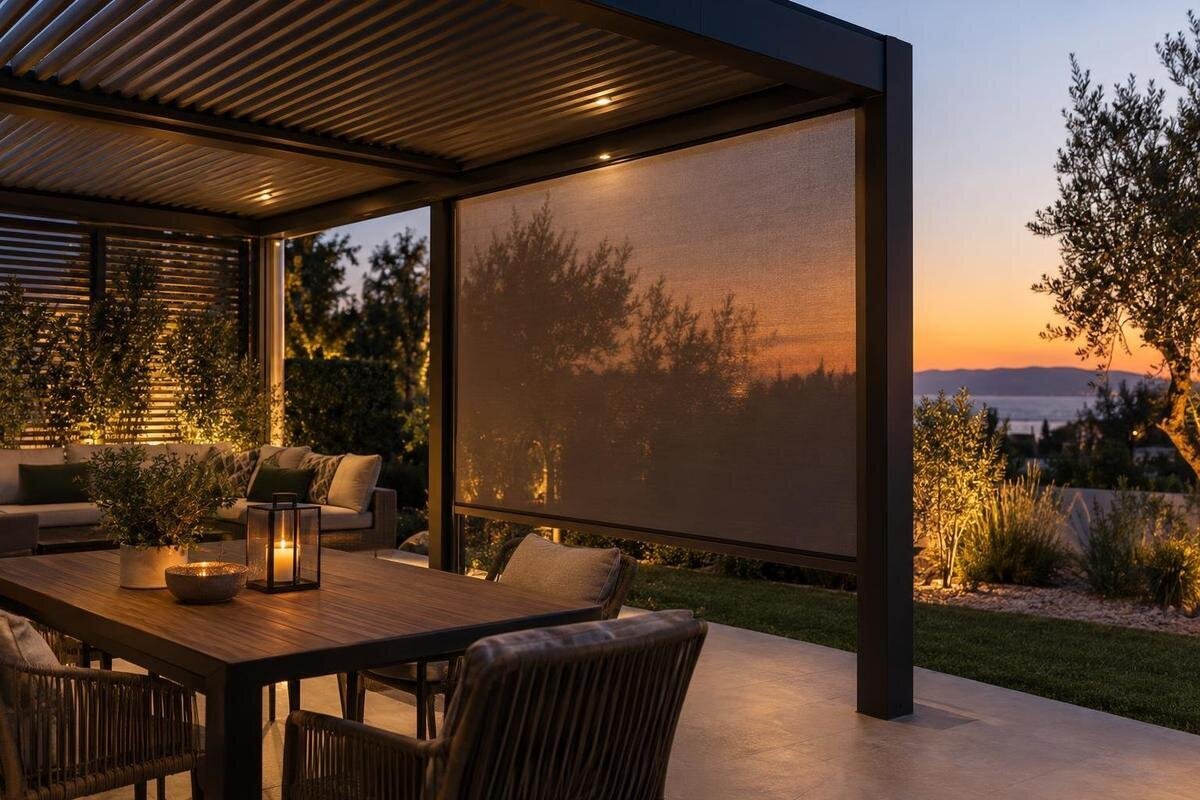
A pergola can feel private at lunchtime and exposed at dinner. Once lights come on, thin or open-weave sides may reveal silhouettes, while clear glazing can reflect the seating area without screening it. The useful test is not simply whether a material looks opaque in daylight; it is whether someone at a neighbour’s window, a nearby path or another garden seat can see occupants under the lighting you plan to use. Check actual viewing angles and light combinations before choosing a side treatment.
Why a pergola can feel less private after dark
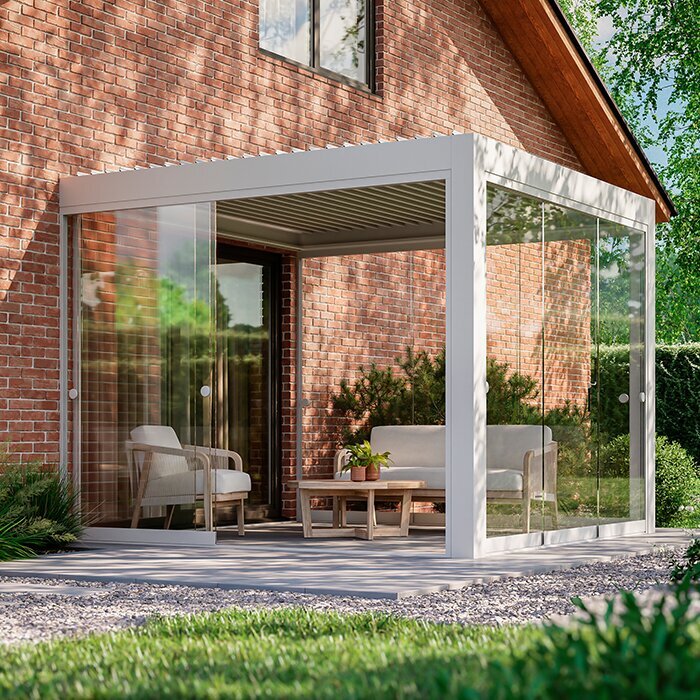
In daylight, you may judge privacy while the surrounding garden or adjoining property is brightly lit. After sunset, that balance can change: a lit patio or room stands out against a darker background, so movement and silhouettes may become more noticeable through openings or translucent material. A side treatment that appears to block a view at midday can reveal shapes when it is lit from behind. Reflections may also shift as the viewer moves, making a surface seem opaque from one angle and clearer from another. For practical privacy, consider whether a passer-by can identify faces or whether even an indistinct outline would reveal that the area is occupied.
Assess roof and sides separately. A pergola roof can alter overhead light, but it does not by itself interrupt a line of sight across an open edge or down from a neighbouring upper-level window. Identify which direction needs screening and which garden views should stay open; one exposed angle may not call for enclosure on every side. The Bloomcabin Pergola page is a model reference, not confirmation that a screen is included. Check the approved side configurations for the exact model before judging a particular material. Define the view you want to block, such as the view from a neighbour’s window or a nearby path, rather than judging privacy in general.
Light contrast matters more than a fabric label
Labels such as sheer, privacy or blackout do not tell you precisely what a person can see at night. Decide what counts as acceptable: a soft glow, a moving outline and recognisable detail are different outcomes. Visibility depends on contrast between the occupant and background, light falling on the material, the viewing angle and distance. A panel may appear dense from one side yet show movement when someone stands close behind it. Colour alone is a poor guide; a small swatch can also behave differently from a full panel, particularly where an edge or opening remains uncovered. Be clear about whether you want to hide facial detail or the presence of someone altogether.
Recreate a typical evening rather than testing in a dark, empty setting. Try the lights you normally use in the house and outdoor area in separate combinations, including the room or doorway behind the seating. Keep the sample and viewer positions fixed, then switch one light group at a time so you can identify what makes silhouettes easier to see. Have one person sit or move behind the material while another observes from each relevant boundary; an empty chair is a poor substitute for a moving person. If you are considering the Bloomcabin Bioclimatic Pergola, describe these lighting conditions when asking about side options.
Map the real viewing angles
Draw a quick plan of the patio, pergola footprint, seating and likely observer positions. Mark a neighbour’s ground-floor window, raised deck, upstairs room or shared path only if it genuinely overlooks the space. A view from directly opposite is not the only one that counts: someone may see around a screen edge while walking past or from a diagonal angle. Include the usual seating positions, not only the frame corners, because where a person sits changes the view corridor. Note whether an elevated position could look down over a side treatment; a ground-level screen test will not answer that question.
Check from positions people actually use. Have someone sit at the table, lounge or bench, then stand and walk through the entry; ask a second person to observe from the mapped points at roughly corresponding distances. Repeat from any relevant upper-level viewing position rather than assuming a side panel will interrupt a downward sightline. If the patio has two regular seating spots, test both: a small change in chair position can expose a different gap. A sketch, marked photos and notes about seated versus standing views make the options easier to compare. Include both directions if you also want to preserve a view out.
Test fabric samples in position
Use a sample of the exact fabric, colour and finish under consideration. Position it as it would hang on the side, with the intended face towards the observer and a person or familiar object behind it. Test it in daylight for context, then after dark with light behind, beside and in front of it; each arrangement may reveal something different. A swatch laid flat on a table is not a useful substitute for viewing it vertically at the intended angle. If a sample is too small to assess movement, ask for a larger offcut or display sample rather than judging by a brochure image. Compare samples with one variable changed at a time, so you can tell whether weave or colour affected the result.
Look at more than whether you can see a lamp through the fabric. Ask the observer to distinguish a face, clothing, gesture and movement at the distances that matter, then swap sides. Try the material with the seat in its final position and check the edges where a sample cannot represent a complete fitted screen. A phone photo can help you remember which test you ran, but automatic exposure may make a dark view look brighter or a lit panel less revealing than it appeared to the eye. For the Bloomcabin Pergola model, confirm which approved side treatment the sample represents.
What fabric screening can and cannot hide
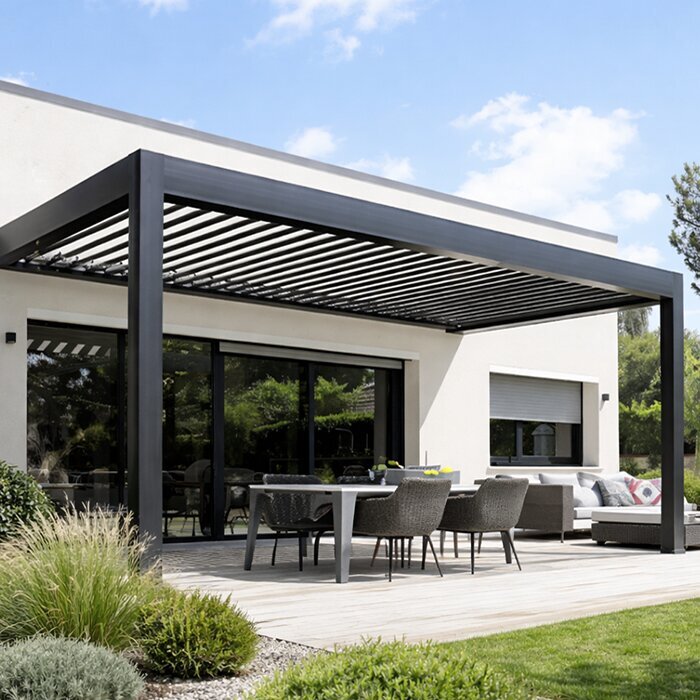
Fabric construction affects how much detail passes through, but the words screen or privacy fabric are not a guarantee of a private view. A more closed weave generally interrupts a direct view more than a widely spaced weave; it can also reduce what occupants see through the side. Look through the fabric from straight on and at an angle, and check around its top, bottom and ends. Small gaps matter more when an observer moves off-centre, and a person’s outline may remain visible against a bright interior even when detail is blurred. Test the sample against the real background, such as a lit doorway or dark garden, rather than a blank card.
Decide which view matters from each seat: blocking a neighbour’s line of sight, keeping a garden outlook or seeing who is approaching. A screen on only the exposed side may preserve openness elsewhere, but a corner or entry gap can leave a diagonal view into the seating zone. Compare the coverage required before choosing fabric density; screening every side to solve one angle may also close off views you value. If you are considering the Bioclimatic Pergola model, verify approved screen options for that model and do not assume an unrelated third-party screen is supplied or compatible.
Glazing does not guarantee night-time privacy
Glass may preserve an outlook or mark an edge, but clear glazing is not an opaque privacy screen. At night, a bright seating area can still be visible through it; a reflective surface may show a viewer or lights rather than conceal occupants consistently. Reflections depend on the viewing angle, brightness on each side and what the glass faces. If a panel looks mirror-like in daylight, do not treat that appearance as evidence of reliable privacy after sunset. Check both the view into the pergola and the reflection seen from the seats, including the effect of any lit room beyond the glass.
Diffusing or patterned glazing can soften detail while still transmitting light, and an illuminated figure may remain recognisable as a silhouette. Assess a full sample or the exact glazing type from both sides in the intended setting, not just a small image, and include the room or outdoor lights behind it. Where glazed and opaque sections meet, check whether the join or remaining opening leaves a direct view. Ask whether the proposed panels are an approved option for the chosen model. The Bloomcabin Wall-Mounted Pergola page identifies a model; its name or photograph does not confirm that glazing is offered or included.
Set the lighting before judging a screen
Lighting can make a privacy problem easier or harder to notice, so assess it as part of the side choice. A strong source behind translucent material can outline people, while a bare bright point in the observer’s line of sight may cause glare without hiding the area. Put task lighting where the activity happens and notice what it illuminates behind the person, not just whether the table is bright. If the usual setup includes house lights shining through a sliding door, keep them on during at least one test; otherwise, the result may overstate privacy. Once the observer is in position, turn each light group on separately and note when the view changes.
Try the usual patterns in sequence: outdoor lights only, indoor lights only, then both together. If you can adjust lights separately, see whether a lower level or different direction preserves visibility for people using the patio while reducing backlighting on the screen. Do not assume that adding a brighter light near the boundary will hide silhouettes; it can create glare or expose a new angle. Judge the arrangement at ordinary evening settings, not only at its brightest or darkest extreme. Have outdoor fittings selected and installed by a suitably qualified professional, and check their suitability for the location. Include any lighting proposed for Bloomcabin’s bioclimatic model in this comparison rather than assessing the fabric in isolation.
Check openings, corners and house windows
Look beyond the face of the screen. A view may pass through an entrance, around a corner, above a panel, or between a side treatment and a post. Check these routes from the neighbour’s actual position and while walking past, then repeat with furniture where it will normally sit. A chair pulled away from the table can put a seated person directly in a gap; moving the seat or changing which edge is covered may address the view without enclosing the whole pergola. If the side treatment has an opening section, check the view with it open and closed. Do not rely on a sketch that shows only straight-on sightlines.
Include the home itself in the night-time test. A lit living-room window or glass door can backlight people on the patio, and a viewer outside may see silhouettes through side fabric or an open edge. From the seats, check whether glass reflects a lamp or bright room and obscures the garden view you wanted to keep. Repeat the test with indoor lights on; an empty, dark house can give false reassurance. When planning a layout with the Bloomcabin Pergola product page as your model reference, mark nearby windows and doors as well as the pergola openings. This keeps light from the house in the assessment rather than treating the outdoor area as an isolated space.
Confirm the model and side configuration
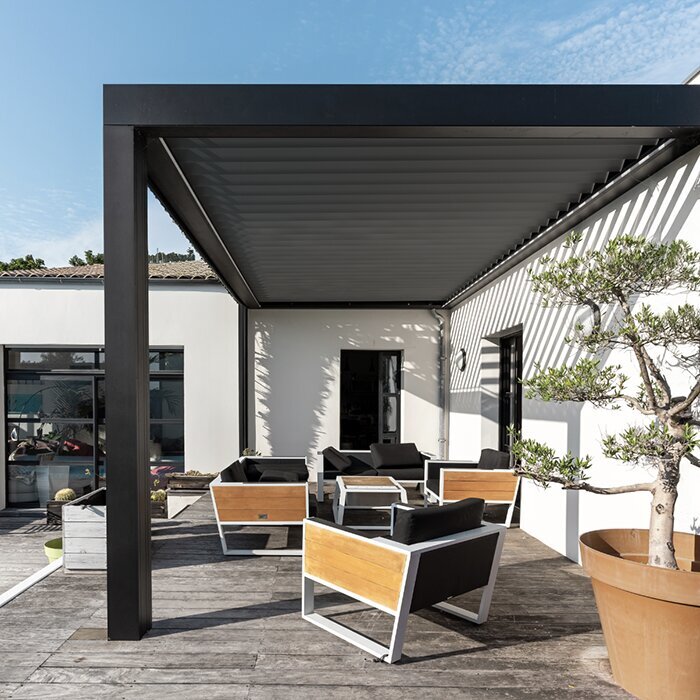
Side privacy depends on the shape and position of the whole arrangement, not just on the material. A freestanding plan, a house-attached plan and a layout with a broad opening can present different viewing paths; the model label by itself does not tell you how much of your particular boundary is screened. Plot posts, entry points and seating on the same sketch, then compare how a screen could cover the target line without blocking the garden outlook you use. If the space is beside the house, the wall-mounted pergola model is a reference to investigate, not a promise that a particular side system fits.
Before ordering, confirm the exact model and accessory combination: which side assemblies are approved, whether each is included or separate, and what portions remain open. If a fabric or glazing option is sourced elsewhere, check compatibility with the pergola manufacturer rather than inferring it from a similar-looking installation. Ask for material samples and, where possible, view the actual assembly at a comparable angle and in similar lighting. A written list of the included side parts and any remaining gaps is more useful than a general description such as privacy screening. A catalogue image can help with appearance, but cannot show whether the finished arrangement will block the view that matters at your home.
Compare options with a repeatable night-time test
Keep a short comparison record for each candidate. Note the sample or glazing type, colour and finish, light combination, observer position, seated or standing view, and what could be recognised. Record whether the main concern was facial detail, silhouettes or seeing activity, rather than marking a vague pass or fail. Repeat the same checks for each option so one is not judged under brighter conditions than another. Include the view out from the seats; a screen that blocks a neighbour may also remove the garden outlook you value. Add an entry or walk-by check as well, since those views can differ from a seated test.
Make the decision against an ordinary evening, not the most favourable test. If an option works only when the house is dark or the patio is empty, it will not provide the privacy you expect during normal use. Where results are mixed, change the seating position, light setting or screen coverage one at a time, then check the new sightlines. If no arrangement works, reconsider where the seats face before assuming that more screening will solve the problem. Keep the final choice within approved model and accessory combinations, and judge every opening as part of the result. That gives you a realistic basis for choosing fabric, glazing or an open side.
Frequently asked questions
Does a pergola privacy screen work at night?
It can interrupt a direct view, but the result depends on the fabric, light behind it, viewing angle and gaps around the screen. Test the exact material with the lights you normally use and an observer at the relevant boundary.
Are darker fabrics more private after dark?
Colour alone is not a dependable guide. Weave, backing, lighting and what is behind the fabric all affect what someone can see. Compare samples in place under realistic lighting rather than choosing by colour or a daytime image.
Will clear glazing make a pergola private at night?
No. Clear glazing does not block the view, and reflections are not a reliable privacy measure. Diffusing or patterned glazing may soften detail, but an illuminated person can still show as a silhouette.
Should I turn the lights off when testing a screen?
Test with the lights on as well as off. Try outdoor lights, indoor lights and both together, especially where a window or doorway behind the seating could backlight people.
Can one screen block views from every direction?
Not necessarily. A view may pass above the screen, around an end or through an entry, and an elevated observer may have a different sightline. Check the specific viewing positions before deciding how much of the pergola to screen.
Night-time privacy is a relationship between the material, its position, the light behind it and the people using the space. The most reliable choice is the one that passes a realistic two-way test from the views that matter, while leaving the outlook and openness you still want. If a screen appears effective only when the house is dark or the patio is empty, adjust the lighting or seating and retest before treating it as a solution.
