
Choosing Pergola Furniture: Aluminium, Timber or Wicker?
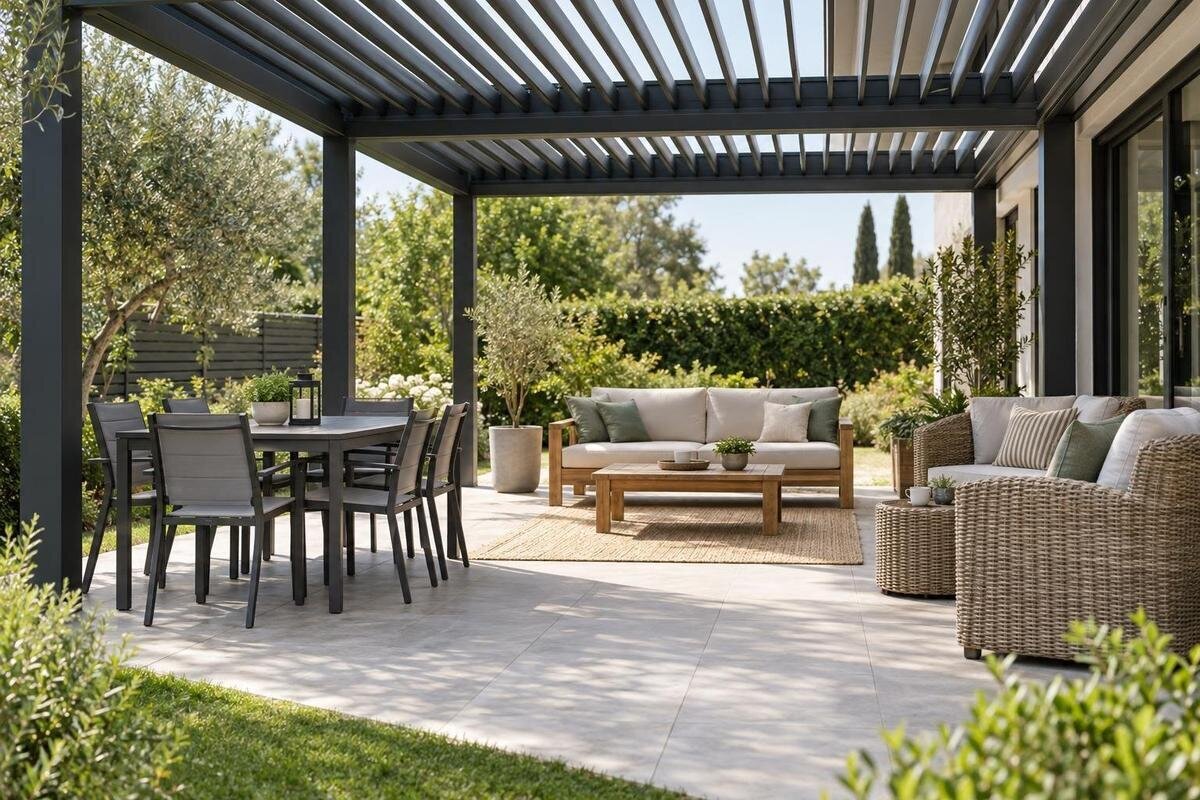
Pergola furniture
Furniture under a pergola needs to suit more than the look of the space. It should feel comfortable when you use it, cope with the sun and moisture that reach it, and fit without obstructing the route between the house, table and garden. Aluminium, timber and wicker involve different trade-offs, and wicker can be natural or synthetic. Finishes, frames and cushions vary as much as the headline material. Compare each complete piece and its care routine with the conditions on your site; there is no single best choice for every Australian outdoor area.
Before you buy 1
Match the furniture to how you use the space
Start with the main activity, because dining and lounging put different demands on furniture. A dining table gets regular contact with plates, glasses and spills, while chairs are moved in and out many times in one sitting. A stable-feeling table and surfaces that are straightforward to clean as directed are practical priorities. For a lounge group, pay closer attention to seat depth, arm height, leg support and whether people can settle in without rearranging loose cushions. If the area does both jobs, decide which layout will stay in place and which pieces need to move. That choice affects both comfort and the amount of furniture you need to store.
Set a realistic limit for routine care before comparing styles. Daily meals may call for a wipe-down after use; a setting used occasionally may be easier to maintain if its cushions can be brought inside and its frame can be cleaned without special products. Consider who will do those jobs, where items can be stored and whether you will actually move heavier pieces. If you entertain often, ease of cleaning may matter more than a particular timber tone or weave. Compare the complete setting, including feet, hardware, tabletops and upholstery, rather than choosing by the frame material alone.
Measure furniture in its working position
Measure the usable floor area, not just the pergola’s overall footprint. Note posts, steps, door swings, drains, fixed planters and the route you need to keep clear. Then check the outside dimensions of the table and every chair, including the space they occupy when someone is seated and another person needs to pass. A chair’s listed width does not show how far it moves when pulled out. The Bloomcabin Pergola size range is listed from 9 to 24 m²; use a selected area as a structural reference, not as a seating-capacity figure.
A plan becomes useful when it shows the furniture in use, rather than as a neat arrangement with every chair pushed in. Mark the table edge, chair positions, any footrests or side tables, and the path to the house or garden. Include doorways and gates that need to stay accessible. Tape the outline on the ground or make a scale drawing, then test whether chairs can move without catching on one another or blocking the route. There is no single clearance that suits every space; the aim is to test your actual furniture and the way people will move around it.
Before you buy 2
Map sun and moisture where the furniture will sit
Conditions can vary across a single pergola area. One chair might receive afternoon sun while the table stays shaded, and wind can carry rain into a spot that looks protected from indoors. Observe the area at the times you expect to use it, including the angle of sun and the direction of prevailing weather at your site. Nearby trees can also bring leaf litter, sap or bird mess onto furniture. A pergola does not guarantee that every seat remains shaded or dry, so assess the position of each piece rather than treating the whole area as one uniform zone.
Use those observations to compare furniture care instructions with its intended location. A timber finish or woven material that needs protection from prolonged wetting may not suit an exposed edge if you cannot move or store it easily. When considering the Bloomcabin Bioclimatic Pergola size options, mark where each furniture piece would sit within your proposed layout. Record which seats receive direct sun and which edges are exposed to windblown rain. This gives you a more useful basis for comparing materials than simply describing the whole setting as covered. If you are choosing between two sets, assess both in the same positions: otherwise, you may be comparing a sheltered arrangement with an exposed one rather than judging the furniture itself.
Aluminium furniture: check the finish as well as the frame
Aluminium can be a practical frame choice when you want a surface that is generally easy to wipe, but the word alone does not tell you how the whole item is finished. Coatings, joins, screws, feet and other hardware may use different materials and may need different care. Check the maker’s instructions for cleaning and for any limits on use in coastal or particularly exposed settings. A frame that looks simple to maintain can still have components that need regular attention, so inspect the whole piece rather than assuming every part behaves the same way.
Think about touch and movement as well as cleaning. Metal can become hot in direct sun, with the feel depending on the surface and how much sun reaches it; a sample or showroom visit can help you judge comfort. Some aluminium chairs are easy to shift, but weight and construction differ, so check the individual item if you expect to move it regularly. Try moving a chair as you would at home, rather than judging its weight by appearance. For a setting that changes between dining and lounging, compare both arrangements with the Bloomcabin Pergola area options. Decide which pieces would move and where they would go, so the convenience of a movable frame translates into a workable daily routine.

Before you buy 3
Timber furniture: species and finish shape the upkeep
Timber is a broad category, not a single maintenance promise. Species, construction and finish all influence how a particular piece should be cared for. Some furniture is sealed or coated; other finishes may have different cleaning or recoating requirements. Do not assume that instructions for one timber setting apply to another, or that a dense-looking timber needs no attention. Read the maker’s guidance for the exact item and note whether the recommended routine matches the amount of time you want to spend on upkeep.
Look closely at the finish and joins, and ask what to do if the surface becomes marked or the coating wears. Clarify what routine cleaning involves and how any recommended refinishing differs from that everyday care. These are separate commitments: being happy to wipe a table after meals does not necessarily mean you want to take on periodic surface maintenance. Also consider whether the piece will stay in one position or need to be moved for cleaning or storage. For a wall-side plan, compare the Bloomcabin Wall-Mounted Pergola size range with your measured space and the furniture you intend to keep there. If a timber table is the centrepiece, make sure you can reach all its edges for cleaning without moving the entire setting. Choose the finish with its care routine in mind, rather than relying on the showroom colour alone.
Wicker: identify the material behind the weave
Wicker describes a woven construction or look, rather than one fixed material. A piece might use natural cane or rattan, or a synthetic weave; its supporting frame could be made from something else again. Those differences affect how the furniture should be cleaned and what exposure it is intended to handle. Ask for the material of both the weave and frame, and check the care instructions rather than relying on a broad label such as outdoor or all-weather. Natural and synthetic weaves should not be assumed to have the same needs.
The texture can feel inviting, but tightly woven surfaces may collect dust, leaves and small debris in places that are harder to reach than a smooth frame. Check that the seat and arms feel comfortable and look for specific instructions on cleaning the weave. Consider whether you can reach the areas around the seat and beneath the cushions without awkward handling. A large woven lounge group can also have broad arms and rounded outer edges, so measure the complete piece rather than just the seat. When comparing the Bioclimatic Pergola area range, allow for those outer edges in your furniture plan. Compare usable seating as well as overall size: a substantial-looking lounge is only useful if its seat depth and arm positions suit the people using it.
Before you buy 4
Cushions and table surfaces need separate consideration
A frame material does not tell you how cushions will perform or how much care they need. Check the fabric and filling guidance, whether covers can be removed, and how they should be cleaned and dried. Water-resistant fabric is not necessarily waterproof, and windblown rain or direct sun may reach a seat under a pergola. If cushions need to come indoors after use, make sure that routine and the storage space are realistic for your household. If they stay outside between uses, follow the maker’s advice for that specific product.
Include storage in the furniture plan instead of treating it as an afterthought. A cushion chest or a clear drying area takes up space and may affect access to chairs. When a dining set includes separate cushion storage, compare the arrangement with the selected Bloomcabin Pergola configuration. Check that you can open the storage and put cushions away without first shifting the table or several chairs. Table surfaces deserve equally close attention. Ask which cleaning instructions apply to the top, rather than assuming the frame’s care routine covers it. Think through an ordinary meal: placing dishes, wiping spills and reaching across the table should all feel manageable. Check the table height with the actual chairs, including their cushions, and consider whether the arms fit comfortably beneath the edge. If you are buying a table and chairs separately, assess them together before committing. An appealing material combination is not enough if the pieces are uncomfortable to use as a set.
Salt, dust and damp need a site-specific care routine
The immediate surroundings matter as much as the headline climate. In coastal locations, airborne salt can settle on exposed frames and hardware; elsewhere, dust, pollen or leaf litter may be the regular nuisance. These deposits can be more noticeable on some finishes and woven surfaces than on others. Check the furniture maker’s guidance for cleaning frequency and suitable products, especially if the item includes several materials. Do not assume that an aluminium frame, synthetic weave or protective-looking coating means the complete setting can be left without routine care.
Shade does not necessarily mean dry. Rain can blow into the area, and damp cushions or debris held in a weave may take longer to dry if air movement is limited. Follow the product instructions for rinsing, wiping and drying, and avoid harsh cleaners unless the maker says they are suitable. Leave space to reach the back and underside of furniture when cleaning, and make sure cushions can dry before they are put away. With the Bloomcabin Bioclimatic Pergola listing alongside your layout, identify where you would carry out those tasks. A routine that requires moving every piece may be less practical than one with ready access around the setting. Keep cleaning instructions for the different components together so you can distinguish suitable care for the frame, tabletop, weave and upholstery.

Before you buy 5
Try the seating and check everyday movement
Once you have measured the layout, use a furniture trial to answer questions that a floor plan cannot. Sit in the pieces as you would at home, rather than briefly perching on the front of a showroom seat. For dining, check whether you can sit comfortably at the table with your arms in a natural position. For lounging, assess the seat depth, back support and arm position, including any cushions you expect to use. Notice whether you need to rearrange those cushions each time you sit down. If several people will use the setting regularly, let them try it too. Comfort is personal, so neither a material comparison nor an attractive display can settle these choices on its own.
Return to the marked-out layout and rehearse a few ordinary tasks: pulling out a chair, standing up, carrying plates to the table and walking past someone who is seated. Include footrests and side tables in their usual positions rather than moving them out of the way for the test. For a wall-adjacent arrangement, compare the Wall-Mounted Pergola configurations with the space available beside the house. Check that doors and gates remain usable while the furniture is occupied, not just when every chair is tucked away. If a movement feels awkward, identify the piece causing the problem before changing the whole setting. A narrower armchair or a different side-table position may be worth comparing with your original choice.
Make ongoing care part of the final choice
There is no need for every piece in a pergola setting to use the same material. You might compare a wipeable dining surface with woven lounge seating, or choose timber for one item and aluminium for another. A mixed setting can work when each piece suits its position and its care requirements are clear. When narrowing a shortlist, write down what each option asks of you after a meal, after wet weather and during longer periods without use. Separate jobs you are comfortable doing from those you are likely to put off. This makes the comparison more useful than describing one material as easy and another as demanding. It also helps you see whether a mixed setting simplifies your routine or leaves you managing several care methods that you do not want to maintain.
Use comfort, measured fit and exposure as your initial selection criteria, then compare the upkeep of the options that remain. The least demanding frame does not automatically make the whole setting low-maintenance if its cushions need frequent storage or its weave takes extra attention to clean. Equally, a finish you particularly like may be worth the care it requires if that work fits your routine. Decide which compromises you are willing to make rather than looking for a material with no drawbacks. The strongest choice is a complete setting that works for your household, not simply the material with the most appealing label.
Frequently asked questions
Is aluminium furniture a good choice under a pergola?
It can suit a low-fuss routine, but check the finish, joins and hardware as well as the frame. Metal can also heat in direct sun, so think about where the furniture will sit and whether the seat itself feels comfortable.
Can timber furniture stay outdoors year-round?
That depends on the timber, finish and exposure. A pergola does not necessarily keep out all sun or windblown rain. Follow the furniture maker’s care and storage instructions for the specific piece.
Is wicker the same as rattan?
No. Wicker describes a woven construction or look; the weave might use natural cane or rattan, or a synthetic material. Check what the weave and supporting frame are made from before judging their outdoor care needs.
Which furniture material is easiest to maintain?
There is no universal answer for a complete setting. Aluminium frames can be straightforward to wipe, timber care varies by species and finish, and woven furniture may need attention to dust caught in the weave. Check the care instructions for each part.
Can I leave cushions outside under a pergola?
Do not assume the pergola keeps cushions dry or shaded. Fabric and filling vary, and wind can carry rain into the area. Check the care guidance and plan where cushions can dry or be stored when they are not in use.
The right pergola furniture comes from matching its materials and care requirements to how the space is used and exposed. Aluminium may suit a straightforward cleaning routine, timber calls for attention to the particular species and finish, and wicker needs a closer look at both weave and frame. Choose the combination whose comfort, placement and upkeep make sense for your own outdoor area.
