
Planning Pergola Installation Around an Operating Business
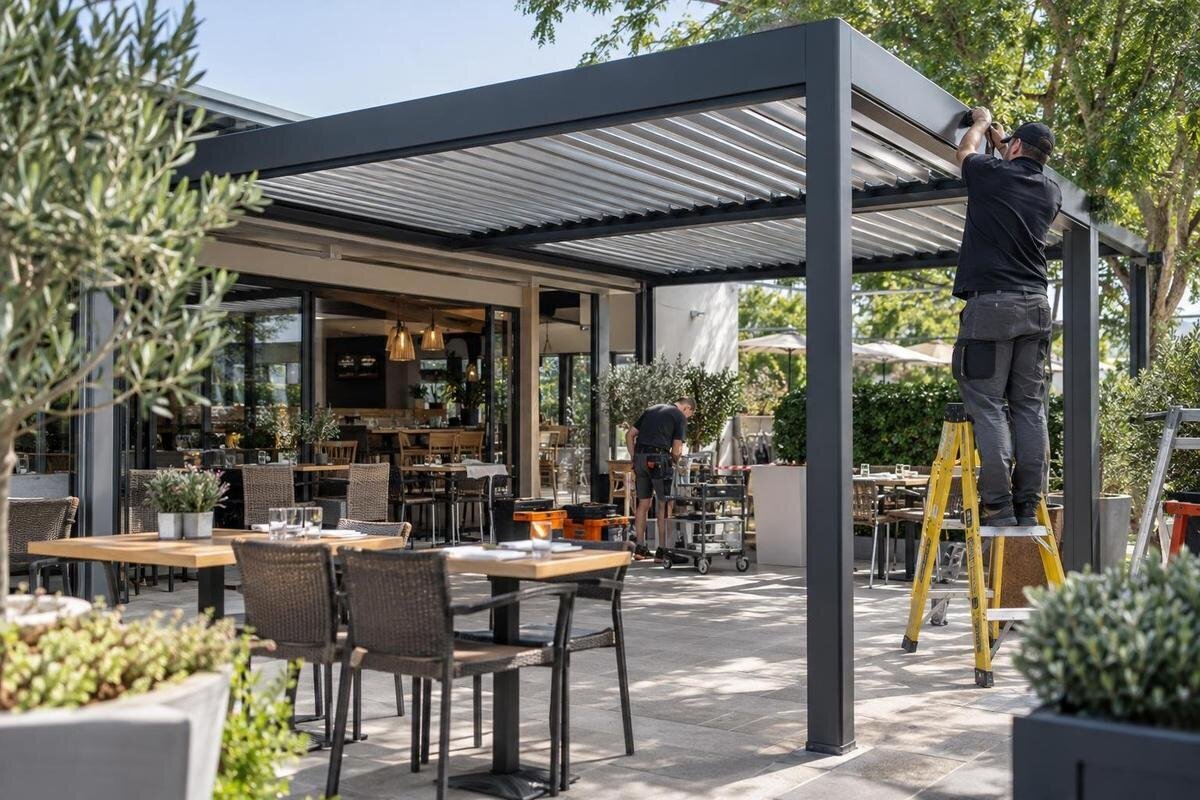
Commercial pergola planning
Installing a pergola while a business continues trading is a coordination job as much as a construction job. The challenge is often not just the installation itself, but keeping customer and staff routes, deliveries, building services and contractor access from colliding. A workable plan starts with the site’s actual operating pattern, then turns it into a dated contractor program, marked work zone, agreed routes and named decision-makers. This guide covers what to document before the first delivery, how to manage changes during the works and what to confirm before the area returns to normal use.

Map the operating schedule against construction activity
Before choosing a start date, map how the site actually operates across a normal week and any known busy periods. A café may have morning deliveries, a workplace may have shift changes, and a venue may host booked events; the relevant issue is the specific movement and service pattern at this address, not a generic idea of an 'off-peak' period. Mark which functions must continue, which can move temporarily and which activities could pause for a defined window. Include opening and closing routines, cleaning, waste collection, staff breaks, bookings and deliveries where they intersect with the proposed work area. Use a real operations calendar, including any seasonal or one-off dates already known.
Turn those observations into limits the contractor can schedule around: acceptable hours for disruptive tasks, times when a route must remain clear, areas that need to stay available, and any agreed period when outdoor service or access must pause. Record the person who can approve an exception and how much notice they need; 'avoid busy times' leaves the crew and site manager to interpret the same instruction differently on the day. Include set-up and pack-down, not just the visible installation. If trading varies by weekday or bookings, attach a weekly schedule rather than relying on one typical day. This becomes the operational baseline against which proposed dates and each work phase can be tested.
Give every approval and site decision an owner
Name one person on the business side to coordinate site decisions, plus a backup for leave or roster changes. The contractor should identify a lead for each phase and make clear who controls deliveries, site access, barriers, service queries, communication with the crew and changes to sequence. These duties can sit with a small number of people, but each responsibility needs an owner. Include the landlord, facilities manager or neighbouring occupier where they control part of the site. The person managing a shift should know whom to call, while the contractor needs to know who can approve a change affecting trading, customer access or the agreed work boundary. Put names and current contact details in the project brief, not just in an email thread.
Before confirming a date, agree the conditions that require work to pause or a decision to be escalated. They might include a delivery outside the authorised window, an unavailable work area, a route that cannot be kept clear or a required review that is still outstanding. State who pauses the affected task, who assesses the issue and how an approved change reaches the site manager; do not rely on an informal assurance at the gate. Agree who can approve a revised delivery slot or a change to working hours. If Bloomcabin Wall-Mounted Pergola is being assessed, record the exact model but treat its proposed connection to the existing building as a separate item for project-specific review. The name alone does not establish that the building or proposed installation is suitable.
Use current plans to map the work zone
Use current, site-specific floor plans and an external-area plan rather than a sketch based only on the pergola's intended footprint. Mark operating entrances, doors, customer and staff paths, accessible routes, existing exits, loading points, waste access, outdoor seating, service cupboards, neighbouring tenancies and places where people queue or wait. Add the proposed work zone and the route from the unloading point to it. Check the drawing with people who know how the site works day to day: a proposed route may cross a queue that forms only at lunch, or the work zone may block an entrance used for deliveries. If plans do not match the site, resolve the discrepancy before they become the basis for sequencing work.
Give each drawing a date and revision, then walk the proposed route with the contractor before work begins. Confirm where barriers will go, how workers enter and leave, whether that route changes between phases, and where materials may be kept without encroaching on operating areas. Set the boundary through the contractor's site-specific planning and any relevant professional review. If Bloomcabin Pergola is the model under consideration, use supplier-confirmed project dimensions and a measured plan to mark its proposed footprint. Keep one current marked copy available on site and send the same revision to the operator, contractor and anyone controlling a shared area.
Keep customer and staff routes usable
Draw a clear separation between the work zone and the areas in use. Identify normal and alternate routes for customers, staff, contractors and deliveries, then check them against doors, queues, seating, service counters and building access. Where an alternate route is proposed, confirm that it is usable for the people who need it and does not cross another work activity or create a new pinch point. Temporary signs should direct people along a route that is actually available; they cannot fix an unresolved obstruction. Include the approach from the street, car park or shared foyer if it forms part of arrival, and agree changes with the landlord or neighbouring occupier when the route crosses shared space.
Put route controls into the daily work plan: when a crossing is permitted, who supervises it, when work needs to stop for movement, and what happens if the route becomes unavailable. Where access or fire-safety questions arise, arrange the applicable review with qualified professionals and the site contact before relying on the arrangement. A business should not assume it can stay open just because a temporary path appears on a sketch. If the wall-mounted Bloomcabin pergola is part of the proposal, ask the project team to show its proposed position and the worker access needed near the building. Check how that access affects entrances and routes during each phase. Mark boundaries that must not shift without approval and identify phases that require an area to close.

Coordinate deliveries, unloading and storage
Treat delivery as a scheduled work phase, not a separate logistics problem. Confirm with the supplier and contractor what is arriving, how many vehicle visits are expected, who receives each delivery and what access has actually been agreed. Check the approach, gate, unloading and holding area against the confirmed delivery plan and any conditions set by a property manager or shared-site operator. Nominate a window that does not collide with customer arrivals, shift changes, waste collection or another booked contractor. If the business uses a shared loading bay, secure the time and route in writing with whoever controls it. A delivery plan should also state where a vehicle can wait if the agreed space is not immediately available.
Decide where items can be received, kept during the works and secured outside working hours, who is responsible for them, and when packaging or waste will be removed. Do not let temporary storage spill into customer circulation, required exit paths or another tenant's area; confirm that the site owner has approved the chosen space. Ask the installation team what equipment, handling space and access it needs. If Bloomcabin Bioclimatic Pergola is in the proposal, use the supplier's confirmed delivery and installation information to plan unloading, handling and storage. Include a response for a late, damaged or incomplete delivery, including who can accept a new slot and whether later work can proceed without it.
Plan service interruptions before work starts
Ask the contractor to identify whether any phase could affect power, water, communications, drainage, lighting, alarms or other building services. Do not assume an outdoor project has no effect on connected services: the proposed location and the building's existing arrangements need to be checked. Record the service, the area it supports, the possible interruption and the person qualified and authorised to assess it. A facilities manager or specialist contractor may need to confirm isolation, reinstatement and any testing. Pay particular attention where a service supports an essential business process or a safety system. Keep product questions separate from building-service questions; the site conditions and agreed scope determine whether anything needs to change.
For each confirmed interruption, agree its proposed window, the notice required, who needs to know, what temporary operating arrangement is available and what confirmation is needed before normal use resumes. Name the person who can approve a revised plan if a service cannot be restored as expected. Any possible effect on a fire or life-safety system needs review by the responsible qualified professional before work proceeds; staff should not improvise an isolation. If the enquiry is for the Bloomcabin Pergola model, ask the supplier and relevant site specialists to confirm any service interfaces for the proposed installation. If the agreed scope has no service impact, record that planning assumption and revisit it if the location, drawings or work sequence change.
Make the contractor program phase-specific
Request a written contractor program that separates preparation, delivery, set-up, installation, any agreed checks, clean-up and handover. For every phase, include the planned date or window, the contractor's duration estimate, work area, access route, crew lead, dependencies and business activities that may be affected. A single start and finish date cannot tell a site manager when noise, a blocked route or a service interruption is expected. Distinguish firm dates from provisional items, such as an unconfirmed delivery or another contractor's completion. Tie milestones to a named person who confirms them, and show the business contact how much notice they will receive before a phase moves.
Have the program explain what changes if access is delayed, a work area cannot be released or a delivery moves. Note which tasks can be resequenced without crossing an operating route, which require the business to relocate or pause an activity, and which must wait for a review or confirmation. For Bloomcabin’s wall-mounted model, use the project scope and installation sequence confirmed for the site to schedule these phases. Add start-of-day coordination and an end-of-shift update where needed, including a single place for the current version. Agree how delays are reported, who can approve a changed date and how customers or staff are told if the change affects them. Keep superseded versions for a clear record, but clearly identify the current program.
Control noise and other disruption during trading
Ask the contractor to describe the disruption expected from the actual work methods, rather than relying on generic assurances that the job will be quick or quiet. Depending on the scope, the business may need to consider noise, dust, vibration, odour, visual screening or temporary loss of an outdoor area; which of these applies must be confirmed for this project. Compare likely work periods with meetings, customer service, food preparation, deliveries and other sensitive activities on site. Agree what control measures the contractor will use, who checks that the agreed boundary remains effective and how the business will be told before a disruptive task starts. Keep the discussion tied to the documented scope and site, not assumptions about every pergola installation.
Set a simple reporting routine for the job: contact before the shift, prompt notice of a changed task and an end-of-day update on what remains. Tell staff which routes or spaces are temporarily unavailable and where to raise a concern; brief reception or customer-facing teams on the agreed message without asking them to judge construction safety. If Bloomcabin’s bioclimatic pergola is under consideration, ask the supplier and contractor to describe the installation methods and expected disruption for the proposed work. Use those details to agree when affected business activities need to move or pause. Coordinate notices with neighbouring businesses where shared access or noise may affect them, and update the site plan whenever the agreed separation changes.

Manage changes to scope, access and timing
Treat a change to the scope, access route, timing or work area as a decision to document, not as a small on-site adjustment. When site conditions differ from the drawings, have the contractor describe the difference, its effect on the program and any extra review needed before the operator approves an operational change. The business contact can decide whether the proposed timing or temporary route is workable, but technical changes should be assessed by appropriately qualified people. Keep a short change register with the date, reason, affected phase, decision owner and people notified. This makes it possible to trace why a delivery slot, closure window or boundary moved.
If the regular Bloomcabin pergola is the model named in the project, include it in the scope record alongside the confirmed configuration and outstanding suitability checks; do not let a verbal substitution obscure what was agreed. A revised plan should show what changed and whether the installation sequence, work zone, services, routes or handover checks are also affected. Set clear triggers for escalation, such as work running beyond the agreed window or a route becoming unavailable, and name who may authorise the next step. When an overrun cannot be contained within the approved arrangement, use the agreed pause and communication process rather than asking staff to improvise around an active work zone. Circulate the revision before the change is implemented.
Confirm handover before returning the area to use
Before work starts, agree what completion means for the business, not only for the installer. Identify who will check the agreed scope, confirm that tools, packaging and temporary materials have been removed, and verify that routes, doors, service areas and the surrounding site are ready for normal use. Any technical inspection or reinstatement should be completed by the person responsible for it; a tidy-looking area is not evidence that every agreed check has occurred. Record any outstanding item, who owns it and whether it affects reopening. Where a separate access, fire-safety or planning review has set project conditions, confirm the relevant close-out points with the responsible professional or site contact.
Give the operator the final marked plan, a record of approved changes, relevant operating or care information supplied for the installed product, and contacts for unresolved items. Brief the people who manage the area on any new controls or maintenance responsibilities before returning it to routine use. Decide who authorises reopening and what evidence that person needs, including confirmation that temporary routes and notices can be removed without disrupting another activity. If a defect or incomplete task remains, agree a safe, documented way to manage the area until it is resolved instead of leaving the next shift to discover it. A short close-out meeting can capture what should change in the next contractor program.
Frequently asked questions
Can the business stay open throughout the installation?
Not necessarily. Whether trading can continue depends on the actual work zone, routes, work methods, service impacts and any site reviews that apply. Plan for access by phase and, if needed, a temporary closure or relocation of an activity. Have the contractor and relevant qualified professionals confirm what is workable before deciding how the business will operate.
What should the contractor program include?
Break it into preparation, deliveries, work phases, agreed checks, clean-up and handover. Show dates or windows, duration estimates, the crew lead, access and delivery routes, affected services, business activities, dependencies, responsible contacts and how delays or changes will be managed. Keep one current, dated version available to the operator and contractor.
How should we choose a delivery window?
Use the agreed site access and actual trading calendar, then check the slot with the supplier, carrier, contractor and whoever controls any shared loading area. Avoid clashes with customer arrivals, staff changeovers or other deliveries where possible. Record where a vehicle can wait if unloading cannot begin as planned.
What if the work runs beyond the agreed window?
Use the escalation process agreed in advance. Notify the named business contact, have the contractor assess whether the route, area or service arrangement needs to change, and issue a revised plan. Do not ask staff to improvise around active works. Tell affected customers and teams using the agreed communication channel.
Which documents should the operator provide?
Provide current floor and external-area plans, the operating calendar, known access or service constraints, and relevant site information held by the operator. Request project-specific dimensions and installation details from the supplier or contractor, and arrange any applicable professional reviews. The program should reflect current information and clearly flag what remains unconfirmed.
An operating business needs more than a booking date for a pergola installation: it needs a plan that shows how the site will function before, during and after each phase. Base that plan on current drawings and the real trading pattern, assign decision-makers, coordinate access and deliveries, record possible service interruptions and set a clear process for changes. Then check the arrangement against the contractor's confirmed scope and any relevant professional reviews. When everyone works from the same current program, the operator can make informed decisions about which activities continue and which need a temporary adjustment.
