
Planning a Pergola for Outdoor Movie Nights
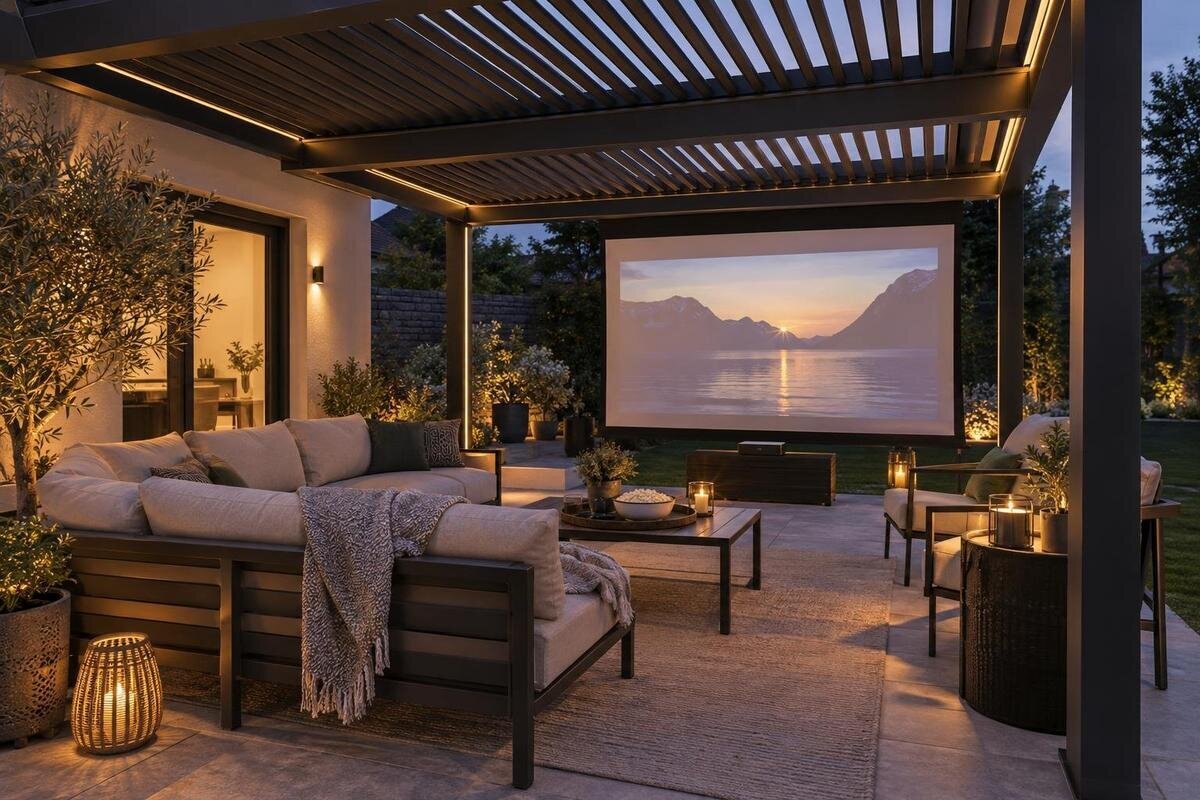
Pergola planning guide
An outdoor movie night depends on more than fitting a screen beneath a pergola. Low sun can wash out the picture, a post can interrupt a seat’s view, and a clear walkway can become a cable route. Plan the screen, seating, lighting and equipment together, while considering nearby homes. A pergola can define the setting, but it is not automatically a dark room or a weatherproof equipment store.

01
Define the film-night setup before drawing a plan
Begin by deciding what the night needs to do: how many people will watch, whether seating is fixed or rearranged, whether the screen and projector will be set up each time, and what must remain outside between screenings. Note doors, garden access, existing furniture and any activities that continue while a film is on. A layout for lounge chairs differs from one that needs to accommodate dining chairs pulled in at the last minute, children sitting on cushions or guests arriving after the film starts. Decide whether people may need to pass through the viewing area once the film begins, or whether late arrivals can approach from the side. These details affect the screen position, circulation space and equipment location.
Measure the items you will actually use, including the screen or display, its support, projector stand, speakers and the occupied footprint of chairs. Use manufacturers’ dimensions where possible rather than estimating from product photos. Sketch the pergola area and mark entrances, boundaries and existing posts or walls; then place the screen and seats before adding side tables. If a wall-mounted pergola listing is part of your comparison, the supplied page gives an area range from 9 to 24 m². That range does not establish usable clear space or site suitability. Compare the selected configuration with its actual plan and your measured layout, including room to set up and pack away without moving chairs through the viewing area.
Choose a screen position that preserves sightlines
Test the picture from every planned seat. Sit in the actual chairs, at the position and height people will use, then check whether anyone must look past a post, screen frame, speaker or standing guest. A front row that feels close during the day may be uncomfortable when guests turn their heads; a rear seat may lose the picture behind someone taller. Try the full group arrangement rather than judging from the central seat alone. If children or people who prefer a different seat height will be watching, test those eye lines too. Check subtitle visibility from the end seats as well, since text can be harder to read from a sharply angled position. Mark the screen’s edges and centre on the plan, not just a vague screen zone.
If you use a projector, position it so heads, doors and moving guests will not interrupt the beam. Keep its stand and controls accessible without putting them in a walkway. A television or freestanding screen also needs stable, unobstructed positioning that follows the maker’s guidance. The Bloomcabin Pergola range is listed from 9 to 24 m²; compare the chosen configuration’s clear dimensions with your screen and seating arrangement. Check the view from the end seats and back row, where posts or other viewers may obscure part of the picture.
02
Use the evening sun to choose the screen direction
Track the sun at the time you expect to start screening, not only at midday. Low-angle sunlight can hit the screen or fall into viewers’ eyes after the pergola has provided useful daytime shade. Observe the proposed position on more than one evening if practical, noting whether nearby windows, pale walls or paving reflect light towards the screen. A screening that begins at dusk may start in bright conditions and finish after dark, so consider how the view changes over the course of the film. Where screening times shift with the season, remember that the sun’s path changes too. Aim to keep direct sunlight off the screen and out of viewers’ eyes, then test with the equipment you plan to use.
Open sides mean light can still enter from the horizon even when the seating is shaded from above. Before adding a curtain or temporary panel, see whether moving the screen, shifting the seats or starting later solves the problem. Any added screening needs to suit the structure and conditions. When comparing a wall-mounted model configuration, include the building façade and existing openings in your sun check. Look at reflections from windows as well as direct sunlight; overhead shade alone does not establish how dark the viewing area will be.
Keep seating and guest movement out of the picture path
Measure chairs in use, not just their folded footprints. Recliners need room to extend, while stools and side tables can encroach on the aisle once drinks and snacks arrive. If seats form rows, leave enough room for late arrivals to reach an open seat without stepping in front of the image. For a casual semicircle, test whether people at the ends can see the screen without turning sharply. Mark furniture in its occupied position and allow for doorways on the plan, then walk the route with the chairs in place. Include any spare or folding seats so they do not end up in the projector beam.
Keep the main approach and route to the house clear, and decide where bags, food and blankets will go. An equipment table should not sit between projector and screen or narrow the passage. Where guests have different mobility needs, allow the space they need to approach, turn and sit rather than relying on a generic layout sketch. Compare the regular pergola options with this occupied furniture layout, including screen supports and speaker stands. Allow for guests getting up during the film, not just arriving and taking their seats.

03
Plan lighting that does not compete with the screen
Lighting has two jobs: helping people move safely and avoiding glare on the screen. Switch off or reduce lights that shine directly at the image or into viewers’ eyes, including bright wall fittings behind the seats. Place any remaining light where people can find steps, drinks and the exit without facing a bright source while watching. Check the scene from the back row as well as from the screen; a fitting that seems unobtrusive near the house may reflect in a display or make the picture look less vivid from the seats. A light aimed towards the ground can still create distracting reflections, so test the actual view rather than judging only from the light fitting.
Plan controls so a host can adjust lighting without walking across the picture or leaving guests in darkness during a pause. Avoid loose light leads or lamps where they obstruct movement. Have fixed outdoor electrical work assessed by a licensed electrician rather than treating permanent wiring as a casual movie-night task. The Bloomcabin Bioclimatic Pergola page lists configurations from 9 to 24 m²; when comparing them, map existing lights and openings onto your proposed layout. Test the lighting with the screen on, since glare and reflections can be easier to spot in viewing conditions than during daylight.
Choosing between a projector and a display
Choose the image method after checking the viewing conditions. A projector needs a clear path to a suitable screen surface, a position where people will not cast shadows across the picture, and a setup that matches the projector and screen makers’ guidance. A wall or fabric that looks blank in daylight may show texture, colour or movement at night, so test the actual surface before making it permanent. Ambient light also affects how a projected image looks; a pergola’s shade does not remove light arriving from the sides. If you plan to use a freestanding screen, check that its proposed position leaves enough room for the seats and the route guests will use.
A television or portable display avoids the projector beam but still needs a clear view, a position that avoids reflections and conditions permitted by its maker. Check the viewing-distance guidance, connections and stand requirements in the device instructions instead of choosing by appearance alone. For either approach, do a trial with the actual source and screen at the planned time. Check whether text, subtitles and darker scenes remain legible from the end seats, and whether sound reaches the group without having to raise it uncomfortably. Confirm that remotes, cables and the intended content source are ready before guests arrive; troubleshooting during the film can mean turning on lights or moving equipment across the viewing area.
04
Store and position equipment with outdoor exposure in mind
Treat the projector, display, speakers, streaming devices and their connections as items that need a planned home between screenings. An open pergola may leave equipment exposed to wind-driven rain, dew, dust or direct sun; overhead cover does not by itself mean electronics are suitable for outdoor exposure. Check each manufacturer’s instructions for permitted conditions, storage and operating position, and bring equipment indoors whenever the conditions fall outside those instructions. A cover or plastic tub is not a substitute for an equipment rating or the maker’s advice. Keep remotes and small adapters together in a dry, accessible place, so setup does not depend on leaving them outdoors or searching for them after guests have arrived.
During use, place stands on a stable surface and route cords away from foot traffic, chair legs, doors and food spills. Don’t run cables where a guest must step over them in the dark or across the route to the house. If the arrangement needs fixed sockets or installed cabling, have a licensed electrical professional assess the work rather than improvising a permanent feed from an indoor setup. Check device manuals for cable, ventilation and positioning requirements, and test connections before guests arrive. A portable setup that can be carried indoors may be easier to manage than leaving valuable equipment under cover, but it still needs a suitable operating position. Decide where each item will go after the screening, not just where it will sit during the film.
Planning for changing weather
Build a pause-and-pack plan around the forecast and the documented limits for your specific pergola and devices. If rain, strong gusts or a sudden change is expected, decide whether to cancel, move indoors or stop early; don’t wait for water to reach equipment before acting. A loose portable screen or lightweight stand may move in a breeze, so follow its maker’s setup instructions and permitted conditions. Make it possible to put equipment away without crossing the group or carrying it through a cluttered space. Keep cushions, blankets and other items that should stay dry somewhere they can be moved quickly. If conditions are uncertain, decide on an indoor alternative before setup rather than relying on the pergola to solve the problem.
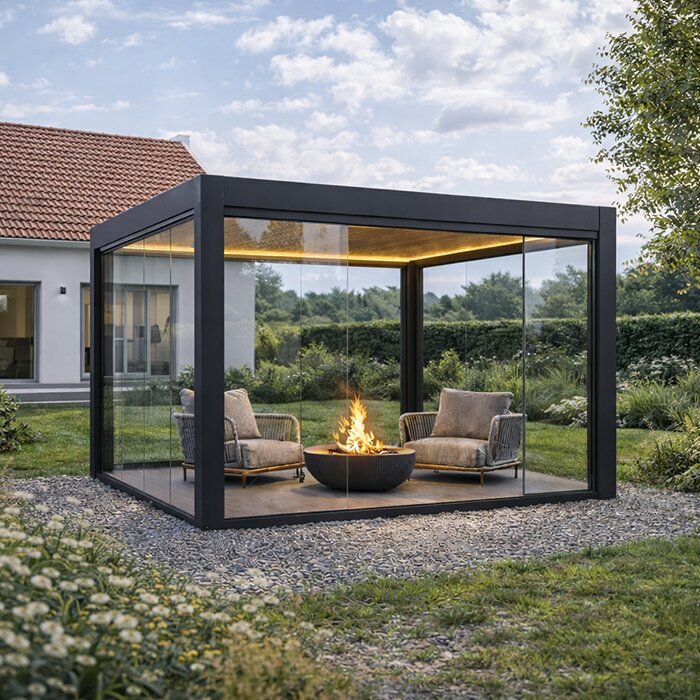
For the pergola itself, ask about the proposed configuration’s coverage, drainage and exposure limits, and have site-specific questions assessed by a qualified professional. When considering the bioclimatic pergola option, check which parts of your layout would be covered, especially the AV table and screen position. A model name or catalogue image does not establish rain protection or suitability for windy conditions. Use the configuration details to identify what needs to be moved first if the weather changes, and keep that route clear. The pack-away plan needs to be manageable during a busy evening, not just on an empty patio.
05
Sound and screen light near neighbouring homes
Sound can carry beyond an open outdoor space, particularly when several guests talk over a quiet scene or a speaker faces outwards. Position speakers towards the seating area and keep them at the lowest level that works for the group; avoid compensating for street or party noise by turning them up. Subtitles can make quieter playback practical, and pausing for conversation may be better than increasing the volume. Before inviting a group, test a short section of dialogue from the planned seats. Then listen from the edge of your property or another nearby point where sound may travel and adjust the direction or level. Repeat the check with people seated if possible, since conversation can change how loud the film needs to be. Don’t assume a boundary fence or pergola will contain sound.
Choose the screen and seating direction with nearby homes in mind as well as the sunset. Avoid shining a bright display towards a neighbour’s windows. Let nearby neighbours know if you are planning regular or late screenings, and be responsive if sound carries farther than expected. Check applicable local noise guidance where relevant. When comparing Bloomcabin Pergola configurations, mark boundaries, nearby windows and speaker positions on each layout; the pergola itself should not be treated as acoustic separation. Consider voices before and after the film too, when guests may gather outside the planned seating area.
Check the site and pergola configuration against the plan
Turn the measurements into a simple site plan before choosing a pergola configuration. Draw the actual area, note doors, posts, boundaries, nearby windows and the sun direction at screening time, then place the screen, every seat, speakers, the equipment table and the main walking route. Include chairs in their occupied positions and space to set up or pack away the AV gear. A labelled concept sketch is useful for discussing layout, but it is not a measured construction or installation drawing. Mark anything uncertain—such as a screen support, surface fixing or power point—as something to verify, not an assumed feature. If possible, mock up the proposed screen and chair positions on site so you can walk the route and check sightlines before making a decision.
Compare the finished plan with the product’s confirmed dimensions, configuration and installation documentation. Ask the supplier or a qualified installer about details the listing does not settle, particularly fixing suitability and site exposure. The wall-mounted Bloomcabin option is one listing to compare, but its name does not establish that a particular wall is suitable. Keep the viewing arrangement flexible enough to remove equipment and reset seating without blocking everyday access. After a full trial at the intended start time, note any changes needed to the picture, walking routes or sound. Use those observations to refine the plan before committing to the layout.
Frequently asked questions
Which way should an outdoor movie screen face?
Choose its position by checking where the low sun falls at the time you plan to watch. Keep direct glare off the screen and out of viewers’ eyes, then test the view from every seat. There is no single compass direction that suits every site.
Will a pergola make the viewing area dark enough for a projector?
Not necessarily. A pergola may provide shade from above, but light can still enter from the sides or through the overhead structure. Try the projector and screen at the intended screening time before settling on a position.
Can I leave a projector or television under a pergola?
Only if its manufacturer allows the conditions it will be exposed to. An overhead structure does not automatically protect equipment from wind-driven rain, dew or other outdoor conditions. Store it indoors when the maker’s guidance calls for that.
How do I work out what size pergola I need?
Measure the screen and support, equipment, seats in use and routes people need to walk. Place them on a site plan, then compare that layout with the selected pergola’s confirmed dimensions. A stated area range alone does not show how the space will work.
How can I be considerate of neighbours during a film night?
Aim speakers towards your seats, keep the volume comfortable and avoid pointing a bright screen at nearby windows. Test sound from the edge of your property, let neighbours know about regular screenings and check applicable local noise guidance where relevant.
Good outdoor screenings come from a layout tested at the time it will be used. Keep glare off the screen, give every viewer a clear view, leave room for guests to move and aim sound towards the group. Just as important, make it easy to bring AV gear inside when conditions demand it and consider nearby homes. A pergola can frame a comfortable film-night area when the layout works with its confirmed configuration rather than assumptions about darkness or weather protection.
