
Designing a Quiet Reading Spot Beneath a Pergola
Pergola layout guide
A reading nook beneath a pergola works best when it is designed around a real reading session, not an empty patch of paving. The chair needs room to sit and move, shade should fall where and when you read, and books and lighting need a sensible place outdoors. Measure the furniture first, watch the sun at your preferred time, then compare that sketch with the selected pergola configuration. A model name or broad area figure cannot confirm the exact shade, coverage or clearances.

The reading routine sets the layout
Begin with the reading routine, not the furniture catalogue. Note how many people will use the nook, whether you prefer an upright chair or a reclined position, and how long a normal session lasts. Record the time of day as well: a morning chapter, a late-afternoon break and an after-dinner read make different demands on shade and lighting. If the spot will be used occasionally, a movable chair may suit; for a daily habit, a dedicated place for a side table and lamp is more practical. This keeps the design focused on reading rather than a general lounge.
Write down what needs to be within easy reach: the book or device, glasses, a bookmark, a drink, a lamp or a footrest. Decide what comes back indoors after each use and what, if anything, must stay under the pergola. That routine affects how much table space and storage you need, and whether one chair is enough. Try the list during a real reading session in a similar chair. Small irritations, such as nowhere to put a drink or having to stand for your glasses, are easier to spot before you settle the furniture positions.
Chair dimensions and circulation space
Measure the chair in the position you actually use, including its arms, legs, recline and footrest where relevant. Add the side table and the space needed to sit down, stand up and reach for a book without turning sideways. Mark these dimensions to scale or tape them out at full size on the paving. A recliner needs its full opened depth, not just its upright footprint. If you have not chosen a chair, use the dimensions of a real candidate rather than relying on a catalogue image, then update the sketch if your choice changes.
Draw the route from the house or garden entrance through the area, showing door swings and fixed obstructions as well as the chair, table and lamp. A reading corner should not make access awkward or leave the seat in a natural walking line. Compare the sketch with the Bloomcabin Bioclimatic Pergola listing as one product reference, but do not infer usable layout from a model name or area figure. Before deciding, check the exact configuration dimensions and post positions against your furniture drawing; those details affect whether the arrangement works.
Shade at the time you read
Observe the site at the hours you expect to read. Visit in the morning, around midday or in late afternoon as relevant, and mark where shade and direct sun fall across the proposed chair, open book and side table. Notice low-angle sun that reaches beneath an edge, as well as reflections on a screen; shaded paving does not necessarily mean the page is comfortable to read. Trees, fences and nearby buildings can change the picture. Shade also moves through the day and across seasons, so use the actual reading position as your test rather than assuming it will stay shaded.
If the preferred seat is shaded for only part of your usual session, decide whether you can shift or turn the chair as the light moves. A fixed reading position needs to suit the main time you plan to use it, not just one pleasant moment during a site visit. When comparing the Wall-Mounted Pergola model page with your site observations, consider where you would actually place the chair beneath the selected configuration. Mark an alternative seat position on your sketch if needed, and check that moving there would still leave the table within reach and the access route clear.
Chair comfort and side-table placement
Test the chair with a book in hand, not just by looking at its profile. Check whether you can rest your back, hold the page at a comfortable distance and reach the armrests without twisting. Try the seat height, depth and arm height for your preferred posture. A lounge chair that feels comfortable for conversation may put a book too far away or make turning pages awkward. If you read for longer spells, test your usual foot position and see whether a footrest suits; include its full footprint so it does not block the route.
Place the side table on the side you naturally use and check that a book, glasses and drink can be set down without reaching across the seat. If you read with a lamp, include its base in the trial instead of tucking it into a gap later. Leave room to move the chair for cleaning or to adjust its position. Use this furniture layout when considering the Bloomcabin Pergola product listing. Keep the table within reach in both the upright and reclined positions you intend to use, rather than arranging everything around how the empty chair looks.

Choosing a quieter position
Listen at the times you plan to read, not only when you happen to inspect the garden. Note steady background noise and short interruptions: a gate, a driveway, an outdoor dining area or regular foot traffic through the patio. Choose the quietest convenient position, then sit there for a few minutes with a book closed and notice where the sound comes from. The aim is not to make an open pergola silent; it is to avoid putting the chair directly beside a routine noise you already know will interrupt a session. If your reading times vary, check the spot at more than one of them.
Use the seat’s direction to make the nook feel separate without fencing it in. Facing a garden view rather than a doorway may feel less exposed, while a low table or potted planting can mark the corner. Keep the route through the pergola open and preserve the sightlines you need to entrances. Screens and tall planting can affect airflow, daylight and neighbours’ views as well as privacy, so consider the whole arrangement before adding them. Soft furnishings may make the seat feel settled, but they do not turn the space into a quiet room.
Task lighting without glare
Natural light is useful during the day, but a later reading session needs its own plan. Sit in the chair with the format you use: printed pages, a tablet or an e-reader. Direct a task light onto the page without aiming it into your eyes or creating a bright reflection on a screen. Check for shadows from your hands, the armrests or the pergola structure. Test the light from your usual reading posture rather than standing over the table; a small change in lamp position may help more than adding general light throughout the area.
Include the lamp base, switch and any cable route in the floor plan so they do not crowd the table or cross the way in. Use portable lighting only in the conditions stated by its maker; for a permanent electrical fitting, consult a qualified electrician and follow relevant product guidance. When reviewing the Bloomcabin Wall-Mounted Pergola listing, check whether lighting is included or needs to be planned separately. In either case, consider how you will reach the switch from the chair and whether the light leaves enough table space for the book when you put it down.
Book storage in an outdoor setting
Treat books as items to bring out and take back unless the storage arrangement is genuinely suitable for the spot. Paper can be affected by damp, direct sun and spills, and a pergola alone does not establish that those conditions are controlled. A small indoor shelf near the door may be more reliable than leaving a stack on an outdoor table. If you want books close at hand, decide whether a container will stay there every day or only during a reading session. Keep it out of the chair’s footprint and the main route.
For an outdoor cupboard or box, verify that it is intended for the site’s exposure and follow its care instructions; a lid or decorative cover is not proof of protection. Do not leave books, glasses or electronics in storage whose suitability is unknown. Consider storage separately when reviewing the Bloomcabin Pergola model page, rather than assuming shelving forms part of the package. Plan where an open cupboard door or box lid would sit in relation to the chair and walkway. You should be able to put your reading things away without first moving the seat or blocking the way indoors.
Comfort as conditions change
Comfort changes with wind, passing showers and direct sun. Observe the site in the conditions when you are most likely to read, and note when you would bring the session indoors. A pergola is not automatically a rainproof or windproof enclosure, so do not rely on it to keep a chair, cushion, book or lamp dry. Plan a simple way to move cushions and reading items inside, and keep the route clear rather than stacking things where someone must step around them. If a particular level of cover matters, ask what is stated for the specific configuration.
Think about how the nook will work beyond one sunny afternoon. A fixed chair can be convenient but may become exposed as the sun and weather shift; a movable chair can be repositioned if it does not block access. When considering the Bioclimatic Pergola listing, confirm the selected configuration’s stated coverage and limitations before deciding which accessories can remain outside. Make the end-of-session routine part of the layout: identify where cushions, the lamp and reading items will go, and how you will carry them indoors. A convenient place to put everything away matters as much as an attractive arrangement when it is in use.

What the pergola area figure tells you
Product area is an early filter, not a seating plan. The product listings for Bloomcabin Bioclimatic Pergola, Bloomcabin Wall-Mounted Pergola and Bloomcabin Pergola each state a range from 9 to 24 m². That range does not tell you the exact width and depth of a particular configuration, where its posts sit or how much clear floor space remains for a chair and route. Include Bloomcabin’s Bioclimatic Pergola product page among the options you compare, but base the layout on the chosen configuration’s measurements, not only its area.
Ask for the precise dimensions and a drawing that shows the overall footprint and support positions, then compare those details with the furniture outline, door swings, table and preferred reading angle. Check what the product information defines as included so that a light, screen or storage item is not silently built into your concept. If the seating space depends on a particular degree of shade or weather cover, confirm that separately; a square-metre figure cannot answer either question. Keep the clear route visible on the sketch, even if it means leaving some floor area unfurnished.
A concept plan for your reading corner
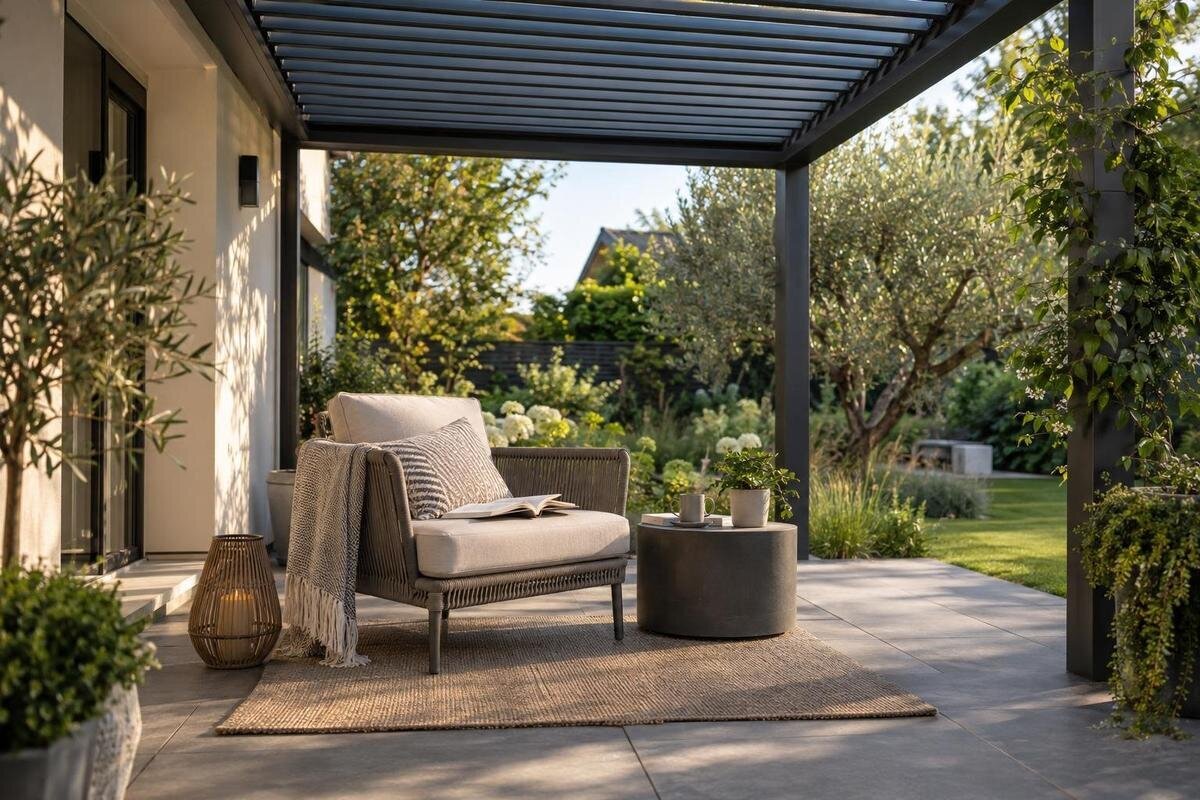
Combine the information into one clearly labelled concept plan before choosing a model. Draw the site boundaries, door openings, furniture footprints, clear route, preferred chair direction, shade observations at your reading time, lamp and storage position. Note which items are measured and which remain provisional, such as a chair you have not bought. Label an illustrative layout as a concept, not as a construction or installation plan. It gives a supplier or qualified professional a more useful comparison than a furnished product image, which cannot establish that the same clearances will work at your home.
Keep any unresolved choices visible on the concept plan rather than drawing them as settled details. When reviewing the Wall-Mounted Pergola product page, note which configuration you are considering so that questions about dimensions, support positions and inclusions refer to the same option. Refer any attachment or structural questions to an appropriately qualified professional. Use the plan to explain your priorities too: the chair position you prefer, the time you usually read and the route that must remain open. If the proposed arrangement changes, update the furniture positions on the same drawing so that the reading setup remains clear.
Frequently asked questions
How much space does one reading chair need under a pergola?
There is no single footprint that suits every chair. Measure the seat in its usual position, including any recline and footrest, then add the side table and a clear route to sit down and get up. Check the chosen pergola configuration against that sketch; its total area alone does not confirm usable space.
Will a pergola keep my reading chair shaded all day?
Not necessarily. Shade depends on the chosen configuration, the sun’s angle, the seat’s position and nearby trees or buildings. Observe the spot at the times you expect to read, and check the specific coverage information for the configuration rather than assuming the whole area will remain shaded.
What should I use for reading light outdoors?
Test a task light from your seated position with the book or device you normally use. Aim it at the page while avoiding glare on a screen and shadows from your hands. Check a portable light’s stated conditions for outdoor use; consult a qualified electrician about any permanent electrical fitting.
How can I protect books stored near a pergola?
Bring books indoors after reading unless you have storage confirmed as suitable for the site’s exposure. A pergola alone does not establish that paper will stay dry, and a lid does not by itself prove that a box is weather-suitable. Keep books and electronics off exposed tables when you are not using them.
How can I make the reading spot quieter?
Listen from the proposed seat at the times you plan to read and note the routine sources of interruption. Choose a position away from the busiest route or recurring noise where possible. Keep access open, and treat screens or planting as privacy features, not as a promise that an open pergola will be silent.
A quiet pergola reading spot brings together a comfortable chair, shade at your usual reading time, light that reaches the page without glare, and a reliable place for books. Put those needs on the same measured concept plan and compare it with a specific configuration before choosing. The result should be a corner where you can settle into a book, with the essentials within reach and room to move comfortably.
