
How to Estimate Pergola Seating Area Heating Costs
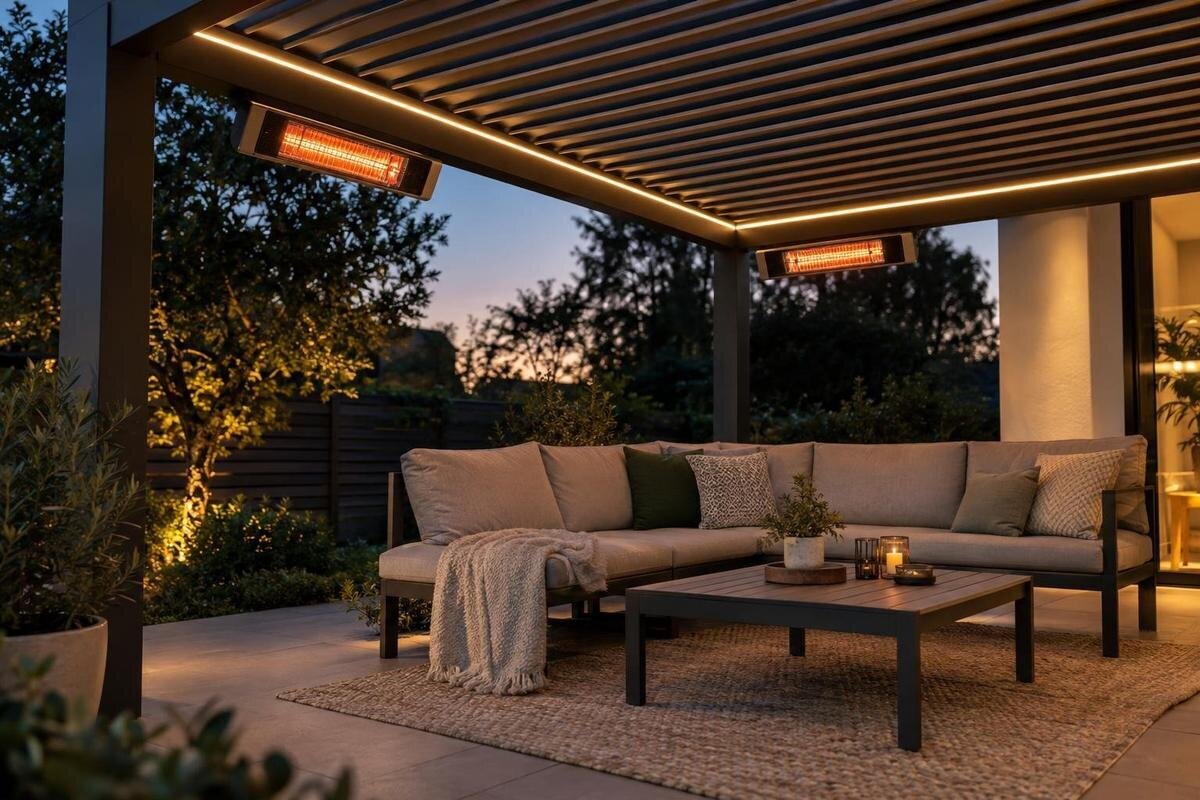
Pergola heating costs
To estimate the running cost of heating a pergola seating area, multiply the heater’s rated electrical input in kilowatts by the hours it operates, then multiply the resulting kilowatt-hours by the usage rate on your electricity plan. That gives the variable energy cost, not the cost of buying or installing the heater. A useful estimate also reflects when people actually sit outside and the type of warmth they want: radiant comfort at a table is not the same as raising the temperature of all the air beneath a pergola.

The basic running-cost formula
Calculate energy first: kilowatt-hours (kWh) = rated electrical input in kilowatts (kW) × the hours the heater is on. Convert a watt rating by dividing by 1,000: 2,000 W is 2 kW. Multiply the kWh by your usage rate in dollars per kWh. If your plan shows cents, divide that figure by 100 first; 30 c/kWh is $0.30/kWh. This estimates the variable electricity charge for that session at that rate, not the price of buying, mounting or supplying the heater. Use the same method for each expected session before adding up a week or season. Keep units beside each figure so watts are not treated as kilowatts and cents are not mistaken for dollars.
Pergola floor area is not part of that equation. The catalogue lists the Bloomcabin Pergola with areas from 9 to 24 m², but an area range does not give the chosen heater’s rating, its hours of use or a cost per square metre. Use area to describe the seating zone you intend to use, then take energy figures from the heater itself. Do not scale a heater’s estimated electricity cost up or down by floor area alone: coverage and permitted use must come from the appliance’s own documentation. The calculation is about electricity consumed, not about warming the whole outdoor space evenly.
Read the heater’s rated electrical input
Find the appliance’s rated electrical input on its rating plate or in its exact manual. The calculation needs input in watts or kilowatts, rather than a description such as “high heat” or an advertised output figure that is not identified as electrical input. If the manual gives more than one power setting, use the input for the setting you expect to use. If it gives only a maximum input, using that figure gives a clear full-power estimate; it may overstate use if the unit operates at a lower level or cycles off. Do not guess a lower figure from the dial position or a product description.
For two electric heaters, work out each rating multiplied by its own operating hours, then add the kWh; if one switches off earlier, do not count its full rating for the other heater’s entire session. For a seating area under the Bloomcabin Bioclimatic Pergola, list each proposed heater separately from the structure so you can account for different ratings and operating times. If you are comparing a gas-fired unit, use its fuel consumption and the relevant gas cost instead; an electricity-only calculation will not capture gas charges or bottle refills. Include separate fans or lights only if you want to estimate their electricity use as part of the overall setup.
Estimate the hours the heater will actually run
Count the time the heater is on, rather than the whole time someone is outdoors. Note typical start and finish times for a seated dinner, a short catch-up or a longer evening. Include any time the heater is switched on before people sit down or left running after they move indoors. When planning evenings under a regular Bloomcabin pergola, base those hours on your household’s routine rather than assuming the heater will run throughout every visit outdoors. A simple diary over a few representative weeks can make an estimate more realistic than assuming every outing lasts the same number of hours.
Separate frequency from duration. If you usually sit out twice a week for two hours and the heater runs for the full period, that is four heater-hours a week. If it is used only for the first hour, count one hour per outing instead. For a weekly or seasonal projection, multiply the hours per session by the expected number of sessions, then apply the kWh calculation. Keep a note of any time the heater runs while the seats are empty. If a thermostat or control cycles the unit, rated input multiplied by the full on-period is a straightforward full-input estimate; actual use may be lower. Update your assumptions when your routine changes.
Use the electricity rate that applies at the time
Use the variable usage rate that applies when the heater runs, not a price taken from a different time band. Check your current plan or bill for the rate in cents per kWh and any time-of-use periods. If evenings are billed at a different rate from daytime, calculate each session using the matching rate. A session that crosses two periods can be split into separate kWh totals. If your plan includes more than one usage rate or a demand component, use the retailer’s stated billing method rather than treating the lowest listed rate as the price for every kilowatt-hour.
Keep fixed and variable charges separate. If your bill includes a daily supply charge that you pay whether or not the heater is used, do not add the whole daily amount to each session. List a new connection or other project-specific recurring charge separately if it actually applies. A demand charge, where included in a plan, may also be calculated under its own terms and will not be captured by a simple kWh figure. If rooftop solar is involved, daytime self-consumption may change grid imports, but it is not automatically cost-free: consider whether that electricity would otherwise have been exported for a credit. Use your own bill terms; an example rate is only a placeholder, not a universal Australian price.

Worked examples for a session and a season
Take a hypothetical electric heater rated at 2 kW, running for two and a half hours at full input. It uses 2 × 2.5 = 5 kWh. At a hypothetical usage rate of 32 c/kWh ($0.32/kWh), the variable energy charge is 5 × $0.32 = $1.60 for that session. These figures are examples only; replace both the rating and rate with the details for your heater and plan. If the unit runs at a lower input or cycles off, actual energy use may be lower than this full-input calculation. The calculation does not include the heater’s purchase price or any installation work.
For a seasonal projection, suppose that same hypothetical 2 kW unit is used for two hours on three evenings each week over 12 weeks. That is 72 operating hours, or 144 kWh. At the same illustrative rate of 32 c/kWh, the energy charge is $46.08 for the period. If each session were one hour instead, the total would be 72 kWh and $23.04 at the same rate. If two identical units run together for every session, their combined energy use doubles for those overlapping hours. These examples assume a constant tariff and full rated input; use different figures if your rate or usage pattern changes.
Radiant comfort is different from warming all the air
Radiant heaters transfer warmth directly to people and nearby surfaces within their intended zone, rather than first needing to raise the temperature of all the surrounding air. That distinction matters outdoors. Someone seated in a suitable position may feel warmer while a thermometer elsewhere still shows cool air. The heater’s running cost is still based on its electrical input and operating time; what changes is where the warmth is felt, not the arithmetic. An air-temperature reading alone therefore cannot tell you whether people at the table will find the setup comfortable.
Think about the comfort goal before estimating hours. If the aim is to take the chill off people sitting in one area, a local radiant effect may be relevant. If the aim is to warm the entire open-air volume, that is a different expectation and can be difficult to maintain outdoors. Breeze, exposure, direction and distance from the source can change how useful the warmth feels; someone moving out of the intended zone may notice a difference even while the heater is on. If you are considering a bioclimatic Bloomcabin pergola, describe that comfort goal when discussing heater options. Check the appliance documentation and assess the occupied seats rather than relying only on a general air reading.
Plan around the seats people use
Map the actual seating area, not just the pergola’s overall footprint. Mark the table, usual chair positions, how many people are typically seated and where people move in and out. A heater may be used for one cluster of seats rather than every square metre, so estimate the operating pattern for the zone that matters. When plotting a seating zone under the Bloomcabin Wall-Mounted Pergola, use the actual plan and furniture arrangement; the model name alone does not give a usable seating footprint or show where a heater may be installed.
Note conditions that may change how long people choose to run the heater, such as whether the seats are sheltered or exposed, how open the sides are and whether the evening is breezy. These details are not inputs you can convert directly into extra watts without the heater’s data. Use them to make realistic assumptions about hours instead. A larger group might mean a different seating arrangement, longer use or another appliance; record those behaviours rather than multiplying cost by the number of seats. If the configuration changes, revisit the use estimate and the relevant heater and pergola documentation.
Compare heaters by input and intended comfort
Compare heater options by rated input and intended kind of comfort, not by the lowest cost-per-hour figure alone. At the same tariff, a higher-input unit costs more per hour if it runs at that input, but it may be designed for a different area or heat distribution. Verify any coverage statement in the exact manual rather than assuming that more watts automatically means better value. For a heater with selectable settings, calculate each realistic setting separately where the documentation gives the relevant input. Compare options on equal terms: the same tariff, duration and assumed operating level.
Check how the appliance is controlled. A timer, thermostat or adjustable output can affect the hours or input you assume, but a product description alone does not tell you the energy used during a particular evening. The heater’s instructions should specify its operating limits and conditions. For a project involving Bloomcabin’s bioclimatic pergola, list the structure and proposed heater separately in your comparison, with any heating options clearly identified rather than assumed to be included. Keep each heater’s rating, controls and intended coverage together so you can compare the options without confusing the pergola price with the heating budget.

Budget for electrical and mounting work separately
Separate running cost from the upfront cost of making an installation workable. Depending on the exact heater, pergola and existing setup, work might be needed for an approved mount, a suitable electrical supply or another part of the installation. Ask a qualified electrician to assess the electrical requirements and obtain a quote before treating a per-session figure as a whole-project budget. Do not assume that an outdoor socket, extension lead or nearby lighting circuit is suitable simply because it is close to the seating area. A quote can help distinguish one-off work from recurring energy charges.
Check the exact heater and pergola manuals for outdoor-use rating, clearances, permitted mounting points and exposure conditions, then have compatibility confirmed by the relevant qualified professional. A product name is not written approval for attaching a heater: if considering the Bloomcabin wall-mounted model, confirm what its own documentation permits rather than choosing a frame member by appearance. These checks may affect one-off costs, but they do not change the kWh formula once the heater’s input and operating time are known. Keep any quoted electrical or mounting work on a separate budget line.
Build an estimate you can update
Make a simple worksheet with the heater’s model and rated input, each setting you may use, expected hours per session, sessions per week, tariff period and resulting kWh. Keep a row for each appliance if several can run, and label a typical estimate separately from a full-input estimate. If Bloomcabin’s regular pergola model is part of your plan, record it alongside the heater model so the worksheet identifies the proposed setup. Fill the energy-cost fields using the chosen heater’s input and your electricity tariff. Note where each figure came from so you can replace an assumption with a confirmed value.
Calculate a low, usual and high use case: shorter or less frequent sessions for low use, your expected routine for usual use, and longer or more frequent sessions for high use. Apply the correct tariff to each case, total weekly or seasonal kWh, then compare the result with the amount you are comfortable budgeting. After using the setup, revise the hours or settings to reflect what actually happened. If the result is higher than expected, review the use pattern, selected setting and tariff period rather than assuming the entire pergola should reach a particular air temperature. That gives you an estimate you can improve without pretending weather or comfort will be constant.
Frequently asked questions
How do I calculate the cost of one heater session?
Multiply the heater’s rated input in kilowatts by the hours it runs to get kWh, then multiply by the electricity rate in dollars per kWh. For example, 2 kW for 2.5 hours uses 5 kWh; use your own plan’s rate to price that session.
Does a 2 kW heater cost $2 an hour to run?
No. Kilowatts measure the heater’s power, not its dollar cost. At a hypothetical rate of 32 c/kWh, a heater drawing 2 kW continuously uses 2 kWh in an hour and costs 64 cents for that hour. Your actual rate and operating level may differ.
Does pergola size determine the heating bill?
No. The bill calculation depends on the heater’s electrical input, operating time and applicable tariff. The seating area helps you plan where people will use the space, but square metres alone do not show a heater’s coverage, suitability or energy use.
Will a radiant heater raise the air temperature under a pergola?
Not necessarily. Radiant warmth can be felt by people and surfaces in the heater’s intended zone without warming all the surrounding air. A thermometer may show little change even if someone in a suitable seated position feels warmer.
Does this estimate include installation or gas costs?
No. The formula estimates electricity used by an electric heater. Put purchase, mounting and any electrical work in a separate upfront budget. For a gas heater, use its fuel consumption and the relevant gas price instead of an electricity-only calculation.
There is no single running cost that applies to every pergola seating area. The useful figure comes from the heater’s rated input, the hours it is actually on and the tariff that applies at that time. Keep equipment and installation costs separate, and judge comfort by the warmth people experience in their seats rather than expecting every heater to raise the air temperature across an open space.
