
Removing Algae from Pergola Posts and Pavers
Pergola care
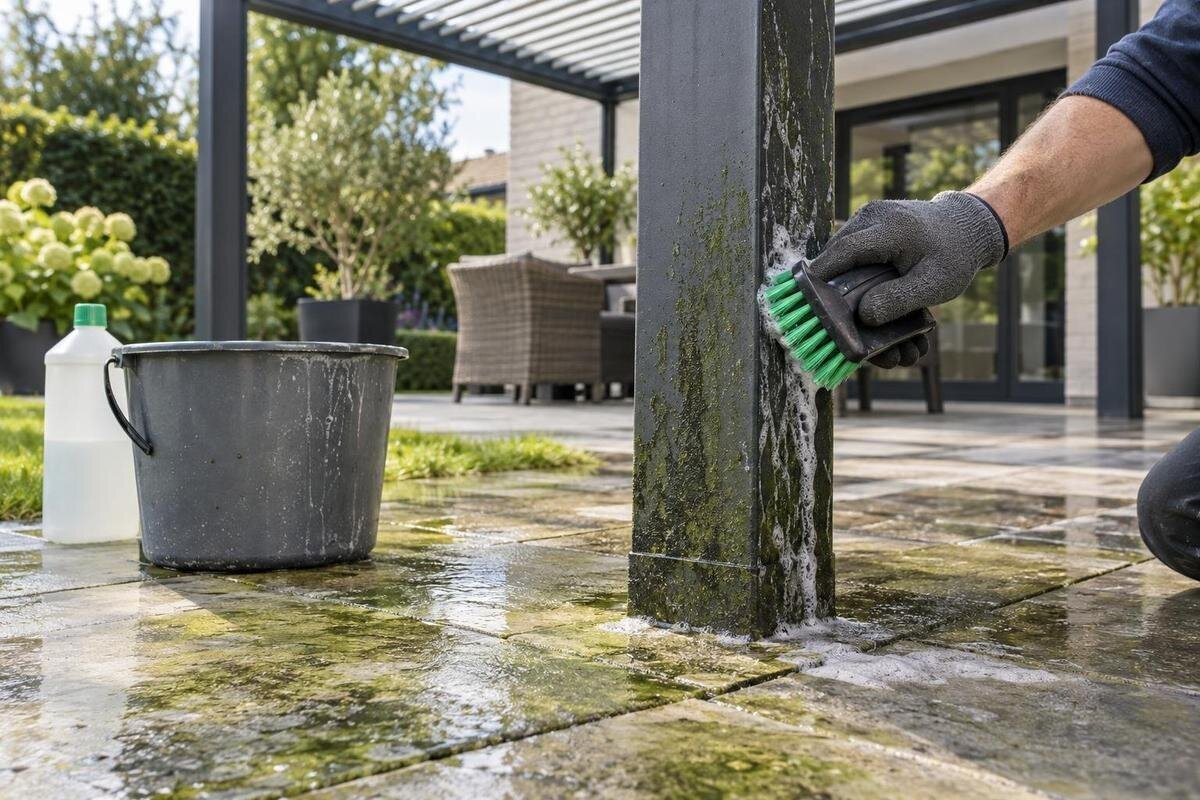
Green algae on pergola posts and nearby pavers can look like one cleaning job, but the surfaces may need different methods. A coated aluminium post can be damaged by products intended for concrete or stone, while paving may have its own finish, sealer and vulnerable joints. Identify each material, use the least aggressive compatible method, and control splashes and runoff before you start.

Before you clean 1
Check whether the marks are algae
Algae often appears as a green film in damp, shaded spots, but dark marks or rough patches can also be dirt, lichen, mould, rust staining or a failing finish. Colour alone is not enough to identify the cause. Before scrubbing, locate the growth: is it on the coated face of a post, at its base, in a paving joint or on the paver surface? Look at a dry patch in good light and compare it with an unaffected area of the same material. If a finish is chalking, blistering, flaking or pitted, don’t treat it as routine algae; aggressive cleaning can remove sound coating and enlarge the damaged area.
Take a close photo of the mark and a wider one showing the post base, paver joints, drains and nearby irrigation. Note whether the area is shaded, frequently wet or exposed to spray. Check the invoice, manual or installer paperwork for the exact pergola model and finish rather than guessing from colour. For a Bloomcabin Wall-Mounted Pergola, match the installed model to its care documents; the product name alone does not confirm the coating or a safe cleaner. After a permitted small test, photograph the area again once it is rinsed and dry, when changes in colour or sheen may be easier to assess. Record post marks and paving growth separately.
Identify the pergola post finish
Posts may be coated aluminium, painted steel, timber or masonry; metallic appearance and colour do not reliably identify the substrate or finish. Check the product label, purchase record and care manual. If you can’t confirm what is on the post, treat it as vulnerable: remove loose leaves or dust, then ask the supplier or installer for the permitted method before applying chemicals, abrasives or a concentrated jet. Do not assume that a cleaner is safe because it says outdoor, for metal or aluminium-safe; bare metal and a painted or powder-coated surface can have different compatibility. Previous touch-ups may also mean the surface differs from its original finish, so include any patched or peeling areas in your photos.
Read the cleaner’s directions and the pergola care information together. Don’t assume a paver treatment, bleach, acidic or strongly alkaline wash, solvent, degreaser, abrasive cream or wire brush is acceptable on a coated post; some can dull, discolour or damage finishes. If you own a Bloomcabin Pergola, ask about compatibility with the actual finish, including any previous touch-ups, rather than aluminium in general. Give the supplier the cleaner’s name and label details so the enquiry concerns the product you intend to use. When instructions are missing or unclear, don’t escalate by trying a stronger product. Never mix cleaning products.
Before you clean 2
Clean coated aluminium gently
Where the care instructions permit routine washing, begin with clean water and a soft cloth or non-abrasive sponge. A soft-bristle brush may suit a textured surface, but use one only if the instructions allow it. Work on a small area with a damp, not dripping, tool so water does not carry grit across the coating. If water does not lift the film and the manual permits detergent, use a mild one in the stated dilution. Don’t invent a stronger mix or leave detergent sitting while you work elsewhere. Test an inconspicuous patch, rinse it, let it dry and check for changes in colour, sheen or texture before continuing. Replace or rinse a dirty cloth rather than rubbing grit over the finish.
Rinse any permitted soap away gently and promptly, without a concentrated jet. Avoid scourers, steel wool, wire brushes, abrasive powders and scraping tools; they can scratch a finish and leave a patch that is harder to assess. Don’t pressure-wash or steam-clean unless the pergola instructions expressly allow it. A strong jet can force water into joints, seals or enclosed components and may damage the finish. For a Bloomcabin Bioclimatic Pergola, check the care instructions for the particular part being washed, rather than assuming a method permitted on a post applies to every component.
Match a cleaner to the paving material
Concrete, clay, natural stone and sealed or coloured pavers are not interchangeable cleaning surfaces. Some acids can etch cement-based paving or acid-sensitive stone; other formulations may affect colour, sealer or joints. The edging or repair mortar may differ from the pavers too. Identify the material and finish from packaging, an invoice or installer notes. If you’re unsure, don’t use a strong algae treatment as a test on the most visible area. Ask the paver supplier, and, if you have a spare paver, follow the labelled test procedure on that first. A discreet test on installed paving can show an immediate reaction, but it cannot make an off-label cleaner suitable.
Choose a product only when its label explicitly covers algae and the relevant paving material, including any sealer or jointing system it addresses. Follow directions for dilution, pre-wetting, contact time, brushing, temperature and rinsing; these steps vary, so don’t borrow a method from another cleaner. Don’t mix products or add household ingredients to boost them. If the label excludes your stone, coloured paver or sealed finish, stop rather than trying a smaller dose. Use a discreet spot for any permitted test, then wait until it is fully rinsed and dry before checking the colour, texture and condition of nearby joints.

Before you clean 3
Treat pavers without disturbing the joints
Clear leaves, soil and loose debris first with a broom or a soft brush suited to the paving. Collect the debris instead of sweeping it into a drain or joint. Work on a manageable patch at a time so the treatment does not dry before you can rinse it. Pre-wet the pavers only if the product label directs you to; water on the surface can affect how some products are used. Apply only the labelled amount with a controlled applicator, keeping it away from posts, furniture and planting. Use the brush type and movement specified for the surface, and don’t dig into the joints to reach growth with a sharp tool.
After the stated contact time, rinse as directed without flooding the area. A concentrated pressure-washer jet is not the default: it may erode the paver face, loosen joint material or scatter cleaner onto the pergola. If a paver or joint is already loose, cracked or crumbling, don’t try to solve it with harder brushing; ask the paver supplier or a suitable contractor about the surface. Keep people off the treated patch until it has been rinsed and is dry, as wet paving and cleaner residue can be slippery. If algae is lodged in a joint, follow the joint material’s care instructions rather than scraping it out.
Keep paving cleaner off the posts
Treat posts and pavers as two separate jobs, using separate brushes, cloths, buckets and applicators. If both need attention, first use the approved gentle routine on the post and rinse it; then shield the post before using a paving treatment below it. This order reduces the chance of transferring paving product to post-cleaning tools, but it doesn’t remove splash risk. Keep the paving container and used cloths on the paving side, and don’t reuse an applicator on coated aluminium after it has touched paving chemical or gritty joint residue. Keep lids on containers when they’re not in use, and don’t leave a chemical-soaked tool beside a post where it could drip.
Use a stable temporary splash board that doesn’t rub against the coating or trap wet cleaner against it. Avoid spraying upwards, pouring product near the post base or working in wind that carries mist. If a treatment reaches the coating, stop and follow the cleaner’s contact instructions and the pergola care guidance; if they call for rinsing, use clean water gently and contain the runoff. Don’t apply another chemical to neutralise the first. If you need advice about a Bloomcabin wall-mounted model after a splash, provide the cleaner label and photos of any visible change once the surface has dried.
Before you clean 4
Plan for water and cleaner runoff
Plan where rinse water will travel before opening a container. Check whether it will flow across more pavers, towards a drain, garden bed, pool, doorway or waterway. Sweep up dry debris and use only the amount of water and cleaner specified for the area. Keep concentrated product and wash water out of soil, stormwater drains and waterways unless the product directions and local guidance allow that disposal. Don’t block a drain and create ponding near a post or building. If you can’t control the flow, don’t apply a chemical cleaner there; ask the product supplier or a suitable cleaning professional about a safer approach.
Use any collection or disposal method specified on the label, and keep children, pets and outdoor items away from the flow as directed. Don’t pour leftover concentrate onto paving, soil or a drain. Record the product name, dilution, area treated and where rinse water went; that information may help explain a stain or finish change later. For an enquiry about recurring wet paving beside a regular Bloomcabin Pergola, include wider photos showing the direction water travels as well as close-ups of the affected area. Distinguish water present before cleaning from the rinse water produced during the job.
Work safely around the pergola
Choose conditions in which you can control the application and complete rinsing before the product dries. Follow any label limits for sun, temperature, rain or wind. A breeze can carry spray onto the coating or plants, while a product that dries too quickly may leave residue. Move furniture, cushions, rugs, pots and other items that could be splashed or hold moisture against a post. Keep foot traffic away until the paving has been rinsed and is dry. Wear the protective equipment stated on the product label, and keep containers and used cloths out of reach of children and pets.
Clean from stable ground; don’t stand on the pergola, climb its posts or use the frame to support a ladder. If algae is out of safe reach, leave the high-level work to a suitable professional. Where a pergola has louvres, lighting, motors, sensors or controls, don’t direct water at electrical enclosures or attempt repairs or wiring. For a Bloomcabin bioclimatic model, consult the care guidance for the installed components before cleaning around them. Keep routine surface washing separate from fault-finding: if a control or drive component behaves unusually, stop and use qualified service rather than attempting to investigate it while cleaning.
Before you clean 5
Reduce the conditions that bring algae back
Once surfaces are clean, reduce the damp conditions that encourage algae rather than reaching straight for a stronger chemical. Clear leaves and soil from paver joints, move pots that hold moisture against a post, and adjust irrigation so it doesn’t repeatedly wet the same paving or coating. Keep nearby plants from resting on the posts, pruning only what you can reach safely. Look for recurring dampness after rain or watering; check obvious sources such as overspray, a leaking tap or a blocked surface drain. Don’t alter the pergola or paving structure as a shortcut to change water flow.
Make a brief inspection part of ordinary outdoor cleaning, especially after a period when the area has stayed damp or shaded. Sweep away organic debris before it builds up, and recheck joints and post bases for repeat growth. There is no single cleaning interval for every garden; shade, rainfall, irrigation and paver material all affect how quickly growth returns. For the Bloomcabin wall-mounted pergola, use the maintenance instructions for the installed model rather than adopting a fixed chemical schedule. Compare recurring marks with your earlier photos and note whether the same spots remain damp after rain or watering.
Know when to stop cleaning
Cleaning may not fix a mark that remains after a compatible gentle wash, or a coating that is peeling, blistered, deeply scratched or visibly corroded. Don’t keep increasing brush pressure, contact time or chemical strength to make the finish look new; that can cause more damage. Stop too if the post moves, a fixing appears loose, masonry is cracked, or a control or drive component behaves unusually. Don’t dismantle, recoat, seal or repair structural or electrical parts as part of algae removal. Photograph the condition and ask the manufacturer, installer or an appropriate qualified service professional for guidance.
For a useful enquiry, provide the exact model and finish if known, close and wide photos, which surfaces were treated, the cleaner label and any visible change after drying. If you are identifying your unit from the Bloomcabin Pergola product details, confirm the match against your purchase records before requesting parts. Include the location of the affected post or component so the enquiry is specific. Ask for the appropriate manual and a compatibility check before ordering a spare or deciding the whole structure needs replacement. Where the remaining issue is finish failure, a loose component or repair, further algae treatment is not the next step.
Frequently asked questions
Can I use the same algae remover on pergola posts and pavers?
Not unless the product instructions and the pergola’s care guidance approve it for both surfaces. Paving cleaners may contain ingredients that damage a coated finish. Use separate methods and applicators, and don’t treat a small test patch as permission to use a product outside its instructions.
Are bleach or vinegar safe shortcuts for algae?
Neither is a universal option. Bleach may discolour a finish, while vinegar and other acids can affect acid-sensitive stone, cement-based paving or joints. Use a product only if its label covers the exact surface, and never mix cleaning products.
Can I pressure-wash pavers beside the pergola?
Don’t make pressure-washing the default. A concentrated jet can damage a paver face, disturb joints or scatter cleaner onto coated posts. Check the paver and pergola instructions first; if they don’t expressly allow it, use a more controlled method.
What should I do if paver cleaner splashes onto a coated post?
Stop applying the cleaner and follow its contact instructions alongside the pergola’s care guidance. If they call for rinsing, use clean water gently and contain the runoff. Don’t add another chemical to neutralise it. Photograph any change after the surface dries and seek advice if the finish looks different.
How often should I clean algae from posts and pavers?
There is no single interval for every setting. Shade, dampness, irrigation and paving material affect how quickly growth returns. Remove loose debris during ordinary outdoor cleaning and check recurring damp areas; use the pergola and paver care instructions rather than applying an algae treatment on a fixed schedule.
Use one method for the coated pergola post and another for the pavers. Identifying materials, testing a discreet patch, following the exact label and keeping splashes and rinse water under control is safer than applying a stronger all-purpose treatment. If growth keeps returning, look for the source of dampness; if the coating or structure appears damaged, stop cleaning and seek the right assessment.
