
Repair or Replace an Older Pergola: Decision Checklist
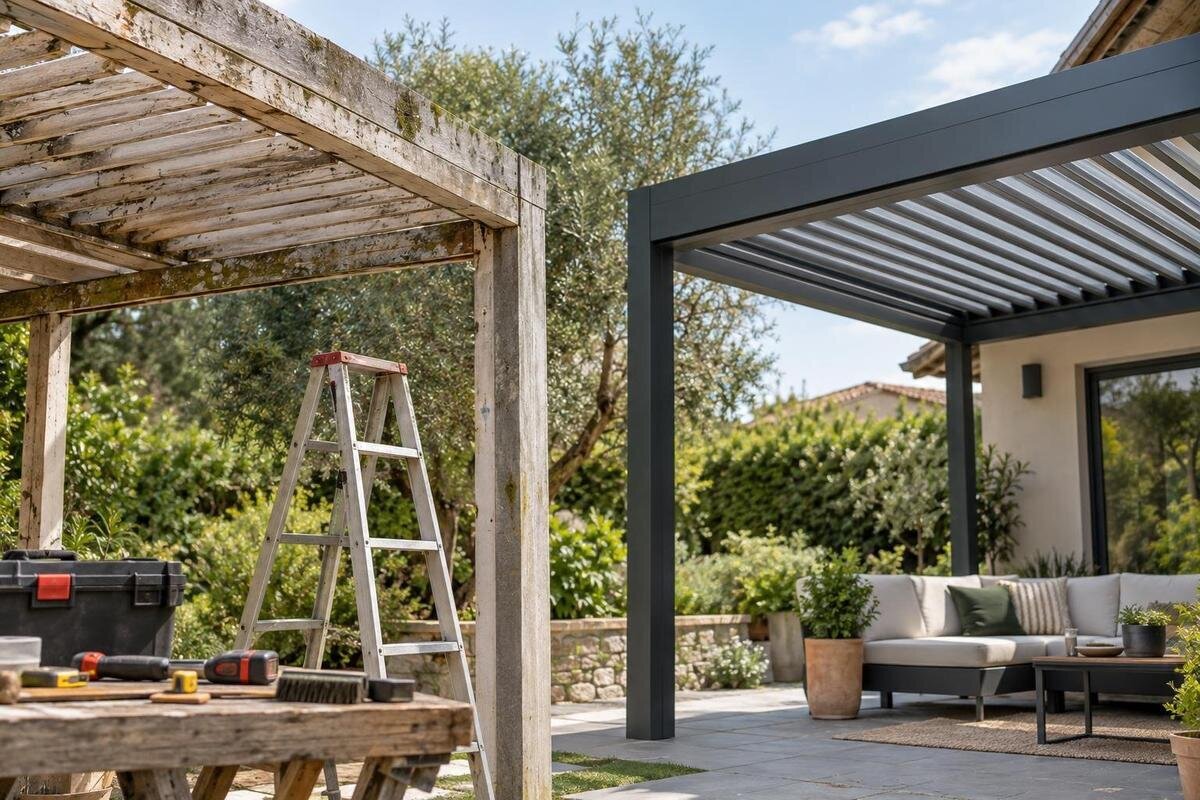
Pergola repairs and replacement
An older pergola can present anything from one identifiable component fault to a question about the whole structure. Age alone does not settle whether repair is practical. The useful evidence is its condition, pattern of failures, support for the exact parts, scope of work and whether it still suits the space. Use this checklist to prepare a clear service enquiry and compare like-for-like repair and replacement proposals. Do not investigate a structure that may be unstable or open powered equipment yourself; have the relevant assessment carried out by an appropriately qualified professional.
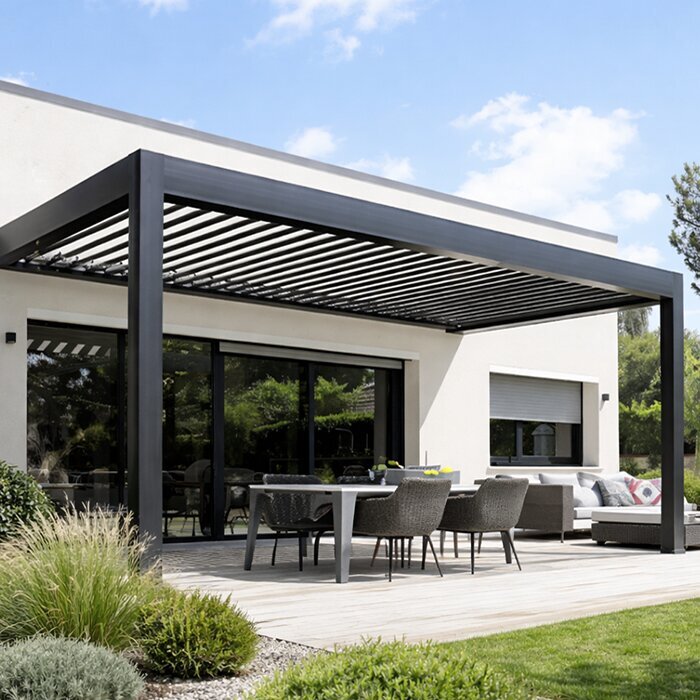
How age affects the repair decision
Age is one factor in the assessment, but it does not determine whether a pergola is worth repairing. The decision depends on its current condition, how many faults it has, whether they share a cause, whether the exact replacement parts are available and how extensive a safe repair would be. A long-serving structure with one identified component fault and confirmed parts may be a better repair candidate than a newer pergola with movement, several failures or uncertain connections. These observations need investigation; an appropriate professional needs to assess anything that could affect stability. Avoid applying a generic lifespan estimate to an individual pergola. Its service records, changes and previous work are more useful than age alone. Ask what the work would leave in place, not simply whether a repair can be done.
Write down the result you want as well as the problem: restore basic function, retain the existing layout, reduce repeat call-outs, or change the covered area. If replacement is in scope, name a specific product as the comparison rather than a vague “new pergola” allowance. The Bloomcabin Bioclimatic Pergola listing identifies one catalogue model, but it does not establish fit, compatibility with the old structure, or suitability for your site. Treat it as a replacement reference only. That makes the later comparison concrete without letting a product name or an older pergola’s age decide the repair question for you.
Record visible condition without dismantling anything
Make a dated record of what is visible before requesting a quote. Photograph the entire pergola from safe positions and note the location of the reported issue, nearby connections and any relevant label you can read without climbing or removing covers. Record when the change first appeared, whether it is constant or intermittent, and what happened just before it started. If an element moves or a control system is involved, describe what does and does not happen rather than trying to reproduce a fault repeatedly. Clear photos and a short factual description help a technician prepare for the visit; they also reduce the risk of a quote being based on a vague description.
Keep cosmetic observations separate from possible functional or structural changes. A faded finish, dirt or a surface mark is not the same observation as a post that appears to shift, a connection that has opened, a visibly distorted beam, a new leak or a moving element that binds. Do not label any of these as a confirmed failure from appearance alone: a photograph cannot establish what is behind a coating or why a connection has changed. Write down what you saw, where it is and whether it is getting worse. If you have an older photo from a similar angle, it may help show when a visible change began, but it will not identify the cause.
Rule out an unsafe situation before planning repairs
Use safety as a filter before deciding whether the job is small. If part of the structure appears loose, a connection has separated, movement is pronounced or an overhead component has changed unexpectedly, keep people clear of the affected area and stop using the pergola until it has been assessed. Do not climb on it, push or pull parts, load the structure or take it apart to test stability. A wide photograph from a safe position may help explain the concern, but getting a close-up is not worth entering an unsafe area. Arrange the appropriate professional inspection; do not turn a warning sign into a home load test.
Powered components need a separate boundary. If controls, a motor or wiring are implicated, describe the symptoms but do not open housings or attempt an electrical repair. Ask the service provider to clarify whether the assessment covers the structure, the powered component, or both, and who is qualified to carry out each part of the work. This matters because a quote for a mechanical component may not address an electrical fault, while a control fault may not explain movement in the frame. Repairs and wiring should follow qualified service requirements. Before work begins, clarify who will confirm that the relevant system is ready to return to use.
Check whether the fault keeps coming back
Repeated faults deserve more than another part swap. Keep a brief history of each occurrence, any earlier inspection, what was changed, who did the work and how long the improvement lasted. Note conditions you have genuinely observed—for example, whether a problem appeared after rain or during movement—without treating that pattern as proof of the cause. A service professional can use the history to decide whether the first repair addressed the underlying issue, whether another component is involved, or whether a broader assessment is needed. The time between occurrences can also be useful context. If the same symptom returns, ask what new evidence supports doing the same repair again.
When you discuss the fault, ask for the finding, likely cause and proposed remedy to be stated separately. If the cause remains uncertain, a diagnostic visit or condition report may be more useful than authorising a larger repair immediately. If you are browsing replacement options, keep that task separate: the Bioclimatic Pergola product page identifies a catalogue model; it cannot diagnose the old pergola or show that a similar-looking part will fit it. The repair proposal should explain work on the existing structure, while a replacement enquiry should describe a new product and the site it needs to suit.

Check parts availability and compatibility
Parts availability means more than finding an item that looks similar. Give the supplier the original model name, product code or serial number, purchase records if available, approximate installation or purchase date, and clear photos of the whole structure and affected part. A manual or technical drawing can help, but check that it applies to the correct model and version. On an older pergola, a name on an invoice may not identify every assembly or revision. If a record is missing, say so rather than guessing. Ask the manufacturer or appropriate service channel to confirm the exact part reference and its compatibility before a repair plan relies on it. Do not assume a generic fitting is interchangeable with a structural or moving component.
Clarify whether the part is available as an individual item, supplied only within a larger assembly, or proposed as an alternative; also ask whether further components might be required once the professional inspects it. Request the answer in writing where practical, including any limits on what has been confirmed. The Bloomcabin Wall-Mounted Pergola catalogue page names a current product model; it does not establish parts support for a different or older pergola. Treat a current product page and an older model’s parts information as separate evidence. If exact support cannot be confirmed, record that as an open point rather than listing a visually similar item as a solution.
Compare the full repair scope with replacement
Ask for a repair proposal that describes the whole scope, not just the visible component. It should separate diagnosis, parts, labour, access or removal needed to reach the fault, any associated work and what is expressly excluded. Ask whether the estimate assumes that no additional damage will be found and how any change in scope would be approved. For more than one fault, have each item identified so you can see whether the work is one coherent repair or several unrelated jobs. Ask what outcome will count as completion and whether any follow-up assessment is included. This is not a request for a guaranteed total before inspection; it is a way to understand what the quoted work actually resolves.
Compare that with a replacement proposal on the same basis. Include the proposed product, any site assessment, removal and disposal of the old structure, preparation or reinstatement, installation, access and any work needed around existing attachments or finishes. Not every quote will cover every item, so list exclusions and assumptions rather than adding unknown costs yourself. The Bloomcabin Pergola product page can identify a particular catalogue model to discuss, but a product listing is not a complete replacement project estimate. Use the same requirements for both options and compare what is included, what remains uncertain and what function each proposal restores.
Decide whether the existing layout still works
Consider whether a repaired pergola would still suit how the space is used. Note the area you need covered, where people sit or move, access through doors and paths, furniture that must remain clear, and any change in shade, drainage or household use that has prompted the review. A repair can restore a component yet leave the original layout problem untouched; that does not make it a bad repair, but it should be an intentional choice. Measure the area and existing clearances yourself from safe ground-level positions. Record the measurements as observations, not as a design approval or proof that any particular replacement will fit.
Catalogue dimensions can help frame the comparison, but they need to be checked against the exact proposed configuration and site. The Bioclimatic Pergola catalogue entry lists sizes from 9 to 24 m²; that range is not a site plan and does not confirm clearances, access or suitability for your layout. Note fixed constraints such as a narrow passage, existing paving, garden edges or a nearby opening, then have the proposed footprint and access reviewed before proceeding. If your needs have changed, compare the usable arrangement rather than simply replacing the old pergola with a nominally similar size.
Assess the support points and site
Treat attachments and the ground beneath the pergola as part of the decision, not as details that automatically carry over. A post base, footing, wall connection or nearby paving may look unchanged while its condition or suitability remains unverified. If a new structure is proposed, ask whether the existing support points have been assessed for that specific design, and who will confirm any required work. Mention any renovations or other changes made to the adjoining building since the pergola was installed. If the pergola connects to a building, a qualified professional should assess the actual wall and connection; a product name or old fixing pattern cannot confirm suitability.
The proposed product also needs to suit the site. The Wall-Mounted Pergola listing identifies a wall-mounted model, but does not establish whether your wall, current anchors or existing layout are suitable for it. Give the assessor the actual site photos and measurements, and flag drainage, access, nearby services and the condition of existing finishes. Ask which elements are being retained, which are being replaced and which are yet to be checked. This avoids treating visible old fixings as a ready-made installation plan and ensures the replacement enquiry covers the whole site rather than the product alone.

Separate an approved upgrade from a new product
An upgrade is not automatically a repair simply because it changes one feature. Before planning to keep the existing frame and add or substitute a component, ask the manufacturer or qualified service provider whether the change is approved for the exact model and version, what else must be assessed and whether the work affects other components. A generic part, control or accessory may look compatible without being confirmed for the existing pergola. If powered equipment or wiring is involved, leave diagnosis and work to appropriately qualified service personnel. Where approval or compatibility cannot be confirmed, compare a complete replacement proposal instead of assuming an upgrade is possible. Make clear whether the proposed work relies on retaining any unverified part of the structure.
A new catalogue model should not be presented as an upgrade kit. The Bloomcabin Pergola listing identifies a product, not evidence that an upgrade kit exists for an older pergola. Ask for the exact component description and written compatibility confirmation if the intention is to retain the old structure. Also clarify whether the work will restore the current arrangement or change it, and whether the parts that remain have been assessed. This distinction keeps the decision clear: a repair addresses a diagnosed fault; an approved upgrade has a confirmed scope; replacement means assessing a new structure and its site requirements.
Summarise the repair and replacement options
Bring the evidence together in three columns: repair supported, replacement supported, and unresolved. Under repair, list the diagnosed fault, confirmed parts, the repair scope and any remaining limitations. Under replacement, list why the old structure is not a practical repair candidate, the specific new product being considered, site checks and the complete work scope. Put unknowns—such as an unconfirmed part, an inaccessible connection or an unclear cause—in the third column. If the proposals differ in what they leave in place, record that too: each may address a different problem. Do not mark an unresolved safety issue as acceptable just because a repair estimate exists. If uncertainty remains, pause the decision rather than treating a guess as a quote.
For a useful enquiry, send the dated photos and fault history, provide the original product details, state the outcome you want, and request a written diagnosis and scope. If you are comparing a replacement, name the exact model page—such as Bloomcabin's wall-mounted model page—only as the product being considered, not as proof it suits the site. Ask the provider to identify assumptions, exclusions, parts status and any further assessment needed. You can then compare the proposed work on the same basis and see which option leaves fewer important questions unanswered. The checklist should make the reasons for your decision clear while keeping any unresolved matters visible.
Frequently asked questions
How old is too old to repair a pergola?
There is no age that, by itself, makes replacement the right choice. Consider the structure’s condition, the pattern of faults, whether the cause and compatible parts can be confirmed, and the full repair scope. A qualified assessment is important if stability is in question.
Can I tell from a photo whether a pergola is structurally damaged?
A photo can document visible changes and help a service provider prepare, but it cannot establish the cause or reveal what is concealed. Take pictures only from a safe position, describe what you have observed, and have possible movement or connection problems assessed by a qualified professional.
What details should I send when asking about a spare part?
Provide the original model name, product code or serial number, purchase records if available, and clear photos of the whole pergola and the affected component. Include the fault history and ask the supplier to confirm the exact part reference and compatibility before you rely on it.
Should I repair a fault that keeps coming back?
First ask what is causing the recurrence and what evidence supports repeating the same repair. A record of earlier work and when the fault returned can help. If the cause is still unclear, consider requesting a diagnostic assessment before authorising further work.
What should a replacement quote include?
Ask for the exact product being considered and a clear scope covering any site assessment, removal and disposal of the old structure, installation, access and associated site work. Check the assumptions, exclusions and unresolved questions so you can compare the proposal fairly with a repair estimate.
A sound decision comes from evidence about this pergola, not a general rule about its age. Record what has changed, have safety concerns assessed, confirm parts support and compare complete scopes for repair and replacement. If the cause, compatibility or site requirements remain uncertain, keep them visible in the comparison instead of assuming the work will be straightforward. That gives you a clear basis for choosing a targeted repair, an approved upgrade or a full replacement assessment.
