
What Solar-Powered Pergola Lights Can Realistically Do
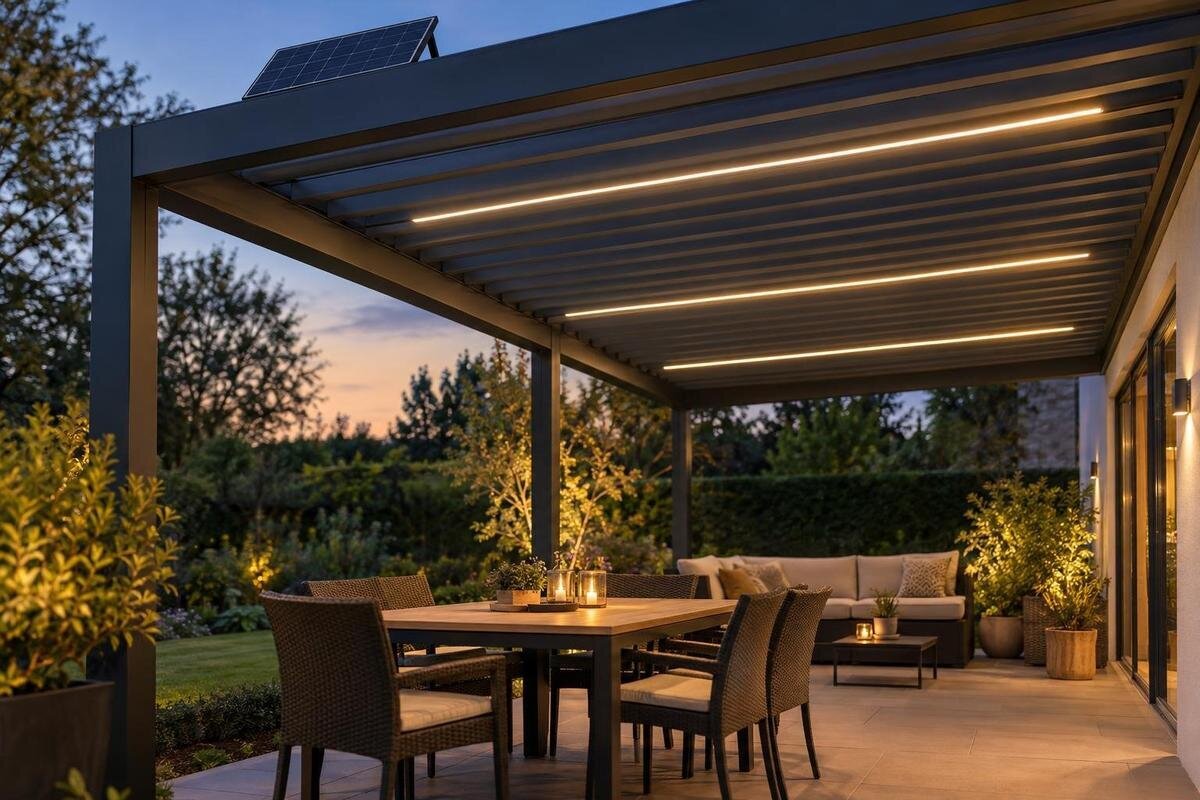
Pergola lighting guide
Solar-powered pergola lights can make an outdoor area more welcoming after sunset, but their useful contribution depends on how much daylight reaches the panel, how much energy the battery stores and what you need the light to do. They can suit gentle ambience, accents or simple route marking when the site and expectations align. They are less dependable for long, bright, whole-area lighting after a run of cloudy days. Assess seasonal charging and runtime against a defined task; do not treat a headline number of hours as proof of mains-equivalent performance. The central question is whether the light can serve the part of the pergola you care about, for the time you need it.

What do you need the lights to do?
Begin by naming the job, not the fixture. Ambient glow, seeing a step, eating at a table, reading and preparing food place different demands on a light. A decorative bulb may add atmosphere yet leave plates or the route from the house indistinct; a downward-facing lamp can brighten one surface while leaving the edges dark. Note who uses the area, where they sit or walk, and what they need to see. Decide whether the aim is atmosphere, useful visibility or both. That description is a more reliable starting point than choosing a light because its advertised runtime sounds long. It also gives you a practical way to assess specifications later.
Rank the jobs by importance. If you mainly want a soft background glow for occasional gatherings, modest output and some variation from night to night may be acceptable. If diners need to see food or someone needs to use a path after dark, define the area and the minimum useful visibility more carefully; decoration alone is not a substitute. A light that appears bright when viewed directly can still leave the table or ground poorly lit. For an important route or task, treat solar as supplementary unless its documented performance suits the conditions where you will use it. That keeps the decision tied to use rather than marketing language.
Read brightness and runtime together
A solar light uses a panel to collect energy from daylight and a battery to store it for use after dark. In practical terms, the useful charge collected during the day needs to cover the energy used by the light for the time you want it on. Shade, cloud, panel position, battery storage and the light's settings all affect that balance. A panel or battery label by itself does not tell you how much useful light the complete product will provide. Look for the output, operating modes and runtime information for the exact model, and check that the stated figures relate to the same mode.
Read any advertised runtime alongside the brightness at which it applies. A product may have different settings, or a longer quoted duration may relate to a lower-output mode. Check whether the manufacturer explains the test conditions, including the assumed charge and selected setting. A full-charge estimate is not a guarantee for every evening at your home, particularly after cloudy weather or in a shaded position. Battery capacity alone is not a useful way to compare how well two lights will perform. Give more weight to clear output and runtime information, and ask for clarification when a claim leaves its conditions unstated.
Seasonal daylight and winter charging
The daylight available to a panel changes over the year. Shorter winter days can leave fewer hours for charging, while cloud and nearby shade can further reduce what reaches the panel. A site that seems bright when you first install a light may be shaded at other times by a roof, eaves, trees or a neighbouring building. Plan for the least favourable part of the year when you expect to use the pergola regularly, rather than basing your choice on a run of clear summer days. The right assumption depends on your location and the actual conditions around the panel.
Check the proposed panel position at several points during the day, and consider the seasons in which you want the lights most. A single look at midday will not show whether an earlier or later shadow cuts across the panel. Keep a simple record of when the position is in sun or shade, including what casts the shadow. This helps you distinguish a location that only looks bright from one that receives sunlight during the available charging period. If the Bloomcabin Bioclimatic Pergola is one structure you are considering, use its listing to identify the pergola option, then assess daylight at your own site. The product name does not establish how much sun a panel will receive once the structure and its surroundings are taken into account.
Panel position and access
The lamp needs to be where its light is useful; the panel needs to be where it can collect daylight. Some products combine the panel and light, while others specify a separate panel and cable. Do not assume that a panel can be moved, that a cable can be extended or that a particular fixing method is approved: check the instructions for the exact product. A panel placed under a roof may be convenient for mounting but poorly positioned for charging. Also consider whether the panel will remain accessible for inspection and cleaning.
Sketch the pergola, the lamp locations and the likely panel position together. Note any roof, wall, post or nearby planting that could cast a shadow, and check the view from the panel location at different times of day. For a separate panel, mark the proposed cable route and compare it with the cable length specified for the light; a straight-line distance alone does not describe that route. Include access to the panel without assuming it can be moved whenever cleaning is needed. If you are considering a wall-mounted layout, the Bloomcabin Wall-Mounted Pergola page identifies a pergola option, but the actual panel position, cable route and fixing approval need separate confirmation. If the roof can change position or configuration, check the panel's exposure in the settings you expect to use.

Runtime for your evening routine
Turn a general claim about hours into a schedule. Estimate how long the light needs to run after sunset on an ordinary evening, then consider how often you will use it and whether you expect consecutive nights of use. A short dinner outside has a different requirement from an evening that continues late. Check whether the quoted runtime assumes continuous operation or a particular control setting. If a light has a sensor, timer or dimmer, confirm that the feature is included and understand how it changes the way the light operates.
Think about the area being lit as well as the number of hours. The Bloomcabin Pergola listing describes options from 9 to 24 m², which can help frame a layout discussion; that range does not specify a solar light's runtime, brightness or coverage. For the light itself, record the stated runtime at the mode you intend to use and compare it with your planned evening. If performance varies with charge, decide whether an earlier shut-off or reduced output would still meet the task, rather than assuming the best-case figure will be repeated each night.
Match the beam to the area being used
Total light output is only part of the picture. The beam shape, direction, mounting height and position affect where the light falls. A narrow beam can create a bright patch while leaving nearby seats in shadow; a broader spread may provide more general visibility but not concentrate light on a particular task. Check the manufacturer's information about output and distribution, and picture the actual table, chairs and walking route beneath the pergola. A single figure for lumens cannot tell you whether every important part of the space will be lit usefully.
Draw the furniture and route on a simple layout, then mark possible light positions and the surfaces that need to be seen. If a bioclimatic pergola option is on your shortlist, keep that lighting sketch alongside the selected configuration and confirm fixture positions against the relevant product information. A temporary light can help you judge shadows and glare after dark. Look from a seated position as well as while walking through the space, and check whether people at the table block light from reaching another seat or the route behind them. Use the exercise to identify where light is needed, rather than to predict the performance of a different fitting. It will not test a solar product's charging or runtime; assess those separately using the exact light specifications.
Manage glare, colour and controls
A light can have adequate stated output yet feel uncomfortable if the source shines directly into people's eyes. Check the fixture's shape, shielding or diffuser and whether its beam can be aimed away from seated sightlines. Colour appearance is another preference to consider: choose a tone that suits the setting, but do not expect colour alone to compensate for too little useful light. If possible, compare how the light looks from the table and from the approach to the pergola, not just from directly underneath the fitting.
Controls can change the experience as well as the energy used. Dimming may make soft ambient lighting more comfortable, while a motion sensor or timer may suit a space that is not occupied continuously; the exact functions depend on the product. Check which settings are available and whether runtime claims apply to them. Also consider how you will select a setting once the fitting is mounted. Ask whether your preferred mode is retained between uses or needs to be selected again, and whether the controls remain accessible in the intended position. When comparing a wall-mounted pergola model with your lighting layout, include control access alongside the lamp and panel positions. This makes the plan useful for everyday operation, rather than considering only how the lights will look when switched on.
Check weather exposure and mounting approval
A solar label does not, by itself, show whether every component is suitable for every outdoor position. Check the instructions and outdoor rating for the light, panel, battery housing and any connectors, and compare them with the exposure at your site. A sheltered position and a fully exposed one may present different conditions. Do not assume that a rating stated for one component applies to the whole assembly. Also read the care instructions so you know how the panel should be kept clear and whether any part needs particular attention over time.
Use only the mounting method approved for the light and the pergola. Drilling, fastening or hanging a component can affect the structure, so do not infer approval from the fact that a surface looks convenient. If you are comparing a Bloomcabin Pergola option, keep the exact model reference with your mounting question and request confirmation for the intended attachment. Where compatibility or the effect of a modification is unclear, ask the supplier or a qualified professional rather than guessing. If the light has a replaceable battery, check the manual and whether a suitable replacement is available.
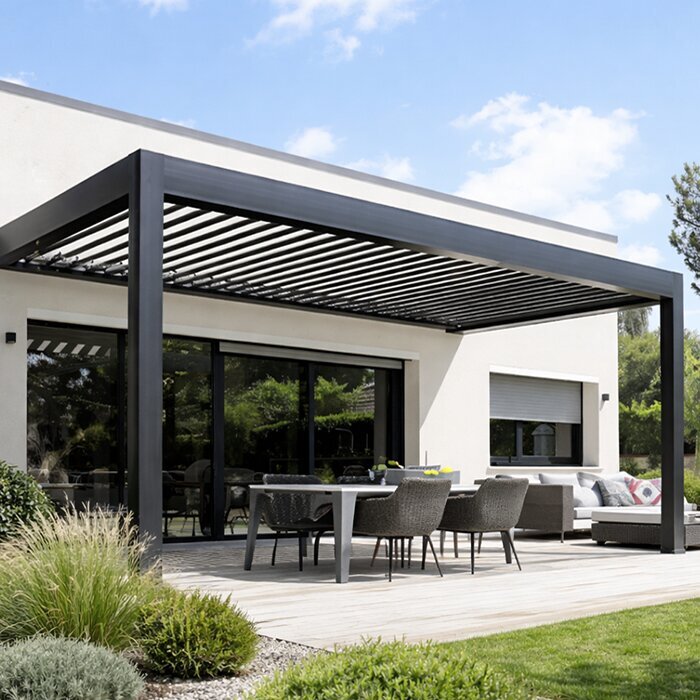
Know when solar should be supplementary
Solar is a sensible option when the task is modest, the panel can receive useful daylight and some variation in performance is acceptable. If you need bright, even lighting for a long evening, or need the same output after several cloudy days, compare that requirement honestly with the product's documented conditions. A decorative solar light can still add atmosphere as part of a broader plan, even if it is not the right source for a demanding task. The important distinction is between adding light and depending on it for a particular result every night.
For more predictable task lighting, consider whether a professionally planned mains-powered option or a verified combination of lighting types better fits the use. Solar accents and a separately planned source for the table, for example, can serve different purposes, but compatibility must be confirmed rather than assumed. If a bioclimatic pergola model is your structure choice, ask which exact lighting options, outdoor ratings and mounting details have been verified for that configuration. A pergola product listing alone does not establish that a particular light is included or approved.
Compare products against the same checklist
For each light you consider, note whether its panel is integrated or separate, where it can be positioned and what the manufacturer says about charging conditions. Record the output and beam information, the runtime at the setting you expect to use, and any controls that affect operation. Add the outdoor rating, approved mounting method and care requirements. Keep the model reference beside these details so you do not accidentally compare specifications from different versions. Leave missing information clearly marked as unknown, rather than filling the gap with a figure from a similar-looking light. Comparing the same details across products is more useful than comparing one model's best-case hours with another's brightness rating. If a listing gives a long runtime but does not say at what setting or under what conditions, treat that as an unanswered question.
Keep the pergola model and light model distinct in your notes. Saving the exact wall-mounted pergola option you are considering gives you a clear reference when checking the proposed layout and mounting details, but the light still needs its own documentation. Choose solar when the panel position, expected seasonal charge, useful output and runtime all fit the task. If any one of those falls short, reduce the role you expect solar to play or plan a verified alternative before buying.
Frequently asked questions
Can solar pergola lights stay on all night?
There is no reliable all-night promise without the exact product specifications and local conditions. Runtime depends on the charge collected, the selected brightness or mode, battery capacity and hours of darkness. Check the stated runtime at the setting you intend to use, and whether the claim assumes a full charge.
Will solar lights charge under a pergola roof?
A panel shaded by a roof may collect less daylight than one in an open, sunlit position. Some products allow the panel to sit separately from the lamp, but that depends on the exact model and its instructions. Confirm where the panel can go before choosing a fitting.
Are solar lights bright enough for outdoor dining?
They may provide useful ambient light, but a product's suitability for dining depends on its output, beam spread, position and the area to be lit. Check the specifications and consider the light at table height. Do not assume a decorative glow will make a table evenly visible.
Do solar pergola lights work through winter?
They can work in winter if the panel receives enough daylight, but shorter days, cloud and shade can reduce charging. Check the manufacturer's runtime conditions and plan around the months when you will use the pergola, rather than relying on a sunny summer-day result.
Can I attach a solar panel or light to a pergola?
Only use mounting methods approved for the specific light and pergola. Check the product instructions and obtain confirmation for the intended attachment before making changes to the structure. If approval or compatibility is unclear, ask the supplier or a qualified professional.
Solar-powered pergola lights are best judged by the task, the panel's exposure through the seasons and the stated runtime at the output you intend to use. In a well-exposed position, they can add useful ambience or accents when that is all the space needs. For sustained, brighter coverage or performance that must be predictable after dark, treat solar as supplementary unless the exact product information supports the job. Clear expectations make the choice simpler: match the light to the area and evening routine, and check the mounting and outdoor details before relying on it.
