
Buying a Used Pergola: Parts and Reinstallation Checks
Pergola buying guide
Buying a second-hand pergola can look straightforward when the frame is standing and the seller says the kit is complete. The real test comes when you compare the actual components with the original design and ask whether they can be reinstalled at your address. A missing bracket, altered post or unidentified controller can change the job substantially. Use these checks to establish what is included, what needs professional review and whether the purchase still makes sense after dismantling, transport and reassembly are considered.

Before you buy 1
Define exactly what is included in the sale
Ask the seller whether the sale covers an installed structure, a dismantled kit or a collection of loose parts; each involves different work for you. Write an inventory of every included item: posts, beams, roof panels or louvres, brackets, base plates, wall-mounting pieces, guttering, downpipes, screens, lighting, motors, remotes and spare hardware where present. Mark exclusions such as footings, electrical connections, removal or installation work. Ask what “complete” means and whether accessories visible in photos are included. When comparing the sale with a new Bloomcabin Pergola, compare the stated inclusions rather than assuming either offer covers everything needed for your project.
Write down who will disconnect equipment, dismantle, label, load, transport and remove the pergola, and who pays for each task. A structure still standing may not be sold with removal or reinstallation included, so make those arrangements explicit rather than relying on a verbal assumption. Ask the seller not to discard small hardware, brackets or manuals before you have checked the inventory. Agree what happens if parts listed as included are absent at collection, and set out access, timing and any condition that would change the sale. Clear terms make the advertised price easier to interpret.
Identify the make, model and configuration
Ask for original paperwork and readable manufacturer or model labels before deciding what the pergola is. Record the make, model, serial or batch number if present, drawing revision, order number, configuration code and purchase date where documented. Request the original invoice or order confirmation, installation manual, parts schedule and drawings. A seller’s estimate of age is useful context, not a substitute for traceable records. If a label is missing, do not identify the structure from colour or a photo alone; record the gap and ask the manufacturer or a pergola specialist whether the remaining details are enough to identify it. A listing such as the Bloomcabin Wall-Mounted Pergola may help clarify a model name, but visual similarity cannot confirm the identity of a used unit.
Compare the documents with what is actually installed or laid out for inspection. Check whether the roof type, mounting arrangement, frame layout and any listed accessories match the drawings; note differences rather than assuming they are factory options. Ask the seller who made changes and when, especially if pieces have been cut, replaced or moved. A drawing for a similar-looking model or a different revision may not describe the parts being sold. If the exact configuration remains uncertain, get written identification from the manufacturer or a qualified pergola professional before using the paperwork to plan a new installation.
Before you buy 2
Match every component to the original parts list
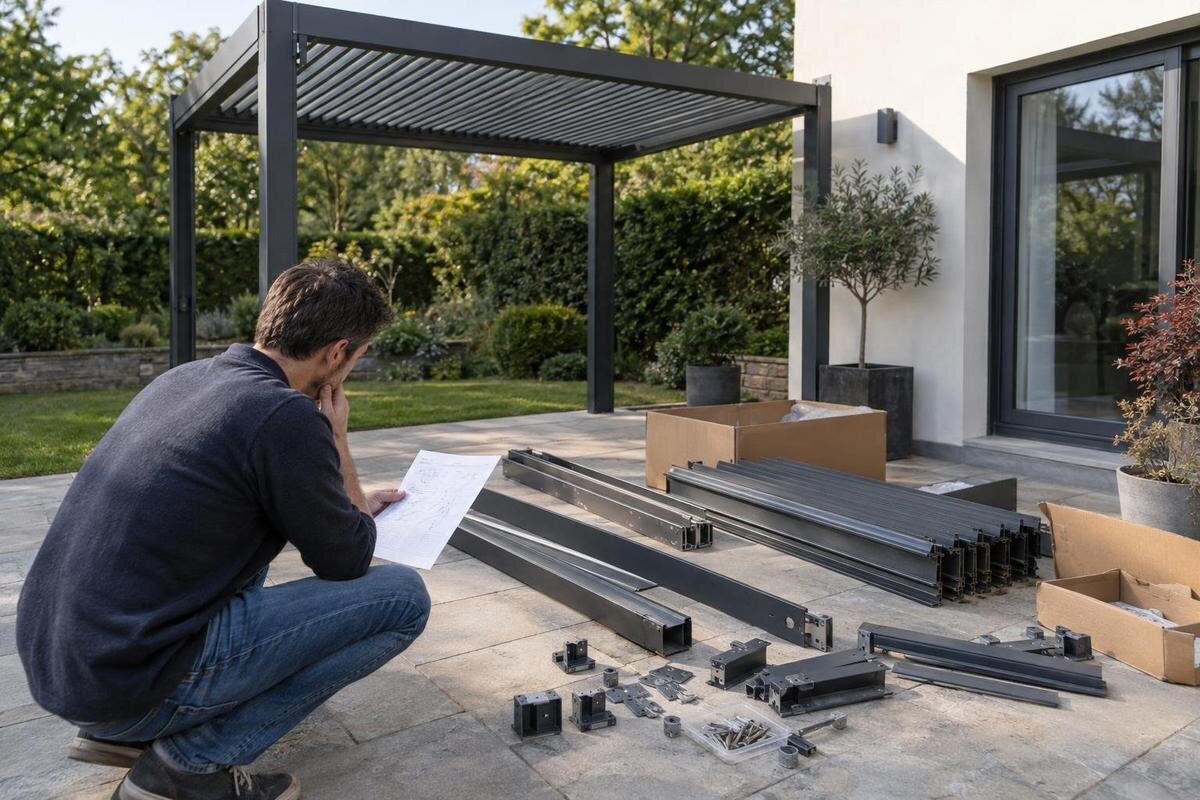
Use the parts schedule for the identified model and version as an inventory, not a general picture of what a pergola usually contains. Count each listed post, beam, roof member, bracket and trim piece, and compare the quantities with the drawing. Check paired or handed components carefully: two parts that look alike may have different positions or orientations. Record each item as present, missing or unverified, then photograph it beside its label or part number where possible. If the kit is still assembled, ask whether the seller can show the less visible connections before dismantling, without forcing or disturbing anything.
Small items can be easy to overlook and difficult to identify later. Count bolts, washers, caps, clips, plates, seals and other fittings against the schedule, and note whether any bags are labelled or mixed together. Do not assume generic hardware is an acceptable substitute just because it fits a hole; the correct specification needs to come from the manufacturer or a qualified professional. Check separately for items that may be supplied as accessories rather than frame components, such as controls, remotes, screens or drainage pieces. A written shortage list gives you a factual basis for asking about replacements before purchase.
Inspect the frame for damage and modifications
Look over each accessible post, beam, roof member, connection and base plate under good light. Note bends, twists, cracks, crushed edges, corrosion, coating loss, impact marks, water staining and holes that do not appear on the drawings. Surface scuffs and structural distortion are not the same issue, so photograph close-ups as well as a wider view showing where each mark is. Check whether connection faces appear square and whether paired pieces are consistent, without forcing parts together. A sound appearance does not establish capacity; if a piece is deformed, cracked or substantially corroded, pause and get a qualified professional’s view before treating the frame as reusable.
Ask about repairs, replacement components, new holes, cuts, welded areas, patches and repainting. A uniform finish can make earlier work harder to spot, so compare the seller’s account with available photos, receipts and drawings. Inspect accessible fixing areas for damage from removal or previous anchoring, but do not dismantle components simply to investigate a concern. If replacement seems preferable to salvaging the frame, use Bloomcabin’s regular pergola listing to explore a new-product alternative, then compare the proposed scope with the repairs and replacement parts the used structure needs. Keep unresolved structural changes separate from cosmetic marks when recording defects and deciding what requires professional advice.

Before you buy 3
Check roof movement, controls and drainage
Where the pergola has moving roof parts or powered controls, ask the seller to demonstrate normal operation using the manufacturer’s instructions, if it is safe to do so. Watch for parts that stick, scrape, sit unevenly or fail to respond consistently, and note missing remotes, switches or other control items. Do not force a jammed mechanism or power equipment with exposed or damaged wiring. Have a qualified electrician assess electrical components when needed. A brief demonstration is only a check of the unit at that moment; it does not show how it will operate after dismantling, transport and reassembly.
Inspect the drainage components that are included, such as gutters, outlets and downpipes, and compare them with the drawings. Look for cracks, dents, blockages or missing joins, and ask how the drainage route was arranged at the former site. Do not assume that its previous layout will work in the new location or that visible components make the pergola weatherproof. If you are also considering a new Bloomcabin Bioclimatic Pergola, list the roof, control and drainage details you need to compare. Check those details separately for each option rather than using a current product description to fill gaps in the used unit’s records.
Confirm support, manuals and warranty terms
Before you commit, ask the manufacturer or supplier whether the exact model and revision can still be identified and whether information is available for dismantling, replacement parts and reassembly. Send the model details, drawings and clear photos rather than asking a general question about a pergola. A supplier may need to verify the configuration before commenting, and an online product description is not a substitute for an answer about an older unit. If no one can confirm which parts belong together or how the system is intended to be reassembled, include that uncertainty in your decision rather than treating the kit as ready to use.
Check warranty documents separately from the seller’s assurances. Ask the warranty provider in writing whether coverage can transfer to a new owner and whether removal, relocation, age or previous repairs affect it; do not assume the answer. Keep the purchase record, original invoice and any written response with the kit documents. If you are weighing up a used wall-mounted structure against the current wall-mounted model, ask about support, spares and warranty terms for each purchase separately. Record what has been confirmed and what remains unanswered. If a mains-powered system is involved, confirm what work needs a qualified electrician and who will arrange it before collection.
Before you buy 4
Assess the new site independently
Measure the proposed location rather than relying on photos or dimensions copied from the seller’s listing. Compare the full footprint and height shown on the drawings with the space available, including room for posts, wall connections, doors, windows, eaves, gutters and access around the structure. Check the usable clearance where people will walk and where doors or other fittings need to move. Note changes in level, nearby services and the intended path for rainwater. A frame that fitted the former patio is not automatically a practical fit for yours, even if the headline dimensions appear similar.
Treat the ground and attachment points as a separate design question. An existing slab, footing or wall fixing may not suit the new site, and the seller’s old anchors should not be assumed reusable. Have a qualified building professional or structural engineer review the proposed base, wall substrate, local exposure and site conditions as appropriate. Share the original drawings and your measurements, and ask what information is still needed before anyone quotes for installation. If Bloomcabin’s wall-mounted pergola is another option you are considering, request the details needed to assess that model separately. Do not carry dimensions or fixing assumptions from one structure into the assessment of another.
Check local approvals and insurance
Do not assume that an approval, consent or assessment for the pergola at its former address applies to a different property. Before purchase, describe the proposed structure and location to the relevant local authority or a qualified building professional, and ask what process applies at that address. Requirements can depend on the property and project details, so avoid relying on a seller’s recollection or advice written for another site. Keep copies of any relevant drawings and written responses with your decision records. If the answer is unclear, resolve the question before arranging transport or committing to installation costs.
Check the insurance position for the property and the proposed work. Tell your insurer what is being moved and ask whether the structure, dismantling, transport or reinstallation affects cover; request confirmation in writing. If you rent, live in a strata property or share access and common areas, check with the relevant owner, property manager or owners corporation before planning work. These checks are specific to your property and policy, so a previous owner’s arrangements cannot settle them. Make sure everyone responsible for access, removal and installation is clear before agreeing dates or paying for a kit.

Before you buy 5
Calculate the full cost of relocation
Build a realistic cost list before comparing the asking price with a new pergola. Include any inspection or professional assessment, dismantling, labelling, loading, transport, storage, replacement parts, repairs, new site preparation and reinstallation. Add electrical work or other specialist services if the configuration requires them, and check whether waste removal or local approval costs apply. Ask each person providing a quote to state what is included and what is excluded; “installation” can mean different scopes. This does not predict the final cost, but it helps expose work that a low purchase price leaves out.
Compare the used option with a complete new-product quote for the same broad project scope, not just with a product-page headline. Ask for comparable drawings, inclusions and site work, and leave uncertain items marked as unknown until they have been checked. Use the current Bloomcabin Pergola listing to identify an alternative for a quote, rather than treating the listing itself as a total project price. If the used kit needs unidentified parts, structural repairs or extensive professional review, decide how much uncertainty you are prepared to accept. A clear comparison may show that the used option is worthwhile, or that the savings disappear once it is made suitable for the new site.
Record the sale and decide whether to proceed
Before payment or collection, keep a copy of the agreed inventory, model details, photographs, known defects, missing parts and any promised documents. Ask the seller for a receipt that identifies the items being sold, and write down the agreed arrangements for removal, access, transport and any unresolved condition. At collection, compare the parts with the inventory and note discrepancies before they are mixed into a load or stored without labels. Keep manuals, drawings, small fixings and control equipment together, and photograph the packed components so their condition and grouping remain clear.
Set clear conditions for proceeding: the unit can be identified, the important parts are accounted for, its condition has been assessed and a qualified person has considered the new site. If one of those points remains unresolved, pause rather than letting a deposit or collection booking turn uncertainty into a commitment. If you decide to explore a new bioclimatic pergola instead, carry your site measurements and required inclusions into that comparison so it addresses the same project. The choice should rest on the complete scope, not just the purchase price. A used pergola makes sense when its records and condition support the project, not merely because the frame looks complete in the seller’s yard.
Frequently asked questions
Can a pergola be reinstalled at a different address?
Sometimes, but the frame and its original fixings are not automatically suitable for a new site. Have the dimensions, mounting arrangement, base and site conditions reviewed by a qualified professional, and check any local approval or insurance questions for the new address.
How can I tell whether a used pergola kit is complete?
Compare the parts in front of you with the parts schedule for the exact model and version. Count small fixings and brackets as well as posts, roof components and drainage pieces. If the seller cannot provide a matching schedule, treat completeness as unverified.
Can I replace missing fixings with similar hardware?
Do not choose structural fixings by appearance alone. Ask the manufacturer for the correct part information or have a qualified professional assess an appropriate replacement. An apparently similar bolt or bracket does not establish that it is suitable for that connection.
Will the seller’s warranty or approval apply after I move the pergola?
Do not assume so. Ask the warranty provider in writing whether coverage can transfer and whether dismantling or relocation affects it. Separately check with the relevant local authority, property manager or building professional whether anything needs approval at the new site.
Is an already dismantled pergola a safer purchase?
Not necessarily. It may be easier to inspect individual pieces, but only if they are identifiable, counted and matched to the correct drawings. Look for labelled components, retained hardware and evidence of any damage during removal; an unlabelled pile can make reassembly harder.
The strongest reason to buy a used pergola is clear evidence: an identifiable model, a checked parts list, a record of its condition and a credible plan for the new site. If those pieces are missing, the risk is not limited to finding a replacement bolt; it can affect the design review, transport and installation as well. Compare the complete relocation job with a separate new-product quote, and proceed only when the parts and responsibilities are clear enough to make an informed decision.
