
ZIP Screens or Outdoor Curtains for a Pergola?
Pergola side-cover guide
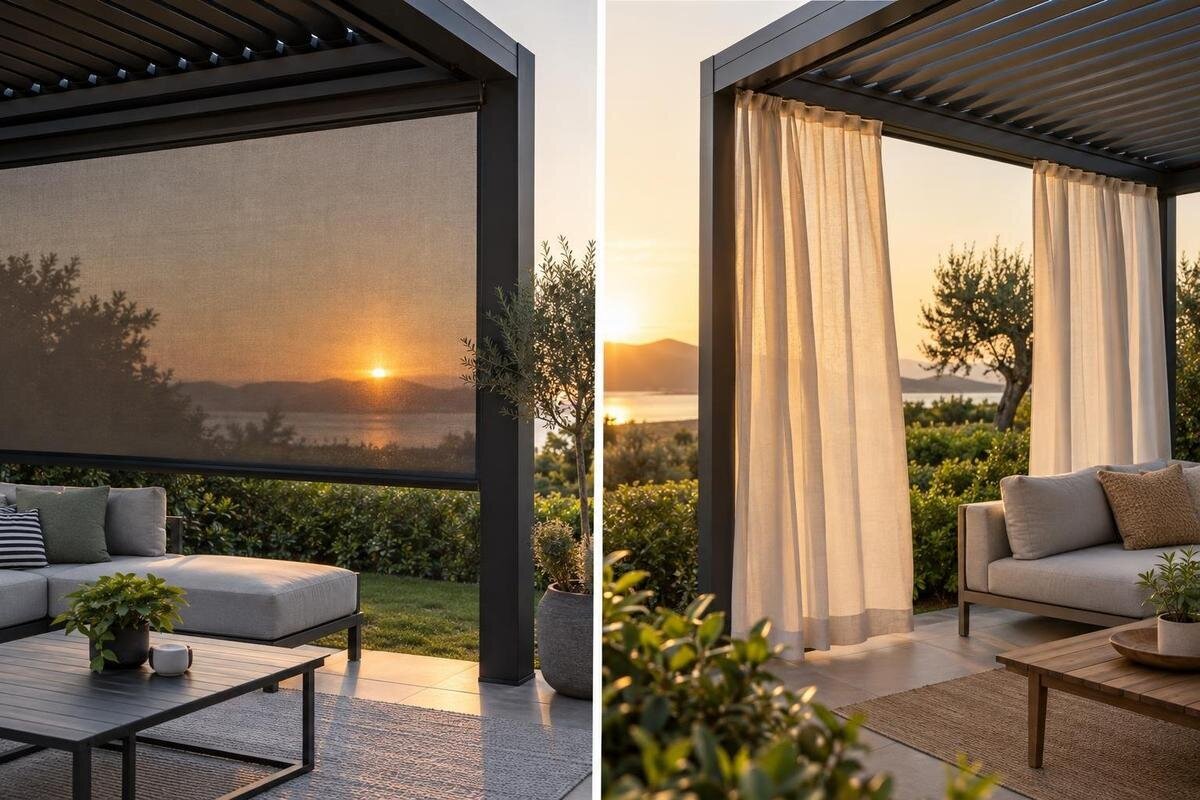
Choosing a side cover for a pergola? ZIP screens and outdoor curtains behave differently once they are open or deployed. A screen creates a guided fabric panel across an opening and retracts when opened; curtains gather at the sides, where the folds remain visible. Neither automatically provides privacy, airflow or wind protection. Compare the opening you want to cover, the fabric and its care, then confirm that the exact accessory is compatible with your pergola.
How ZIP screens differ from outdoor curtains
A ZIP screen is generally a fabric panel that moves between side guides and retracts when opened; its zipped edges are intended to keep it aligned in those guides. Hardware differs between systems, so the name alone does not tell you whether it is hand-operated or motorised, how it stores or which fabric is supplied. Outdoor curtains are panels suspended from a rod or track and drawn together or gathered to the sides. Their panel count, track and tie-backs also vary. Both are ways of treating a pergola opening, but neither is automatically a wall or a complete enclosure.
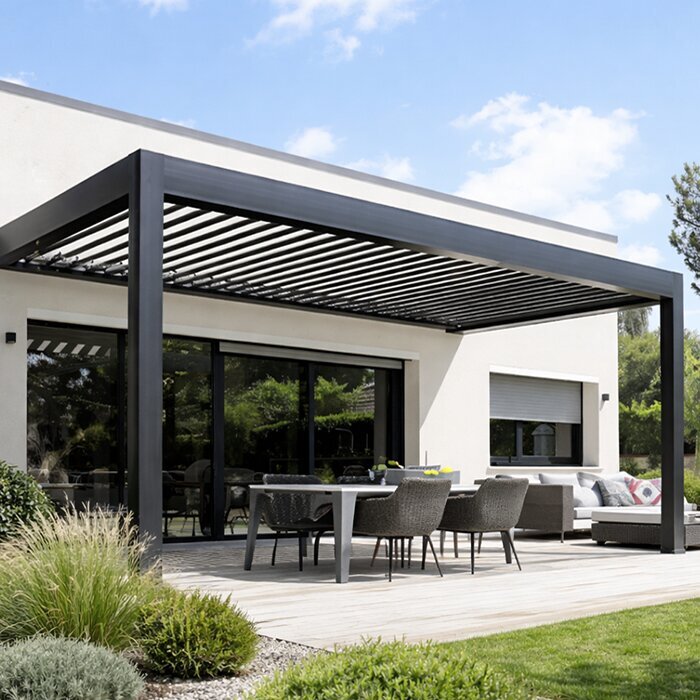
The difference is clearest in daily use: a lowered screen tends to form a flatter surface across a bay, while gathered curtains leave folds at the edges and may leave gaps where panels meet. When opened, a screen's fabric retracts, though its guides or housing may remain; curtains leave fabric gathered at the ends. Neither automatically provides a particular level of shade, privacy or weather protection. Keep the roof and side opening separate in your comparison. If your base structure is the Bloomcabin Bioclimatic Pergola, use its exact name in an accessory enquiry; the product listing does not establish that a screen or curtain is included.
Opening space and everyday operation
Picture the opening during normal use, not only when the fabric is down. A retractable screen can clear much of the bay when raised, although its guides and any housing remain; whether it can pause at intermediate heights depends on the mechanism. Curtains can be pulled aside without lifting a whole panel, which may suit a side people regularly pass through, but the gathered fabric occupies space at one or both ends. Some systems use tie-backs; others hang freely. Ask to see the control and movement rather than assuming every screen is motorised or every curtain slides smoothly. If a system is motorised, ask how it is operated and what happens if power is unavailable.
Include the fittings in your layout. Mark any nearby door swing, table, chair, barbecue or walking route, then allow room for a curtain stack and access to the controls. A screen's side guides can affect the clear opening, but the amount is specific to the proposed system and should be measured rather than guessed from a photo. With a wall-attached arrangement such as the Bloomcabin Wall-Mounted Pergola, include the wall-side opening in the clearance discussion. Wall-mounted describes the pergola format; it does not confirm how a particular accessory fits or where its fabric will sit.
Privacy depends on fabric and lighting
Privacy is a fabric choice as much as a system choice. Screen mesh can have different levels of openness; a more open weave generally allows more outward visibility and airflow than a more closed option, while its appearance from outside also depends on lighting and distance. Curtains range from sheer to dense textiles, but folds and joins between panels can leave sightlines through. Do not treat mesh as one-way glass. Ask for the fabric's stated openness or privacy information where available, and look at a sample against the actual background rather than relying on a colour name.
Check from the places that matter: a seat, a window, a neighbouring outdoor area and the approach to the opening. View a sample in daylight and after dark with the pergola lights on; bright interior lighting can change which side is easier to see from. Consider the top, bottom, corners and joins, not just the centre of the fabric. For an enquiry about the Bloomcabin Pergola, specify the exact accessory and ask for its fabric sample or written performance details. The model listing alone does not define the privacy provided by an add-on.
Side shade and the sun's angle
Side shading is most useful when placed where low-angle sun enters, rather than simply on every available side. Note when you use the pergola and which opening gets direct sun at those times; the sun's position shifts over the day and through the year. A sketch from the seating area can show whether glare crosses the table, reaches a screen or passes beneath the roof edge. Before choosing an add-on for the Bioclimatic pergola model, record the side and time of day you want to improve. That gives a supplier a more specific question than asking for shade in general.
A lowered screen can create a continuous area of side shade across the part it covers, subject to its height, fabric and fit. Curtains let you vary coverage by drawing panels partly together or gathering them away, but overlap and gaps affect the result. Neither will block sun entering through an uncovered side. A darker fabric is not automatically the best choice: it can change the outlook and the daylight passing through. Compare a sample at the pergola at the relevant time, then confirm the proposed accessory's coverage on the actual opening.
Airflow depends on openness and coverage
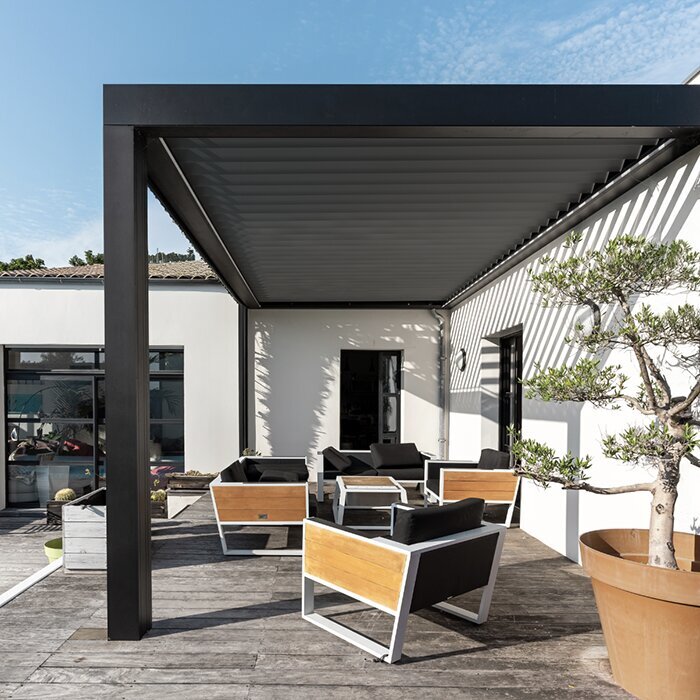
Airflow comes from both the fabric and the open area left around it. Mesh screens can pass some air, but the amount varies with their weave and openness; do not infer a ventilation figure from the word ZIP or a product photograph. Ask whether the accessory has published airflow or open-area information and what it refers to. A curtain panel drawn across an opening lets less air through than a fully clear gap, but fabric weight and weave vary too. A sheer appearance does not prove that a particular textile will provide enough breeze for your space.
Think about what is deployed at once. One panel on the side facing a breeze may feel different from several sides covered, and a partly open screen or curtain may still leave airflow paths at the corners. Sketch the usual positions and describe how you use the area; ask for guidance on the exact fabric and arrangement. For the wall-mounted pergola model, specify which bay is involved and whether the proposed screen or curtains will usually be open or closed. The listing identifies the base model, but supplies no airflow data for a side accessory.
Wind limits need to be documented
There is no universal wind limit for ZIP screens or outdoor curtains as categories. Any figure supplied is meaningful only for the stated system, dimensions, fixings, conditions and operating position. Ask whether guidance applies to the exact Bloomcabin Pergola model, the selected screen or curtain, the proposed bay, and whether the fabric is raised, lowered or partly deployed. A rating for a different awning, screen or pergola is not a substitute. Guided edges do not make a screen storm-proof, and a curtain's loose movement does not mean it can safely remain deployed in gusts.
Request the manufacturer's written operating instructions, including when the accessory should be opened, retracted or secured and what to do before leaving it unattended. If the documentation distinguishes gusts from steady wind, confirm that it addresses the conditions relevant to your site; do not invent a safe threshold when it does not. Side fittings interact with the pergola structure, so a qualified installer or supplier should confirm the proposed combination is supported. If the answer is only a general assurance or a photo of a similar installation, ask for model-specific documents before treating the accessory as suitable.
Cleaning and drying requirements
Screen fabric and side guides can collect dust, pollen or grit. Follow the accessory's own cleaning instructions: a suitable method for the fabric may not be suitable for its guides or seals, and forcing a stiff mechanism can make an obstruction worse. Curtains are easy to inspect across their full surface, but stain removal, washing and removal from the track depend on the textile and fittings. Check the care label or manual before using detergent, pressure or a washing machine. Ask whether fabric can be removed without dismantling the pergola and how the track should be cleared.
Sun and moisture can age outdoor fabrics, so request stated UV performance or service guidance if it matters to your choice; do not infer fade resistance from colour alone. When viewing the Bloomcabin Bioclimatic Pergola listing, ask which cleaning instructions apply to the specific approved screen or curtain rather than assuming the base-product page covers it. Find out whether wet material should dry before being rolled or gathered, and what parts or fabric can be replaced if damaged. A panel may not be removable, washable or individually repairable just because it is made of textile. Choose an option whose care fits your routine.
Check approved accessories and fit
Compatibility is more than matching width. Confirm the exact pergola model and variant, the opening measurements, the side to be covered and how the screen or curtain is supported. Check where posts, beams, brackets and existing fittings sit, and whether the proposed rails or track need a clear run. Ask for a drawing or written list of compatible configurations rather than relying on an assumed standard size. The Wall-Mounted Pergola listing identifies the base product; it does not by itself confirm any side accessory, its availability or its fit.
Distinguish an accessory approved for the pergola from a third-party product that happens to look suitable. Ask whether the exact item is currently offered for the model and available for your purchase location, and whether it is supplied separately; catalogue imagery may show styling rather than package contents. If a third-party system is proposed, get written confirmation about how it attaches, who is responsible for installation and how it affects support or warranty coverage. Have a qualified professional confirm structural or fixing questions. Record the model, opening, side and accessory together so an enquiry cannot be answered for a different setup.
Replacement parts and appearance when open
Think about serviceability over time, not only the look on day one. Ask whether screen fabric, guides or curtain panels are available as separate replacement parts for the exact system. This matters if a panel wears or a mechanism is damaged, but availability should be verified rather than inferred from the product category. Check whether routine cleaning requires access to a top housing or track, and whether the supplier's instructions describe a practical way to do that. Also ask what parts are covered by any applicable support or warranty terms instead of assuming that every component is treated alike.
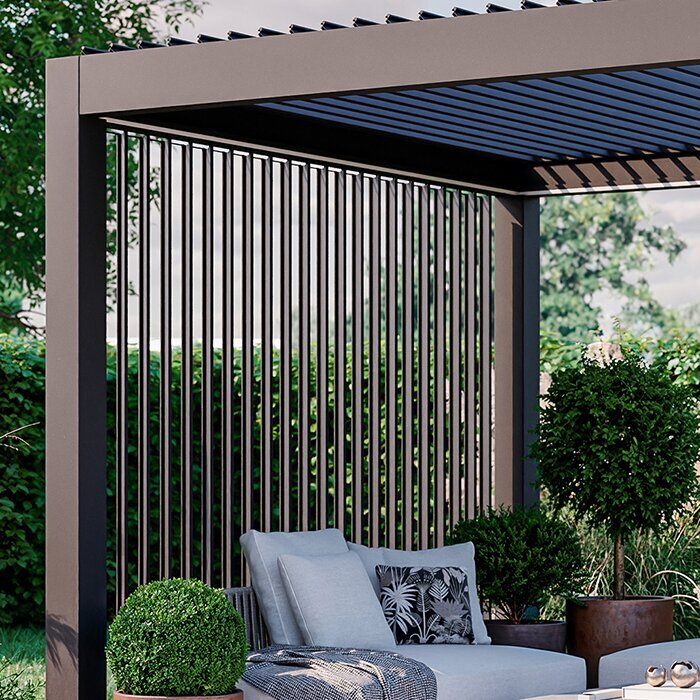
Appearance changes when the side is open too. A screen may leave a clear central opening with its guide lines still visible; curtains create folds and a fabric stack at the ends. Decide whether that stored appearance suits the pergola and whether folds or a housing will interfere with nearby lights, planting or furniture. If you want the view and breeze of a fully open bay for much of the year, ask how much fabric and hardware remains in sight when retracted. These everyday trade-offs are distinct from claims about privacy, shade or wind performance.
Compare both options in the actual opening
Make the comparison with one specific bay rather than two product descriptions. Measure the opening, note where people pass and where chairs sit, then mark the likely curtain stack and screen position on a sketch. At the hours you use the space, hold fabric samples in place and check the view from a seat as well as from outside. A temporary tape outline can help judge circulation and coverage, but it cannot demonstrate wind performance, privacy after dark or exact fit. Ask to see the installed mechanism or an accurate drawing if the operation remains unclear.
Rank the outcomes that matter most: a guided panel, curtains that are easy to draw aside, privacy, shade, breeze, cleaning or documented wind guidance. A ZIP screen may suit a preference for a flatter panel across the opening, while curtains may suit a softer appearance and a bay that is often left open; neither wins without the right fabric and approved arrangement. Keep availability, approval and compatibility separate: a product being sold does not confirm it suits your pergola. Get the accessory name, model confirmation, care instructions and wind guidance together before comparing options.
Frequently asked questions
Which option gives better privacy?
Neither option is automatically more private. Screen mesh varies in openness, while curtains range from sheer to dense; joins and gaps can also affect what people can see. Check a sample from both sides in daylight and after dark, with the pergola lights on, and ask for details about the exact fabric.
Can a ZIP screen stay down in windy weather?
Do not assume so. Wind guidance needs to apply to the specific screen, pergola, installation and deployed position. Ask the manufacturer or supplier for written operating instructions, including what to do in gusts. A ZIP-style guide does not, by itself, make a screen storm-proof.
Will outdoor curtains let more air through?
Curtains pulled aside leave a more open gap than a panel drawn across it, but fabric type and how much of the bay is covered matter. Screen mesh also varies in openness. Compare information for the actual fabrics and consider how many sides will usually be covered.
Can outdoor curtains go in the washing machine?
Only if the care instructions for that particular textile allow it. Some panels may not be removable, and washing methods vary. Check the care label or manual before using detergent, a machine or pressure cleaning; ask how the screen fabric and its guides should be cleaned as well.
Will either option fit an existing pergola?
That depends on the exact model, opening, mounting arrangement and accessory. Ask whether the proposed screen or curtain is approved for your pergola, whether it is currently available for that model, and what fit or installation details need professional confirmation. Do not rely on a similar-looking product or photo.
The practical distinction is between a guided panel and fabric that gathers at the sides. A ZIP screen may suit a preference for a flatter panel across the opening; curtains may suit a pergola where you want visible fabric folds and flexible coverage. But the label alone cannot tell you how much privacy, breeze or shade a particular fabric provides, or how it should be managed in wind. Base the choice on the way you use the space, and confirm the accessory, care instructions and documented operating guidance for your exact pergola.
