
Buying a Freestanding Pergola on Black Friday: Choose the Right Size
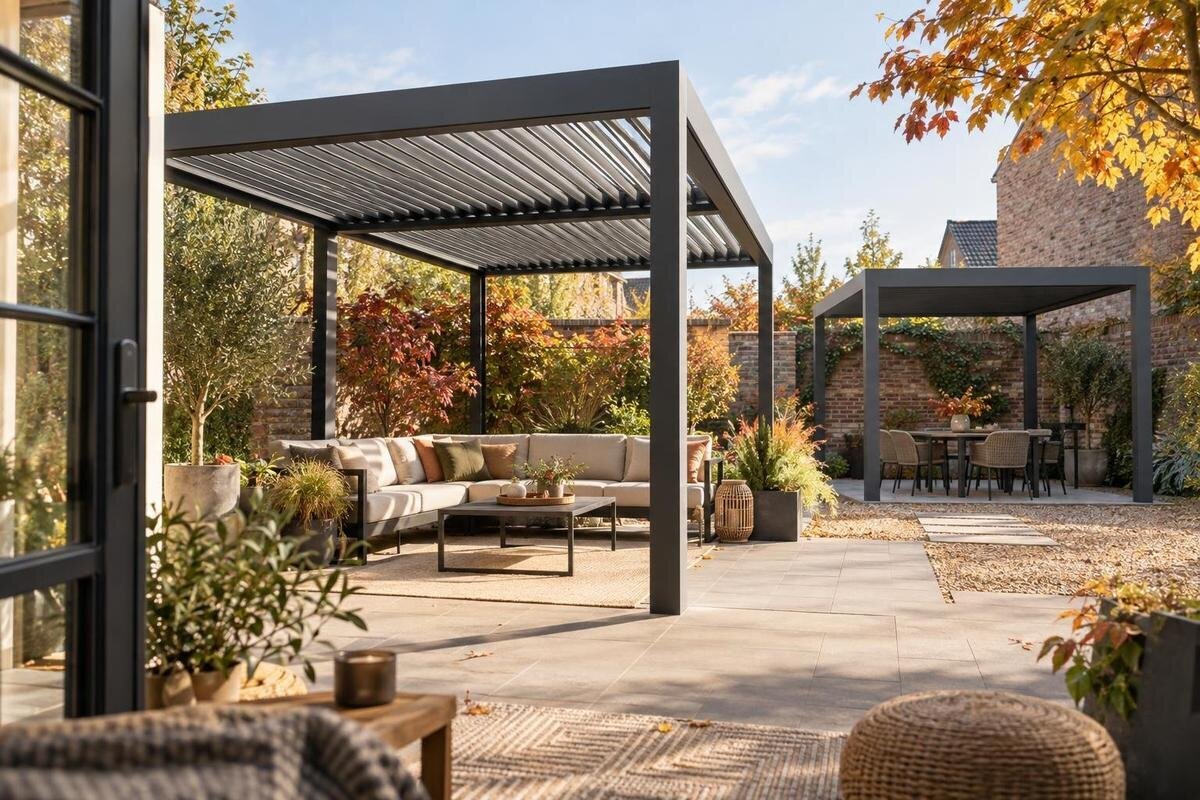
Pergola buying guide
Black Friday may make it easier to compare pergola listings, but a promotion does not show whether a freestanding structure will fit your yard. Measure the usable ground area first, then test the full footprint against furniture, walking routes and planned activities. Use the product's stated dimensions and verify any offer terms before ordering.

01
Measure the yard area you can actually use
A freestanding pergola needs a clear ground footprint; the whole yard's area is not the area available for it. Walk the intended part of the yard and note patio edges, fences, garden beds, trees, steps, doors, drains and other fixed obstacles. Measure open space in both directions where the structure could sit. If the area narrows or has a cut-out, record those changes rather than noting only its widest and longest points. The useful figure is the largest practical rectangle that fits without crossing obstacles, not a theoretical area based on the lot. Pay attention to the narrowest approach, since measurements taken only at the ends can hide a pinch point.
Make a rough plan with the open area's length and width, then add obstacles and routes that must stay usable. Mark the proposed corners on the ground with removable tape or string, and walk around the outline. Include gates, doors, storage access and seasonal items you might otherwise forget; a space used only at certain times of year still matters if it is part of your routine. A practical outline can reveal that a seemingly wide patio loses usable space near a step or garden bed. If the product type matches your plan, compare the mark-out with the stated dimensions on the Bloomcabin pergola listing. Use those measurements, not the apparent size of the photograph, to judge the fit.
Read the product dimensions carefully
Product dimensions are useful only when you know which points they describe. A width and depth may refer to the outer edges of the frame, the positions of the posts, an overhead edge or the clear opening inside it. Listings may use different labels, so look for a dimension drawing and identify the ground footprint separately from any roof or canopy extent. If only an overall measurement is given, do not assume that the usable area between posts is the same size. That difference can affect where furniture fits, even when the outside measurements appear to match your available space.
Record the stated width, depth and height, and note whether each number is outside-to-outside, centre-to-centre or internal. If a measurement point is unclear, seek clarification instead of estimating from a photo or converting an ambiguous number. Apply the same questions to every candidate, including the Bloomcabin bioclimatic pergola listing; its name does not establish its dimensions. If listings use different units, convert only after you know which edges each number measures, and keep the original figures in your notes for reference.
02
Test your furniture plan at full size
Start with the furniture you expect to keep under the pergola, not an idealized number of seats. Measure the table, chairs, sofa or loungers as they will actually be arranged. For dining, account for chairs pulled out so people can sit down and stand up; a tabletop's dimensions alone do not describe the space the set uses. Add side tables or a serving surface if they are part of the plan. For a lounge area, include the full length of each seat and room to reach it, rather than fitting only the furniture's outline. Note any pieces you move seasonally so they do not disappear from the plan.
Draw the furniture to scale on graph paper, or mark its outline on the patio with tape or chalk. Then add the chair positions when pulled back, along with the paths people will use to sit down, stand up or move between areas. This test can show whether a table technically fits but leaves no practical way to use it. Compare the layout with the measurements stated on the product page for Bloomcabin's pergola, if it is one of your candidates. The page's dimensions and your furniture plan answer different questions, so check that both fit rather than relying on either one alone.
Size the space for your main activity
Decide what you most want to do under the pergola before choosing its dimensions. A dining setup, a lounge arrangement and an open area for flexible use need different layouts. List the furniture or equipment that belongs to your main activity, then test that arrangement first. Planning around actual items is more useful than choosing by a guest count alone, because the number of seats does not describe the table, chair movement or room needed to get around them. Also decide whether the arrangement must work for everyday use, occasional hosting or both. A compact dining set may suit daily meals but become impractical when extra chairs are brought out, while a larger lounge layout can make a small gathering comfortable but leave little open floor space. Write down what must remain in place and what can be moved before comparing footprints.
If you want the area to serve more than one purpose, sketch each arrangement rather than assuming everything will fit at once. For example, test the dining layout and the lounge layout separately, and note what would need to move between them. If changing the furniture blocks a route or makes everyday use awkward, decide whether one activity should take priority or whether a larger footprint is practical. More covered space is not automatically better if it takes away the part of the yard you still want for other activities.

03
Keep walking routes around the pergola clear
Mark how people will reach the pergola from the house, a gate, steps, garden beds or another seating area. Include those routes in your yard plan before settling on the footprint. A structure that fits between two measurements may still interrupt the usual path across the patio or make a gate awkward to reach. Draw the direction of travel, not just the outline of furniture, and check that the route remains open when chairs are pulled out or people are gathered around a table.
With a freestanding structure, plan the routes you actually want around it rather than assuming a fence or building will form one side of the layout. If you are also considering a building-attached format, keep its measurements in a separate comparison: the wall-mounted pergola listing represents a different category, not a measurement template for a freestanding footprint. The yard area and circulation can be arranged differently for each type, so do not transfer one layout to the other without checking the specific product and site.
Match width and depth to the yard's shape
A width-and-depth pair can fit one way and fail when turned around. Compare the pergola's proportions with the usable part of the yard: a long, narrow patio may suit a different orientation from a more square area. On your sketch, try both orientations and note how each affects the furniture, access routes and the space left over. This helps you avoid focusing only on the largest dimension while overlooking a short side that will not fit beside a step, planting bed or other fixed feature.
Check how much usable yard remains outside the proposed footprint, too. A pergola may fit on paper yet leave an awkward strip that cannot serve the purpose you had in mind. Consider whether the longer side should run alongside the patio, toward the garden or in another direction that suits your established layout. For each orientation, compare like-for-like measurements from the product page, such as those for the bioclimatic pergola page if it is under consideration. Do not assume that turning a model around changes its stated footprint or resolves a clearance issue.
04
Check the ground and site constraints
A clear-looking area can still have details that affect where a structure can be placed. Note changes in level, slopes, paving joints, tree roots, drains and other features within the proposed footprint. Do not assume a pergola can sit across an obstacle or that the widest open space is a suitable location. Record these conditions on the same plan as your measurements so they are not overlooked during a product comparison. If you are unsure how the ground or an existing feature affects placement, ask a qualified local professional or installer to assess the site.
Black Friday timing may mean you are comparing products when part of the yard is hard to see. If snow, stored items or seasonal changes obscure the ground, use a recent measured plan only if you trust it; treat old or approximate dimensions as provisional. Recheck the intended location when it is visible, especially if patios, garden beds or routes have changed since the plan was made. A product's advertised dimensions cannot confirm that the proposed site is suitable, so keep the product comparison and the site assessment as separate checks.
Compare Black Friday listings on equal terms
A Black Friday label does not establish that a particular pergola is discounted, the right size or available with the items you expect. For each listing, check the exact model and dimensions, any stated offer conditions, what is included and the displayed price. Where shown, review delivery charges, taxes and the total at checkout, along with the retailer's stated return terms. Do not compare one item's headline amount with another item's total if the conditions or included items differ.
Make a short record of each candidate on the same day: product name, dimensions, listed price, any stated offer dates or conditions, and other costs shown before purchase. Check the page for the exact item rather than assuming terms apply to every pergola. If you are considering the Bloomcabin's bioclimatic pergola listing, use its own current details and verify its dimensions independently. A promotion is useful only if the model fits your plan; do not let an event label replace the sizing checks.

05
Use a simple sizing comparison
For each candidate, record the overall width and depth, the measurement points used, any stated interior space and the height if overhead clearance matters. Add the footprint that your yard can accommodate in each orientation, plus any fixed obstacles or routes that must remain open. Keep the original units beside any converted figures, and leave a field blank when a listing does not provide the information. A blank is a prompt to ask a question, not permission to estimate from a product photo or a model name. Note the direction of the proposed longer side as well. For a rectangular footprint, a width and depth that fit beside the house may not fit when rotated toward the garden. Record the remaining usable space on each side of the mark-out, particularly beside doors, gates and planting areas, so that a model is not judged only by whether its outer edges fit inside the available rectangle.
Compare the same measurements across candidates, and check that each one fits the dimensions of your marked-out plan. If the listing does not make clear where posts sit or what the width includes, ask for clarification before treating the model as a match. The Bloomcabin's pergola page can be one reference in your comparison, but use the details stated for the exact product rather than assuming information carries over from another listing. A consistent record makes differences easier to see without favouring a model simply because it appears larger or has a promotional label.
Confirm the exact model before you order
Before placing an order, mark the chosen footprint on the ground again and walk through the planned furniture arrangement. Check that the routes you identified still work and that the layout does not rely on moving a fixed obstacle. If access to the yard is narrow, ask about the dimensions of the delivered packages and how delivery is handled; do not assume the product's assembled dimensions tell you whether it can reach the site. Confirm any details that matter to your purchase before relying on the listing.
Check that the order identifies the product type and exact model you measured, as well as the selected dimensions and any stated offer conditions. If your plan specifically calls for a freestanding pergola, do not treat the Bloomcabin wall-mounted pergola page as the same configuration; keep it as a separate alternative. Review the order record for the displayed total, included items, delivery details and return terms. If the product dimensions or footprint remain unclear, resolve that before committing rather than relying on the Black Friday page or photograph.
Frequently asked questions
How do I measure the space for a freestanding pergola?
Measure the open ground where the structure could sit in both directions, and note obstacles or areas that need to stay accessible. Mark the proposed footprint on the ground, then check that it fits alongside the furniture and walking routes you plan to keep.
How much clearance should I leave around a pergola?
There is no single clearance figure that suits every yard and layout. Identify the paths, doors and gates that need to remain usable, and include those routes in your plan. Check the product's instructions and ask a qualified local professional if site or installation requirements are unclear.
Should I compare overall size or interior space?
Compare both measurements when they are available. Overall width and depth help establish whether the structure fits the yard; the clear space inside helps you assess your furniture plan. Check how each listing defines its measurements rather than treating the terms as interchangeable.
Can I estimate a pergola's dimensions from a product photo?
No. A photo does not provide a reliable scale or show precisely where the posts sit. Use stated dimensions or a dimension drawing, then compare them with a full-size mark-out on the ground. Ask for clarification if the measurement points are unclear.
Does Black Friday guarantee the best price for a suitable size?
The event name alone does not confirm a saving or particular offer terms. Check the conditions for the exact model, compare the displayed total and included items, and keep fit as the deciding requirement. A lower price cannot make an unsuitable footprint work in your yard.
Good sizing is less about filling the largest possible area than finding a footprint that fits the yard and the way you use it. Measure the available zone, test your furniture and routes at full size, and keep each product's dimension definitions with your notes. During Black Friday comparisons, judge every exact listing against that plan and verify any stated terms. A clear fit is more useful than a promotion attached to a model that does not work in your space.
