
How to Choose a Pergola for a Hot Tub Area
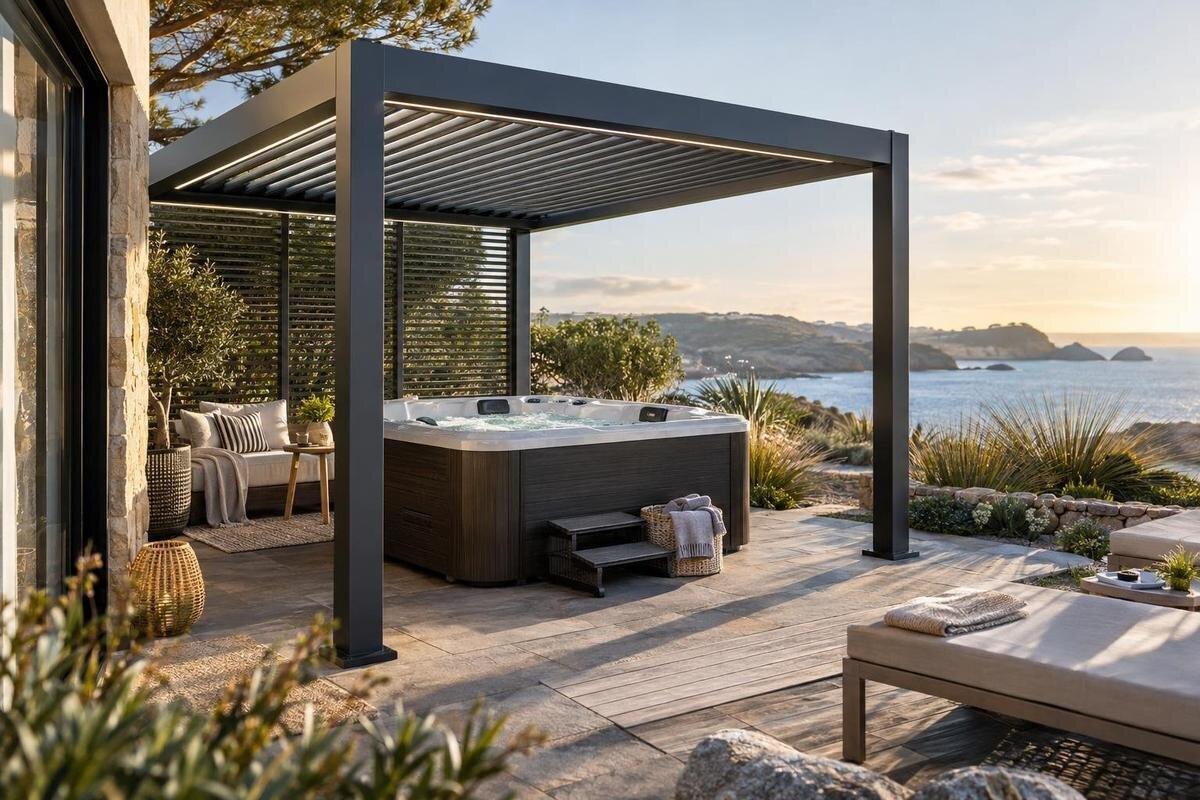
Pergola buying guide
Choosing a pergola for a hot tub starts with the space the tub needs in use, not its outer footprint alone. Steps, cover movement, equipment access, privacy and the people moving around it all affect where posts and roof edges can go. Before you buy a pergola for a hot tub area, sketch the full setup and compare the structure’s documented dimensions, mounting requirements and weather guidance. This guide focuses on those purchase decisions without assuming a product name or image tells you what a pergola can do.

01
Measure the whole hot tub area
Start with the hot tub model’s full outside dimensions, not the water surface or a rounded estimate. Add any steps, handrail or access door that projects beyond the shell, then note the clearances specified by the tub manufacturer. If you have not chosen a tub yet, use the dimensions of each shortlisted model and keep the pergola decision provisional; a small change in the tub’s size can affect where posts and paths will fit. Mark the service side on your plan, too. It needs a practical route for inspection or repair, rather than a post or fixed furniture placed in front of it. Include any surrounding pad, deck edge, retaining wall or grade change that limits where a post can sit. Measuring the usable area rather than only the tub footprint makes it easier to see whether the intended location remains comfortable.
Draw the pergola’s posts and roof projection on the same plan as the tub. Include the space needed to walk around it, open gates or doors, and place any furniture you actually expect to use. Check that the roof edge and posts do not interfere with access to the tub or its cover. A Bloomcabin pergola listing can be one page to compare; use any dimensions it publishes against your drawing, and seek clarification if a measurement you need is missing. Do not assume the product name or an image tells you how much room the structure occupies.
Keep entry and service routes clear
Plan the route people will use from the house or yard to the hot tub, including the space needed to reach its steps and get in and out. Think about where towels or a robe will be kept and whether furniture, planters or a screen could narrow the approach. These details matter after the pergola is built: an attractive layout can become awkward if a post sits in the natural walking line or a chair has to be moved every time the tub is used.
Check the hot tub manual for access requirements around its panels and equipment. Leave enough room for the service person to reach those areas without dismantling a screen or shifting a fixed feature. If you are planning a bench or storage nearby, mark its full footprint on the sketch rather than adding it after the pergola is chosen. A clear service route is a different need from everyday circulation, so account for both before deciding where the structure and furniture will sit. Consider the route used to bring supplies or replacement equipment to the tub as well. A path that works for a person in daily use may still be too constrained for occasional servicing.
02
Allow for the hot tub cover
A cover can need considerable room to move, depending on its design. If your tub has a folding cover, cover lifter or removable panels, check how that equipment operates and where the cover goes when open. Measure the height and width of its movement against the pergola posts and beams. The hot tub maker’s instructions are the reference for clearances; do not rely on a rough estimate or assume a cover will fit because the tub itself sits beneath the roof.
Decide where the cover will rest during use and whether that position blocks a path, equipment panel or seat. If the cover opens to one side, make sure the planned layout leaves that side free; if it uses a lifter, verify the space it needs before fixing the pergola position. When choosing a tub and pergola together, keep both sets of dimensions in view. The product details for this pergola are useful to compare only alongside your hot tub’s cover instructions and the structure’s published measurements. Check the cover in its fully open position, rather than measuring only its closed outline. This is especially important where a roof beam, privacy screen or nearby wall could restrict the movement above or behind the tub.
Compare roof styles and their actual function
Pergola roofs can be open, fixed or adjustable, depending on the design. Those options change how much open sky and direct light the area receives, but they do not all provide the same shelter. Decide what matters most while using the tub: shade at certain times of day, an open view overhead, or a more covered feel. A bioclimatic pergola listing may be worth comparing, but that label alone does not confirm how its roof operates, whether it adjusts, or what weather protection it provides. Look for those details in the product documentation.
Consider how the roof will affect the setting from the tub and the yard. Check where the sun falls during the hours you expect to use the area, and whether beams or roof panels would interrupt a view you want to keep. Consider the view from inside the house as well, particularly if the pergola will be a prominent part of the patio or deck. If the roof has moving parts, find out what the manufacturer says about operation and care before making it central to your decision. Avoid treating a roof style as a guarantee of shade, privacy or rain protection; those outcomes depend on the specific design and its documented features.

03
Choose a position that suits the yard
Look at the proposed location from the hot tub, the house and the rest of the yard. Consider privacy, nearby windows, the view while seated and how much sun or wind reaches the spot. A short walk through the area at the times you are most likely to use it can reveal sightlines or obstacles that are easy to miss on a plan. Notice changes across the day and season, such as shade from mature trees or a neighbouring building. Also check whether the proposed footprint leaves enough room for the route to the tub and for any maintenance access you have already marked. This observation helps separate a location that looks appealing at one moment from one that suits regular use.
Decide whether an attached or freestanding structure suits the site, without assuming either is automatically easier to install. If you are considering a wall-mounted design, include a wall-mounted pergola option in your comparison and check its stated mounting requirements. A qualified installer can assess whether the particular wall and location are suitable. For a freestanding structure, ask what site preparation and support requirements apply. In either case, keep posts away from planned access routes and confirm that the position works with the hot tub’s instructions.
Balance privacy with an open layout
Think about privacy from the tub, not only from the yard entrance. Nearby homes, windows, fences and trees may affect what you can see and what others can see from their usual vantage points. A screen, curtain or planting can change those sightlines, but a screen on one side will not necessarily make the whole area private. Consider how much visibility changes when people are seated in the tub, standing on its steps or walking to and from the house. Sketch where screening might go, then check that it does not obstruct access to the tub or make the space feel more enclosed than you want.
Confirm whether screens or other accessories are included, optional or not part of the product before comparing costs and layouts. An image does not establish what arrives with the order. Read the pergola’s product page for stated inclusions and check any separate accessory details against the structure’s dimensions. Leave room for the hot tub cover, service panels and normal movement even if a screen is added later. This helps keep privacy features from turning a useful route into an obstacle.
04
Check materials and maintenance near spa water
Compare the stated material and finish, then consider how much upkeep you are prepared to do. Different materials have different care requirements: wood may need periodic surface maintenance, while a metal structure depends on the suitability and care of its finish. These are general considerations, not guarantees about a particular product. Think about how easily you can reach roof members, posts and any joints for the recommended cleaning or inspection. Ask what the product is made from, how the manufacturer recommends maintaining it and whether replacement parts or finish-care instructions are available. A realistic care routine is more useful than choosing a material based solely on how it looks when new.
A hot tub area can expose nearby surfaces to moisture and splashes, so check the manufacturer’s guidance for the actual material and finish rather than guessing. Ask whether the care instructions address the conditions around a spa and whether any cleaning products should be avoided. The Bloomcabin bioclimatic pergola page is a product to assess, but its category name does not identify its materials or maintenance needs. Use the details provided for the particular listing, and get clarification if an important point is not stated.
Verify weather limits and water runoff
If your yard is exposed to snow, wind, rain or ice, look for the pergola’s documented limits and follow the manufacturer’s instructions. Do not assume that a pergola roof is designed to carry local snow or to act as a fully weatherproof cover. The listing labelled bioclimatic pergola does not, by its name alone, establish a snow or wind rating. If the documentation does not answer a question that matters for your site, ask the supplier or manufacturer and consult a qualified local professional before committing to the layout.
Consider where water could go if the roof design directs runoff, and whether that route could make steps or the main approach wet. Look at the surrounding surface and its existing drainage pattern so that water is not directed toward a route you need to keep usable. Check whether drainage components are specified or need separate planning; do not infer that they are included from a product photo. Ask about seasonal care and any instructions for roof operation during adverse weather. These answers help you compare products on the conditions they document, rather than assuming that one roof style will behave the same way as another.

05
Coordinate the pergola with the hot tub installation
If the hot tub is already installed, mark its controls, equipment panels and any utility access on the plan before locating pergola posts. If you are buying both at once, coordinate the proposed positions with the instructions for each product. The pergola should not block access or create a conflict with planned services. Have qualified trades review questions about electrical work or other site services; a pergola buying guide is not a substitute for their assessment or the hot tub manufacturer’s installation information.
Ask what preparation, mounting and professional work a pergola order requires, and who is responsible for each part. For a wall-mounted model, the wall-mounted pergola page identifies a mounting style, not whether your wall is suitable; a qualified installer must assess the actual site and product requirements. For a freestanding model, ask what base or ground preparation is specified. Check with the appropriate local authority or professional about any approvals that may apply to your project, without assuming the same requirements for every location.
Compare product details before you order
When you have a shortlist, compare the details that affect fit: overall footprint, height, post positions, roof projection, mounting style, materials and any documented weather limits. Check which measurements are provided and whether they answer your questions about the tub cover and service route. Also read the roof-operation and care information rather than relying on a brief category name. If a critical measurement or feature is missing, get clarification before treating the product as a match for your plan.
Before placing an order, confirm what is included, whether any screen or other accessory is separate, and what assembly or professional work may be needed. Read the seller’s delivery, return, warranty and service terms, and consider whether the chosen location offers a practical route for getting the components into the yard. Keep the answers with your sketch so you can check the final layout against the same requirements. This turns a broad comparison into a clear purchase decision without relying on details that have not been stated.
Frequently asked questions
What size pergola do I need for a hot tub?
Measure the tub’s full exterior footprint and include its steps, cover movement, access route and the clearances specified by the tub manufacturer. Then add the pergola’s posts and roof projection to your plan. The right size depends on how those areas fit together, not on the tub dimensions alone.
Can I put a pergola directly over a hot tub?
That depends on the pergola’s documented dimensions, roof design and weather limits, as well as the hot tub’s clearance requirements. Don’t assume a pergola roof is designed to carry snow or provide full weather protection. Check both manufacturers’ guidance and consult a qualified professional if the site or structure raises questions.
Is a wall-mounted pergola a good choice for a hot tub area?
It can be an option if the location and wall are suitable for the product’s stated mounting requirements. Check for conflicts with doors, windows, gutters and hot tub access, and have a qualified installer assess the wall. The product label alone cannot confirm that a particular wall is appropriate.
Which pergola roof style is best for a hot tub?
Choose based on the light, open-sky view and shelter you want, then verify what the specific roof can do. Open, fixed and adjustable designs differ, but a term such as bioclimatic does not confirm how a roof operates or how it performs in local weather. Look for product documentation.
What should I check before ordering?
Compare the overall dimensions, height, post locations, roof projection, mounting requirements, materials, maintenance guidance and documented weather limits. Confirm what is included, what needs separate purchase, and the delivery, assembly, warranty and service terms. Ask for clarification wherever a detail that affects your layout is missing.
A pergola for a hot tub should fit the way the area works: people need to reach the tub, the cover must have room to move, and service access cannot be an afterthought. Once those practical limits are on your plan, compare roof style, privacy, material care, mounting and documented weather performance. The strongest choice is the one whose stated requirements match the site and the hot tub’s instructions, with no important measurement or installation question left to assumption.
