
Buying a 44 mm wooden garden shed: what the wall thickness means
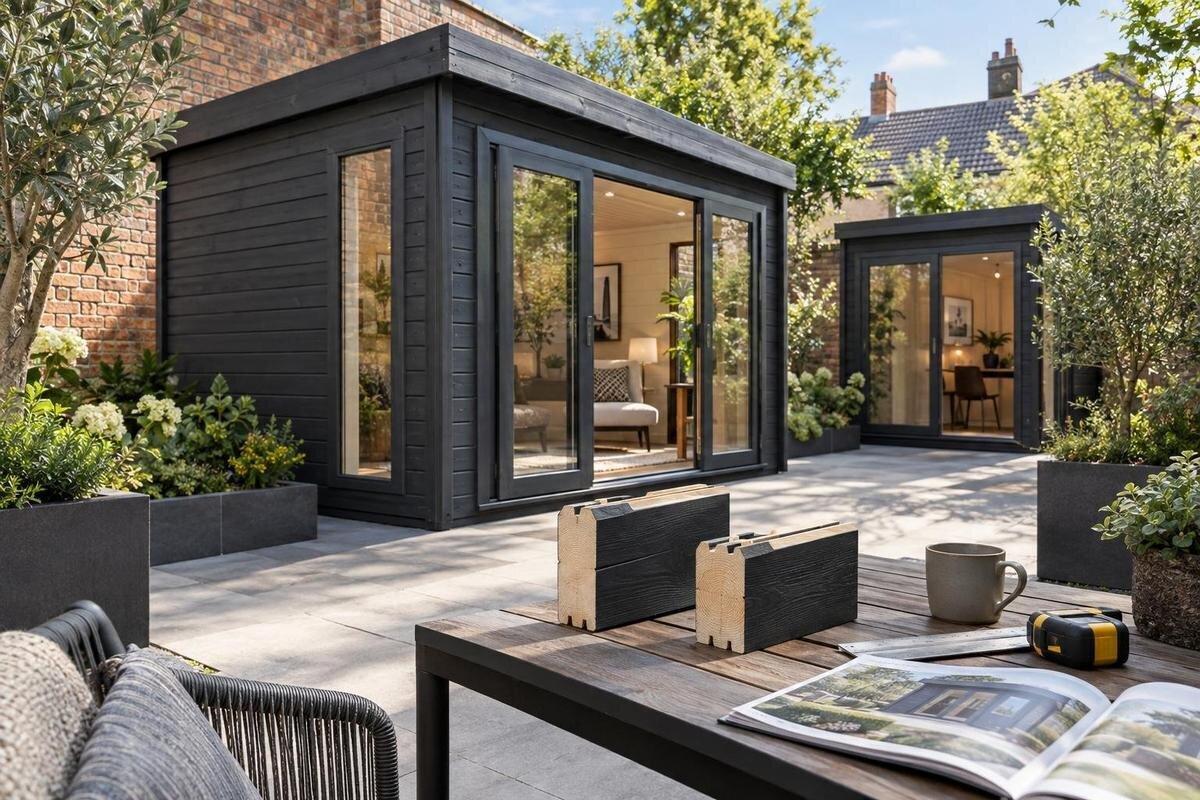
Garden shed buying guide
At first glance, 44 mm can look like a complete answer to whether a wooden garden shed will suit your yard. It is only one measurement. On most listings, it refers to the nominal thickness of the timber wall elements, but the seller’s definition and the rest of the construction matter. The figure does not tell you the interior dimensions, what comes in the kit or how the building will perform in your chosen setting. Use it as a starting point for checking the specification, then compare the full shed, site requirements and ordering terms before committing to a 44 mm garden shed.
01
What a 44 mm wall thickness refers to
On a listing for a wooden garden shed, “44 mm wall thickness” usually refers to the nominal thickness of the timber making up the wall, rather than the complete building envelope. Treat it as a dimension to verify, not a performance rating. In everyday units, 44 mm is 4.4 cm, or about 1.73 inches—just under 1¾ inches. The conversion helps if a plan or yard measurement uses imperial units, but compare dimensions in the same units before you order. This figure should not be confused with the shed’s outside width, floor area or clear interior space. Those are separate measurements that should appear elsewhere in a useful specification.
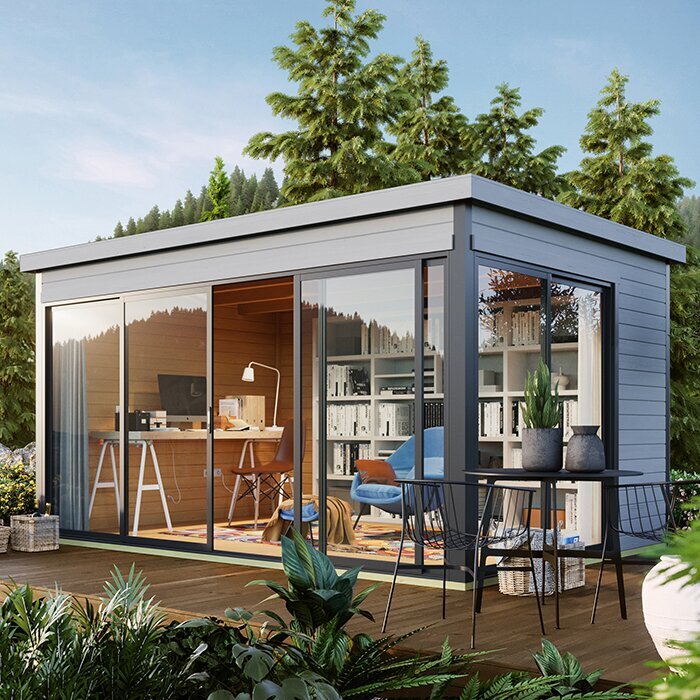
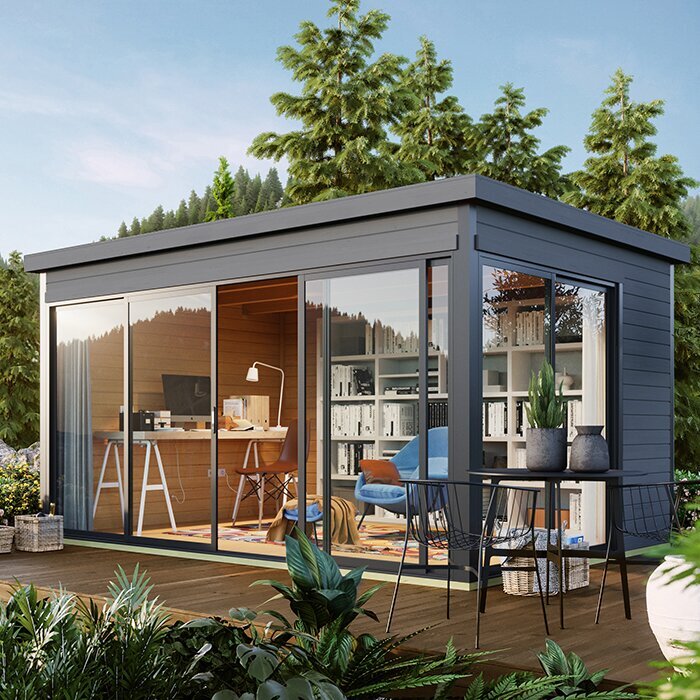
Before treating the figure as exact, find out whether it describes a nominal board dimension, the depth of a wall profile or the measurement of an assembled wall. Profiles and joinery can affect how a stated size is presented, and a finished wall may include layers or projections not captured by one number. Ask for a cross-section or written specification note if the product page is unclear, and check what the measurement includes. On the Verdana 1 garden house page, use the model name to identify the item, then verify the wall definition in its current product details; do not infer it from a photograph or name. If headline wording differs from the technical table, ask which measurement applies to the supplied walls.
Check how the wall is measured and assembled
A single thickness figure does not show the shape of each piece or how the wall is assembled. Look for a drawing or written description of the wall profile, the corner connection and how sections meet around doors, windows and gables. With interlocking or profiled boards, the nominal timber depth and the effective wall coverage may be different dimensions, so a cross-section can show what 44 mm applies to. Ask whether it describes the timber before assembly or the wall once the pieces are joined. A drawing may also show whether the measurement includes interlocking edges or only the board body. You are checking that the dimension is clear and comparable, not selecting a joint from a generic rule.
Ask whether 44 mm applies to every wall section or whether parts such as gables or areas around openings are specified separately. Confirm whether the wall is one timber layer or part of a larger assembly, and whether any lining or insulation is included, optional or absent. A product photograph rarely reveals every edge or connection. When you review the Verdana 2 garden house or another model page, record the exact wording of its wall specification, including units and any diagram reference, rather than relying on an image or a number copied from a category page. If an answer remains vague, request clarification in writing before comparing it.
02
What the 44 mm figure cannot tell you
Thickness is one dimension, not a measure of overall quality. By itself, 44 mm cannot tell you the timber species or grade, how pieces were dried or treated, what fasteners and joints are used, or how the whole building is designed to handle wind, snow, rain or wear. It also cannot establish thermal performance, sound reduction or how comfortable the shed will feel in different weather. Those outcomes depend on the complete design and conditions at the site. Do not turn one clear number into a promise about performance unless the manufacturer provides separate specifications or evidence for the particular claim. The figure is not a load rating or an insulation value.
Read claims about durability, weather resistance or seasonal use as separate questions that need their own support. Check whether the product information names materials, describes the roof and floor build-up, and states any relevant limits or care requirements. Ask what conditions or assumptions a performance claim covers; a broad phrase without a defined scope may not answer a site-specific question. If you plan to use the building for more than straightforward storage, request documentation that matches that use. For a structural or foundation question tied to your site, consult a qualified local professional. Judge a listing such as Durano garden house from its published details, not its model label or one wall measurement.
Match the shed to its intended use
Write down the jobs the shed needs to handle before choosing a wall figure: storing garden tools, keeping bicycles and seasonal gear, protecting supplies, or making room for a hobby bench all raise different planning questions. Note what must fit, how often you will access it, and whether bulky items need a clear route through the doorway. Consider whether a wheelbarrow must pass without moving stored contents. Check door position and interior dimensions against those objects, not just the advertised footprint. The 44 mm figure cannot answer these space and access questions, so compare your needs with the complete description and the manufacturer’s stated scope.
If you expect to mount shelves, hang equipment or store unusually heavy items, check the manufacturer’s guidance for wall fixings and loading rather than assuming that thickness sets a safe capacity. For a work area, or for goods sensitive to temperature or humidity, ask about the whole building specification and any additional requirements; one wall dimension cannot establish those conditions. A model name such as Veltor 1 garden house is only an identifier, not evidence of how it will serve your particular purpose. Check the fixing instructions for the locations you have in mind, especially where openings or other fittings limit the available wall area. Let your contents list and confirmed details guide the comparison.
03
Compare usable space and the full specification
Dimensions matter as much as the wall figure when you are checking whether a shed fits your yard and its contents. Compare the outside footprint with the usable floor area, and confirm whether advertised dimensions are measured to the outer wall edges or another reference point. The wall build takes up space, while interior clearance, wall height, roof slope and door position affect how the room can be used. Ask for a floor plan and elevations when the listing does not make these points clear. A plan can help you check where shelving might fit without blocking access. Do not treat 44 mm as a measure of overall shed size or available storage.
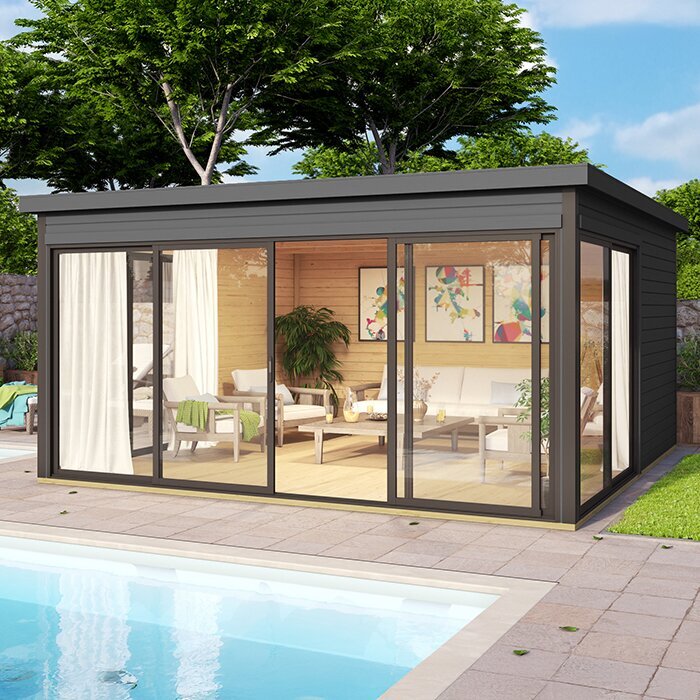
Read the roof and floor descriptions separately, along with the doors, windows, glazing, fittings and any finish. Check whether a floor, roofing material or treatment is included, optional or left for you to arrange; none is established by the wall-thickness figure. Keep a comparison sheet with a separate line for each component so two kits do not appear equivalent just because both show 44 mm. Use the Orello 1 garden house page as a product identifier only: rely on its actual specifications, not its name or photograph. If options are shown, note what is included as standard and what needs to be selected separately. Ask about any component missing from the description.
Check site, base and assembly requirements
A 44 mm wall measurement says nothing about the ground where the shed will stand or the preparation required there. Measure the intended footprint and the route for bringing the kit to the site, including gates, narrow passages and overhead obstructions. Then check the manufacturer’s base and assembly requirements, including the support and clearance the design calls for. Consider how water drains from the proposed spot and whether nearby fences, trees or other structures will limit access for assembly or upkeep. The assembly may also require working room beyond the footprint. Do not choose a base from a generic assumption based on wall thickness: the full design and site conditions matter.
Confirm whether assembly is included or arranged separately and what the instructions say about tools, help and access to the site. Ask how the kit is packaged if you need to plan unloading or moving it from the delivery point. For questions about foundations, local restrictions or site-specific loads, use the manufacturer’s documentation and consult a qualified local professional or your municipality. The answer depends on the project and location. Check the proposed footprint against your actual yard plan before ordering a model such as Modano 1 garden house, rather than assuming the listed dimensions alone settle site preparation.
04
Understand the timber’s finish and care
A thickness measurement does not tell you whether the timber is untreated, treated, stained or otherwise finished, or what care it needs. Check the product description for the stated species and treatment, whether a coating is included, and whether finishing is required before or after assembly. Ask which surfaces need attention and what inspection or maintenance the manufacturer recommends; follow its written guidance rather than applying a generic schedule. A stated finish does not necessarily explain what care exposed or concealed surfaces need, so confirm the details. This information helps you estimate the time and materials involved. Do not assume that sheds with the same wall thickness have identical finishes or upkeep.
Think about how the proposed site is exposed to sun, wind-driven rain, snow or damp ground, then ask whether the product’s installation and maintenance guidance addresses the conditions you expect there. The 44 mm dimension does not settle weather performance: wall construction, connections, roof details, drainage and finish also need to be described. If care requirements are missing, request the manual or a written answer before ordering. When using wooden garden shed M as a comparison listing, ask the same questions about its stated materials and care instructions; a similar product name does not establish identical upkeep.
Confirm kit contents and ordering terms
Two sheds with the same stated wall thickness may be offered with different components or ordering arrangements. Read the contents list for wall sections, roof and floor materials, doors and windows, fittings, hardware and assembly instructions; check separately for anything marked optional. Confirm whether assembly is included, whether finishing products are supplied and what you must provide yourself. Ask which tools or consumables, if any, are not supplied. If the kit is delivered in sections, review any package-size or access information available so you can judge whether unloading and moving it to the intended spot are practical. These are purchase details, not consequences that can be inferred from 44 mm.
Before paying, review the seller’s current written terms for delivery charges, site access, cancellation or return conditions, and the process for reporting missing or damaged parts. Confirm where delivery ends and what help, if any, is included for moving the kit beyond that point. Do not assume a delivery arrangement, warranty or assembly service unless the terms explicitly include it. Keep a copy of the selected product details and any answers about the wall measurement, included items and site requirements. Evaluate wooden garden shed S from its own listing and terms, just as you would any other candidate.
05
Compare the total project cost
Build a realistic project total using costs confirmed for the specific order. Beyond the shed itself, possible items to account for include site preparation, a base, optional flooring or finish, delivery, unloading and assembly; which apply depends on the listing and your site. Separate included items from optional extras and work you would arrange independently. Ask for an itemized quote when any part is unclear, then compare candidates on the same basis. For example, do not compare a kit with a floor included against one that excludes it without accounting for the difference. Keep estimates separate from confirmed fees: the wall figure alone gives no indication of the total spend.
Value also depends on how completely the specification answers your questions. A lower quoted total may exclude a component or service that another listing includes, so check the contents and delivery terms before comparing. If the wall measurement or base requirements remain unclear, treat that as unresolved rather than assuming it will be easy to settle later. Use estimates for early planning; where a cost could change your decision, get a confirmed amount before committing. A side-by-side record of specifications and inclusions makes price comparisons more useful than comparing headline totals alone.
Decide whether the specification is complete
A 44 mm wooden garden shed is easier to assess when the measurement is explicitly defined, the rest of the construction is described, and the dimensions, included items and use guidance align with your plans. It may be a candidate if the manufacturer’s documentation answers those questions and the building works for your site and budget; the number alone cannot make that judgment. If the listing leaves the measurement ambiguous, omits key components or makes performance claims without supporting details, pause and ask for clarification before you order. If the answer changes your choice, request an updated written specification. You are comparing a complete product and its requirements, not selecting a number in isolation.
Before deciding, keep a written record of the wall definition, outside and usable dimensions, roof and floor details, kit contents, care and assembly requirements, total confirmed costs and any site-specific advice you need. Save that record with your order confirmation so you can check it against what you selected. This keeps 44 mm in perspective: it is useful when clearly defined, but it is not a complete description of the shed. A careful comparison of the full specification tells you more than one measurement, product photo or model name.
Frequently asked questions
What does 44 mm mean on a wooden garden shed?
It usually describes the nominal thickness of the timber wall elements, but confirm whether the listing means a board dimension, a profile depth or an assembled-wall measurement. It is about 4.4 cm, or 1.73 inches; it does not describe the complete wall assembly or the shed’s other dimensions.
Is 44 mm the thickness of every part of the shed?
No. A wall-thickness specification refers to the wall measurement described in the listing. The roof, floor, openings, glazing, hardware and any additional lining are separate details. Confirm whether the figure applies to every wall section and what the kit includes.
Does a 44 mm wall mean the shed is insulated or suitable for year-round use?
No conclusion about insulation or seasonal use follows from thickness alone. These depend on the complete construction, openings, finish, ventilation and site conditions. Ask for documentation relevant to your intended use, and get qualified advice if your site or planned work requires it.
How should I compare 44 mm sheds with other wall thicknesses?
Compare how each measurement is defined, the wall profile and materials, the rest of the construction, the dimensions and what the kit includes. Different wall figures are meaningful only when you consider the other specifications on the same basis.
What should I confirm before ordering?
Get the wall measurement and product dimensions in writing, check the roof and floor details and kit contents, and review care, assembly, delivery and return terms. Confirm any base or site requirements and the total costs that apply to your specific order.
The useful role of 44 mm is to provide a comparable wall dimension once the seller defines it. Match that figure with the shed’s complete specification, usable space, site requirements and intended use. If those details are clear, you can judge the listing on its merits; if they are not, resolve the ambiguity before ordering. That is a more reliable basis for choosing a wooden garden shed than treating one measurement as a guarantee.
