
Buying a Motorized Pergola: Controls, Wiring and Maintenance
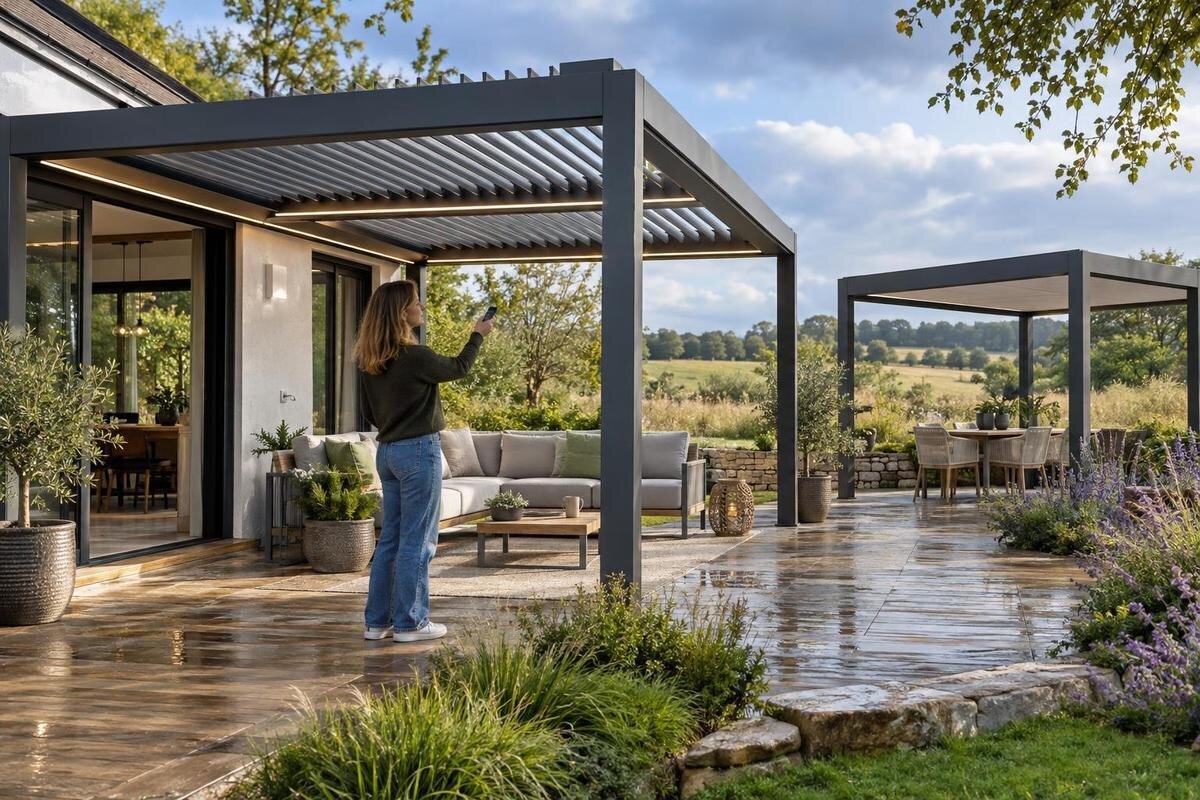
Pergola buying guide
Buying a motorized pergola involves more than choosing a roof style. You also need to know exactly what the motor moves, which controls come with that configuration, how the electrical work will be handled, and what routine care the manufacturer expects. Those details affect the quote, coordination with an electrician and the way you use the space if power or connectivity is unavailable. Because “motorized” can describe different systems, compare written configurations rather than relying on a product image or a broad label. The questions below help you identify what is included and what still needs confirmation before you place an order.

Identify exactly what the motor operates
“Motorized pergola” describes a powered way to operate a component, not one standard configuration. Depending on the design, a motor may move adjustable louvers, a retractable canopy or another part; different mechanisms can have different controls, electrical requirements and care routines. Ask the seller to name the moving component and state whether the motor is included with the exact model being quoted. Do not assume the whole roof moves just because one part is powered. A general mention of motorization, or a photograph of a pergola, does not establish what is in the package. Making this distinction first keeps the rest of your comparison focused on the same type of system.
Find out how many moving sections are powered, whether they operate together and whether the motor is standard or an option. A pergola product page can help identify a named item, but its title and images do not confirm that a motorized configuration is offered. Request the model and option names in writing, along with a list of powered components. If the motor is an add-on, ask whether it is compatible with that exact version and who supplies it. Keep these answers beside the quote; later control and wiring questions should refer to the same components, not a different configuration shown in a gallery.
Choose controls for everyday use
Controls may include a handheld remote, a wall switch, an app or a combination, but do not assume a particular interface comes with the motor. Ask how the system is meant to be operated during ordinary use and who needs access. If several people will use the space, consider whether each needs a controller or can use a shared one; ask how additional remotes are supplied and paired. Confirm whether the control is included with the motor, sold separately or bundled with another option. An advertised feature only helps if it is available on the exact version in your quote and suits the way you expect to use the pergola.
An app-based interface raises questions that a simple switch may not: does operation require an internet connection, a local wireless network, an account or a phone app? Is there another control if a phone is unavailable? Ask whether app access is included, what setup the installer handles and how account access is managed if ownership changes. When browsing a separate pergola listing, look for an explicit list of included controls. If the page does not name a remote, switch or app, treat that as an open question rather than assuming the equipment is standard. Have the supplier clarify any connection requirements before you compare packages.
Ask about stopping, limits and safety features
Ask how the moving part responds to commands: whether it has open and closed positions only, offers intermediate positions or lets separate sections move independently. These are design-specific features, not baseline promises. Find out how you know the mechanism has reached its intended position, whether a particular control sequence is required, and whether the owner can change any settings. A supplier or installer should explain normal operation and any limits before handover. Avoid treating a feature shown on another model as evidence that your selected configuration works the same way. Ask for the operating instructions for the exact system you are considering.
If the wall-mounted pergola page is part of your comparison, verify motor functions against the exact configuration rather than assuming the product type determines them. Ask about stopping behaviour, obstruction detection or other protective features, and whether each is included, optional or unavailable. Get the user instructions and ask the installer to demonstrate the approved control sequence. Do not infer that a motor will sense an obstacle or safely reverse unless the documentation says so. If the system has a manual release or service control, ask who may use it and under what conditions; do not improvise a workaround or adjust a mechanism without the instructions.
Compare what the quote actually includes
A headline price is difficult to compare if packages contain different components. Ask for separate line items for the pergola structure, motor or operator, controller, optional accessories, delivery or assembly if applicable, electrical preparation, electrician’s work and commissioning. Suppliers may present those items differently, so clarify whether each is included, optional, supplied by another contractor or left to you. Confirm taxes and any site-dependent charges in the written quote rather than estimating from a product page. This is a scope check, not a request for a particular package: it shows what the order covers and what you may need to arrange separately.
Match the written quote to the exact model and option list. If the listed pergola option is being considered, confirm that the quoted configuration is the one you intend to buy and that the motor and controls you discussed are included. Do not assume every pictured accessory is part of the order. Ask who coordinates installation, whether wiring work is excluded, what preparation is expected from you and who will demonstrate the system at handover. Keep separate estimates for product and electrical work where needed, then compare the complete scope. A lower total can otherwise reflect missing work rather than a like-for-like price.

Plan the electrical connection with a professional
Before ordering, ask for the written electrical requirements for the exact motor and controller. Depending on the equipment, the electrician may need details such as the supply type, circuit requirements, cable entry point and control-system requirements. These are facts to confirm from the supplier’s documentation and have a professional assess, not details to guess from a photo. If the manufacturer’s information is incomplete, ask the seller to obtain it before the work is planned. Sharing the same documents with the electrician and pergola installer can help them identify questions early and reduce the chance of discovering after delivery that the proposed connection plan needs to change.
Discuss cable routing before site work or an order fixes the location. Ask where the motor connection is, whether visible wiring is expected, how future service access will be maintained, and who is responsible for the route and any finish work. The pergola product details may identify a structure, but they are not a substitute for motor-specific electrical documentation. Have a qualified electrician assess the power supply, environmental exposure, protective measures and any local requirements. Do not cut, extend or connect outdoor wiring based on general online advice; get the installation method from the professional responsible for the electrical work.
Coordinate the pergola installer and electrician
Agree on responsibilities between the pergola supplier, installer and electrician. Ask who assembles and secures the structure, who supplies and connects the motor, who provides the controller and who checks that the controls work after installation. These roles may be covered by one company or several; confirm them in writing rather than assuming that one order includes every service. If you arrange contractors separately, give each the same product model, option list and manufacturer documents. That helps the electrical professional and the structure installer coordinate their work without relying on different assumptions about the equipment or the intended location.
Site details also need review. A nearby wall, finished deck, planting or other fixed feature can affect access to controls and wiring, but the suitability of a fixing or route must be assessed for the actual location. When reviewing a wall-mounted pergola listing, treat the page name as an identity clue, not proof that a particular wall or cable route is suitable. Have the relevant qualified installer assess the mounting plan and a qualified electrician assess the electrical work. Ask who will check local approval or inspection requirements, if any apply, and who is responsible for arranging them; do not assume the retailer or contractor has done so.
Know what happens during an outage or fault
Plan for loss of electricity separately from loss of an app or network connection. Ask whether the motor can be operated when power is unavailable, whether a manual override exists on that model and what the approved procedure is. Some configurations may not provide a manual option, so do not assume you can move the mechanism by hand or force it. Ask whether an interruption affects stored positions or requires a reset, and who should carry out any reset. These answers matter if you want to adjust the pergola at a particular time or need to leave it in a chosen position before you are away.
Ask what to do if a control stops responding, the motor stalls or the system is used outside conditions permitted by the manufacturer. What should you stop using, and who should inspect it before operation resumes? The seller should point you to the relevant operating manual; a qualified service person, not guesswork, should handle faults. When comparing the named pergola option, add outage and fault answers to the record for that exact model. Do not assume a powered system responds automatically to weather, includes a sensor or can be operated safely under every condition simply because it has a motor.
Get maintenance instructions for the exact system
Maintenance applies to the structure and to its moving and electrical components, and instructions can differ by model. Before buying, request the care and operation manual for the exact configuration. Ask which parts need routine visual checks, how to keep the moving area clear, what cleaning products or methods are allowed, and whether any lubrication is required. Do not apply lubricant or adjust a mechanism simply because it seems noisy; some parts may require a particular method, and others may not be owner-serviceable. The manual should distinguish ordinary owner care from work that needs a technician, so you can understand the ongoing commitments before ordering.
Ask about recommended service intervals, how to prepare the system for periods of non-use and what care may be needed in your climate. Temperature, dust, moisture, leaves and other debris can affect maintenance questions, but there is no universal schedule to infer from the word “motorized.” If you are considering another pergola page, request instructions for the exact motor as well as the structure; a general structure guide may not cover the drive. Find out whether the controls use replaceable batteries and how to obtain the correct documentation or parts. Do not assume the manuals, batteries or replacement components are included.

Check service and warranty responsibilities
Read warranty terms as separate coverage questions for the structure, motor, controller and installation labour. Ask who provides each warranty, when coverage begins, what exclusions or operating conditions apply and what actions could affect coverage. Do not assume a product warranty includes electrician costs, travel, removal or reinstalling parts. Request the terms in writing and keep them with the configuration details and invoice. If different companies supply the structure and motor, ask which one is the contact for a problem involving both. Clear boundaries can help you understand whom to call if a component needs attention later.
Maintenance and repair are related but not identical. Ask whether routine service is required, which issues you can inspect or report, and which jobs must be handled by a service professional. Confirm how replacement parts are identified and ordered, whether the supplier can help if an operating fault arises, and what information you should keep, such as a model or serial reference. Ask whether the motor and controller remain serviceable if a component is changed or discontinued. These are questions, not guarantees of parts availability; get the seller’s current support process in writing before you rely on it.
Make a like-for-like comparison before ordering
Build a side-by-side comparison around the exact package, not the adjective “motorized.” For each option, note the moving component, model and configuration, included motor and controls, available operating modes, written electrical requirements, and whether installation or commissioning is in the quote. Add a line for outage behaviour and manual operation, plus any stated restrictions or maintenance intervals. Mark each answer as documented, confirmed verbally or still unknown. This record makes missing information visible and helps prevent a conversation about one version from being mistaken for a specification of another.
Before accepting an order, compare that record with the final quote and ask for corrections where names or inclusions differ. Confirm which party arranges the electrician, who supplies the parts and controls, how the completed system will be demonstrated, and which manual and warranty terms will be provided. If an electrical requirement, motor option or service responsibility remains unsettled, ask the responsible provider to clarify it before proceeding. You do not need every possible feature; you do need a clear account of what the selected model can do, what work is included and who supports it.
Frequently asked questions
Does every motorized pergola include a remote?
No. The category name does not establish which controls are included. Check the exact configuration for a remote, wall switch, app or other interface, and ask whether additional controls or setup are required. Also confirm what local control remains available if an app or network connection is unavailable.
Can I add a motor to a pergola later?
Ask the supplier to confirm compatibility with the exact model and configuration. Find out which motor and controls are required, who supplies them, and whether a qualified installer and electrician can support the proposed setup. A similar-looking model is not proof that an upgrade will work.
Who should plan the wiring for a motorized pergola?
Ask the supplier for written requirements for the exact motor and controller, then have a qualified electrician assess the electrical setup and any applicable local requirements. Confirm who arranges the electrician and who is responsible for the completed connection; do not rely on a general product image or online instructions.
How often does a motorized pergola need maintenance?
There is no single schedule that applies to every system. Request the care instructions for the exact structure, motor and controls. Ask about cleaning, routine checks, lubrication if applicable, periods of non-use and which tasks require a service professional.
What should I ask about a power outage?
Ask whether the exact system has a manual override, how it is used and what happens when power or network access is lost. Do not assume the mechanism can be moved by hand or forced. Get the approved instructions from the supplier or installer.
A motorized pergola is a combination of a moving component, an operator, controls, electrical work and ongoing care. Compare those parts as one clearly documented configuration, then make sure the quote and installation responsibilities match it. The right choice is not necessarily the one with the most controls; it is the one whose operation, electrical setup and service expectations are clear for your space and the way you plan to use it.
