
How to Buy a Pergola for a Coastal Property
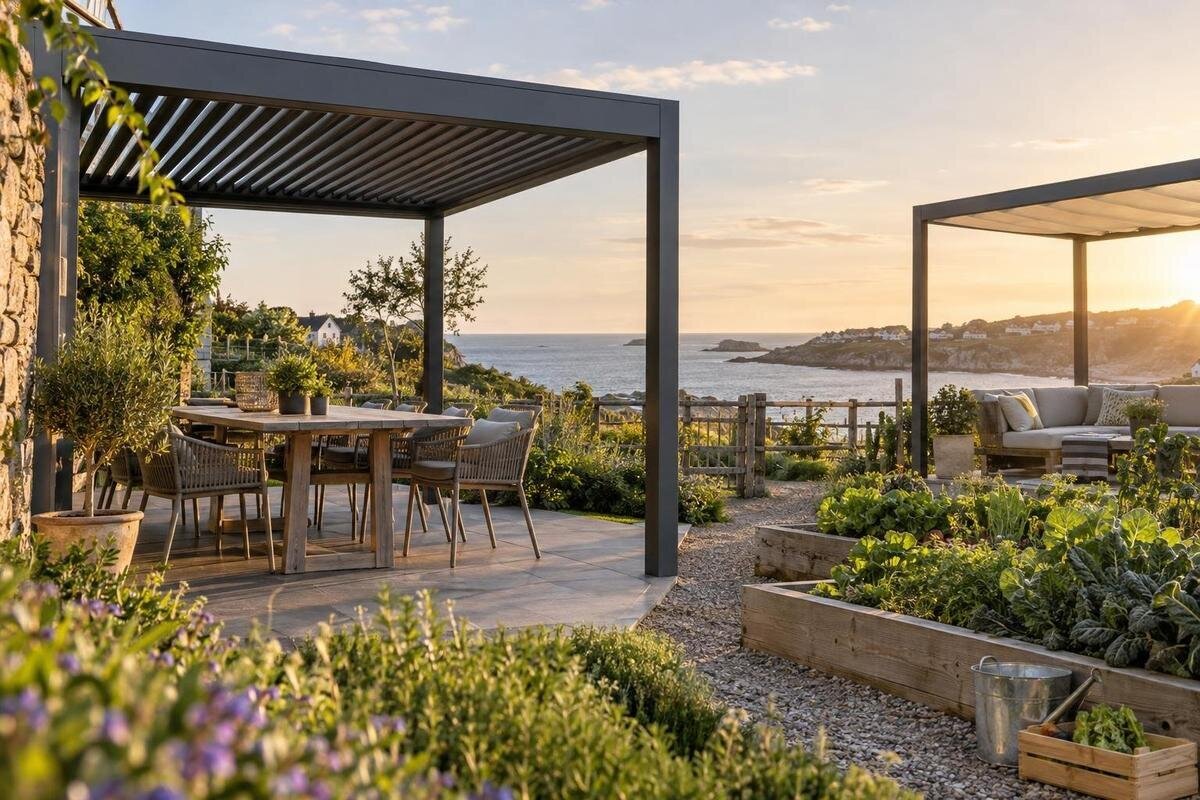
Pergola buying guide
Coastal properties do not all face the same conditions: a sheltered patio may receive less spray than an exposed one, and wind or moisture can vary across a single lot. Buying a pergola for a coastal property means matching the structure, finish and care instructions to the place it will stand—not relying on appearance or a broad product label. Compare salt exposure, wind, roof operation, attachment and maintenance, then confirm installation requirements before ordering. These questions help separate what you can assess yourself from what calls for written product information or site-specific professional advice.

Coastal exposure varies by location
Describe the exposure at the precise footprint you are considering, rather than simply calling the home coastal. Note whether the patio is open toward the water, frequently receives salt spray, or is screened by the house, a fence, trees or neighbouring buildings. Terrain and gaps between buildings can change how wind reaches a small area, and conditions may differ from one side of the property to another. Record where you notice salt residue and whether the planned spot stays damp after wet weather. These observations do not establish a safe wind limit, but they give a supplier and installer a clearer description than shoreline distance alone.
Keep observed conditions separate from assumptions. A sheltered corner may still collect salt or moisture, while two spaces on the same property may face different gusts. Share your site notes and ask which written product guidance applies to the exact design and configuration. On this Bloomcabin product page, rely only on stated information when comparing options; an image or category name cannot establish coastal suitability. If a relevant detail is missing, treat it as an open question and request documentation before ordering. This is more useful than choosing a pergola based on a broad label or the appearance of a nearby installation.
Compare materials, finishes and care
Look for the specific structural material and protective finish, not just broad descriptions such as metal or weather-resistant. For a metal pergola, ask what base metal and surface treatment are used, whether edges and connection points receive the same protection, and how to maintain or repair the finish. A coating can help protect a surface, but its presence alone does not explain how it will perform in salty, damp air. Do not assume that aluminum cannot corrode or that coated steel needs no upkeep. You need the manufacturer’s guidance for the exact model, including any stated limits for coastal exposure.
Timber calls for different questions: identify the species or product type, treatment and finish, then check whether the recommended care suits your willingness and access. Ask how exposed ends and joints are treated, and how the finish should be maintained; a stain or sealant label alone does not answer those questions. Compare the complete assembly instead of ranking options from a material name. A page such as the Bloomcabin pergola listing can identify a candidate, but the purchase decision should rest on verified construction details and written care guidance. If the details needed for a fair comparison are unavailable, the options are not yet like-for-like.
Treat fasteners and connectors as part of the structure
The vulnerable details may be the joins, screws, brackets and moving hardware rather than the large posts. Moisture between incompatible metals can encourage corrosion at a contact point, and a finish may be interrupted where a part is cut, drilled or scratched. Ask what materials are used for fasteners and connectors, whether they are compatible with the frame and finish, and how exposed connections should be maintained. A stainless appearance or a phrase such as “marine grade” does not explain the material and protection used for every part. Request the relevant parts information for the exact configuration, including guidance for handling a fitting that is damaged during delivery or assembly.
Clarify which components are included and which must be supplied separately. Substituting different fasteners can change the material combination, so replacements should be checked against the manufacturer’s instructions rather than selected by appearance. Ask whether connectors and fasteners are included, what finish they have, and whether repair or touch-up guidance is available. A page such as this linked pergola listing identifies an option, but technical decisions should come from current product documentation and the installation manual. If those materials do not identify the connection details, ask for clarification instead of judging a close-up photo. That information helps you compare the full assembly, not just its visible frame.
Check roof operation against coastal weather
Roof format affects the shade you get and how the pergola responds to changing conditions. Fixed slats, adjustable louvres and fabric elements have different operating and care requirements; none should be assumed suitable for a particular wind exposure based on appearance. Ask for written guidance on permitted roof positions, any wind limits, and whether limits apply while the roof is moving or partly open. Find out how the system is meant to be secured, and whether any elements need to be removed or stored in specified conditions. When comparing the Bloomcabin product entry, confirm the exact roof type and instructions rather than inferring them from the product name or photograph.
Think about the weather functions you actually need. Do not assume that a pergola roof provides rain protection unless that performance is stated for the exact product and configuration. If the design has moving parts, ask what routine care they need and how to operate them safely from the intended seating area. Consider whether everyone who may use the space can reach and operate the controls as directed. Clear instructions matter in a coastal setting, where wind and exposure can differ across the property. If the operating guidance does not address your intended use, ask for an answer before treating the design as a fit.

Fit the pergola to the patio and daily use
Sketch the proposed footprint on a simple plan and mark the furniture, walking routes, doors, windows and any access you need to keep clear. Include the space required to pull out chairs or move around a table, not only the area occupied by the furniture when nobody is using it. Note nearby drains, service access and the sightlines you want to retain. If the patio is exposed to wind or salt from a particular direction, consider how that affects seating comfort and the preferred orientation, without assuming the pergola itself will block either. A plan turns general preferences into specific questions about size and placement.
Check the actual dimensions and drawings for the model you are considering. A photograph cannot confirm the post positions, clearances or roof coverage, and two similar-looking designs may have different layouts. Ask whether the published dimensions describe the outside footprint, usable space or another measurement, and confirm any clearances required for operation and installation. If this Bloomcabin product listing is part of your comparison, use only its stated dimensions and request a drawing if you need more detail. Also think about the sun at the times you expect to use the patio; orientation and roof design affect shade, so a staged image is not a substitute for assessing your own site.
Confirm the mounting surface and attachment plan
Identify what is beneath the proposed posts: a concrete slab, a timber deck, pavers or soil are not interchangeable installation surfaces. The visible finish does not show what supports it or whether the required anchoring can be completed as specified. Ask a qualified installer to assess the actual construction, access and drainage at the site, then compare the proposed method with the manufacturer’s instructions. Foundation and anchoring needs depend on the product and the location; do not choose a method by copying a nearby pergola or relying on the patio’s appearance. Raise these questions before placing an order, while you can still compare different designs or locations.
If the pergola will attach to the home, ask a qualified professional to identify the part of the building that can receive the connection and how any penetration will be managed to protect the exterior. Do not assume that cladding alone is suitable for attachment. A freestanding design still needs an appropriate installation plan and a suitable support surface. A page such as this Bloomcabin product page can help identify the option under consideration, but it cannot determine the condition of your wall, deck or patio. Confirm who is responsible for the site assessment, the attachment details and any related repair work before agreeing to an installation scope.
Ask what ongoing maintenance involves
Make care requirements part of the material comparison. Salt can settle on exposed surfaces, while moisture and windblown grit may affect finishes and joints. Ask the manufacturer how and when to clean the exact material, which products or methods are acceptable, and which areas need inspection. Do not assume a household cleaner or a forceful washing method is appropriate; the finish may have specific care instructions. Find out whether scratches need prompt attention, how repairs should be made, and whether moving parts have separate maintenance requirements. Written guidance lets you judge the ongoing work before purchase instead of discovering that an attractive finish is difficult to maintain.
Consider whether routine care is realistic at the planned location. Some areas may be difficult to reach safely, and access can affect how easily you can inspect a finish or connection. Ask whether the manufacturer recommends checks after particular weather conditions and what those checks involve; do not create your own procedure from a photograph. Keep the product documents and care instructions with your purchase records so they are available later. When reviewing the relevant pergola listing, treat any care information as applying only if it clearly matches the exact product and finish. If instructions are not supplied, request them before deciding whether the maintenance commitment works for your household.
Read the warranty and technical documents
Read the written warranty for exclusions that may affect a coastal property, including terms about corrosion, finish damage, hardware, maintenance and installation. Ask whether the document defines coastal exposure or sets conditions for where the product may be used. If a moving component is included, check whether it is covered on the same terms as the frame. A general statement about durability is not the same as a warranty commitment, and verbal reassurance may not resolve an unclear clause. Request written clarification for the exact model before purchase, and keep the answer with the warranty so you can refer to the same terms later.
Make sure the documents all refer to the same model and configuration. Compare the product information, any drawing, installation manual, care instructions, warranty and written quote; note differences in size, roof type, included parts or installation requirements. Do not fill gaps by guessing from a model name or image. When checking this page for the Bloomcabin pergola, match the product identity to the documents you receive and confirm which options are included in your order. If a needed manual or specification is not available, ask the supplier or manufacturer for it. A clear document set makes it easier to compare choices and gives your installer a reliable basis for planning.

Compare delivery, quote and installation details
Compare written quotes by scope, not just by the headline amount. Check whether each includes the pergola, roof components, connectors, anchoring materials, site preparation, installation and any work needed to make good the surrounding area. Confirm who supplies items that are not included and who is responsible for checking that those items match the manufacturer’s instructions. Do not treat an existing patio or a proposed anchor point as suitable unless it has been assessed. A clear breakdown helps you see whether two offers cover the same work and gives you a chance to resolve omissions before placing an order.
Plan how the components will reach the installation area. Ask for package dimensions and any access requirements, then check gates, steps, narrow paths, storage space and room to work. Confirm whether delivery and assembly are separate services, who handles missing or damaged components, and when final site measurements are required. Do not assume that delivery to the property includes moving items to the patio or assembling them. Coastal homes can have tight or exposed access routes, so raise practical constraints early rather than leaving them until the installation date. Written scope and access details help avoid surprises without making assumptions about delivery timing or available services.
Final checks before ordering
Put the key facts for each candidate in one comparison record: exact model and configuration, site exposure, material and finish, connectors, roof instructions, mounting requirements, care, warranty, included components and installation scope. Mark each item as confirmed or still unanswered, and keep the source document beside it. This makes it easier to spot when one option has a clear specification and another relies on general language. It also helps you avoid comparing a fully specified model with an alternative whose dimensions, maintenance or attachment details are unknown. Appearance still matters, but it is most useful once the practical differences are visible.
Before ordering, confirm that the documents refer to the exact pergola you intend to buy and that the proposed installation suits the chosen location. If wind guidance, coastal care or attachment details remain unclear, ask the manufacturer or a qualified installer rather than trying to infer the answer. Check with the relevant local authority or property manager about any approvals or property requirements that may apply to your situation; do not assume the same requirements everywhere. A pergola is a better fit when its documented limits, installation plan and upkeep all make sense for the actual site, not merely because its style looks right.
Frequently asked questions
Does a pergola need a special coastal rating?
Do not rely on a coastal label unless the maker explains what it means for the exact model. Ask for written guidance on materials, finishes, connectors, wind limits, installation and care, then compare that guidance with the conditions at your property.
Which material is best for a pergola near the coast?
There is no universal answer based on the material name alone. Compare the specific material, protective finish, exposed edges, fasteners and maintenance instructions. A well-documented care plan for the actual model is more useful than a broad claim about metal or timber.
Can I install a pergola on an existing patio or deck?
The visible surface does not confirm what lies beneath it or whether the structure can be anchored as required. Have a qualified installer assess the actual surface and support, then check the proposed installation against the manufacturer’s instructions before ordering.
Can an adjustable pergola roof stay open in coastal winds?
That depends on the exact design and its written operating guidance. Ask which roof positions are permitted, whether there are limits for operation or use in wind, and how moving or removable parts should be secured. Do not infer safe operation from a photograph.
Does a pergola warranty cover salt-related corrosion?
Warranty terms vary. Read the written exclusions and maintenance requirements for the finish, hardware and other components, and ask whether coastal exposure affects coverage. If the terms are unclear, request a written answer for the specific model before you commit.
Buying a pergola for a coastal property is a site-fit decision as much as a style choice. Compare the whole assembly, written weather and care guidance, mounting plan, warranty terms and installation scope against the conditions where it will stand. If an important detail is missing, leave it marked as unresolved rather than assuming that a material name, photo or coastal label supplies the answer. The strongest choice is the one you can match to your location with clear product information and a practical plan for installation and upkeep.
