
Buying a Pergola for a Hotel or Vacation Property
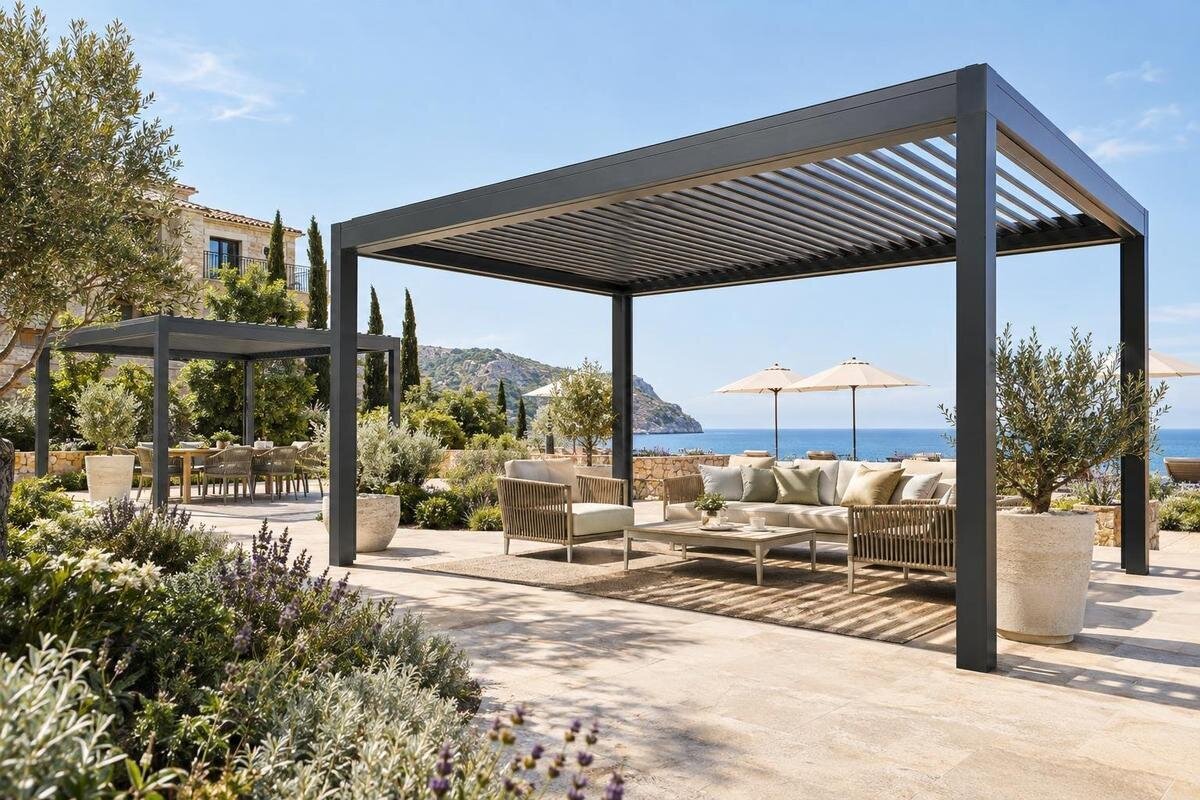
Pergola buying guide
Buying a pergola for a hotel or vacation property is an operational decision as much as a design choice. It should make a specific outdoor area more useful without complicating guest circulation, housekeeping, weather planning or future upkeep. Define who will use the space and what you expect the structure to do, then check the site, installation conditions and published product information. A pergola's name or appearance does not establish that it is suitable for commercial use, a particular climate or a specific wall or surface.

Define the guest experience before choosing a style
Begin by describing the job you want the outdoor area to do, rather than choosing a look first. It might be a shaded place for guests to pause near a shared amenity, a seating area for people staying at a vacation property, or a spot for a small group to gather. Note the main activities and the times of day the space matters most. That helps you rank shade, privacy, seating and a sense of separation instead of treating them as equal priorities.
Consider how use may vary. A hotel space could serve different guests throughout the day, while a vacation property may be used by the same booking party for several days. Ask the property manager or cleaning staff what makes the area easy or difficult to use, and review guest feedback if it is available. Consider whether quiet morning use, evening gatherings or children playing nearby creates different expectations for privacy and supervision. Decide whether the pergola would serve a shared area or a more private guest space, and whether guests need to understand its purpose without staff direction. Use those answers to screen options such as the Bloomcabin pergola listing; a product name alone does not establish that it suits your site or operating needs.
Measure the whole outdoor area, not just the footprint
Measure the space guests and staff can actually use, including the approach to it. Note fixed features such as doors, windows, steps, drains, trees and service entrances, as well as boundaries that affect where the structure might sit. Mark the space available for the pergola separately from the space needed to get to and around it. This can reveal a conflict with an entrance or route before you choose a size. Check the exact product dimensions in its documentation rather than estimating them from a photograph.
Draw the proposed layout with the furniture in place. Allow for chairs to be moved, doors to open and guests to pass without having to weave around posts or table settings. Include any route staff need for cleaning or servicing the area, as well as space for luggage, prams or mobility aids where these are likely. Consider where wet umbrellas, pool towels or food-service items may temporarily be placed, so these do not spill into a circulation route. A simple dimensioned plan gives you a more useful comparison than a photo alone; the general pergola product page can be considered alongside that plan, not used as a substitute for confirmed dimensions. If the space has unusual levels or fixed features, ask a qualified professional to review the proposed placement.
Choose a location that works for guests and staff
Think about where guests will encounter the pergola during their stay. A position near a common room may make the outdoor area easy to find, but a location close to guest-room windows could bring conversations near private spaces. Consider sightlines from rooms and neighbouring properties, how guests reach the seating area, and whether the structure would make an entrance or service route less convenient. The best location is not necessarily the most visible one; it should fit the way people move through the property.
Include routine operations in the site choice. Staff may need access to clean the area, move furniture, tend nearby landscaping or manage seasonal debris and snow where relevant. Think about where cleaning supplies and outdoor furniture will be stored when the space is not in use, and whether moving them will interfere with guest arrival or departure. A remote vacation property may also need a clear plan for who will check and care for the space between bookings. If you are considering an attached layout, the wall-mounted pergola listing identifies a configuration to investigate, but does not establish that a particular façade is suitable. Have a qualified professional assess the building and proposed location.
Set realistic expectations for shade and weather cover
Shade and protection from precipitation are different requirements. If shade is the priority, observe how sunlight reaches the proposed area during the hours guests are likely to use it. Nearby trees and buildings can affect the result, and their shadows may change over the day or season. If your goal is to keep seating dry, be more specific about what you expect: the amount of cover, the direction rain may come from and whether guests need shelter in particular conditions. A pergola should not be assumed to provide dependable all-weather protection.
Check the actual product information for the overhead arrangement, how it is operated if applicable, and any stated limits for rain, wind or snow. Also consider how water from the surrounding site behaves during rainfall; puddling or runoff near the seating area can affect guest comfort even if the overhead arrangement is suitable. Do not use a term such as bioclimatic as a substitute for those details. The bioclimatic pergola product listing is a product identity to compare, not evidence that a particular coverage need is met. If weather protection is important to guest operations, ask the supplier for written product information and have a qualified professional assess whether the product and proposed site are appropriate.

Compare mounting options against the actual site
Compare a freestanding layout with an attached one by looking at the space each would occupy and the conditions at the proposed location. Supports within the outdoor area may affect furniture positions and guest routes. An attached layout depends on a suitable connection to the building and may affect where the structure can sit near doors or windows. Neither approach should be selected from appearance alone; the property, available space and installation requirements all matter.
A product page labelled wall-mounted pergola identifies a format to investigate, not proof that an existing wall can support it. Confirm the required clearances and mounting conditions from the product documentation, then ask a qualified installer or other relevant professional to assess the actual building and site. They can also identify site conditions that affect the proposed work, rather than leaving those questions to be resolved on installation day. Likewise, do not assume that an existing patio or deck is an appropriate support surface. If the product information does not answer a site-specific question, resolve it before ordering rather than relying on a general description.
Plan seating, guest numbers and day-to-day use
Estimate the number of people who will use the space during an ordinary day and during busier periods. Consider how many seats you need, whether guests are likely to sit together or in smaller groups, and whether staff will rearrange the area between uses. Guest numbers help you plan the layout; they are not a measure of how much weight a structure can support. Do not infer structural capacity from the number of seats shown in a photo or from the size of the outdoor area.
List the furniture and equipment you intend to place nearby, then check what is included with the product and what would be purchased separately. Consider how the layout will work when furniture is stacked, moved aside for cleaning or arranged differently for a larger booking party. If you are considering attachments or add-ons, ask whether they are compatible with the exact product and what documentation applies. Avoid planning around an assumed ability to attach screens, lighting or other equipment. Make sure staff can still clean the area and move furnishings without creating a cluttered guest space. A clear furnishing plan can also help prevent buying a structure that leaves too little useful room.
Check maintenance requirements before committing
A pergola adds a task to the property's maintenance plan, so find out what care the specific product requires. Ask for the supplier's cleaning and inspection guidance, including any seasonal steps, and decide who will take responsibility for them. A hotel may be able to assign work to facilities staff; a vacation property may depend on a local manager or caretaker. If the property is not regularly staffed, make sure the maintenance plan still works when the owner or manager is away.
Check the stated materials and finishes, the recommended cleaning products, and any care limits in the product documentation. Ask how replacement parts or repairs are handled and what warranty terms apply; do not assume that products with similar names have the same care requirements. Establish who can receive a service visit, report a problem and make a decision if maintenance is needed during a guest stay. When reviewing the bioclimatic pergola listing, use only the information actually published for that item, and ask the supplier about details that are missing. Factor the expected maintenance workload into the purchase decision as well as the initial setup.
Account for access, safety and guest privacy
Review the layout from the perspective of guests with different mobility needs. Consider the route to the seating area, door clearances, changes in level and whether furniture is likely to block a path during normal use. Where accessibility requirements apply, check them with the appropriate local professional rather than relying on a visual impression. Ask staff to test the planned layout with the furniture in place; a route that looks clear on a drawing may be narrowed by chairs, tables or other items once the space is being used.
Consider privacy and safe operation together. Look at views from guest rooms, nearby properties and areas used by staff, and decide whether guests will feel exposed or overlooked. Think about whether the space will remain comfortable when one group is using it while another is checking in, walking past or using a neighbouring amenity. If you are considering screens or other additions, confirm that they are suitable for the exact product and site rather than assuming they are included. The pergola listing can be assessed against your access and privacy plan, but a catalogue image cannot confirm clearances, accessibility or safe installation. Check applicable local requirements with qualified professionals.

Confirm approvals, installation and delivery responsibilities
Before committing to a purchase, confirm who has authority to approve changes to the property. The person managing a hotel or vacation rental may not be the owner, and a leased or jointly managed site may have additional approval steps. Check local requirements with the appropriate authority or a qualified professional; do not assume that a small outdoor structure is exempt from review. Keep a written record of the approvals and site conditions that need to be settled before installation can proceed.
Read the quote and ordering terms to see what is included. Confirm whether the price covers delivery, assembly or installation, site preparation and removal of packaging, or whether you must arrange those separately. Check delivery access, staging space and timing with the property team, especially if a vacation property has a caretaker or limited receiving hours. Plan around occupied periods where possible, since a delivery or installation activity may affect parking, guest access and the use of nearby outdoor areas. Ask who will confirm site readiness and who to contact if a delivery or installation question comes up. These details prevent the product order from being mistaken for a complete installation plan.
Compare the complete project before placing the order
Compare the total project, not just the pergola's listed price. Your budget may need to account for the structure, delivery, professional assessment, site preparation, installation, furnishings or compatible additions, and ongoing care. Some of these costs will depend on the site, so ask for quotes that describe the same scope before comparing them. Include any seasonal or remote-property arrangements that matter to your operation. This makes it easier to see whether an option fits the property's plans without assuming that a lower initial figure represents the lower overall cost.
Before ordering, verify the exact product identity, documented dimensions, materials, configuration, included components, installation needs, delivery terms and warranty information. Confirm that the final selection matches the layout and operating plan used in your comparison, rather than a different configuration or a visual reference. For example, use the page labelled bioclimatic pergola as a reference for the item being considered, then confirm any details that are important to your site with the supplier. Keep unanswered questions in writing and settle them before purchase. A well-matched choice is one the property can install, maintain and operate for guests—not simply the option that looks closest to the original idea.
Frequently asked questions
What should a hotel decide first before buying a pergola?
Define who will use the area, when they will use it and whether it is shared or reserved for particular guests. Then measure the site, map seating and routes, and compare options using published dimensions and site requirements. This keeps the purchase focused on how the space needs to work.
Does a pergola labelled for commercial use automatically suit a hotel?
No. A label alone does not establish suitability for a particular property, climate or level of use. Ask for product documentation covering intended use, weather limits, materials, maintenance and installation requirements, then have a qualified professional assess the site and proposed mounting.
Should I choose a wall-mounted or freestanding pergola?
There is no universal answer. Compare the available space, guest and service routes, nearby doors and windows, and the support conditions at the site. A qualified professional should confirm whether the proposed location and mounting approach are appropriate before you order.
Will a pergola keep guests dry in the rain?
Do not assume that it will. Pergolas can have different overhead arrangements, and the product name or a photo does not confirm rain protection. Check the exact product information for coverage, drainage and weather limits, and ask a qualified professional whether it meets your property's needs.
What should I confirm before placing an order?
Confirm the exact product, documented dimensions and materials, included components, mounting requirements, installation scope, delivery terms and maintenance information. Also settle any property approvals and site-access arrangements. Get important details in writing, especially if the property is remotely managed.
For a hotel or vacation property, the right pergola is the one that supports a defined guest use, fits the real layout and can be maintained by the people responsible for the site. Treat appearance as one part of the comparison. A clear plan for access, mounting, weather expectations, installation and ongoing care makes the final purchase more likely to work for both guests and property staff.
