
How to Choose a Pergola for Strong Summer Sun
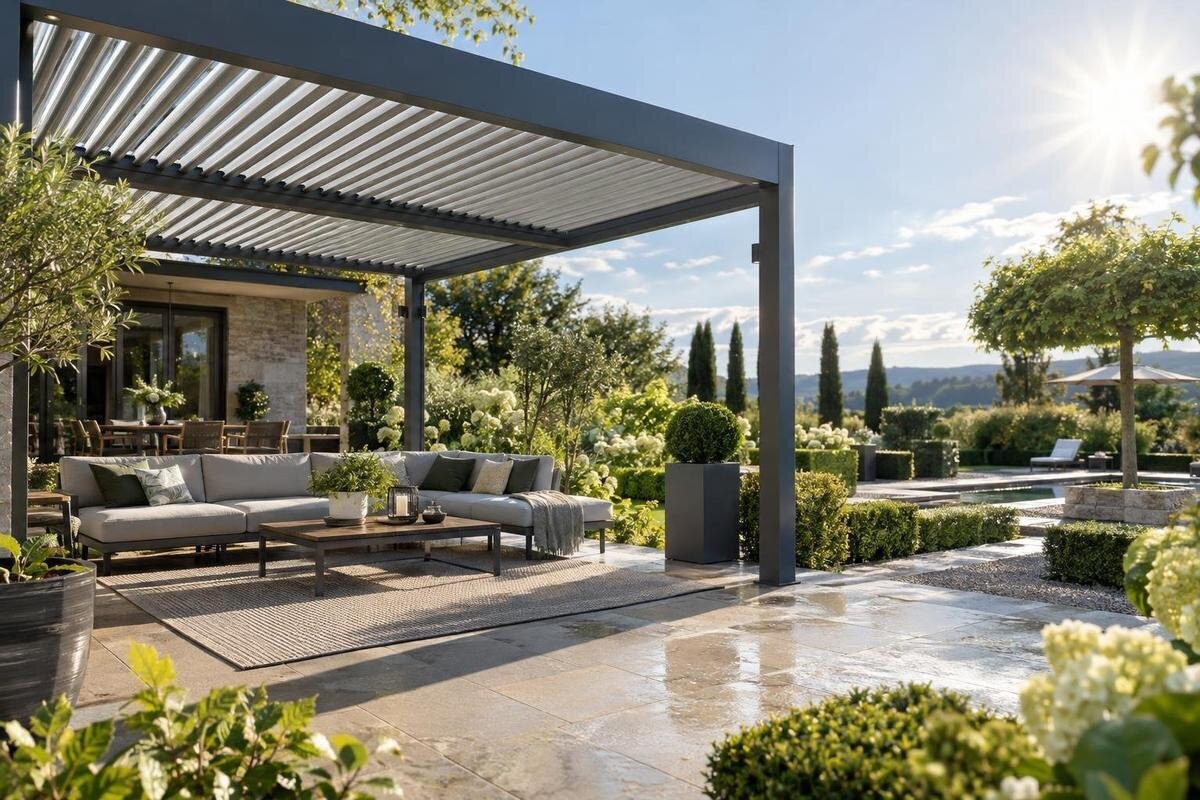
Pergola buying guide
When buying a pergola for strong summer sun, the key question is not simply how large it is, but where shade will fall when you use the patio. A generous-looking footprint can leave a table exposed at lunch; a denser overhead design may block more sky than you want at other times. Note when direct sun reaches the seating area, how much space needs cover and whether rays also enter from the side. Then compare dimensions, overhead design, operating details and installation requirements. A product name or photograph cannot establish how much shade a particular pergola will provide.

Buying checklist 1
Define your shade needs by time and activity
Begin with the activity, not a broad label such as “full sun.” A dining table used at midday has a different shade requirement from lounge chairs used after work. List the spots people actually occupy, the times they use them and how many seats must be covered together. Include the route to a door and the space needed to pull out chairs; shade over the table is less useful if people have to squeeze around it. A clear brief might be “cover the dining area through lunch” or “provide one shaded seat later in the day.” Specific timing makes comparisons more meaningful. Also note whether children, guests or a serving area regularly extend beyond the main furniture arrangement. The useful target is the area people occupy in practice, not simply the centre of a table or the largest empty rectangle on the patio. If uses change between weekday evenings and weekend meals, record both rather than designing around only one occasion.
Decide whether you need continuous shade over a whole zone or enough cover for a defined seating area. An open top can cast a broken shadow; closer-spaced members or a cover may block more direct sunlight from above, but neither guarantees protection from low-angle rays at the sides. Shade also should not be confused with a promise of a particular air temperature. Treat “pergola for full sun” as a question to investigate, not proof of all-day coverage. Compare your brief with the Bloomcabin pergola product page, and look for stated design and coverage details rather than inferring them from the product name.
Observe the patio through the day
Observe the patio on clear days at the hours you plan to use it, rather than relying on a single midday snapshot. Sun height and direction change through the day and season, so a corner shaded in the morning may be exposed later. Sit or stand in the intended places and note when direct light reaches the table, lounge chairs and doorway. A small sketch with times and compass direction is useful; photos taken from the same spot can also help you compare the moving shadow. Even a short log of morning, lunch and late-day conditions is better than assuming one observation represents the whole day. Repeat the check on more than one day if possible, especially when a nearby tree, fence or building creates intermittent shade. You do not need a technical sun study: the aim is to identify the times and directions that make the patio uncomfortable, and to distinguish a brief patch of sun from exposure that affects the whole intended use.
Include existing house eaves, fences, trees and neighbouring buildings in the sketch. They may shade the patio at certain times or leave an exposed strip where chairs are placed. Note the direction from which the unwanted sun arrives, and whether glare reflects off nearby glazing or paving; those observations can change which edge needs protection. A “bioclimatic” label alone does not establish how a particular top operates or the shadow it casts. Inspect the seller’s drawings and operating information for the listing labelled bioclimatic pergola, and ask for clarification where the effect is not shown.
Buying checklist 2
Measure the space that needs coverage
Measure the target shade zone and the pergola’s overall footprint separately. Start with furniture in its everyday position, then allow for chairs pulled out, a route around the table and places where people stand. If the intended use is a lounge, include the occupied space rather than counting empty paving at the edge. Mark doors, steps and gates so a post or side screen will not obstruct access. These measurements define the outdoor area that needs shade; they do not tell you the dimensions of a specific model, which must come from its own product information. Measure from fixed features such as a wall, step or paving joint so the sketch can be checked later. Record tight passages as well as the main open area. This helps you see whether a frame could fit physically while still leaving the circulation space that makes the patio convenient to use.
On a sketch, draw the intended table or seating group and a separate outline for the proposed frame. Pergola dimensions may refer to different points, such as the top’s outer edge or post positions, so look at a dimensioned drawing rather than relying on a headline size. Check whether the overhead area covers the seating you marked, including its edges, and leave room to move around the structure. When you review the Bloomcabin pergola listing, confirm what its measurements describe; if a view or drawing is unclear, ask before treating it as a fit.
Match overhead design to shade and daylight
Pergolas can have different kinds of overhead design, and the word pergola does not guarantee a continuous roof. Widely spaced members can create a patchwork of light, while a closer-spaced top or a cover may intercept more direct sun from above. Some designs may have adjustable elements, but you need to confirm whether a particular model does and how its positions change the shade. More coverage can also mean less sky view and daylight in the adjoining area, so compare the desired shadow with how open you want the patio to feel. Consider how the choice will feel while the patio is unused as well as while people are seated beneath it. An overhead design that suits a lunch table may make an adjacent indoor room seem darker, or it may be visually more substantial than you want near a window. Looking at both occupied and surrounding areas helps keep the comparison balanced.
Ask for a drawing or description that shows the overhead arrangement and, where relevant, its usable positions. Check whether the pictured cover or shade element is part of the listed product or an optional extra; do not assume it is included. Look for information about gaps, the area covered and how the design behaves when the sun is not directly overhead. A page identified as a bioclimatic pergola product page does not by itself confirm a particular mechanism or shade result. Use the stated product details to answer those questions.

Buying checklist 3
Check for sun entering from the sides
Overhead coverage addresses sunlight coming from above, but morning and late-afternoon rays can enter beneath its edge. A table that sits in shade at lunch may still be exposed from one side later. Use your observations to identify the side that matters most, then check whether the pergola’s position and top design can address that direction. An existing fence, wall or tree may already screen part of the patio, so consider the actual gap between those features and the seating rather than planning from the open area alone. This is also why the position of furniture matters: moving a chair group slightly may reduce exposure without requiring every open edge to be screened. Identify the most bothersome angle first, then decide whether changing placement, changing the seating layout or considering a compatible side-shade option would best address it.
If side screens, curtains or panels are important to your plan, ask whether they are offered for the specific pergola and whether they are compatible with its design. Confirm where they can be placed and whether they would obstruct a doorway, a route through the patio or a view you want to keep. Do not assume an accessory is included just because it appears in a photograph. A screen may change the feel of the space as well as its shade, so decide which edges need protection instead of enclosing the whole patio by default.
Compare freestanding and wall-mounted placement
A freestanding pergola can be considered where there is room for its footprint away from the house; a wall-mounted style sits beside a building and may affect how shade falls near doors and windows. Neither arrangement is automatically better for a sunny patio. Compare the available positions with your sun notes: a structure near the house may still leave seating exposed if the light reaches it from the side. Also check that the chosen position leaves access to doors, steps and the routes people use. Think about the view from inside as well. A position that places shade over the patio may frame a window, doorway or outdoor view differently, which can matter in a frequently used room. Mark those sightlines on the same sketch so they are considered alongside shade and circulation, rather than after a preferred configuration has already been chosen.
Before choosing a wall-mounted arrangement, have a qualified installer assess whether the intended wall and position are suitable for that product. A listing’s description identifies a configuration; it does not establish that a particular building can support it or that the location will provide the shade you want. The same care applies to a freestanding option: the installer should assess the intended surface and support requirements. You can compare the configuration shown on the wall-mounted pergola product page, but confirm site suitability separately.
Buying checklist 4
Compare product measurements and drawings
For each option, look for measurements that let you compare the installed footprint, overall height, post positions and overhead area. Check whether dimensions describe the full frame or another part of the design, and whether a drawing shows clearances around doors, windows and seating. If the product information gives a range of positions for a moving element, compare the coverage in the position you expect to use. A general size label is not enough to show how much of your particular seating area will be shaded.
Treat photographs as illustrations, not measuring tools. Camera angle, cropping, furniture placement and the time the image was taken can all change how large a structure or its shadow appears. Make a side-by-side comparison of the information actually stated, and mark gaps instead of filling them in from the image. The product page for Bloomcabin pergola can be one entry on your comparison sheet; use its posted details for any confirmed measurements, and ask the seller if a dimension or coverage point is not clear.
Ask about materials, sun exposure and upkeep
Direct sun can affect some exterior finishes and fabrics over time, but the degree and care needs vary by material and product. Do not infer UV performance or colour retention from a photograph or a general category name. Look for the manufacturer’s stated material information and any guidance about exposure, cleaning and routine care. If the listing does not explain those points, ask before making them part of your decision. This is especially relevant if the shade you want depends on a surface or component that may need particular care.
Consider the maintenance you are willing to do alongside the shade pattern. Ask how to clean the product, which parts need periodic attention and whether any cover or other replaceable element can be replaced later. Confirm which components are included and whether care instructions apply to the whole structure or only to specific materials. When reviewing the bioclimatic pergola listing, use the stated material and maintenance information rather than assuming details from its name. A clear care plan is more useful than an unsupported expectation about how a finish will age.

Buying checklist 5
Confirm installation and ordering details
A suitable shade plan still has to fit the site. Before ordering, confirm where the posts or wall connection would go, whether the planned position leaves the required access and what surface or building features the installer needs to assess. Ask a qualified installer about the suitability of the intended location and the product’s support and attachment requirements. Do not use a product photo or a rough sketch as an installation plan, and do not assume an existing patio surface or wall is suitable without an assessment.
Clarify what arrives with the pergola, whether pictured accessories are separate, what assembly involves and what information the installer needs before work begins. Check that the delivery can be brought to the intended work area and that the proposed dimensions match the space available there. For the listing labelled wall-mounted pergola, ask whether any wall-specific parts or assessment requirements are described; do not assume they are included. These ordering details help prevent a shade choice from becoming a site-fit problem.
Compare choices against your priorities
Use your notes to compare each pergola against the same priorities: the hours when shade is needed, the area to cover, sun entering from the sides, available space, overhead design, care and installation. Separate must-haves from preferences. For example, a particular seating area may need shade at a certain time, while colour or the amount of sky visible may be flexible. This makes it easier to see whether a product addresses the main reason you are buying, rather than letting one attractive feature outweigh an unresolved coverage question.
Keep confirmed details separate from assumptions. If you cannot tell from a drawing whether the top covers the table at the time you need, ask for a clearer explanation or mark that point unresolved. If an accessory is essential, confirm that it fits the selected pergola and is part of the order you are considering. A strong comparison does not require every option to be perfect; it requires you to know which trade-offs you are accepting before you buy.
Frequently asked questions
Will a pergola provide complete shade throughout the day?
Not necessarily. The shadow depends on the overhead design, its orientation, the sun’s changing position and how much light enters from the sides. Look for product drawings or shade information that relates to the time and area you care about. A product name or staged photo alone cannot confirm all-day coverage.
How do I choose the right pergola size for a sunny patio?
Measure the seating area and the space people need to move around it, including room to pull out chairs. Compare that target with the pergola’s overall footprint and its overhead coverage as separate measurements. Check a dimensioned drawing to see what the listed dimensions refer to.
Are adjustable pergolas better for strong sun?
There is no universal best choice. An adjustable top may let you change how open it is, if the product includes that feature, but its range and resulting shade pattern need to be confirmed. A fixed design may suit you if its documented coverage matches your needs. Do not assume a category label describes the mechanism.
Can a wall-mounted pergola block afternoon sun?
It depends on where the sun comes from, the pergola’s position and the design of its top. Overhead coverage may not block low-angle light entering from the side. Map the sun’s direction at the times you use the patio, and have a qualified installer assess whether the intended wall and placement are suitable.
What should I confirm before placing an order?
Confirm the installed dimensions, what the drawings say about overhead coverage, and whether any shade elements are adjustable. Ask what components are included, what care the materials need, and what installation and assembly involve. Resolve unclear measurements or site requirements before treating a product as a match.
A good pergola choice for a sunny patio starts with the shadow you need, not a promise suggested by a broad product label. Use observations from the hours you spend outside, a measured seating plan and clear product information to compare coverage, placement, upkeep and installation. When a detail that matters is not stated, treat it as unknown until it is clarified. That approach helps you choose a design that fits the actual use of your outdoor space, rather than one that only looks right in a photograph.
