
Buying a Pergola With Side Screens: Privacy and Weather Considerations
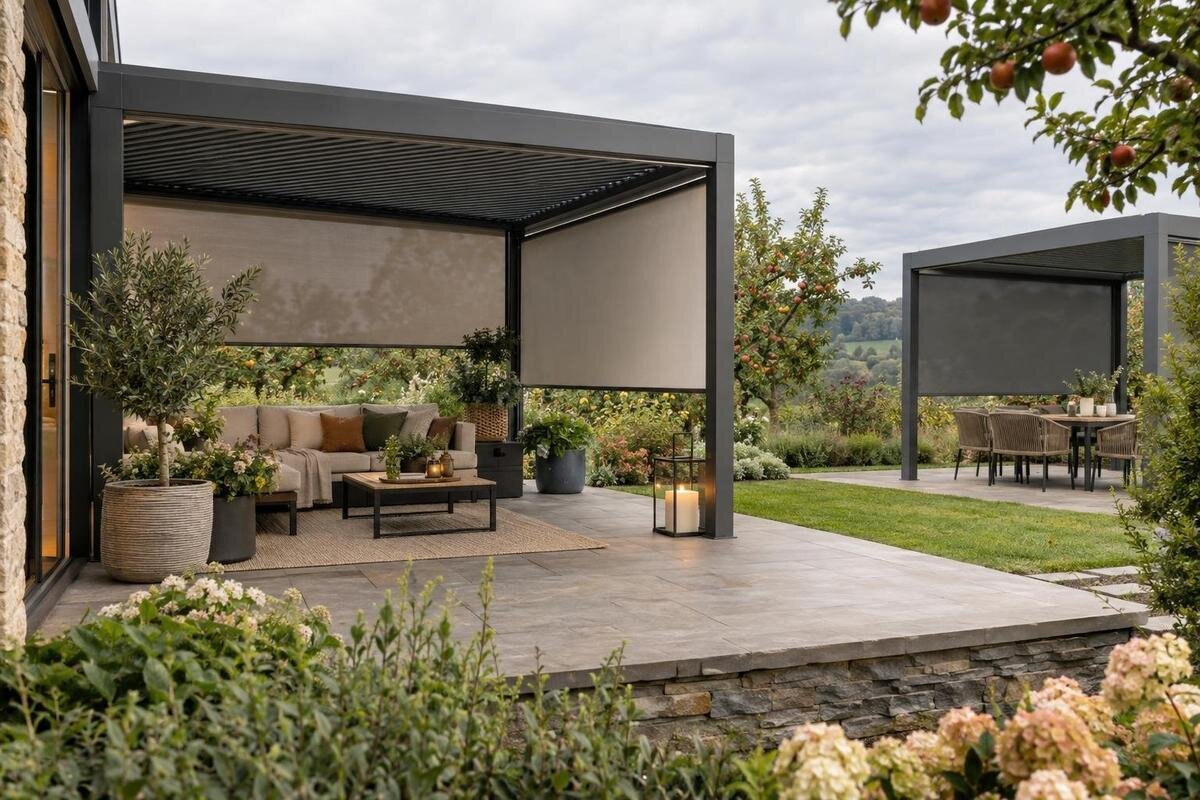
Pergola buying guide
When you buy a pergola with side screens, the main choice is not simply how many sides to cover. You are balancing privacy against views, daylight, airflow and easy access, while checking that the screen setup suits the weather at your site. Treat the pergola frame and screen package as related but separately described parts: a product name or photo alone may not establish what is included. The points below help you compare configurations and ask focused questions before placing an order.

Decide what the side screens should do
Write down the primary reason you want a screen before comparing configurations. You may want to block a particular neighbour’s window, soften direct sun at one seat, or create a more sheltered feeling around an outdoor dining area. Those are different jobs: visually open mesh may preserve some outward view while doing less to conceal activity, whereas a denser panel can provide stronger visual separation but make the space feel less open. Name the one or two outcomes that matter most, then treat secondary benefits as bonuses. This keeps broad claims such as privacy or shade from standing in for the specific result you need.
Also decide what you do not want to give up. A screen across the wrong side can close off a valued view, make the route into the pergola awkward or reduce the breeze you rely on. Consider whether you want visual privacy, a boundary or simply a more sheltered feeling; these are related but not interchangeable results. When reading Bloomcabin’s pergola listing, separate the frame identity from screen details: verify whether screens are included, what type they are and which sides the selected package covers. If a staged image shows extra components, compare it with the written contents list instead of assuming the full scene is included.
Map the sightlines around the pergola
Stand or sit in the places you expect to use the pergola and note where the open sightlines come from. Include neighbouring windows, upper-level decks, a path or lane, and views from your own house; the most exposed direction may not be the one you first notice. Check both seated and standing eye levels, and consider whether the concern is constant or limited to one part of the day. A quick sketch with the intended seating, entrances and surrounding windows gives you a more useful basis for comparing screen positions than the word privacy in a product description.
Take the sketch outside and compare proposed screen coverage with the view from the actual seating area. A full-height panel may block more than the view you want to hide, while a partial screen may leave the relevant sightline open; the result depends on distance, elevation and angle. If useful, have someone hold a large sheet at a proposed edge to picture the visual boundary, without treating that as an exact screen measurement. A listing such as the Bloomcabin pergola page still needs a dimensioned plan or written measurements before you can judge fit.
Choose how many sides to screen
Think of coverage as a layout choice. One screened side can address a single exposed boundary while leaving other sides open; screens on opposing or several sides may block more views but can also reduce cross-breezes, make the approach less direct and frame the space more tightly. Do not assume a higher screen count is automatically more private: an uncovered entrance or a gap beside a post may still leave an important view open. Mark the boundary each screen would occupy and the side from which people need to enter before deciding how many panels to order.
Check whether the configuration is fixed or can be opened, retracted or repositioned, and whether that choice is described for the exact option you are buying. These arrangements are not interchangeable: a fixed panel, a roll-up screen and a sliding panel need different clearances and leave different openings when not in use. Confirm the count, location and method of operation in writing; do not infer them from a broad category name. If a pergola product listing does not spell out the screen package, ask whether screens are optional and whether each side can be ordered independently.
Balance privacy with light, views and airflow
Privacy depends on how much can be seen through a screen, not just its colour or label. Mesh and woven materials may retain some outward visibility, while dense fabric, panels or closely spaced slats may obscure more; actual results vary with the product, viewing angle, distance and light. A screen that looks opaque from across a bright yard may appear different when someone is close to it. Ask for the maker’s description of openness or visibility rather than relying on words such as privacy, shade or outdoor.
Consider daytime and evening use separately. A lit pergola against a darker background can make silhouettes or movement more noticeable through some screen materials, so do not assume a screen offers the same concealment at every hour. A sample, if available, can help you judge texture and colour, but view it from both sides and at the distance that matters; a small sample cannot prove full-panel privacy. For the Bloomcabin pergola listing, look for written screen details or ask the seller what the screen option is, rather than reading a performance promise into the pergola’s name.

Consider wind, rain and sun exposure
Consider wind first if the site is exposed, between buildings or regularly affected by gusts. A broad, less-open screen can change airflow around a pergola, but the effect depends on the screen and the structure. Ask for operating guidance for the exact configuration, including whether instructions differ when a screen is fully deployed, partly open or retracted. Do not treat a screen’s ability to create privacy as proof that it is suitable to remain deployed in any weather. If the site is challenging, ask the supplier or a qualified installer to assess suitability.
Rain and sun call for separate questions. A side screen should not be assumed to seal the pergola, so rain driven at an angle may still reach the seating area; stated weather resistance is not the same as a waterproof enclosure. For sun exposure, ask whether the screen material has documented UV-related performance and what care it requires, rather than assuming that a darker or denser appearance provides a particular level of protection. Check the limits for the screen itself, and assess roof performance separately if overhead rain cover is part of your decision. Read a Bloomcabin pergola product page for its exact written options rather than inferring a screen’s limits.
Verify the pergola and screen package together
Read the package contents as a system. Confirm the frame, number of screens, rails or tracks, brackets, fasteners, handles and any other listed parts that are included; identify components shown in an image but not named in the order details. Ask which dimensions describe the pergola frame and which describe the usable area once posts and screens are in place. If a screen is sold as an option, confirm that it is intended for the exact pergola configuration you selected, rather than relying on a similar appearance or a shared brand name. A pergola product page can be a starting point for questions, not proof of screen compatibility.
Where a structure connects to a building, have the supplier’s documentation explain the intended attachment conditions and ask a qualified professional to review the site if the fit or attachment is uncertain. A wall, eaves, doors and existing fixtures can affect where a screen sits and how it moves; a product title does not establish that a particular wall or layout is suitable. For a freestanding layout, confirm the required footprint and screen clearances against the proposed location. Keep the published drawing, component list and chosen options together so the installer and the person placing the order are working from the same configuration.
Plan entrances and everyday screen operation
Draw the routes people use before you settle on screen positions. Include the path from the house, a main entrance, space to move a chair, and any door or gate that swings into the proposed area. A screen can be easy to overlook on a plan if you only mark the pergola posts; its track, frame or fully opened position may take additional space. Check the clear opening with screens in their normal position and when they are stored or retracted, using dimensions for the chosen product rather than estimates based on a photo.
Think through operation as part of everyday use. Confirm whether each panel is fixed, manually moved, rolled or otherwise operated, and whether there is room to reach its handle or pull without shifting furniture. Ask how it behaves in a partly open position and whether that position is allowed by the instructions; not every screen can be stopped or left wherever convenient. If the listed pergola leaves the screen method unclear, request a diagram or written explanation before ordering. This is especially useful if more than one person will use the space or if you expect to adjust the screen often.
Ask about care and replacement parts
Check the care instructions for the screen material and the moving parts. Ask how the screen should be cleaned, whether it needs to dry before storage, how to keep tracks or channels clear, and whether it should be removed or secured in particular conditions or seasons. You can also ask whether cold, snow or ice affects operation or storage. Leaf litter, grit and moisture may affect upkeep, but the right method depends on the design and material; avoid using a cleaner or treatment simply because it is used on another outdoor fabric. A maintenance guide is more useful than a general claim that a product is low maintenance.
Ask what can be repaired or replaced if a screen is damaged, and whether the screen is a separate component from the pergola frame. Before ordering, find out whether replacement panels, hardware or care instructions are identified for the configuration; do not assume a screen can be swapped for any similarly sized product. Save the written answer with the selected options and order confirmation. If the product page does not show care or replacement details, treat that as a question to resolve rather than evidence that no maintenance or replacement is needed.

Compare complete purchase packages
Compare candidates in a simple table so one appealing image does not outweigh missing details. Record the frame footprint, usable interior, screen count and placement, opening size, material or visibility description, operation, included hardware, and the weather guidance stated for the screen. Add whether parts are included or optional and what documentation is available. Leave a blank wherever information is missing. This makes it clear whether you are comparing a basic pergola with optional screens against a complete screen package, rather than treating different bundles as if they were identical.
Then compare the complete purchase requirements, not just the structure label. Confirm which configuration and accessories will appear on the order, whether assembly or professional installation is needed, and what delivery or installation arrangements are offered for your address. These details can affect the work and total cost, so get them from the seller instead of guessing. Read any stated care, return and warranty terms on the applicable order documents, without assuming they cover optional screens in the same way as the frame. A short written question list also helps you get comparable answers from different listings.
Match the configuration to your daily use
Finally, match the configuration to how you will use the pergola on an ordinary day. If one neighbour-facing view is the main issue and the rest of the space benefits from open sides, partial coverage may be worth comparing before a more enclosed layout. If you want to adjust privacy as the day changes, a fixed screen may not suit that preference; confirm the actual movement and storage method. If you mainly want all-weather shelter, side screens alone are not enough evidence: check the exact product guidance and consider whether the pergola’s other components meet that separate need.
Settle on a short list of requirements you will not compromise on: the sightline to block, the opening to preserve, an acceptable level of visibility, and the screen’s stated use limits and care. Then rule out any listing that cannot clearly show the screen package and dimensions, or ask for those details before paying. The choice is not about selecting the maximum number of panels; it is about getting coverage that does the job without making access, ventilation or upkeep harder than you intended. A modest, clearly specified setup may suit your space better than an undefined promise of privacy.
Frequently asked questions
Do side screens make a pergola private?
Not automatically. Privacy depends on how open the screen is, the viewing angle and distance, and how the light falls on it. A screen that obscures a view in daylight may offer less concealment when the space behind it is lit at night. Check the screen’s written visibility details and consider the sightlines from both sides.
How many sides should I screen?
Choose the number of sides by mapping the views you want to block, the entrances you need and the airflow you want to keep. A single screen may address one exposed boundary; covering more sides can make access and openness more limited. Compare the actual panel positions rather than choosing by panel count alone.
Can I leave a pergola screen down in windy weather?
There is no single answer for every screen and pergola. Ask for the operating guidance for the exact configuration, including whether instructions differ when a screen is fully open, partly open or retracted. Do not infer a screen’s wind limits from the pergola frame or from another product with a similar appearance.
Will side screens keep rain out?
Do not assume they will. A side screen may not seal the pergola, and rain driven at an angle can still reach the space through or around it. Check the written weather guidance for the screen itself, and assess overhead rain cover separately if that is part of your purchase decision.
What should I confirm before ordering?
Confirm the number and position of screens, what is included, the dimensions and clear openings, the screen’s visibility and operation, and its weather and care guidance. Also ask whether the screen is intended for the exact pergola configuration, what installation conditions apply, and what can be repaired or replaced.
The best fit is the configuration that blocks the specific view you want to screen while keeping the access and openness you need. Give equal weight to the written screen package, the site’s wind and rain exposure, and the instructions for operation and care. If those details are unclear, pause the comparison until the seller confirms the exact configuration in writing. With the boundaries and trade-offs stated plainly, you can judge whether partial coverage or a more enclosed layout is the more practical purchase for your outdoor space.
