
Buying a Garden Shed for Your Vacation Property
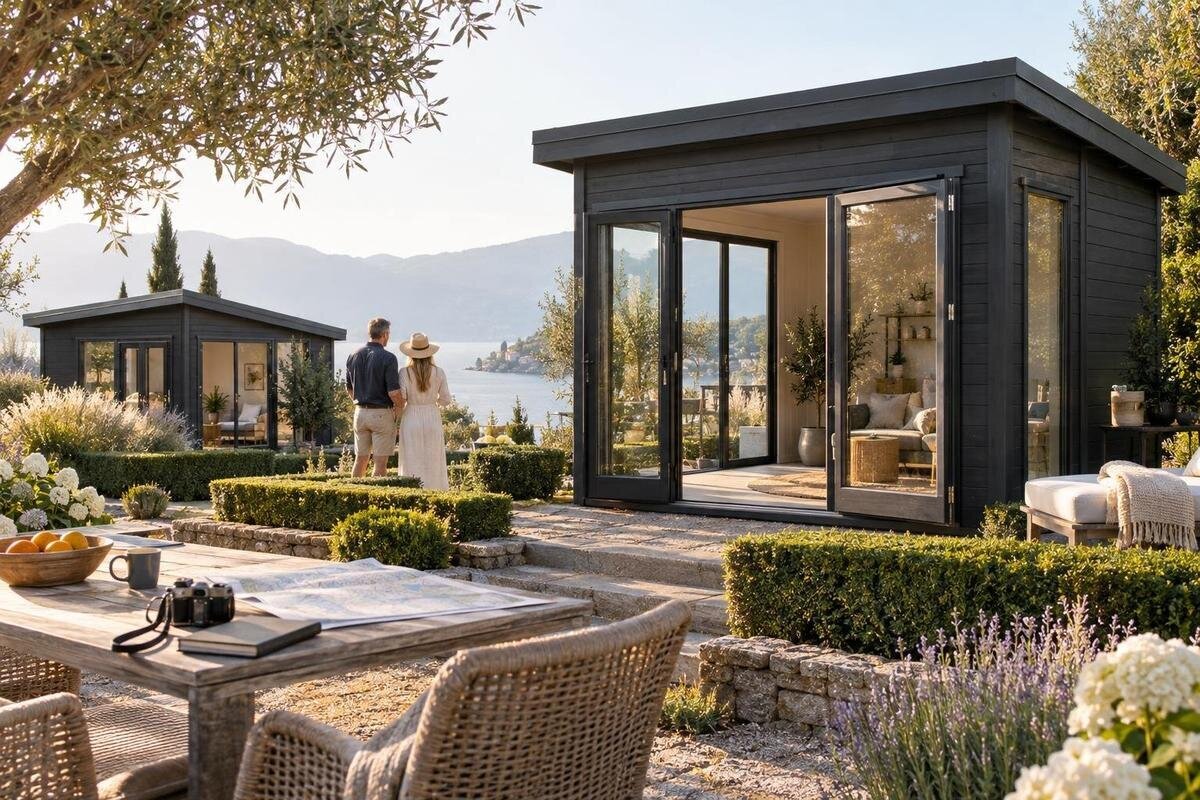
Garden shed buying guide
Buying a garden shed for a vacation property is partly a storage decision and partly a question of access and upkeep. A shed may sit unused for weeks, then need to be useful as soon as you arrive. Before comparing garden sheds, decide what will stay there, measure both the intended site and the route in, and consider what maintenance you can manage between visits. That order helps prevent a structure that looks right online from becoming awkward to place, fill or care for at a cottage or cabin.
01
Make a list of what the shed will store
List the things you genuinely expect to keep at the property rather than buying around a hypothetical future use. Group them by purpose—yard-care tools, maintenance supplies, outdoor furniture or seasonal recreation gear—and note which items need to be reached on every visit. Include small accessories such as covers, hoses, spare parts and bins; individually they may seem minor, but together they can take shelf space and add clutter. If the property is used in different seasons, record when each group is needed and whether it will stay on site year-round. Separate must-store items from optional extras so rarely used belongings do not dictate the size.
Measure the longest and bulkiest items in the form in which they will be stored: folded furniture, stacked chairs, bins with lids or equipment with handles attached. Record the room needed to lift, roll or remove each one, not just its resting footprint. A long-handled tool may need vertical space; a bin that fits on paper may be difficult to pull past another item. Mark objects that need a direct path from the doorway, and note whether they are carried or rolled into the shed. Check manufacturers’ storage instructions for anything sensitive to temperature or moisture rather than assuming a garden shed provides controlled conditions.
Plan for the time between visits
At a vacation property, no one may be available to move belongings when conditions change. Decide which items can remain between visits and which should come home, especially products with storage directions or equipment you do not want left unattended. A garden shed is not automatically a temperature-controlled room or secure locker, and a product description cannot establish the conditions at your specific site. Set aside valuable, moisture-sensitive or otherwise restricted items and confirm their storage needs before counting them as permanent shed contents. If several people use the property, agree on what stays and where it belongs; otherwise spare space can gradually become a catch-all.
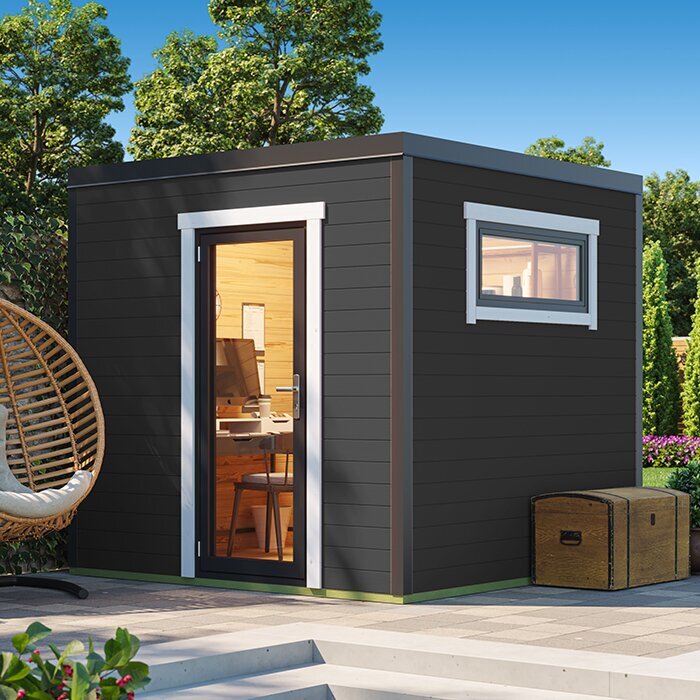
Map the arrival and departure routines too. What will you reach for first, and can you get to it without unloading half the shed? Keep frequently used items near the entrance and reserve less-accessible space for seasonal equipment. On the Verdana 1 garden-house listing, look for stated overall dimensions and entrance information. If an important measurement is missing, ask rather than inferring capacity or suitability from a product name or image. A plan that leaves room to put equipment away can make short visits easier than one that fills the floor from wall to wall.
02
Measure both the site and the route in
Mark the proposed shed outline before ordering. Compare the maker’s overall dimensions—not just a label such as compact or large—with the open area, property boundaries, fences, trees and overhead branches or structures. Check what the published dimensions include, including any projections, and allow the access space specified by the manufacturer or installer. No single clearance figure fits every site: you may need room for the door, routine exterior care and a route around the shed. Mark known utility lines, drainage routes and shared boundaries for follow-up rather than guessing at them. Take measurements on site; a visual estimate can miss a narrow passage or an awkward corner.
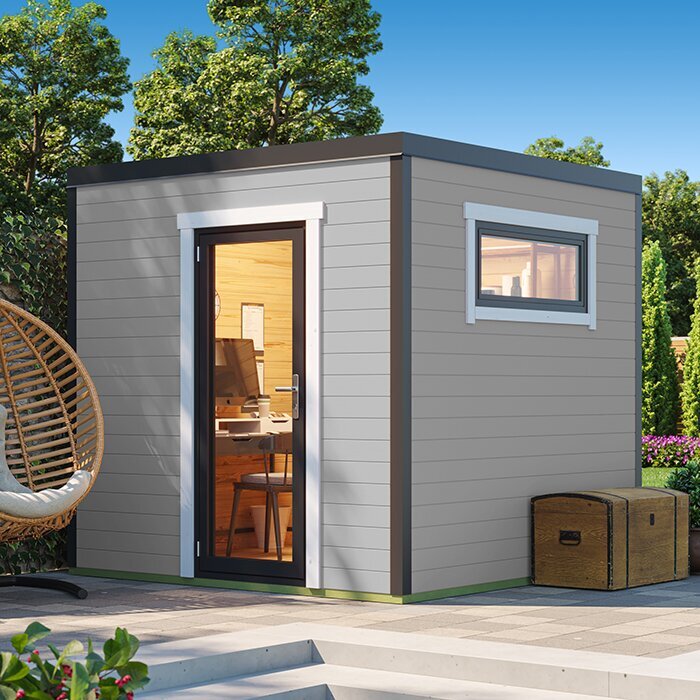
Measure the path from the unloading point as well as the final position. The narrowest gate, turns, steps, slopes and overhead clearance can affect moving a structure or its components. An assembled footprint will not tell you whether a packaged kit can pass through a gate; package dimensions and the assembly route may differ. The Verdana 2 garden-house listing can be one comparison point, but use only dimensions actually stated and ask for package measurements or unloading details if they are unclear. If a carrier or installer needs to reach the location, ask what access information they require. A site that fits on paper still needs a workable route.
Compare usable interior space, not just the footprint
Product dimensions can describe different things: outside width, interior floor dimensions, wall height or total height. Check the wording and any drawing rather than treating one width-by-length figure as usable floor space. Walls, framing, an entrance and built-in features may affect how much area remains for stored items; details depend on the exact model, so ask for clarification when the listing is not explicit. Compare interior height with tall equipment and the room needed to lift items onto a shelf. Also check whether the stated dimensions include projections. A larger exterior footprint does not automatically make every corner accessible.
Sketch the intended arrangement rather than choosing from floor area alone. Add the stored objects at approximate scale, indicate shelves and mark the space needed to take bulky equipment through the entrance. A simple plan can reveal that two storage zones compete for the same corner, or that a shelf blocks the route to another item. On the Durano garden-house listing, compare the measurements actually provided with your plan. If usable interior dimensions or a drawing are not given, ask before treating the listed footprint as usable storage area.
03
Check the entrance and door clearance
The door affects the free space on both sides of an entrance. A hinged door needs room for its swing; sliding or folding arrangements move differently and may have their own clearance needs. Don’t choose by style alone: verify the clear opening width and height, threshold details, door position and whether the opening works for your longest stored item. If the listing provides only an exterior view, ask for a dimensioned plan or clear-opening measurements. These details determine whether an object can enter, not merely whether there is enough floor area once it is inside.
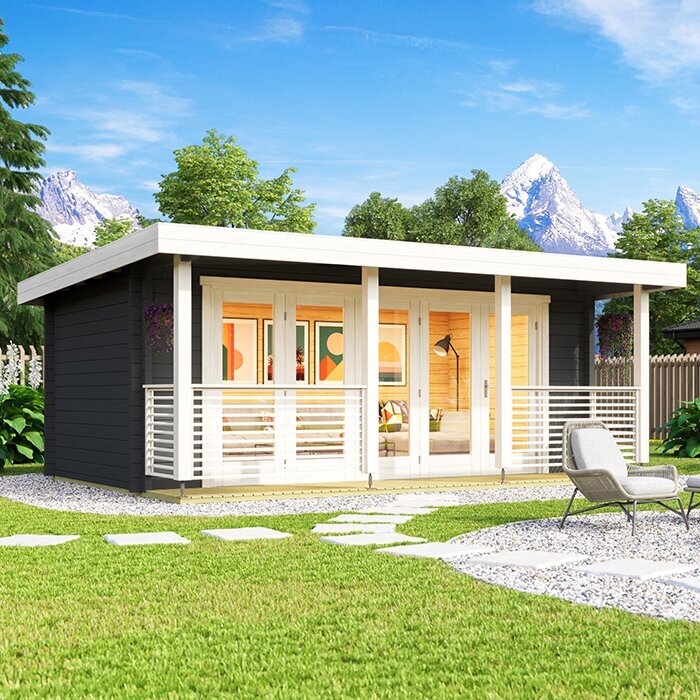
At the property, mark the planned shed position and door direction with tape or string. Walk the approach as you would when carrying or rolling equipment, then check whether a fence, vegetation or a usual parking spot could interfere. Think about access in the seasons when you visit, not only the day you take measurements. Use the Veltor 1 garden-house listing to look for the door arrangement and measurements actually supplied; don’t rely on an image alone for clear-opening size. If the orientation is unclear, ask the seller before placing the shed on your site plan.
Plan where equipment and supplies will go
Organize the interior into practical zones. Keep bulky pieces where their full length can lie or stand, give small tools a consistent place, and leave a clear route to items behind or below something else. The arrangement should reflect how you carry, roll or lift gear; a row of shelves is not useful if it forces you to move chairs or equipment on every visit. Mark floor-level and wall-mounted storage separately so that the plan does not use space needed for an entrance or access. Leave room for moving items in and out as well as for storing them.
Check what is included with each package and what you would need to add. Shelves, hooks, bins, flooring or other fittings may be separate unless the seller’s written list says otherwise; don’t count items pictured in a lifestyle image as included. Ask which fixings are approved before planning to attach storage to a wall, and confirm that additions won’t obstruct an opening or a ventilation feature specified for the design. The Orello 1 garden-house listing is one page to review for any stated layout and contents; request missing information before finalizing your storage plan.
04
Match upkeep to your visit schedule
Material and finish affect the care routine, but a category label is not enough to tell you what a particular shed needs. Verify the stated material, what surface treatment is supplied, whether further protection is required before use, and how often the manufacturer recommends inspection or maintenance. Ask which products or methods are compatible with that finish. If assembly leaves surfaces to be treated, find out what needs to be done and when. Don’t infer care requirements from a model name, photograph or another shed that looks similar; details can vary between models and configurations.
Consider the conditions at the actual location and your visit pattern. A spot with shade, frequent moisture or more exposure to weather can raise different care questions from a sheltered location, but an online image cannot tell you how a specific finish will perform there. Ask whether the maker provides guidance for the conditions you expect and who could handle any scheduled checks while you are away. The Modano 1 garden-house listing can be reviewed for details it actually states about materials and care; if those details are absent, request written guidance before comparing upkeep.
Confirm site preparation and local requirements
Before selecting a shed, get its installation and base requirements from the supplier or manufacturer. The right approach depends on the exact product and site; ground conditions, slope and drainage may affect what a qualified installer needs to consider. Don’t choose a pad, foundation or anchoring method from the shed’s outline alone, and avoid relying on a generic diagram for a different model. Share the intended location and relevant site details with a qualified builder or installer if you are unsure what preparation is suitable. This lets you compare products with realistic preparation needs rather than assuming every site is ready.
Check local and property-specific requirements before paying. Ask the municipality or relevant local authority about requirements that may apply, review property agreements or community rules, and confirm permission if the lot is shared or leased. Identify underground services, easements or access arrangements that could affect placement; use reliable site records or qualified help rather than guessing. For a product comparison, request model-specific base and assembly information for the Wooden Garden Shed M listing and confirm that it applies to the exact configuration you plan to order. Treat the model name as an identifier, not as guidance about site preparation.
05
Sort out delivery and assembly at the property
Delivery to a vacation property can involve a different route and hand-off than delivery to an urban driveway. Tell the seller where the property is and ask where a delivery vehicle is expected to stop, whether unloading is included, and who moves packages from there to the installation site. Measure gates and passageways, and consider whether the approach will be usable in the season when delivery is expected. Don’t assume a truck can reach the shed location simply because it can reach the property entrance. Get the delivery scope, access conditions and any additional charges in writing, and decide who can be there to receive the order.
Clarify how the shed will be assembled and who is responsible for each stage. For a self-assembly order, confirm the contents list, instructions, any tools or special requirements, and where a package can be kept if building cannot start right away. If hiring an installer, confirm the agreed scope, site preparation, access, unloading and who checks for missing or damaged parts. Review the seller’s ordering, change and return terms before committing, since a late discovery that the site or route does not work can complicate the purchase. The Wooden Garden Shed S listing is a starting point for checking the exact configuration; ask the seller to confirm delivery and assembly arrangements for your order.
Compare product details on the same basis
Make a comparison sheet with one row per candidate and the same questions for each: external and internal dimensions, door opening and orientation, stated materials and finish, base requirements, included components, delivery method and assembly scope. Add maintenance instructions and package dimensions if access is tight. Mark each answer as stated, confirmed with the seller or still unknown, so a strong photograph or familiar product name does not stand in for a specification. If an answer matters to the purchase, request it in writing. A consistent comparison makes genuine differences easier to see without treating one model as a proxy for another.
Weigh the essentials in order: will the planned layout accommodate your actual items; will the shed fit the location and delivery route; can you prepare and maintain the site; and are delivery and assembly responsibilities clear? A bigger structure is not automatically better if it crowds the lot, and a smaller one is not a suitable choice if an item will not fit through its opening. Resolve important unknowns before committing. The best fit is the one that serves the property’s routine without adding preventable work during every visit.
Frequently asked questions
How do I choose the right size for a garden shed at a cottage?
Start with the items you expect to store, measure them in their stored form, and plan how you will get each one in and out. Compare those measurements with the shed’s stated interior space and entrance dimensions, not just its exterior footprint or model name.
Which items are suitable to leave in a shed while I’m away?
That depends on the storage conditions the item requires and the conditions documented for the shed. Don’t assume an ordinary garden shed controls temperature or moisture. Check manufacturers’ instructions for sensitive equipment and take home anything that should not be left unattended.
Should I measure the route as well as the site?
Yes. Measure the narrowest gate or passage, turns, steps and overhead clearance between the unloading point and the planned location. Ask the seller for package dimensions and unloading details if they are not stated; the assembled shed’s footprint alone does not establish whether it can reach the site.
How do I confirm the base requirements?
Request the requirements for the exact shed and configuration you plan to order. If the site has slope, drainage or other concerns, discuss the location with a qualified installer or builder rather than choosing a base from a generic diagram.
What delivery details matter for a vacation property?
Confirm whether delivery reaches the property or only a designated stopping point, who unloads and moves the packages, what access the vehicle needs, and whether someone must be there to receive the order. Get the delivery scope, assembly responsibilities and any conditions in writing.
Keep the choice tied to the property’s real routine: what stays there, how it reaches the shed, how the interior will be used and how upkeep will be handled between visits. Once the site, base and delivery route are measured, compare actual interior dimensions and documented requirements rather than relying on model names or photos. That leaves a clearer decision—a garden shed that stores the equipment you listed, fits the available space and suits the time you can give it when you are away.
