
Can You Change the Roof on an Existing Pergola?
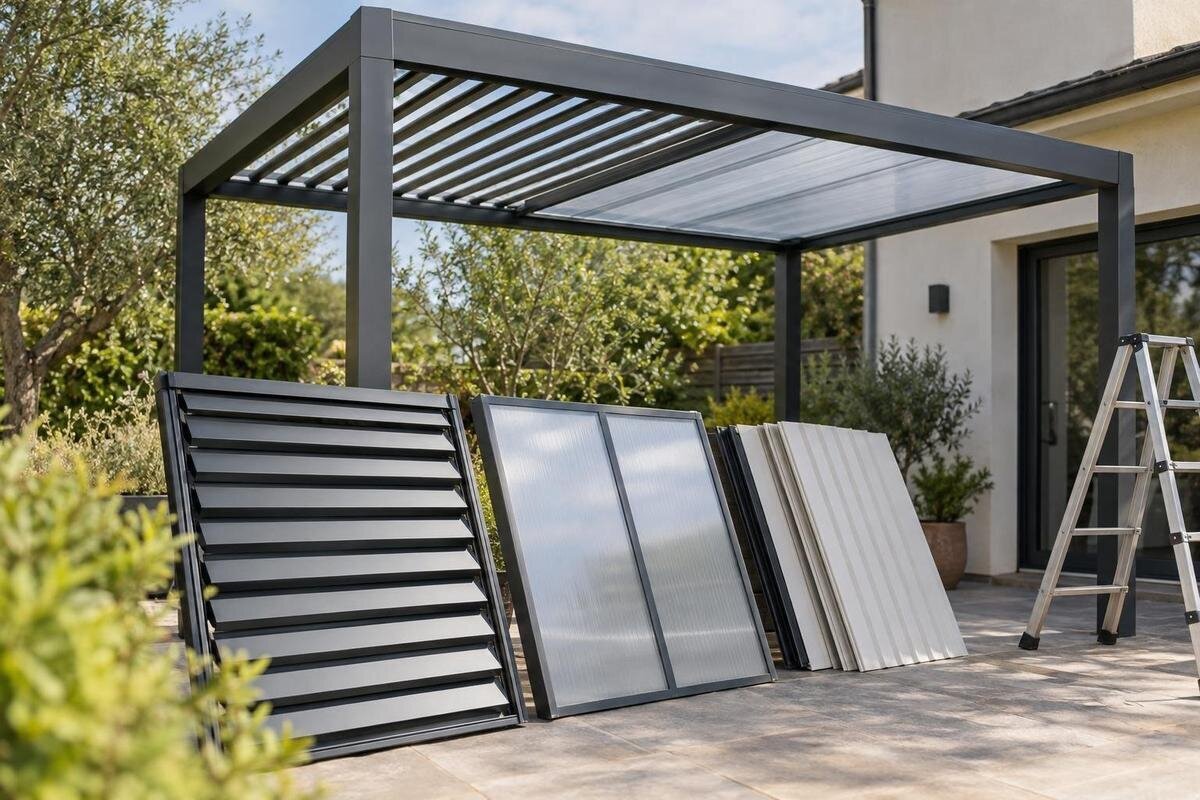
Pergola roof guide
Replacing a pergola roof may be possible, but a roof is not a universal accessory. Its size, connection points, weight, drainage and exposure to wind or snow all interact with the frame and its supports. A swap that seems simple from the patio can change how forces travel into posts, footings or a house wall. The useful buying question is whether the proposed roof is approved for your exact pergola and installation—not merely whether it fits between the beams.

When a roof replacement becomes a conversion
Sometimes—but only when the proposed roof is designed for the pergola’s exact frame and attachment system. A like-for-like replacement renews a component the existing structure was designed to carry, using compatible dimensions, fixings and drainage details. If the manufacturer offers a replacement for the same model and version, that is a more credible route than choosing a cover by appearance, although the part still needs to match. A retrofit is a bigger change: moving from a fabric or fixed cover to a different roof type, for example, or adding moving parts. That can change how forces reach the frame, where water flows and what clearance the assembly needs.
The first question is whether the manufacturer lists a conversion for this model and whether the structure remains approved for the proposed roof. A roof sold for another pergola may be incompatible even when its outside dimensions seem close. If no documented conversion fits, consider a supported replacement part, a separate shade solution designed for the frame, or replacing the complete pergola. Do not rely on adapters or altered fixings before the attachment details, structural implications and warranty position are understood. The greater the difference in weight, rigidity or operation between the old and new roofs, the less a visual match can tell you about suitability.
Identify the pergola frame and the roof you have
Begin with identification, not with a measurement alone. Look for the maker’s label, model or series number, invoice, original order, installation paperwork and instruction sheet. Record the approximate installation date and any repairs, replacements or changes, because the frame may have been altered since it left the factory. Identify the present roof too: a fabric cover, fixed panels, slats or another arrangement may have very different support and attachment details. Note whether it is fixed, removable or adjustable. Two pergolas can look nearly identical from below while using different beam profiles, brackets or support layouts, so appearance is not enough to identify approved replacement parts.
Photograph the whole structure and close views of each roof-to-frame connection, along with the posts, bases and any wall attachment. From accessible areas, record the overall dimensions, main beam spacing and support locations as reference information; these measurements do not confirm that a new roof will fit or be supported. Keep the original manual and any correspondence with the seller. Label your photographs so that the person reviewing them can distinguish each side and connection. If a label is missing or unreadable, say so rather than assigning a model based on appearance. If replacing the whole structure is also an option, use the Bloomcabin Pergola product listing to identify a complete-system alternative. Keep that comparison separate from the search for parts for your existing frame, so an enquiry about a new pergola is not mistaken for a request to confirm a roof retrofit.
Check the roof-to-frame attachment points
Compare how the existing roof attaches with how the proposed one is meant to be supported. The old roof may rest on rails, slide into a channel, bolt to brackets, pivot on a fitting or bear directly on beams. Check the shape and spacing of the connections, the required support points and any clearance around the frame. An outside measurement can show that a roof is too large, but a close measurement cannot prove a match: the profiles, fixings and way the roof transfers force matter too.
A different roof can place force in different locations, including at a smaller number of attachment points. Reusing holes or adding an adapter does not show that the fasteners engage the right parts of the frame. Drilling, cutting or changing a bracket may also affect a protective finish or create a route for water. Request the drawing or written fitment information for the exact frame and proposed roof. Ask the supplier to distinguish parts that remain from parts that must be replaced, rather than describing the package simply as a replacement roof. This makes it easier to understand whether the proposal involves only a cover or also new rails, brackets and other connections. If you are considering a different pergola type instead, the Bloomcabin Bioclimatic Pergola listing provides a separate model to compare as a complete purchase, not a source of presumed interchangeable roof components.
Assess the frame and supports for the new loads
A replacement roof can change more than the pergola’s own weight. Depending on its design and the site, the structure may also need to carry different forces from wind, snow or ice. A rigid surface, an adjustable roof and a fabric cover do not necessarily pass those forces into the frame in the same way. Roof shape and exposure can matter as well. Do not assume that a pergola which has carried its current roof for years can automatically carry another type, or try to decide by comparing the apparent weight of two parts.
The assessment needs to consider the complete path from the roof through the beams and posts to their supports. For a wall-mounted pergola, the house-side attachment is part of that path; for other structures, the base and supporting surface matter. Visible wear, movement, corrosion, cracking or previous repairs deserve attention, but a sound appearance alone does not prove capacity. Ask the manufacturer for model-specific compatibility information and have a qualified structural professional assess the existing installation if the proposed change affects loads or connections. Make clear which parts you hope to retain, including any existing wall attachments, so the assessment addresses the whole proposal rather than just the new roof. If you are comparing the Bloomcabin Wall-Mounted Pergola as a complete alternative, ask separately about the intended installation. A decision to replace the pergola does not resolve whether the existing house-side fixings can remain.

Plan for water, weather and operating clearance
A new roof may direct water differently from the old one. Check where rain will run off, whether the existing channels or gutters are part of the original design, and whether water could collect or discharge near a doorway, wall or walking area. A change that concentrates runoff at one edge can create a different problem from a cover that lets water pass through. Ask how the proposed arrangement is intended to drain and whether the existing frame has the appropriate parts. Do not assume the old drainage route will suit a roof with a different surface or edge profile.
If the roof opens, adjusts or includes other moving parts, confirm the space needed for its full movement and for future access to clean or maintain it. Check for nearby eaves, doors, windows and other obstructions before treating a roof as a fit. Describe which adjacent doors or windows need to remain usable, and ask whether access to the roof's service points would still be practical after installation. These are separate questions from whether the roof fits inside the frame when stationary. When comparing another roof category, use Bloomcabin’s Bioclimatic Pergola product page as a reference for a separate complete model, then ask about its drainage and clearance requirements for your proposed location. Do not assume that either model has particular moving parts. Snow and wind conditions also belong in the manufacturer's guidance for the complete system; do not infer a suitable capacity from the roof's appearance.
Look for a manufacturer-approved upgrade
The clearest retrofit route is a conversion specifically approved for the pergola’s model and version. Ask whether the proposed roof is listed for that frame, which brackets and fasteners are required, and whether the conversion calls for other components or changes to the original installation. Check that the instructions cover the actual structure you have, rather than a similar-looking series. If a kit is described as universal, ask what frames it is approved for and where that approval is documented; the label alone is not evidence that it suits your pergola.
When no approved conversion is available, ask the manufacturer or seller for a written answer rather than assuming a local adaptation is acceptable. A qualified installer can help define the work, but installation experience does not by itself establish that an unsupported roof and frame combination is compatible. Clarify whether the answer rules out the roof itself, the proposed attachment method or the use of that roof on your particular frame version. That distinction helps you compare the remaining options without repeatedly asking about the same unsuitable combination. If the roof cannot be approved for your unit, compare the scope of a complete replacement with the cost and uncertainty of adapting an unlisted system. The Bloomcabin Pergola page identifies a separate model for that comparison. Ask for each proposal to state what is retained, removed and supplied, so a roof-only price is not compared with a complete installation as though they cover the same work.
Check warranty terms before making changes
Do not assume that changing a roof automatically cancels every warranty, or that a warranty will remain unchanged. Terms can differ for the frame, roof parts and installation, and may address modifications, non-approved components or work by someone other than the original installer. Ask the manufacturer or seller how the specific proposed change affects each relevant part. If a replacement roof has its own warranty, clarify who handles an issue at the connection between the new roof and the original frame.
Keep the warranty documents, installation instructions, purchase records and any written compatibility confirmation together before work begins. Photograph the existing connections and the frame condition, and retain the replacement part details and installer’s invoice afterwards. This record can help establish what was changed if a problem arises. Ask about warranty implications before removing the existing roof, since the maker may need information about the original configuration. A verbal assurance can be difficult to interpret later, so request a clear response that names the model, proposed roof and installation method.
Compare a roof replacement with a complete pergola
There are usually several different scopes to compare: replacing the original roof part, installing a manufacturer-approved conversion, adding a separate shade element designed for the frame, or replacing the whole pergola. These are not interchangeable fixes. A roof-only purchase can leave the original frame and attachment questions in place; a conversion changes the system; a separate shade element needs its own suitable support; and a complete pergola means planning for a new structure and its installation. Compare what each option requires, not just the visible roof surface.
Compare the full scope of each quotation, including removal of the old roof, replacement connection parts, any changes to drainage and the installation work described. A lower roof-only price is not necessarily a lower price for the completed project if other required work is listed separately. Equally, a complete replacement should not be treated as necessary merely because it is easier to quote. Ask why each option is being proposed and which existing components would remain. The Bloomcabin Wall-Mounted Pergola model page can help you identify a complete wall-mounted alternative, but it does not establish that its roof can be transferred to another frame or that your wall is suitable. If you move from a roof-only replacement to a complete system, assess that system for the intended site as a separate decision. Keep the assumptions alongside each quotation so you can see whether the options actually address the same desired result.

Prepare specific questions before you buy
Before requesting a compatibility answer, assemble the model or series details, purchase or installation date, current roof type, photographs of the connections and any known repairs. Include the overall frame dimensions, beam spacing, post locations and whether the pergola is freestanding or attached to a building. Note where water currently drains and describe the roof you want to install. These details give the manufacturer or installer a clearer starting point than a question such as whether a roof will fit a pergola of a certain width.
Ask for confirmation that names the exact frame version and proposed roof, and whether the required attachment parts and installation instructions are available. Ask what, if anything, must change in the frame, supports or drainage, and how the change affects warranty coverage. Separate unanswered questions from confirmed details in your enquiry; an approximate measurement or an unidentified bracket should not read like an established specification. If local approvals or site-specific structural questions may apply, confirm them with the appropriate local authority or a qualified professional. When comparing complete alternatives through Bloomcabin’s Pergola listing, specify that you are considering a new system rather than seeking parts for the old one. Keep the response with your other product records, and check that it addresses the proposed roof and frame version rather than only the pergola's general dimensions.
Have damage or uncertainty assessed before a retrofit
Pause the roof change if the frame appears bent or out of alignment, connections are loose, supports move, or you find corrosion, rot, cracks or evidence of an earlier repair. These signs do not identify the cause or prove that the structure must be replaced, but they make a new roof a poor test of its condition. Have the existing pergola assessed before adding parts or altering fixings. Include the locations of visible problems in the information you provide, and distinguish them from repairs you know about only through previous records. Ask whether the proposed work includes resolving those issues or assumes the existing frame is ready to use. If a complete system becomes a more suitable option, Bloomcabin’s Bioclimatic Pergola page offers a separate model to consider. Its listing is not an assessment of the damaged structure or confirmation of suitability for your site.
Different questions belong with different people. The manufacturer or seller can confirm whether a roof or conversion is approved for the exact pergola; a qualified structural professional can assess the existing frame and supports where the change affects them; and an installer can explain the work involved. Check that their answers refer to the same proposal. For example, confirmation for an unaltered frame does not resolve an assessment that calls for changes to that frame. Ask for any disagreement to be clarified before ordering parts, rather than choosing whichever answer is most convenient. The final scope should distinguish the roof replacement from repairs or alterations to the supporting structure, making clear what the installation is intended to include.
Frequently asked questions
Can I replace only the cover on my pergola?
Often, a like-for-like replacement is the simplest option, but it still needs to be intended for your exact model and version. Check the manufacturer’s instructions for the cover, fixings and attachment method rather than relying on matching dimensions.
Can I add a louvre roof to an existing pergola?
Only if a compatible conversion is documented for the frame you have. A different roof system can change loads, attachment points, drainage and clearance. Similar outside dimensions do not establish that the frame can support it.
Will changing the roof void the pergola warranty?
There is no universal answer. Warranty terms may treat the frame, roof parts and installation separately, and conditions can depend on the modification. Ask the manufacturer or seller for a written answer about the exact change before work begins.
Can I reuse the holes from the old roof?
A matching hole pattern does not prove that a new roof is compatible. The attachment may need different fasteners, support or load capacity. Use the manufacturer’s instructions for the exact pergola and proposed roof before reusing or changing fixings.
When should I consider replacing the whole pergola?
Consider a complete replacement if there is no approved roof conversion, the frame has been altered or damaged, or the proposed roof requires unsupported changes. A qualified professional can assess the existing structure before you decide what can remain.
A successful roof change starts with compatibility, not appearance. Identify the exact frame, get model-specific confirmation for the proposed roof, and have the supports assessed if the change affects loads or connections. When no approved retrofit exists, compare a suitable separate shade option or a complete pergola rather than relying on adapters. That keeps the decision grounded in what the existing structure is designed to carry.
